

Ngorongoro Crater Safari - Complete 2026 Planning Guide
TL;DR
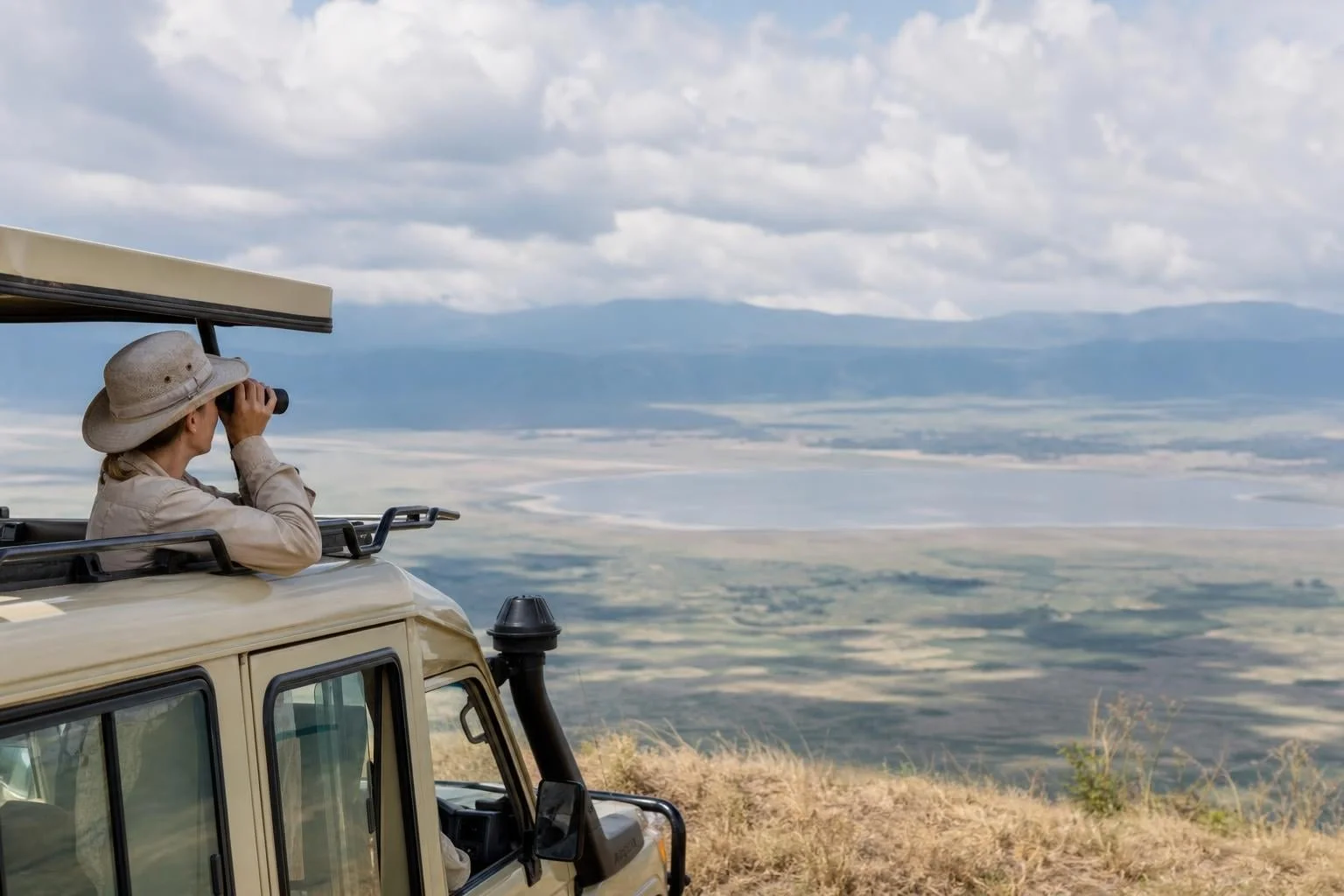
The Ngorongoro Crater is actually a volcanic caldera in northern Tanzania, home to over 25,000 large animals including all of the Big Five. A Ngorongoro Crater safari typically involves a five to six hour game drive on the 260-square-kilometer crater floor, with fees running roughly $400 to $550+ per couple before vehicle and guide costs. The best strategy is staying on the crater rim to descend at 6:00 AM, beating the crowds that arrive from Karatu an hour later.
Quick Answer: Is a Ngorongoro Crater Safari Worth It? Yes. A Ngorongoro Crater safari is one of the best one-day wildlife experiences in Africa. The crater's enclosed ecosystem supports more than 25,000 large animals, including lions, elephants, buffalo, hippos, hyenas, flamingos, and one of Africa's most accessible black rhino populations. Most visitors spend five to six hours on the crater floor during a single game drive. For the best experience: - Stay on the crater rim. - Enter at 6:00 AM. - Visit in January-February or June. - Budget $220-$380 per person, excluding accommodations. - Combine the crater with Serengeti and Tarangire for a complete Northern Circuit safari. If your goal is to maximize wildlife sightings in a single day, Ngorongoro offers one of the highest animal densities anywhere in Africa.
Ngorongoro Crater Safari at a Glance
|
Category |
Details |
|---|---|
|
Location |
Northern Tanzania |
|
Protected area |
Ngorongoro Conservation Area |
|
UNESCO status |
Yes |
|
Crater size |
260 km² |
|
Elevation |
2,300 m (rim) |
|
Time on crater floor |
5-6 hours |
|
Wildlife |
25,000+ animals |
|
Big Five |
All five species present |
|
Best months |
January-February and June |
|
Typical visit |
Half-day game drive |
|
Best accommodation |
Crater rim lodges |
|
Distance from Arusha |
190 km |
|
Self-drive |
Technically possible but not recommended |
What “Ngorongoro Crater Safari” Actually Means
A Ngorongoro Crater safari is a guided game drive inside the world’s largest intact volcanic caldera, located in northern Tanzania about 190 kilometers from Arusha. Most visitors experience it as one stop on the Northern Circuit, a popular safari route that also includes Tarangire National Park, Lake Manyara, and the Serengeti.
The crater sits within the Ngorongoro Conservation Area (NCA), a protected zone covering 8,292 square kilometers. It was designated a UNESCO World Heritage Site in 1979. Unlike Tanzania’s national parks, the NCA allows human habitation. Maasai pastoralists have lived here for centuries, grazing livestock alongside wildlife.
If you’re early in the process of planning a Tanzania safari, this glossary covers every term, fee, rule, and logistical detail you need before booking.
Geography and Formation
Caldera vs. Crater
The single most misunderstood fact about Ngorongoro: it is not a crater. It is a caldera. The distinction matters because it explains why the ecosystem works the way it does.
A crater is a bowl-shaped depression caused by an impact or explosion. A caldera forms when a volcano’s magma chamber empties and the entire structure collapses inward. Two to three million years ago, a massive volcano (estimated at 4,500 to 5,800 meters tall) did exactly that, creating a self-contained basin with walls rising 600 meters above the floor. Those walls trap water, nutrients, and many of the animals inside, producing one of the densest wildlife concentrations on Earth.
Crater Floor
The floor spans roughly 260 square kilometers (100 square miles) and sits about 610 meters below the rim. It contains four distinct habitat zones: short-grass plains in the east, the alkaline Lake Magadi in the south, highland swamps and forest along the western wall, and the Lerai Forest near the lake. This habitat diversity in a relatively compact space is why a single morning’s game drive can produce sightings of lions, rhinos, elephants, flamingos, and hippos.
Crater Rim
The rim sits at approximately 2,300 meters elevation. This is where the premium lodges are located, and it’s the staging area for every descent into the crater. Temperatures drop sharply at night, sometimes reaching 0 to 5°C, so packing layers is essential. Check the Tanzania safari packing list for specifics on what to bring for high-altitude safari conditions.
Northern Circuit
The Northern Circuit is Tanzania’s most popular safari route, linking Tarangire, Lake Manyara, the Ngorongoro Conservation Area, and the Serengeti. Most Ngorongoro Crater safaris are built into multi-day Northern Circuit itineraries rather than visited in isolation. The drive from Arusha takes about 3.5 to 4 hours, and operators typically schedule the crater visit between Serengeti days and the return to Arusha.
For a broader view of how this route fits together, see the guide to Tanzania’s safari parks and circuits.
Wildlife Glossary
Big Five
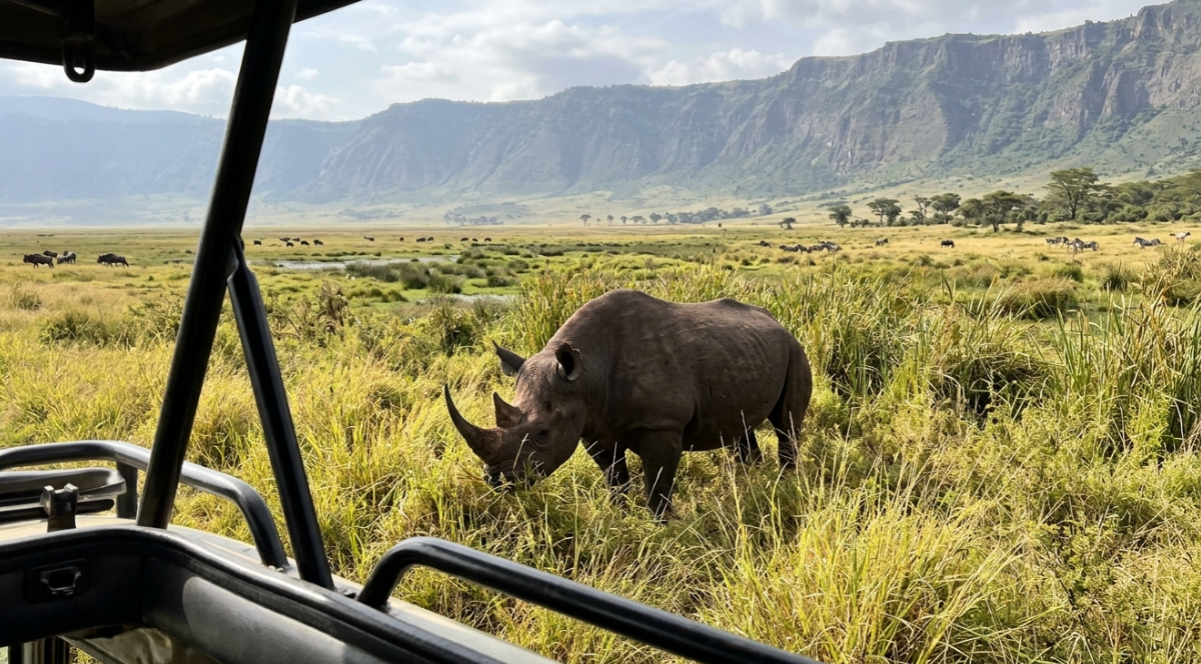
All five are present in the crater: lion, leopard, Cape buffalo, African elephant, and black rhino. This concentration in such a small area is what makes the Ngorongoro Crater safari famous. Seeing four of the five in a single morning is realistic. The leopard is the holdout, present in small numbers but secretive and rarely spotted due to limited suitable habitat on the floor.
Black Rhino
The star attraction. Approximately 26 to 40 black rhinos live on the crater floor under 24-hour ranger protection. This represents one of the healthiest and most accessible black rhino populations on the continent. Sightings are never guaranteed, but your chances here are better than almost anywhere else in Africa. Rhinos are most commonly spotted near Gorigor Swamp and the surrounding dense shrub.
Crater Lions
The crater supports over 55 lions, making it one of the densest lion populations in the world. What makes these lions genuinely unusual is their genetic isolation. The crater walls limit gene flow with outside populations, producing a distinct phenotype: darker, heavier manes than their Serengeti cousins. This isolation is fascinating from a biological perspective, though it also raises conservation concerns about inbreeding.
Elephant Bulls
The crater serves as something of a retirement ground for old elephant bulls. Many sport outsized tusks of dimensions now seldom seen elsewhere in Africa. The breeding herds mostly remain in the highlands above, so nearly all elephants you see on the floor will be solitary males. Around 300 elephants inhabit the crater, and the best place to find them is in and around the Lerai Forest.
No Giraffes
A surprising fact that catches many visitors off guard: there are no giraffes inside the crater. Despite being common throughout the broader conservation area, giraffes presumably cannot navigate the steep crater walls. It’s a small detail, but worth knowing so you don’t spend the drive wondering where they are.
Lake Magadi Flamingos
Lake Magadi is a shallow soda (alkaline) lake that attracts thousands of lesser flamingos. The pink concentrations are most dense during the wet season, when algae blooms flourish. The lake also draws other waterfowl and is a reliable stop on any crater game drive.
Predator Density
The crater floor has the highest per-capita predator concentration in Africa. Lions, spotted hyenas (over 6,000 of them), jackals, and the occasional cheetah all hunt the resident herds of roughly 7,000 wildebeest, 4,000 zebras, 3,000 elands, and 3,000 gazelles. Total large animal count exceeds 25,000.
Wildlife Viewing Expectations
|
Animal |
Likelihood |
|---|---|
|
Lion |
Very high |
|
Elephant |
Very high |
|
Buffalo |
Very high |
|
Black rhino |
High |
|
Hippo |
Very high |
|
Hyena |
Very high |
|
Flamingo |
Seasonal |
|
Leopard |
Low |
|
Cheetah |
Low |
|
Giraffe |
None |
Key Locations on the Crater Floor
Lerai Forest
A stand of yellow fever acacia trees near Lake Magadi. This is the best area for elephant sightings and the most likely place to spot a leopard (if your luck is running hot). Monkeys are common here too. The forest creates a visual contrast against the open plains that makes for excellent photography.
Lake Magadi
The shallow alkaline lake in the southern part of the crater floor. Beyond flamingos, it attracts various waterfowl and wading birds. During the dry season, the lake shrinks considerably, concentrating birdlife along the remaining water’s edge.
Gorigor Swamp
A marshy area that attracts hippos and elephants. The surrounding dense vegetation is prime rhino territory. Guides often route through or past Gorigor when tracking rhino sightings reported over the radio.
Hippo Pool
The most commonly mentioned lunch stop on a Ngorongoro Crater safari. This is one of the designated picnic areas where visitors are allowed to exit their vehicles. Hippos are reliably present, making it a more interesting lunch break than most.
Seneto Descent and Lemala Ascent Roads
These are the two access roads connecting the crater rim to the floor. You descend via Seneto (on the western side) and ascend via Lemala (on the eastern side). They are one-way roads, which helps manage traffic flow. The descent gate at Seneto closes for entry at 4:00 PM, and all vehicles must be out of the crater by 6:00 PM.
Best Photography Locations in the Ngorongoro Crater
|
Location |
Best subjects |
|---|---|
|
Lerai Forest |
Elephants |
|
Lake Magadi |
Flamingos |
|
Gorigor Swamp |
Rhinos |
|
Hippo Pool |
Hippos |
|
Eastern grasslands |
Lions |
|
Western wall |
Landscape photography |
Photographers should prioritize early morning game drives. The best light occurs between 6:30 AM and 8:30 AM.
Fees and Cost Structure
The fee structure for a Ngorongoro Crater safari is layered and, frankly, confusing. Here is how it breaks down.
NCA Entry Fee
Every person entering the Ngorongoro Conservation Area pays a daily entry fee. Adult rates (ages 16+) are approximately $70.80 to $83 per day, depending on the fee category. Children ages 5 to 15 pay around $24 per day. Children under 5 enter free. These fees change periodically, so confirm current rates with your operator before travel.
Crater Service Fee
A one-time fee of $295 per vehicle for each descent into the crater. This is the big-ticket item and applies regardless of how many people are in the vehicle. It’s charged per descent, not per day, which is why most operators structure the visit as a single half-day game drive rather than multiple short trips.
Concession Fee
If you stay at a lodge on the crater rim (inside the NCA), an additional concession fee of approximately $59 per person per night applies on top of the entry fee.
What It Actually Costs: Worked Examples
Day trip from Karatu (couple, 2 adults):
(2 x $70.80 NCA entry) + $295 crater service fee = approximately $436.60 in fees alone, before vehicle, guide, or accommodation costs.
One night on the crater rim (couple, 2 adults):
(2 x $70.80 NCA entry) + (2 x $59.00 concession fee) + $295 crater service fee = approximately $554.60 in fees alone.
Daily all-in crater safari costs (including vehicle and guide but not accommodation) range from roughly $220 to $380 per person for budget to mid-range experiences. For a full breakdown of what safaris cost across different budget levels, see this Tanzania safari cost guide.
Rules and Regulations
The Ngorongoro Conservation Area Authority enforces strict rules inside the crater. Breaking them can result in fines or ejection.
Six-Hour Rule
Each vehicle may stay on the crater floor for up to six hours per game drive. In practice, this is more of a soft logistical limit than a hard legal cutoff. The real constraints are the gate times: Seneto descent opens at 6:00 AM, closes for new entries at 4:00 PM, and all vehicles must be out by 6:00 PM. The $295 crater service fee is a one-time charge per descent, which makes a single extended game drive the most cost-efficient approach.
The total excursion, including the drive from your lodge, descent, game viewing, picnic lunch, and the climb back up, typically takes seven to eight hours.
Speed Limit
25 km/h throughout the Ngorongoro Conservation Area. This is enforced and matters both for safety and to minimize dust disturbance for wildlife.
Five-Vehicle Rule
No more than five safari vehicles should cluster around a single animal or kill at any time. The reality, according to travelers, is different. An AFAR community reviewer noted seeing 27 other jeeps jockeying for position at a lion sighting, with estimates of up to 50 vehicles at a single spot during peak season. This is worth knowing as you set expectations.
Other Rules
You must remain inside the vehicle at all times except at designated picnic areas like Hippo Pool. Off-roading is not allowed anywhere on the crater floor. All visitors must be accompanied by a licensed guide. No walking safaris are permitted inside the crater itself.
When to Go: Seasonality Terms
Timing a Ngorongoro Crater safari involves trade-offs between wildlife visibility and crowd levels. For a deeper month-by-month breakdown, see the guide on the best time for safari.
Dry Season (June to October)
Peak wildlife visibility because animals concentrate around permanent water sources. Lion and rhino sightings are most reliable. This is also peak tourist season, meaning maximum vehicle density on the crater floor and higher lodge prices.
Green Season (November to March)
Lush scenery, migratory birds, and fewer crowds. January through February is a particularly attractive window: the landscape is green, wildebeest and zebra herds are active, and visitor numbers haven’t peaked.
Calving Season (January to March)
An important distinction: the famous calving season happens primarily on the Ndutu Plains (at the NCA’s border with the Serengeti), not on the crater floor itself. Thousands of wildebeest and zebras give birth in Ndutu, attracting dense predator activity. If your trip falls in this window, pairing a crater game drive with a day in Ndutu is a strong combination.
Shoulder Season (April to June)
The “long rains” fall in April and May, but by late May and June conditions are excellent. Fewer crowds than peak dry season, good visibility, and lower prices. Many experienced safari-goers prefer this window for Ngorongoro specifically because the crater’s permanent water means wildlife doesn’t disperse the way it does in other parks during wet months.
Where to Stay: Rim vs. Karatu
This is one of the most consequential decisions in planning a Ngorongoro Crater safari, and the trade-offs are real.
Crater Rim Lodges
Staying on the rim means you can be on the crater floor by 6:30 AM, often beating the crowds from Karatu by 45 minutes to an hour. That early window matters enormously. Animal activity peaks in the early morning, and big cats and rhinos are most visible before the sun climbs and the air warms.
TripAdvisor community discussions consistently support this approach. The consensus: “The best place to sleep the night before a crater visit is on the crater rim since you will get to the crater floor before most tourists.” Practitioners on travel forums report that the experience of exploring the crater with few vehicles, before the late-morning wave arrives, is transformative.
The downsides: rim lodges are significantly more expensive (partly due to the concession fee), and nighttime temperatures can be genuinely cold at 2,300 meters.
For travelers considering premium rim properties, the luxury Tanzania safari guide covers what to expect at this price tier.
Karatu
A town about 50 kilometers (30 miles) from the crater, home to a wide range of mid-range and budget accommodations, many set on coffee farms. The only real downside is the additional driving time, which means arriving on the crater floor later and encountering more vehicles. For budget-conscious travelers, Karatu is the obvious choice. Just accept that you’ll share the crater with more company.
The Afternoon Descent Tactic
A strategy almost no competing content mentions: some outfitters offer back-to-back descents, one in the afternoon of arrival day and a second the next morning. The afternoon light is beautiful, crowds thin out as vehicles leave for the day, and you get a completely different atmosphere. Combined with an early morning descent the next day, this gives you two distinct experiences of the crater. It does mean paying the crater service fee twice, but travelers who’ve done it report it’s worth the cost.
Crater Rim vs. Karatu: Which Is Better?
|
Factor |
Crater Rim |
Karatu |
|---|---|---|
|
Cost |
Higher |
Lower |
|
Wildlife access |
Excellent |
Good |
|
Morning entry |
6:00 AM |
7:00-7:30 AM |
|
Crowds |
Lower |
Higher |
|
Lodge options |
Limited |
Extensive |
|
Best for |
Luxury travelers |
Budget travelers |
Recommended Ngorongoro Crater Safari Itineraries
One-Day Safari
Best for travelers based in Arusha.
-
Depart Arusha at 5:00 AM.
-
Arrive at the crater around 9:00 AM.
-
Spend five to six hours on the crater floor.
-
Return to Arusha in the evening.
Two-Day Safari
Best for first-time safari travelers.
Day 1:
-
Stay in Karatu or on the crater rim.
Day 2:
-
Descend into the crater at 6:00 AM.
-
Complete a full game drive.
-
Continue toward the Serengeti.
Three-Day Safari
Best overall experience.
Day 1:
-
Tarangire National Park.
Day 2:
-
Ngorongoro Crater.
Day 3:
-
Serengeti National Park.
Five- to Seven-Day Northern Circuit Safari
-
Tarangire.
-
Lake Manyara.
-
Ngorongoro Crater.
-
Serengeti.
This is the most popular safari itinerary in Tanzania.
The Honest Experience: Crowds and Expectations
One reviewer in The Traveler captured the Ngorongoro Crater safari experience with useful nuance: “The crater is extraordinary and, in short bursts, it absolutely lives up to its reputation. But it is also regimented, expensive, busy and at times strangely rushed.”
This is accurate. The combination of the six-hour soft limit, the one-descent-per-day structure, and the sheer number of vehicles (especially July through September) creates a more managed experience than open-ended game drives in the Serengeti or Tarangire. It doesn’t diminish the wildlife spectacle. It just means expectations should be calibrated.
One useful piece of advice from the AFAR community: “Work with your guide/driver to get in the position YOU want. This is your trip, not theirs. You’re in charge of where the vehicle goes (within reason) and when it stops.” Good communication with your driver-guide makes a meaningful difference.
For thoughts on whether a private vs. group safari makes more sense for the crater specifically, the private option gives you more control over timing and positioning.
Beyond the Crater
The Ngorongoro Conservation Area is far more than the crater itself. Travelers on TripAdvisor forums regularly emphasize this point: “There is a lot more to Ngorongoro than just the crater!”
Olduvai Gorge
One of the most important paleoanthropological sites in the world, located within the NCA. This is where Louis and Mary Leakey discovered early human fossils that reshaped our understanding of human evolution. A small museum at the site provides context. Most safari itineraries pass through on the route between Ngorongoro and the Serengeti.
Empakaai Crater
A smaller caldera with a deep soda lake, accessible by hiking. The trek down to the lake offers views of flamingos from above and, on clear days, a line of sight to both Kilimanjaro and Mount Lengai. This is a genuinely underrated addition to any Ngorongoro itinerary.
Olmoti Crater
Another walking safari destination, less visited than Empakaai. The hike leads to the Munge Waterfall, which feeds the Ngorongoro Crater floor. Guided walks here are led by NCA rangers and offer a physical, immersive alternative to vehicle-based game drives.
Ndutu Plains
Located on the NCA’s border with the Serengeti, Ndutu is the epicenter of the Great Migration’s calving season (January to March). If your timing aligns, adding a day in Ndutu to your Ngorongoro Crater safari is highly recommended.
Maasai Boma Visits
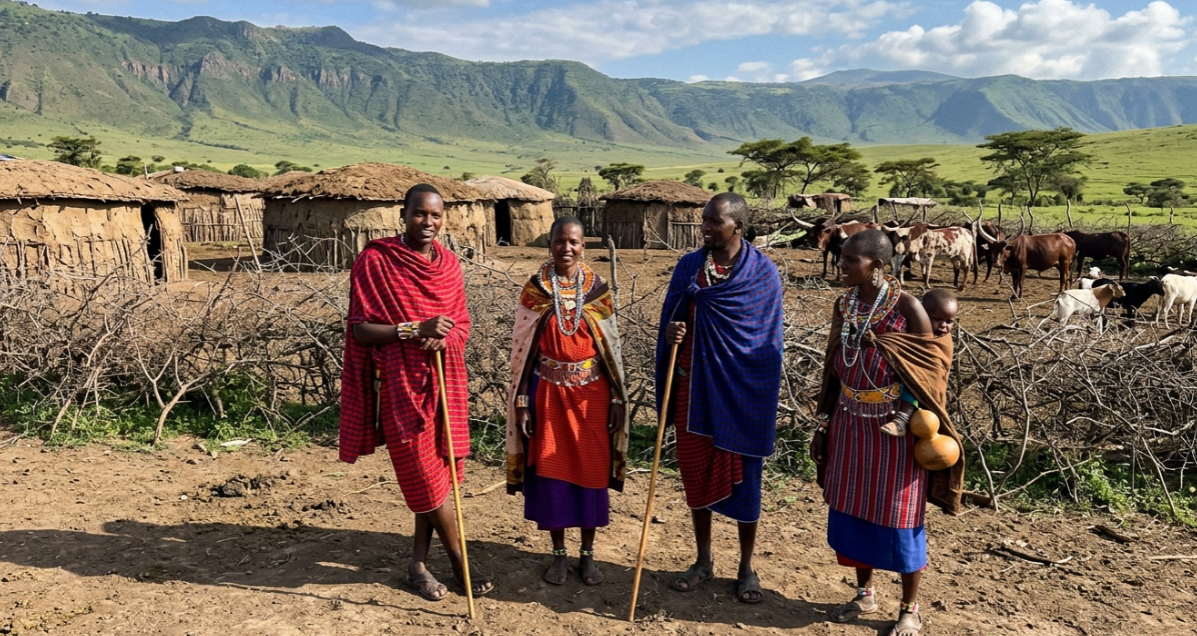
Cultural visits to Maasai homesteads (bomas) are widely offered in the NCA. The Maasai have lived here for centuries, and the conservation area’s dual-use model, protecting wildlife while allowing pastoral habitation, is globally unique.
It’s worth noting the ethical complexity. Between June 2022 and September 2024, roughly 10,000 Maasai were relocated from the NCA. In December 2024, President Samia Suluhu Hassan met with Maasai leaders, acknowledged past human rights violations, and promised to address land disputes. Travelers who want deeper context on this topic should read the Maasai cultural safari guide.
Practical Planning Terms
Game Drive
A guided vehicle safari on the crater floor, typically lasting five to six hours of actual wildlife viewing. The full excursion, door to door from your lodge, runs seven to eight hours. Most operators include a boxed picnic lunch eaten at one of the designated spots.
4x4 Safari Vehicle
A sturdy four-wheel-drive vehicle with a pop-up roof for standing and photography. Required for the crater’s unpaved roads. All reputable operators provide these as standard. For more detail on vehicle types and what to look for, see the safari vehicles glossary.
Driver-Guide
A licensed professional who both drives the vehicle and interprets wildlife behavior, tracks, and habitat. In the Ngorongoro Crater, a licensed guide is mandatory. The quality of your guide has an outsized impact on the experience, particularly for rhino tracking and finding less obvious species. Tipping your driver-guide is expected. The safari tipping guide covers standard amounts and etiquette.
Picnic Lunch
A boxed lunch eaten at designated areas on the crater floor. Hippo Pool is the most common stop. You’re allowed to exit the vehicle only at these spots. Lunches are typically prepared by your lodge or camp and include sandwiches, fruit, juice, and a snack.
Five Common Ngorongoro Crater Safari Mistakes
1. Staying in Karatu the Night Before
You'll arrive after many of the vehicles descending from the crater rim.
2. Visiting Only During Peak Season
July through September offers excellent wildlife viewing, but it also produces the highest vehicle density.
3. Expecting a Full-Day Safari
Most game drives last five to six hours.
4. Packing Only for Warm Weather
Temperatures on the crater rim can fall to 0-5°C.
5. Expecting to See Giraffes
There are no giraffes inside the crater.
Frequently Asked Questions
How long should I spend at Ngorongoro Crater?
Most travelers spend one game drive (five to six hours) on the crater floor. Two nights in the area, with one full morning on the crater floor and a second day exploring Empakaai, Olmoti, or Ndutu, gives a much richer experience than a single rushed visit.
Can I see all of the Big Five in one game drive?
Four of the five (lion, elephant, buffalo, black rhino) are realistic in a single morning. Leopard sightings are rare due to low numbers and the animal’s secretive nature. Don’t plan around seeing all five.
Is the Ngorongoro Crater safari worth the high fees?
Yes, for most travelers. The crater’s wildlife density is genuinely unmatched, and black rhino sightings alone justify the visit for many. The fees are steep, but they fund conservation of an irreplaceable ecosystem. Just understand that you’re paying for a managed, time-limited experience rather than an open-ended wilderness day.
What’s the best month to visit?
January and February offer green scenery, active wildlife, and smaller crowds than peak dry season. June offers excellent visibility with moderate tourist numbers. July through September delivers the most reliable big cat and rhino sightings but also the heaviest vehicle traffic.
Should I stay on the rim or in Karatu?
If budget allows, the rim. Being first on the crater floor at 6:30 AM, ahead of the Karatu wave, produces a fundamentally different experience. If budget is a constraint, Karatu is perfectly fine. You’ll just share the crater with more vehicles.
Are there giraffes in the Ngorongoro Crater?
No. Despite being abundant in the surrounding conservation area, giraffes cannot navigate the steep crater walls. Every other classic safari animal is present.
How does Ngorongoro fit into a longer Tanzania itinerary?
Most commonly, it’s combined with Tarangire and the Serengeti on a Northern Circuit safari of five to ten days. Many travelers add Zanzibar beach time afterward. A 14-day Tanzania itinerary can comfortably include all of these.
Do I need to book a tour operator, or can I self-drive?
A licensed guide is required inside the crater. While self-drive is technically possible within the NCA, the crater descent requires a permit, and the logistics (vehicle type, guide licensing, fee payments) make booking through an operator far more practical for the vast majority of visitors.