

Serengeti Honeymoon Glossary 2026: 30+ Terms to Know
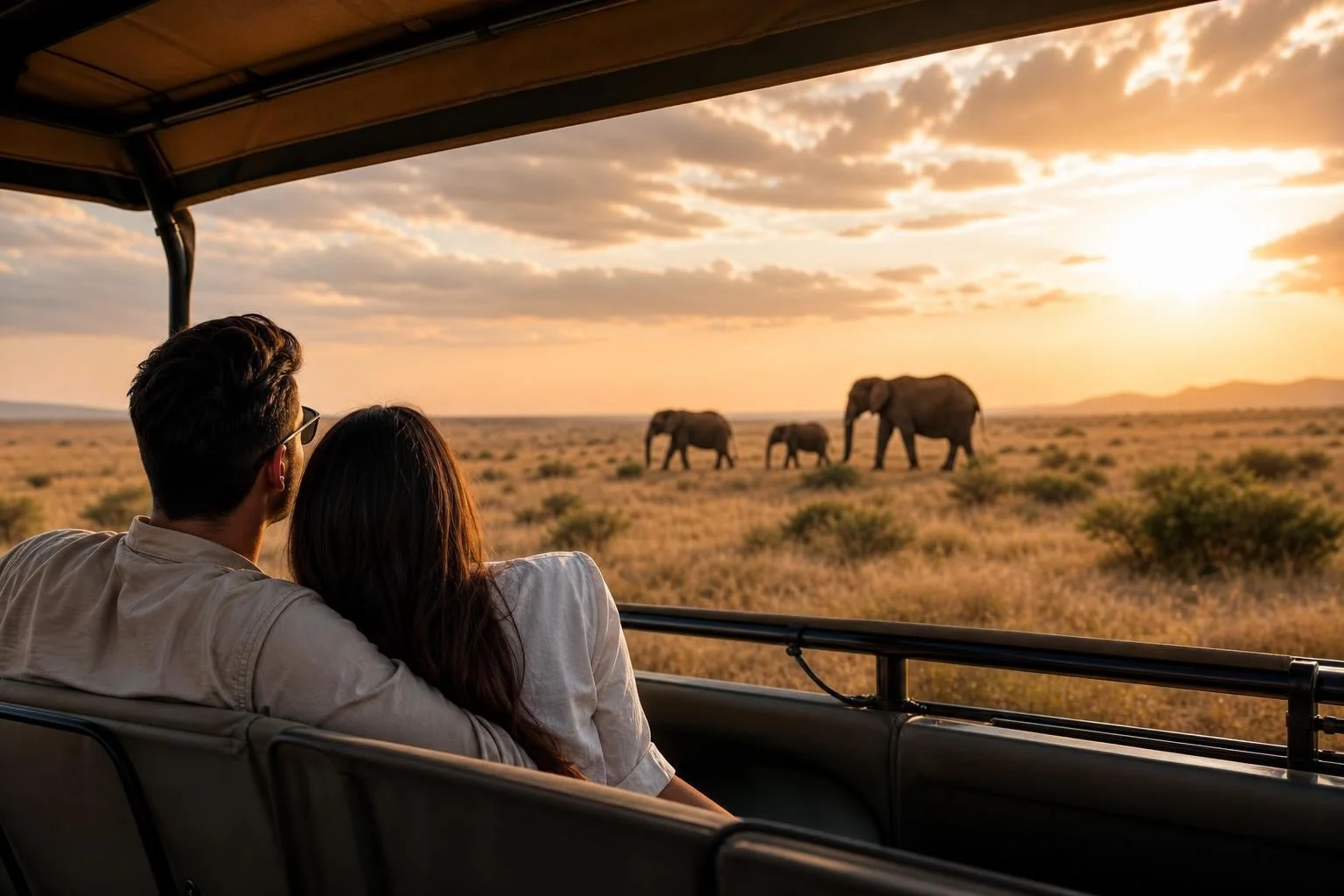
TL;DR
A Serengeti honeymoon glossary helps couples understand the safari terms that affect where they stay, what wildlife they see, what activities they can do, and what their trip costs. The most important terms are Central Serengeti, Ndutu, Northern Serengeti, Great Migration, calving season, private concession, mobile camp, fly-in safari, private game drive, full board, bush-and-beach, and Zanzibar extension. Your travel dates and priorities should determine which terms matter most.
A Serengeti honeymoon sounds straightforward until you start researching it. Within minutes, you’ll run into phrases like “fly-in safari,” “private concession,” “calving season,” and “concession fee.” Tour operator websites assume you already know what these mean. Most couples don’t.
That gap between excitement and understanding is where bad decisions get made. You book a lodge in the wrong zone for your travel dates. You pay for “full board” expecting drinks to be included. You choose a camp inside the national park and miss out on night drives.
This glossary exists to close that gap. Every term is defined in plain language, organized by the order you’ll encounter them while planning, and connected to the honeymoon decisions that actually matter.
If you want the full planning picture beyond terminology, our Serengeti safari guide covers zones, fees, and migration timing in depth.
Quick Answer: What Terms Matter Most for a Serengeti Honeymoon? The most important Serengeti honeymoon terms are safari zone, Great Migration, calving season, private concession, mobile tented camp, private game drive, fly-in safari, full board, bush-and-beach, and Zanzibar extension. Your travel dates determine the best zone, while your budget and desired level of privacy determine whether a private vehicle, concession, luxury camp, or special activity is worthwhile. As a rule of thumb: January–March: understand Ndutu and calving season. June–July: understand the Western Corridor and Grumeti. July–October: understand Northern Serengeti, Kogatende, and Mara River crossings. Any time of year: Central Serengeti and resident wildlife are important terms. For privacy: learn private concession and private game drive. For convenience: learn fly-in safari and bush airstrip. For romance: learn sundowner, star bed, bush dinner, balloon safari, and honeymoon package. For trip structure: learn bush-and-beach and Zanzibar extension.
Serengeti Honeymoon Glossary: Definition
A Serengeti honeymoon glossary explains the safari terms couples encounter when choosing Tanzania accommodations, wildlife zones, seasons, activities, transportation, and honeymoon packages. Key terms include Central Serengeti, Ndutu, Great Migration, private concession, mobile camp, fly-in safari, sundowner, balloon safari, full board, and bush-and-beach. Understanding these terms helps couples compare itineraries, accommodation options, inclusions, and travel dates more confidently.
Quick-Reference Table: Serengeti Honeymoon Terms
|
Term |
What It Means |
Why It Matters |
|---|---|---|
|
Serengeti National Park |
Tanzania's famous wildlife park and part of the larger Serengeti ecosystem |
Defines the main safari destination |
|
Serengeti Ecosystem |
The wider ecological area surrounding and extending beyond the park |
Wildlife and migration cross park boundaries |
|
Central Serengeti |
The Seronera area in the center of the park |
Strong year-round wildlife and big-cat viewing |
|
Ndutu |
Southern Serengeti area associated with seasonal grazing and calving |
Important for January–March trips |
|
Northern Serengeti |
Northern section around areas such as Kogatende |
Key area for Mara River migration activity |
|
Western Corridor |
Western Serengeti around the Grumeti River |
Important for the migration's westward movement |
|
Great Migration |
Annual movement of wildebeest and other herbivores across the Serengeti-Mara ecosystem |
Determines where major herds may be found |
|
Calving Season |
Period when large numbers of wildebeest give birth in the southern plains |
Excellent for newborns and predator activity |
|
Big Five |
Lion, leopard, elephant, buffalo, and rhino |
Common safari wildlife benchmark |
|
Kopjes |
Rocky outcrops scattered across the grasslands |
Important wildlife habitat and scenic landmarks |
|
Private Concession |
Privately managed conservation land outside or adjacent to the national park |
May allow activities unavailable inside the park |
|
Mobile Tented Camp |
A camp that relocates seasonally to follow wildlife movements |
Keeps couples closer to seasonal wildlife |
|
Fly-In Safari |
Safari using small aircraft between camps and airstrips |
Reduces long overland transfers |
|
Private Game Drive |
Game drive using a dedicated vehicle and guide |
Maximizes privacy and flexibility |
|
Sundowner |
Sunset drinks served in the bush |
Popular romantic experience |
|
Star Bed |
Outdoor sleeping setup under a protected canopy or mosquito net |
Adds a distinctive overnight experience |
|
Bush Dinner |
Meal served outdoors in a wilderness setting |
Common honeymoon experience |
|
Night Drive |
Wildlife viewing after dark |
Usually associated with areas where night drives are permitted |
|
Walking Safari |
Guided wildlife experience on foot |
Provides a more immersive bush experience |
|
Full Board |
Usually breakfast, lunch, and dinner |
Helps compare accommodation inclusions |
|
All-Inclusive |
Package including meals plus additional inclusions defined by the property |
Important when comparing prices |
|
Balloon Safari |
Dawn hot-air balloon experience over the Serengeti |
High-demand romantic activity |
|
Champagne Breakfast |
Breakfast served outdoors, often following a balloon flight or game drive |
Popular honeymoon add-on |
|
Photography Drive |
Game drive designed around wildlife photography |
Useful for couples prioritizing photographs |
|
Bush and Beach |
Safari followed by a coastal or Zanzibar stay |
Classic Tanzania honeymoon structure |
|
Zanzibar Extension |
Beach portion added after the safari |
Provides relaxation after the safari |
|
Domestic Flight |
Internal flight between Tanzanian destinations |
Connects safari parks, airstrips, and Zanzibar |
|
Bush Airstrip |
Small airstrip serving remote safari areas |
Where fly-in safari transfers arrive |
|
Park Entry Fee |
Fee charged for entering a national park |
Affects total safari cost |
|
Concession Fee |
Fee associated with certain concession or accommodation arrangements |
Can affect lodge/package pricing |
|
Honeymoon Package |
Special accommodation or experience benefits for newlyweds |
May include romantic extras or discounted rates |
The Serengeti: What It Is and How It Works
Serengeti National Park
Spanning nearly 14,763 km², the Serengeti is Tanzania’s most famous protected area and a UNESCO World Heritage Site. It is not one uniform grassland but a mosaic of distinct ecological zones: open plains in the south, wooded savannah in the center, hilly terrain and river systems in the north, and riverine forest in the west.
For couples, this matters because where you stay determines what you see and when. A lodge in the Central Serengeti offers a completely different experience than a tented camp in the Northern Serengeti, even during the same week.
Serengeti Ecosystem
The wildebeest migration doesn’t recognize park boundaries. The Serengeti ecosystem extends beyond the national park to include adjacent reserves and private conservancies. This is why some of the best honeymoon camps sit outside the park itself, in concessions where rules around vehicle access and activity timing are more flexible.
Northern Circuit
The standard safari routing through northern Tanzania, typically running Arusha to Tarangire to Ngorongoro Crater to the Serengeti. Most first-time visitors follow some version of this circuit. It’s efficient because the parks form a rough loop, and domestic flights connect the major airstrips.
For a deeper look at how to structure a Northern Circuit safari, including Tarangire and Ngorongoro, that guide covers routing and pacing.
TANAPA (Tanzania National Parks Authority)
The government body that manages all Tanzanian national parks, sets entry fees, and enforces park rules. TANAPA fees are fixed and non-negotiable. They directly fund conservation, anti-poaching operations, road maintenance, and wildlife protection. Every package you’re quoted will include these fees, whether itemized or bundled.
Serengeti Zones: Where to Stay and When
Choosing which zone to stay in is the most consequential decision in planning a Serengeti honeymoon. It’s entirely driven by what time of year you’re traveling.
Serengeti Zones: Which Area Is Best for a Honeymoon?
There is no single “best” Serengeti zone for every honeymoon. The right area depends primarily on your travel dates, desired wildlife experience, tolerance for driving, and preference for privacy.
|
Serengeti Area |
Best Known For |
Best For |
|---|---|---|
|
Central Serengeti / Seronera |
Resident wildlife and big cats |
First-time visitors and flexible dates |
|
Southern Serengeti / Ndutu |
Calving season |
January–March wildlife trips |
|
Northern Serengeti |
Mara River and northern migration |
July–October migration-focused trips |
|
Western Corridor / Grumeti |
River and seasonal migration activity |
Couples seeking a quieter alternative |
|
Private concession areas |
Privacy and flexible activities |
Honeymooners prioritizing exclusivity |
The migration moves continuously, so these periods are approximate rather than guarantees. Your safari operator should match the itinerary to current wildlife conditions as well as the calendar.
Central Serengeti (Seronera)
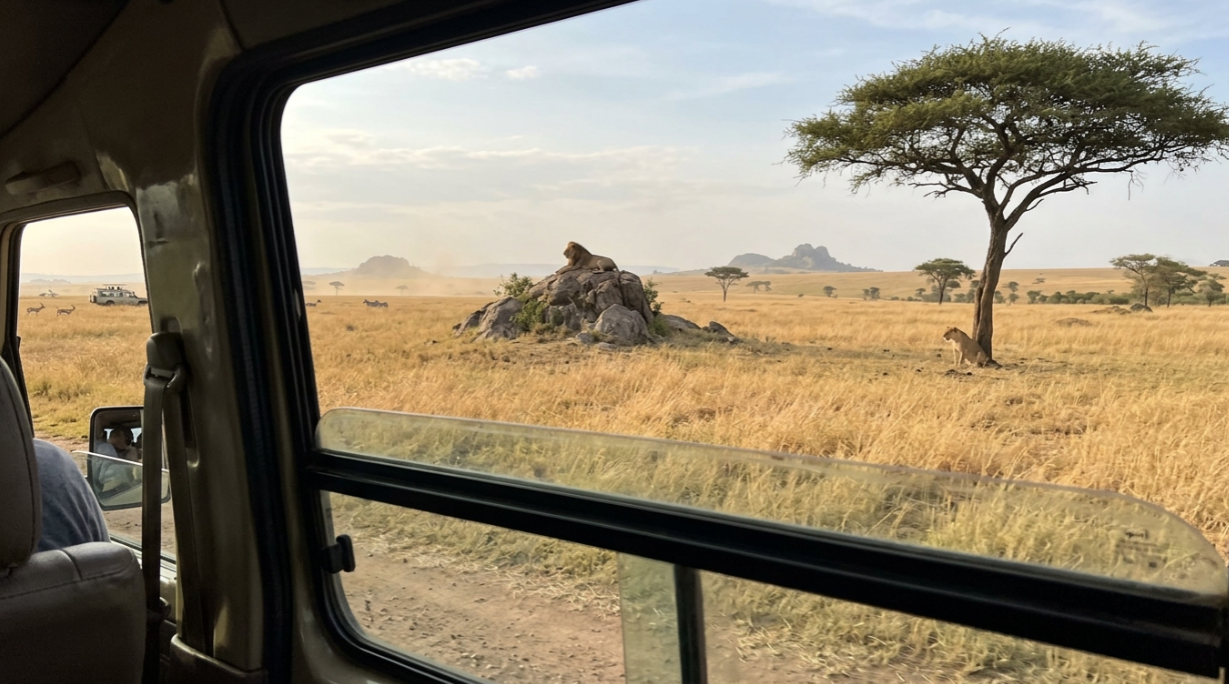
A mix of woodland and savannah that holds resident lions, leopards, elephants, and cheetahs year-round. Accessible by both road and air, this is the standard first-timer base. If your wedding date doesn’t align neatly with migration timing, Central Serengeti is a safe bet: you’ll see big cats regardless of the month.
Ndutu
Ndutu is an area on the southern edge of the Serengeti ecosystem, within the Ngorongoro Conservation Area, and is closely associated with the southern end of the wildebeest migration. It becomes especially important from roughly January through March, when large numbers of wildebeest gather for calving.
For honeymooners, Ndutu can be a strong choice if newborn wildlife, predator activity, open plains, and a quieter safari atmosphere matter more than seeing the Mara River crossings.
Northern Serengeti (Kogatende / Lamai)
Hilly terrain, kopjes, and open grassland along the Mara River. This is where the famous July through October river crossings happen, drawing peak lion and crocodile activity. One Duma Explorer reviewer described witnessing a Mara River crossing as the “most memorable experience of my life.”
Timing a Serengeti honeymoon to coincide with crossings requires booking in the northern zone during these specific months. Camps here fill early, sometimes a year in advance.
Western Corridor (Grumeti)
Riverine forest lining the Grumeti River, with dramatically lower visitor numbers than other zones. The migration passes through here in June and July, creating theatrical river crossings without the crowds of the northern sector. It’s an underrated choice for couples who want a more private migration experience.
Kopjes
Rocky outcrops that rise from the Serengeti grasslands like stone islands. Big cats, particularly lions and leopards, use them as lookout points and resting places. The most famous formation, Moru Kopjes in the central Serengeti, is a reliable spot for predator sightings. Your guide will likely build a game drive route around kopje systems.
To match your wedding date to the best zone and wildlife activity, when to time your Tanzania safari breaks this down month by month.
Wildlife and Migration Terms
Great Migration (Wildebeest Migration)
Not a single event. The Great Migration is a year-round cycle driven by rainfall and grazing patterns. Over 1.5 million wildebeest, along with hundreds of thousands of zebras and gazelles, travel continuously in search of fresh grass and water. Where the herds are at any given moment depends on recent rains.
This is the single most-mentioned highlight across safari reviews. Another Duma Explorer traveler reported seeing “42 big cats in 3 days” during their trip, which gives a sense of the predator density that follows the herds.
Calving Season
The period from roughly January through March when the migration concentrates on the southern Serengeti plains for birthing. The sheer volume of newborn calves attracts predators from every direction. It’s visceral, dramatic, and far less crowded than the dry-season river crossings.
Mara River Crossing
The northern Serengeti’s signature spectacle. From July through October, massive herds gather on the banks of the Mara River and eventually plunge across, with crocodiles waiting below. Timing is unpredictable on any given day, but spending several days in the Kogatende area during these months gives strong odds of witnessing at least one crossing.
Big Five
Lion, leopard, elephant, Cape buffalo, and black rhino. Originally a hunting term, it now serves as the benchmark checklist for safari wildlife viewing. The Serengeti is one of the few places where all five can be seen in a single trip, though rhino sightings require patience and some luck.
Accommodation and Experience Terms
Sundowner
One of the most popular rituals on a Serengeti honeymoon. A sundowner involves stopping at a scenic viewpoint as the day ends, pouring drinks (often gin and tonics or champagne), and watching an African sunset paint the sky. Most safari lodges include sundowners in their daily program. Honeymoon packages often upgrade this to a private sundowner, with a dedicated setup just for the two of you.
Star Bed
An open-air sleeping platform, typically elevated and screened by mosquito netting, positioned in the bush away from the main lodge. With nothing between you and the Milky Way, it’s a completely different experience from sleeping inside a tent or room. Not every camp offers star beds, so couples who want this experience should ask when booking.
Bush Dinner / Bush Breakfast
Private meals set up in the wilderness at scenic locations. A bush dinner might involve a candlelit table under acacia trees with a campfire nearby; a bush breakfast is often served after a dawn game drive. Many lodges include these as part of honeymoon packages, and some position them near active wildlife areas.
Mobile Tented Camp
A luxurious semi-permanent camp that physically relocates around the Serengeti to stay within range of the migration herds. These camps break down and move two to four times per year, following a seasonal calendar. Mobile camps are the best way to be close to the action without sacrificing comfort. Expect proper beds, en-suite bathrooms, and full meal service.
Private Concession / Conservancy
This is one of the most important terms for honeymoon planning. A private concession is a tract of land bordering the national park, managed by a single lodge operator. Only guests of lodges within that concession can access it.
The practical difference is significant. In private concessions, your guide can follow wildlife off-road, conduct night drives, and lead walking safaris. All three activities are restricted or prohibited inside the national park. The result is fewer vehicles, more flexibility, and a more intimate experience. Concessions cost more per night, but for a honeymoon, the privacy and exclusivity are often worth the premium.
Night Drive
Vehicle-based wildlife viewing after dark, using spotlights to spot nocturnal species like aardvarks, bush babies, genets, and hunting leopards. Not permitted inside Serengeti National Park. Only available in private concessions bordering the park. If night drives matter to you, your accommodation choice needs to account for this.
Walking Safari
A guided bush walk with armed TANAPA rangers. Walking changes the sensory experience entirely, from observing inside a vehicle to feeling the ground, hearing insects, and reading animal tracks. Limited availability inside the park, and more flexible in private conservancies. It’s a quieter, more intimate way to experience the Serengeti and makes for a memorable honeymoon morning.
Full Board vs. All-Inclusive
Full board means breakfast, lunch, and dinner are included. All-inclusive adds drinks (alcoholic and non-alcoholic), laundry, and sometimes activities like game drives or park fees. Most Serengeti safari lodges operate on a full-board or all-inclusive basis. Understanding this distinction prevents sticker shock and helps couples compare packages accurately. Always confirm what’s included before assuming a price covers everything.
Honeymoon Package
Most Serengeti lodges offer specific honeymoon perks: champagne on arrival, private bush dinners, couples’ massages, room upgrades, and sometimes discounted rates. For example, andBeyond’s Serengeti properties offer the bride or groom 50% off the standard rate (minimum two nights). The critical detail is that you must inform the lodge in advance that you’re honeymooners. If you don’t mention it during booking, you may miss out on perks that were available for the asking.
If matching Serengeti zones and seasons to your wedding date feels complicated, Duma Explorer can design a honeymoon itinerary around the wildlife experience you want most, whether that’s calving season in the south or river crossings in the north. Explore Serengeti safari options to start building your picture.
What Does a Serengeti Honeymoon Package Usually Include?
The phrase “Serengeti honeymoon package” does not have one standardized set of inclusions. Packages vary by lodge, safari operator, accommodation category, transportation method, and itinerary.
|
Possible Inclusion |
Often Included? |
Confirm Before Booking |
|---|---|---|
|
Accommodation |
Yes |
Room or tent category |
|
Breakfast, lunch and dinner |
Often |
Exact meal plan |
|
Game drives |
Often |
Shared or private vehicle |
|
Safari guide |
Often |
Dedicated or shared guide |
|
Airport or airstrip transfers |
Often |
Which transfers are covered |
|
Domestic flights |
Sometimes |
Baggage allowance and routes |
|
Park/conservation fees |
Often bundled |
Amount and validity period |
|
Drinks |
Varies |
Alcoholic and non-alcoholic drinks |
|
Laundry |
Varies |
Number of items or unlimited |
|
Bush dinner |
Sometimes |
Private or shared |
|
Sundowner |
Sometimes |
Standard or private setup |
|
Balloon safari |
Usually extra |
Price and operating area |
|
Couples' massage |
Sometimes |
Availability and booking requirements |
The safest way to compare two honeymoon quotes is to compare their total inclusions, not just the nightly accommodation price.
Which Serengeti Terms Matter Most by Travel Month?
Your travel month determines which Serengeti terms deserve the most attention. The migration is a continuous ecological cycle rather than a single event, so the best zone depends on recent rainfall, animal movements, and the experience you want.
|
Travel Period |
Terms to Know |
Typical Planning Focus |
|---|---|---|
|
January–March |
Ndutu, calving season, Southern Serengeti |
Newborn wildebeest, predator activity, open plains |
|
April–May |
Green season, low season, wet season |
Lush scenery, fewer visitors, possible camp closures |
|
June |
Western Corridor, Grumeti, migration |
Herd movement toward the west |
|
July–October |
Northern Serengeti, Kogatende, Mara River crossing |
Migration activity and river-crossing opportunities |
|
November–December |
Short rains, Southern Serengeti, migration cycle |
Herd movement toward the southern plains |
No migration calendar guarantees a specific wildlife sighting. The herds respond to rainfall and grazing conditions, so treat seasonal locations as planning guidance rather than fixed dates.
Serengeti Honeymoon Terms Couples Often Confuse
Serengeti National Park vs. Serengeti Ecosystem
The Serengeti National Park is a specific protected area. The Serengeti ecosystem is much larger and includes surrounding protected areas and landscapes used by migrating wildlife. The distinction matters because a camp can be associated with the Serengeti ecosystem without being located inside Serengeti National Park.
Private Concession vs. National Park
A private concession is privately managed conservation land, often associated with a lodge or camp. National park land is managed under national park regulations. The rules governing activities such as night drives, walking, and off-road driving can therefore differ.
Full Board vs. All-Inclusive
Full board generally means breakfast, lunch, and dinner. All-inclusive is broader, but exactly what it covers varies by property. Always check the property's written inclusions rather than assuming drinks, laundry, transfers, activities, or park fees are included.
Private Game Drive vs. Private Safari
A private game drive generally means your vehicle and guide are dedicated to your party. A private safari can refer to the entire trip being privately arranged, including transportation, accommodation, guides, and activities. They are related but not identical terms.
Mobile Camp vs. Permanent Camp
A mobile camp relocates seasonally to follow wildlife movements. A permanent camp remains in one location. Mobile does not necessarily mean basic: many mobile camps offer en-suite bathrooms, comfortable beds, dining areas, and full service.
Bush and Beach vs. Zanzibar Extension
Bush and beach describes the overall safari-plus-coast concept. A Zanzibar extension specifically means adding Zanzibar to a safari itinerary. Zanzibar is therefore one possible form of a bush-and-beach honeymoon.
Romantic Add-Ons and Upgrades
Balloon Safari
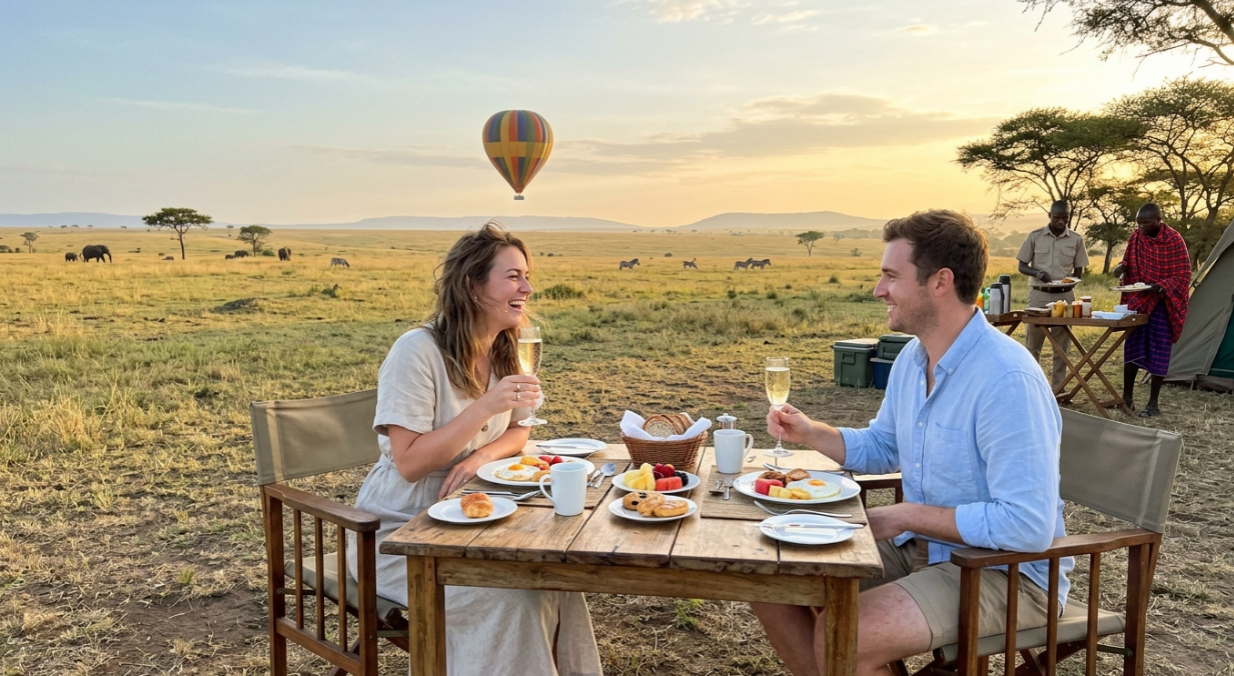
A dawn hot-air balloon flight over the Serengeti plains. In 2026, expect to pay $550 to $650 per person, which includes the roughly 60-minute flight, a champagne toast on landing, a full bush breakfast cooked in the field, lodge transfers, and TANAPA’s $40 ballooning concession fee.
Flights launch at approximately 6:00 a.m. from four sites across the Serengeti: Central (year-round), Ndutu (December 25 to March 15), Western Corridor (June to October), and Northern Serengeti (July to October). The hot-air balloon experience over the Serengeti is one of the most frequently mentioned highlights in traveler reviews. It’s also one of the few add-ons that genuinely lives up to the marketing photos.
Worth noting: balloon safaris involve early mornings and some physical movement getting in and out of the basket. Consider safari travel insurance that covers adventure activities.
Private Game Drive
For the ultimate honeymoon privacy, book a private safari vehicle through your lodge. Instead of sharing a Land Cruiser with four to six other guests, it’s just you and your guide. This lets you control the pace, linger at a sighting, and skip anything that doesn’t interest you. A typical Serengeti honeymoon safari includes a private vehicle as standard, but confirm this when comparing packages.
One TripAdvisor advisor put it plainly: “Most honeymooners don’t want to go on a trip with others, especially those they don’t know.” That’s the core argument for private over group, particularly on a honeymoon. For a detailed comparison of private and group safari options, including cost differences, that guide lays it out.
Champagne Breakfast
Often paired with a balloon safari landing or served as a standalone bush experience. A champagne breakfast in the Serengeti usually involves a full cooked meal set up under acacia trees with sparkling wine and fresh juice, sometimes within sight of wildlife. It’s one of the lower-cost romantic add-ons and one of the most photographed.
Couples’ Massage
Many upscale Serengeti lodges have bush spas offering massages with a view. These are typically booked on “rest days” between game drives. If your itinerary includes a two-night stay at a single property, scheduling a couples’ massage on the middle day creates a natural rhythm of activity and relaxation.
Photography Drive
A specialized game drive focused on getting the best wildlife photographs, often at dawn or dusk when light is optimal. Some lodges pair this with a guide who understands camera angles and animal behavior. Couples who care about coming home with exceptional photos should ask about dedicated photography drives or bring the right equipment. Safari photography tips can help you prepare.
Logistics and Cost Terms
Fly-in Safari
A premium travel option where small chartered or scheduled aircraft fly you directly between national parks and remote lodges. This eliminates long road journeys and reclaims hours for wildlife viewing and relaxation. The three main Serengeti airstrips are Seronera (Central), Lobo (Northern), and Kogatende (Mara River area). Flying between zones often replaces a four-to-five-hour road transfer with a 35-minute flight.
Practitioners on travel forums consistently recommend fly-in options for honeymoons. As one reviewer from The Points Guy noted, “Safari can be quite adventurous, requiring a ton of flying, bumping around in Land Cruisers and navigating unfamiliar territory.” Fly-in logistics smooth out the rough edges.
Park Entry Fee / Conservation Fee
The 2026 TANAPA entry fee for Serengeti National Park is $70.80 per adult per day in low season and $82.60 per adult per day during peak season (May 16 to March 14). Valid for 24 hours. These fees are always included in any legitimate package quote, but knowing the exact number helps you evaluate whether a “deal” is actually cutting corners.
Concession Fee (Overnight Fee)
If you stay inside the park or in a private concession, additional overnight fees apply. Government fees alone run roughly $160 to $180 per adult per day once you count entry, the overnight concession fee ($59.00 low season, $70.80 peak), and a share of the $17.70 daily vehicle fee. These are baked into your lodge rate, but understanding them explains why Serengeti accommodation costs more than you might expect.
For a complete breakdown, the Tanzania safari cost guide itemizes every fee category.
Dry Season (Peak Season)
June through October. Animals concentrate around shrinking water sources, making them easier to find. Vegetation thins out, improving visibility. This is the most popular period for safari travel and for Serengeti honeymoons. Expect higher prices, camps booking out months in advance, and more vehicles at popular sightings.
Green Season (Shoulder / Low Season)
April and May bring intermittent rain, lush green scenery, and significantly lower prices. Some camps close. Others offer discounts of 30% or more. The photography light during green season is often better (softer, more dramatic skies), and you’ll share the Serengeti with far fewer tourists. The tradeoff is that some roads become difficult and wildlife can be harder to spot in tall grass.
Bush and Beach
The most common Tanzania honeymoon structure. Five to seven nights on safari in the Serengeti (and often Ngorongoro), followed by three to five nights of beach relaxation in Zanzibar. Plan about 10 to 14 days total if you want both without rushing.
To see how this works in practice, a 14-day Tanzania safari and Zanzibar itinerary maps out one version day by day.
Zanzibar Extension
The beach portion of a bush-and-beach honeymoon. Zanzibar sits about 90 minutes by flight from the Serengeti. Adding it costs roughly $2,000 to $6,000 per couple depending on resort choice and duration. Four to six nights is the sweet spot after a safari. Fewer than three nights feels rushed. For ideas on what to do once you’re there, Zanzibar excursions and day trips covers the options.
Planning Decision Terms
Private vs. Group Safari
A private safari means a dedicated vehicle, guide, and flexible schedule. A group safari puts you in a shared vehicle with other travelers on a fixed itinerary. For a honeymoon, private is the strong recommendation. You control the pace, you don’t compromise on what to see, and you get the intimacy that makes this feel like a honeymoon rather than a tour.
Trip Pacing
How many nights you spend at each location and how many transfers you make. Overpacking a Serengeti honeymoon itinerary with one-night stays creates fatigue from constant packing and moving. Two to three nights at each camp is the comfortable minimum. Three nights at a single property gives you a full day without a transfer, which is valuable for relaxation and deeper wildlife immersion.
Domestic Flight
Internal flights within Tanzania, operated by small airlines like Coastal Aviation or Auric Air, using Cessna Caravans and similar aircraft. These connect Arusha, the Serengeti’s various airstrips, Ngorongoro, and Zanzibar. Luggage is typically limited to 15 kg in soft-sided bags. If you’re planning a fly-in Serengeti honeymoon followed by a Zanzibar beach extension, domestic flights are the connective tissue of the whole trip.
Bush Airstrip
A small, unpaved landing strip in or near a national park. These range from well-maintained gravel strips to grass runways. They’re perfectly safe but look dramatically different from commercial airports. Your lodge will arrange a vehicle to meet you at the airstrip, often with a game drive built into the transfer to camp.
How Much Does a Serengeti Honeymoon Cost?
There is no single standard Serengeti honeymoon price. The total depends on travel season, number of safari nights, accommodation level, private versus shared transportation, domestic flights, romantic experiences, and whether Zanzibar is included.
For a useful comparison, separate your budget into these categories:
|
Cost Category |
What Changes the Price |
|---|---|
|
Accommodation |
Camp/lodge category, location, season, room type |
|
Safari transportation |
Private vehicle, shared vehicle, road transfers, flights |
|
Park and conservation fees |
Destination, visitor category, applicable tariff |
|
Activities |
Game drives, balloon safari, walking, special experiences |
|
Honeymoon extras |
Private dinners, sundowners, massages, upgrades |
|
Zanzibar |
Resort category, number of nights, transfers |
|
International flights |
Origin, airline, cabin class, travel dates |
Because safari rates and government fees can change, use current operator and official park tariffs when building a 2026 budget rather than relying on a single universal price range.
For a quote comparison, ask each operator to provide the per-person cost, total couple cost, included fees, transportation, activities, accommodation category, and exclusions separately.
Frequently Asked Questions
How many days do you need for a Serengeti honeymoon?
Five to seven nights on safari is the comfortable minimum for the Serengeti and Ngorongoro combined. If you’re adding Zanzibar, plan 10 to 14 days total. Anything shorter than 10 days for a bush-and-beach honeymoon will feel rushed.
What is the best month for a Serengeti honeymoon?
It depends on what you want to see. June through October (dry season) offers the best general wildlife viewing and Mara River crossings in the north. January and February (calving season) provide dramatic predator action in the southern plains with fewer crowds and often lower prices. There’s no bad month, just different experiences.
Should we fly in or drive to the Serengeti?
For a honeymoon, flying in is worth the extra cost. It saves four to five hours of driving each way and gives you more time for game drives and relaxation. The Serengeti has multiple airstrips, so you can fly directly to the zone that matches your travel dates.
Do lodges offer honeymoon packages?
Most do, but you must tell them in advance. Standard perks include champagne on arrival, room upgrades, private bush dinners, and sometimes discounted rates. Some properties offer significant savings, like 50% off one guest’s accommodation for stays of two nights or more. Ask your operator to check what’s available at each property on your itinerary.
Can you combine a Serengeti honeymoon with Zanzibar?
Yes, and most couples do. The bush-and-beach structure is the classic Tanzania honeymoon format. A 90-minute flight connects the Serengeti to Zanzibar. Four to six nights on the island after safari creates a balanced trip with both adventure and relaxation.
Is a Serengeti honeymoon worth the cost?
One Duma Explorer couple who honeymooned on safari put it simply: “It exceeded our expectations in every way.” The combination of wildlife encounters, intimate camps, and vast open spaces creates something no beach resort or European city can replicate. The cost is real, but what you get in return is genuinely uncommon.
What should we pack for a Serengeti honeymoon?
Neutral-colored clothing (khaki, olive, tan), layers for cool mornings, a good pair of binoculars, sunscreen, and a camera with a decent zoom. Soft-sided luggage is required for domestic flights. For a complete list, what to pack for a Tanzania safari covers everything.
Ready to start planning? Duma Explorer designs private Serengeti honeymoon itineraries around your travel dates, preferred wildlife experiences, and budget, from zone selection to Zanzibar extension. Plan your Serengeti honeymoon.