

Serengeti Safari Guide (2026): Zones, Fees & Migration
TL;DR
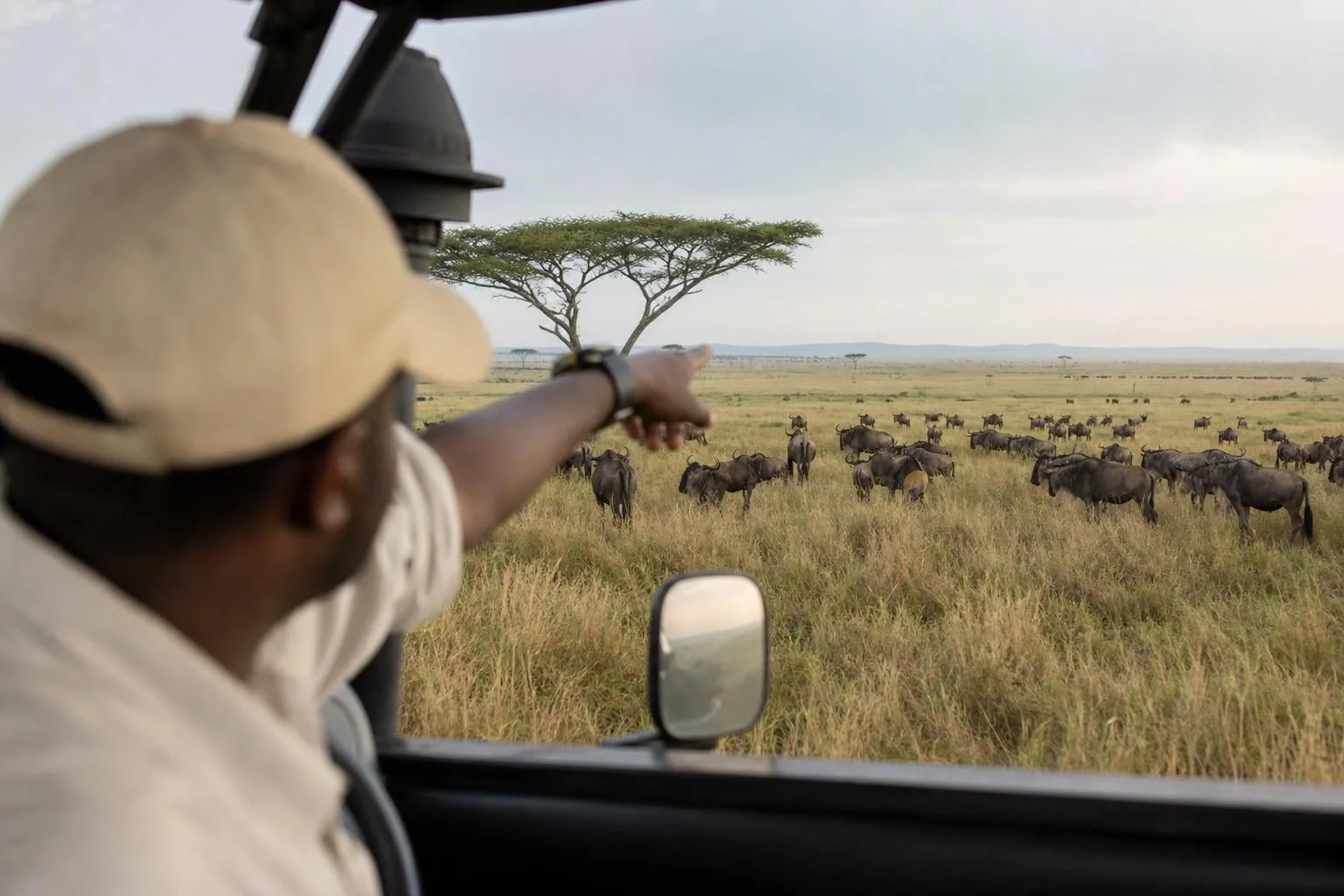
The Serengeti spans nearly 14,763 km² across northern Tanzania and hosts the largest terrestrial wildlife migration on earth, involving roughly 1.5 million wildebeest, 400,000 zebras, and 200,000 gazelles. This Serengeti safari guide breaks down every term, zone, fee structure, and seasonal pattern into a quick-reference glossary so you can plan smarter, communicate clearly with your operator, and know exactly what to expect on the ground. Park fees for foreign adults run $60 to $70 per 24-hour period depending on season, with additional concession fees for in-park accommodation.
Planning a Serengeti safari means encountering dozens of unfamiliar terms. Kopjes, concession fees, calving season, fly camps, the 24-hour rule. These aren’t just vocabulary words. Each one shapes the trip you’ll actually experience.
This Serengeti safari guide is organized by theme rather than alphabetically, so it works both as a reference you return to and as a planning walkthrough you read start to finish. Every entry gives you a clear definition, then explains why it matters for your trip.
For a broader view of how the Serengeti fits into a full Tanzania itinerary, see our Tanzania safari itinerary glossary.
Quick Answer: How to Plan a Serengeti Safari The best Serengeti safari depends on matching the right region to the right season. 1. January to March: Southern Serengeti (calving season) 2. May to June: Western Corridor (Grumeti crossings) 3. July to October: Northern Serengeti (Mara River crossings) 4. Year-round: Central Serengeti (best overall wildlife viewing)
Most first-time visitors spend 4 to 6 days in the Serengeti as part of Tanzania's Northern Circuit.
Expect to budget:
|
Expense |
Typical Cost |
|---|---|
|
Park fee |
$60-$70/day |
|
Concession fee |
$60/day |
|
Mid-range safari |
$350-$600/day |
|
Luxury safari |
$800-$2,000+/day |
|
Balloon safari |
$600-$799 |
Takeaway: Don't choose your travel dates first. Choose the wildlife experience you want, then select the month and Serengeti zone that matches it.
Serengeti Basics: The Park Itself
Serengeti National Park
Tanzania’s most famous protected area, spanning nearly 14,763 km² in the country’s northern highlands. It was officially listed as a UNESCO World Heritage Site in 1981 and supports more than 500 bird species alongside its headline mammals. The park is bordered by Kenya’s Maasai Mara Game Reserve to the north, the Ngorongoro Conservation Area to the south, the Loliondo Game Controlled Area to the east, and Maswa Game Reserve to the west.
Why it matters: The Serengeti is not a single homogeneous place but a mosaic of distinct ecological zones. Where you stay within it determines what you see.
Siringit (“Endless Plains”)
The name “Serengeti” comes from the Maasai term siringit, which translates to “endless plains.” The Maasai people are the reason the Serengeti has its name, and their cultural connection to this land predates the national park by centuries.
Why it matters: You’ll hear this word from guides, see it on camp names, and encounter it in Maasai cultural contexts throughout your trip. Knowing its origin is a basic sign of respect.
Serengeti Ecosystem
The broader ~30,000 km² area that includes the national park plus all adjacent reserves, conservation areas, and game-controlled areas. The wildebeest migration doesn’t recognize park boundaries, so the ecosystem concept matters more than the park lines on a map.
TANAPA (Tanzania National Parks Authority)
The government body that manages all Tanzanian national parks, sets entry fees, and enforces park rules. TANAPA fees are fixed and non-negotiable. They are not set by tour operators. These fees directly support conservation, anti-poaching efforts, road maintenance, and wildlife protection.
Northern Circuit
The standard safari routing through northern Tanzania, typically running Arusha to Tarangire to Ngorongoro Crater to Serengeti. Most first-time visitors follow some version of this circuit. For a detailed breakdown of Tanzania’s safari parks and circuits, we have a separate guide.
Serengeti at a Glance
|
Category |
Information |
|---|---|
|
Size |
14,763 km² |
|
Ecosystem size |
30,000 km² |
|
UNESCO designation |
1981 |
|
Annual wildebeest migration |
1.5 million |
|
Zebra population |
400,000 |
|
Gazelle population |
200,000 |
|
Best overall wildlife area |
Central Serengeti |
|
Peak river crossing season |
July-October |
|
Best calving months |
January-February |
|
Typical trip length |
4-6 days |
|
Nearest gateway city |
Arusha |
Serengeti Zones and Key Landmarks
Understanding zones is arguably the single most important part of any Serengeti safari guide. From the open grass plains of the south to the rolling woodlands of the west, and from the granite kopjes of Seronera to the Mara River crossings in the north, each region has its own character, wildlife behavior, and seasonal spectacle.
Central Serengeti (Seronera Valley)
The park’s beating heart, offering year-round abundance of wildlife. The Seronera River draws animals throughout the year, and resident populations of lions, leopards, and cheetahs make this the most reliable zone for big cat sightings in any season.
Why it matters: If your dates don’t align with migration timing, Central Serengeti still delivers. Lion density in these prime viewing areas can reach 20 lions per 100 km², compared to a park-wide average of about 3.5 per 100 km².
Southern Serengeti (Ndutu Plains)
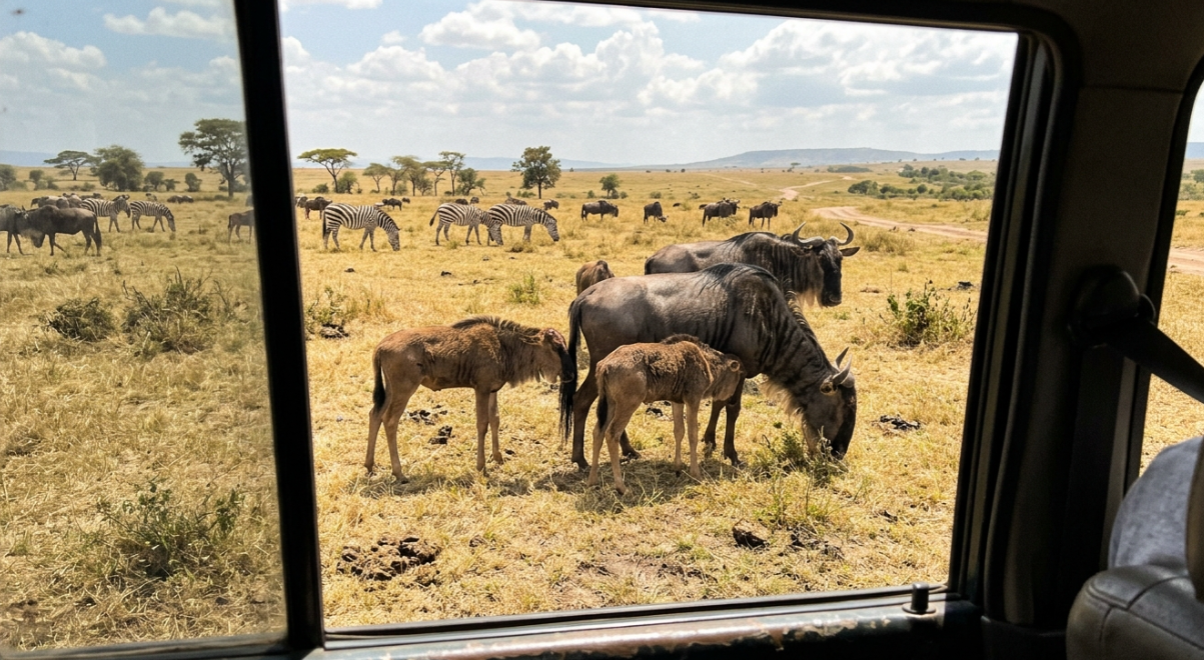
Open short-grass plains stretching from Naabi Hill to Ndutu and Kusini, formed on volcanic ash deposits from the Ngorongoro Highlands. This zone features two seasonal lakes (Ndutu and Masek) and is the calving ground for the Great Migration.
Why it matters: January through March, this is where roughly 500,000 wildebeest calves are born within a two-to-three-week window. Tanzania is the only place in Africa where this concentrated calving occurs.
Western Corridor (Grumeti)
The stage for one of nature’s most dramatic shows. Millions of wildebeest and zebras cross the Grumeti River here, braving crocodile-infested waters. The corridor is typically active from May through June.
Northern Serengeti (Kogatende)
The Kogatende area near the Mara River is the northern hotspot during river-crossing season, typically July through October. This is where you’ll see the iconic crossings photographed for wildlife documentaries.
Why it matters: Practitioners on travel forums consistently identify camp positioning near crossing points as the single biggest decision for a northern Serengeti visit. One poster on Fodors noted wanting “mid-luxury accommodations near crossing points” with “great and flexible guiding.”
Kopje (Pronounced “Copy”)
Granite rock outcrops scattered across the plains, derived from the Afrikaans word for “small rocky hill.” These formations serve as predator lookout points, and lions are regularly spotted lounging on their sun-warmed surfaces.
Moru Kopjes
A specific kopje formation in the south-central Serengeti notable for two things: it’s a key rhino conservation area, and it contains ancient rock art. Worth a stop if your itinerary passes through.
Naabi Hill Gate
The main southern entrance to Serengeti National Park, where you’ll pay park fees and pass through a checkpoint. Other gates include Ndabaka (west), Fort Ikoma (northwest), Klein’s (northeast), Bolongoja, and Handajega.
Seronera Airstrip
The main air access point for the Central Serengeti. Fly-in safaris typically land here, cutting a full day of driving from Arusha.
Private Concession
Land bordering the national park where different activity rules apply. Inside Serengeti National Park, guests usually remain on the road network. In private concessions, your guide can follow wildlife more flexibly, explore after dark, and bring you into the landscape on foot.
Why it matters: This is the most misunderstood concept among first-time planners. Forum discussions consistently show confusion about what activities are possible where. A travel agency on a popular safari forum recommended staying “in a conservancy as it is high season with crazy tourist traffic in the Reserve,” which validates the practical value of understanding this distinction. If walking safaris, night drives, or off-road tracking matter to you, you need a concession, not just a park booking.
Which Serengeti Zone Is Right for You?
|
If you want... |
Stay here |
|---|---|
|
The highest chance of seeing big cats |
Central Serengeti |
|
The Great Migration calving season |
Southern Serengeti |
|
Grumeti River crossings |
Western Corridor |
|
Mara River crossings |
Northern Serengeti |
|
Fewer crowds |
Eastern Serengeti |
|
Rhino sightings |
Moru Kopjes |
|
First safari |
Central Serengeti |
|
Photography |
Northern or Central Serengeti |
The Great Migration
Great Migration (Great Wildebeest Migration)
The largest movement of land animals on earth: approximately 1.5 million wildebeest, 400,000 zebras, and 200,000 gazelles traversing the Serengeti-Mara ecosystem in a continuous clockwise loop. There is no start or end date. The migration is always happening somewhere.
One critical caveat: the migration follows the rain, and rain does not follow a calendar. The timing below is based on historical patterns, but nature is unpredictable.
For a deeper look at crossing timing and viewing strategy, see our Great Migration safari guide.
Migration Month-by-Month Calendar
|
Month(s) |
Zone |
What to Expect |
|---|---|---|
|
January - March |
Ndutu (Southern Serengeti) |
Calving season, predator action, newborns everywhere |
|
April |
Southwest Serengeti |
Herds begin moving north, long rains start |
|
May - June |
Western Corridor (Grumeti) |
Grumeti River crossings, the rut/mating season |
|
July - October |
Northern Serengeti (Kogatende) |
Mara River crossings, peak drama |
|
November |
Eastern Serengeti |
Short rains, herds heading south |
|
December |
Southeast Serengeti |
Herds returning to calving grounds |
The best strategy, as one experienced operator advises, is not to target a specific week but to choose a month that aligns with your interests and trust your operator to position you correctly.
Calving Season
The period when wildebeest give birth, typically in February on the short-grass plains of the southern Ndutu region. Approximately 500,000 calves are born within a two-to-three-week window, attracting extraordinary predator activity. For predator action, January through February is unbeatable.
The Rut (Mating Season)
May through June, when bulls compete for mates in the Western Corridor. Less photographed than river crossings but dramatic in its own right, with constant territorial displays and fighting.
River Crossing
The dramatic moments when migration herds plunge into crocodile-filled rivers. The Grumeti crossings happen around June and July. The Mara River crossings, the most famous, run from July through October. For peak crossings in August and September, booking 12 or more months ahead is ideal.
Herd Position / Herd Tracking
How guides and operators track the real-time location of migration herds. Good operators communicate with camps and other guides across the Serengeti to position clients where the action is, rather than guessing based on calendar dates alone.
Safari Activities and Formats
Game Drive
The standard safari activity: vehicle-based wildlife viewing in a 4x4 with a pop-up roof for photography. In Serengeti National Park, game drives run from 6 AM to 6 PM. Night drives are not permitted inside the park. The speed limit is 25 km/h.
Why it matters: The 6-to-6 rule means your itinerary revolves around sunrise and sunset. Early mornings are best for predator activity. Midday often means returning to camp.
When weighing whether to book a private or group safari, consider that vehicle flexibility directly affects your game drive experience.
Walking Safari
On-foot wildlife viewing with an armed TANAPA ranger. Tourists cannot walk freely outside lodges, camps, or designated picnic areas because of the presence of wild animals like buffalo, lions, and hyenas. Walking safaris are permitted in select zones within the park and more broadly in private concessions.
Night Drive
Vehicle-based wildlife viewing after dark, using spotlights to find nocturnal species. Not permitted inside Serengeti National Park. Only available in private concessions bordering the park, where regulations allow activities not usually permitted inside the national park, including walking safaris, night drives, and off-road tracking.
Balloon Safari
A dawn hot-air balloon flight over the Serengeti plains, typically launching around 6:00 AM and lasting approximately 50 to 70 minutes in the air. Prices for the 2026 season range from $600 to $799 per person and include a full English bush breakfast served in the open at the landing site.
Launch sites operate across four zones: Central (year-round), Ndutu (December 25 to March 15), Western Corridor (June to October), and Northern Serengeti (July to October).
Fly-In Safari
Arriving at the Serengeti by scheduled light aircraft rather than driving from Arusha (which takes roughly 8 hours by road). Fly-in safaris save time and reduce fatigue, though they cost more and involve separate landing fees.
Photographic Safari
An itinerary designed specifically around wildlife photography, often with a specialist guide who understands animal behavior, lighting conditions, and vehicle positioning for optimal shots. These safaris typically use modified vehicles with camera mounts and extra roof space.
Mobile Tented Camp
A camp that physically relocates to follow the migration herds through different Serengeti zones seasonally. You get the migration experience without being locked into one location.
Off-Road Tracking
Driving off established roads to follow wildlife more closely. Only permitted in private concessions, never inside Serengeti National Park. This distinction alone can justify the premium of staying in a concession property.
Wildlife Terms
Big Five
Lion, leopard, elephant, buffalo, and rhino. Originally a hunting term referring to the five most dangerous animals to hunt on foot, it’s now used as a sighting checklist. The Serengeti has all five, though rhino sightings are rare and concentrated around Moru Kopjes.
Resident Wildlife
Species that stay in one area year-round rather than migrating. In the Central Serengeti, resident populations of lions, leopards, cheetahs, elephants, and giraffes mean excellent game viewing even outside migration months.
Lion Density
A measure of how many lions occupy a given area, and therefore how likely you are to see one. The Serengeti sits near the top globally, with an average of 3.5 lions per 100 km². In the Central Serengeti’s prime lion viewing areas, density can reach 20 lions per 100 km².
Wildebeest (Gnu)
The blue wildebeest (Connochaetes taurinus) is the central protagonist of the Great Migration and the most numerous large mammal in the Serengeti ecosystem. Their annual migration is the largest movement of land animals on earth.
Predator-Prey Dynamics
The relationship between predators (lions, leopards, cheetahs, hyenas, wild dogs, crocodiles) and their prey species. This dynamic drives nearly every memorable safari moment, from cheetah hunts on the plains to crocodile ambushes at river crossings.
Commonly Seen Antelope
Dik-dik, topi, hartebeest, eland, Thomson’s gazelle, Grant’s gazelle, and impala are all regularly seen but rarely named in generic safari guides. Knowing these species makes game drives far more engaging.
Seasons and Timing
Understanding seasons is essential to any useful Serengeti safari guide. Your travel dates affect wildlife behavior, crowd levels, prices, and available activities.
Dry Season (June Through October)
The main safari season in Tanzania. Animals concentrate around permanent water sources as vegetation dries out, making wildlife easier to find. Visibility improves as grass shortens. This is when most visitors come.
For a month-by-month breakdown, see our guide on the best time for safari in Tanzania.
Green Season / Wet Season (March Through May)
The period of long rains. The green season transforms the landscape with lush growth. Wildlife is more dispersed, but newborn animals are everywhere, predator action is extraordinary, birding is exceptional, and prices are significantly lower. This is the underrated season that experienced safari-goers deliberately target.
Short Rains (November Through December)
Brief afternoon showers, typically clearing quickly. A shoulder season offering good value, fewer crowds, and the return of migration herds to the southeastern Serengeti.
Peak Season vs. Low Season
For TANAPA fee purposes, peak season runs from May 16 through March 14, with low season covering March 15 through May 15. But operator demand peaks differently: July through October (dry season, river crossings) and January through February (calving) command the highest lodge rates and earliest bookings.
How Many Days Should You Spend in the Serengeti?
|
Trip length |
Recommended for |
|---|---|
|
2-3 days |
General wildlife viewing |
|
4-5 days |
First-time visitors |
|
6-7 days |
Migration-focused safaris |
|
8+ days |
Photography and multi-zone itineraries |
General rule: Every time you change Serengeti zones, you lose part of a day to travel. Fewer camp changes often produce better wildlife viewing.
Park Fees and Logistics (2025-2026)
Park Entry Fee
For non-resident foreign tourists: $70 per adult per 24 hours during peak season (May 16 through March 14) and $60 per adult per 24 hours during low season (March 15 through May 15). Current TANAPA park fee schedules are published on their official site.
For comparison, Tarangire and Lake Manyara charge $50 per entry.
Concession Fee
An additional $60 per adult per 24 hours charged when staying at a lodge or camp inside the national park. This is separate from the park entry fee.
The full math: A foreign tourist staying inside the park during peak season would pay $83 (park fee) + $60 (concession fee) + 18% VAT, totaling approximately $160.40 per adult per 24 hours.
For a complete breakdown of all safari-related costs, see our Tanzania safari pricing guide.
The 24-Hour Rule
Park fees are calculated per 24-hour period starting from your time of entry, not per calendar day. If you enter at 2 PM, your first 24-hour window runs until 2 PM the next day. This catches many travelers off guard and can add an extra day’s fees if not planned carefully.
Vehicle Fee
A separate charge for each safari vehicle entering the park. Your operator handles this, but it’s built into your trip cost.
Entry Gates
The park has multiple entry points: Naabi Hill (south, most common), Ndabaka (west), Fort Ikoma (northwest), Klein’s (northeast), Bolongoja, and Handajega. Which gate you use depends on your itinerary direction.
What Does a Serengeti Safari Really Cost?
|
Safari type |
Average cost per person per day |
|---|---|
|
Budget camping |
$200-$350 |
|
Mid-range safari |
$350-$600 |
|
Luxury lodge safari |
$800-$1,500 |
|
Ultra-luxury safari |
$1,500-$3,000+ |
Typical costs include:
-
Park fees
-
Accommodation
-
Transportation
-
Guide services
-
Meals
Additional expenses may include:
-
Balloon safaris
-
Alcohol
-
Tips
-
International flights
-
Travel insurance
When Should You Book a Serengeti Safari?
|
Travel period |
Recommended booking window |
|---|---|
|
January-February |
6-9 months |
|
March-May |
3-6 months |
|
June |
6-9 months |
|
July-October |
12-18 months |
|
November-December |
4-6 months |
Accommodation Types
Safari Lodge
A permanent structure with hotel-like amenities: solid walls, running water, electricity, restaurant, sometimes a swimming pool. Lodges don’t move and tend to occupy prime locations with established infrastructure.
For guidance on choosing between property tiers, our luxury Tanzania safari guide covers the top-end options in detail.
Luxury Tented Camp
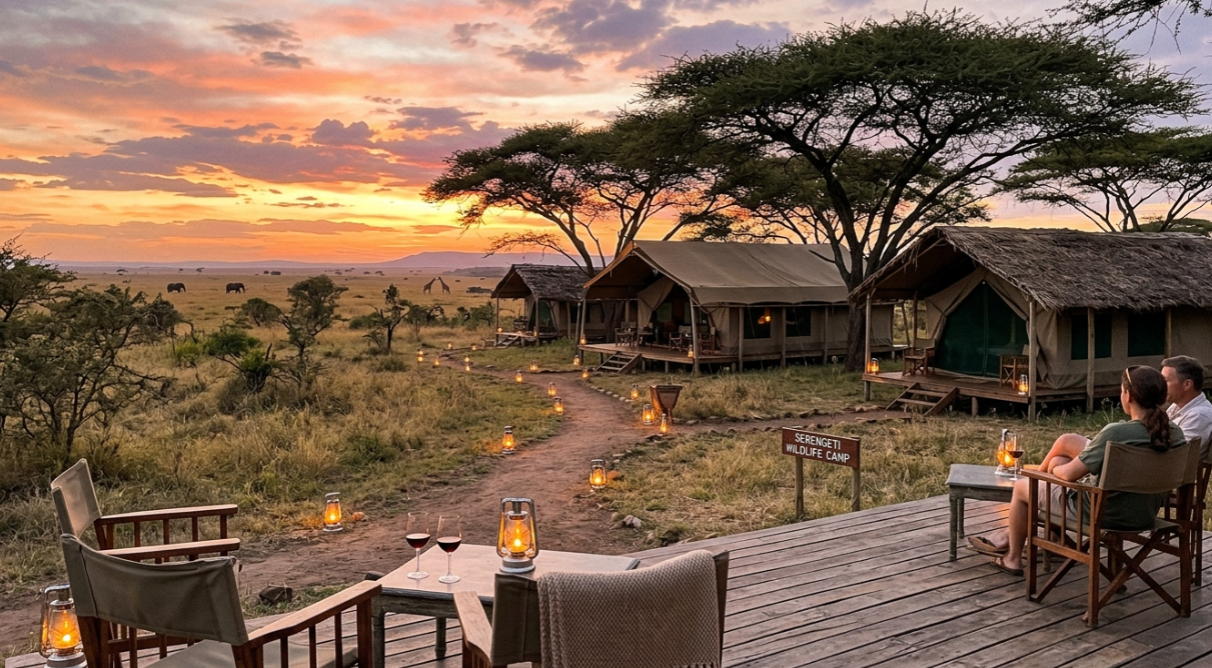
Upscale canvas structures with en-suite bathrooms, proper beds, and often better locations than lodges because their lighter footprint allows placement in more remote areas. The term “tented camp” does not imply budget accommodation. Many luxury tented camps are the most exclusive properties in Tanzania, running between $300 and $1,000 per person per night.
Commonly confused: A tented camp is not camping. Think of it as a boutique hotel under canvas.
Mobile / Semi-Permanent Camp
A camp that relocates seasonally to track the migration herds. These camps break down and reassemble in different zones, giving guests the best wildlife positioning without committing to a single location year-round.
Fly Camp
A temporary, minimalist camp set up specifically for walking safari overnights. Stripped down to essentials: a small tent, basic bedding, campfire dinner. The experience is about immersion, not luxury, though it’s typically offered as a premium add-on.
Public Campsite
TANAPA-managed campsites within the park, available for approximately $20 per night for foreign tourists. Basic facilities. Bring your own equipment or have your operator set up camp.
Guide Qualifications and Safari Team
Driver-Guide
The combined role standard in Tanzania: one person drives the safari vehicle and interprets wildlife, birding, and ecology. This person’s skill level is the single biggest variable in your safari experience. When evaluating operators, ask about guide training, experience, and certification. For tipping norms, see our safari tipping guide.
FGASA (Field Guides Association of Southern Africa)
A formal guide certification system with progressive levels starting at NQF2 Level 1. FGASA certification signals that a guide has passed standardized assessments in animal behavior, ecology, safety, and interpretation. Not yet widespread in Tanzania, but a growing number of quality-focused operators are investing in it.
For more on what different certifications mean, our safari guide qualifications guide breaks down the major systems.
EcoTraining
A professional safari guide training program based in Southern and East Africa. Graduates receive practical field skills in tracking, birding, ecology, and guest management.
Spotter / Tracker
A specialist who locates wildlife, separate from the driver-guide in some higher-end operations. Having a dedicated spotter in addition to your guide dramatically increases sighting quality.
Armed Ranger
A TANAPA ranger required for any walking activity inside the park. This is not optional. The ranger carries a firearm for safety given the presence of dangerous game.
Useful Swahili and Maasai Terms
You will encounter Swahili greetings and wildlife terms throughout your safari. Knowing even a handful earns genuine warmth from your crew.
|
Term |
Meaning |
|---|---|
|
Safari |
Swahili for “journey” |
|
Simba |
Lion |
|
Tembo |
Elephant |
|
Duma |
Cheetah |
|
Jambo |
Hello |
|
Asante |
Thank you |
|
Hakuna Matata |
No worries (yes, it’s real and commonly used) |
|
Kopje |
From Afrikaans, widely adopted; small rocky hill |
|
Boma |
Enclosed area, used for Maasai homesteads and camp dining areas |
How These Terms Connect to Planning Your Safari
Every term in this Serengeti safari guide exists because it affects a decision you’ll make. Knowing the difference between a concession and the national park shapes what activities are available to you. Understanding the 24-hour fee rule prevents a surprise charge. Recognizing that “tented camp” means luxury, not roughing it, changes your accommodation expectations entirely.
The best safari plans start with clear communication between you and your operator. When you speak the same language about zones, seasons, and logistics, you end up with an itinerary that actually matches what you want, not a generic package.
If you want help building a Serengeti itinerary from someone who knows these terms from the ground up, explore our Tanzania safari cost and planning guide as a starting point.
Frequently Asked Questions
What is the best month to visit the Serengeti?
It depends on what you want to see. For Mara River crossings, visit July through September. For calving and predator action on the Ndutu plains, January and February are unbeatable. For lower prices and fewer crowds with lush green scenery, March through May offers surprising value.
How much does it cost to enter Serengeti National Park?
Foreign adult visitors pay $70 per 24-hour period during peak season (May 16 through March 14) and $60 during low season (March 15 through May 15). If you stay at an in-park lodge or camp, add a $60 concession fee plus 18% VAT, bringing the total to roughly $160 per day.
Can you do a walking safari in the Serengeti?
Yes, but with restrictions. Inside the national park, walking requires an armed TANAPA ranger and is limited to select areas. Private concessions bordering the park offer more flexibility for walking safaris, along with night drives and off-road tracking.
What is a kopje and why do safari guides stop at them?
A kopje (pronounced “copy”) is a granite rock outcrop rising from the plains. Lions, leopards, and other predators use them as lookout points and resting spots. They’re some of the most reliable locations for big cat sightings.
How far in advance should I book a Serengeti safari?
For peak periods (August through September for river crossings, February for calving), book 12 or more months ahead. Popular camps in prime locations sell out quickly. Shoulder season trips can sometimes be arranged with shorter lead times.
Is the Great Migration one event or ongoing?
It’s continuous. The roughly 1.5 million wildebeest, 400,000 zebras, and 200,000 gazelles are always moving somewhere within the Serengeti-Mara ecosystem. Different months put the herds in different zones, which is why matching your travel dates to the right zone matters more than picking a single “migration week.”
What is the difference between a concession fee and a park entry fee?
The park entry fee ($60 to $70 per adult) is charged to every visitor entering Serengeti National Park. The concession fee ($60 per adult) is an additional charge that applies only if you sleep at a lodge or camp located inside the park boundaries. Both are per 24-hour period and set by TANAPA.
What should I pack for a Serengeti safari?
Neutral-colored clothing (khaki, olive, tan), layers for cool mornings, sun protection, binoculars, and a good camera. For a detailed checklist, our Tanzania safari packing list covers everything you need.