

Gorilla Trekking FAQs 2026: Permits, Costs & What to Expect
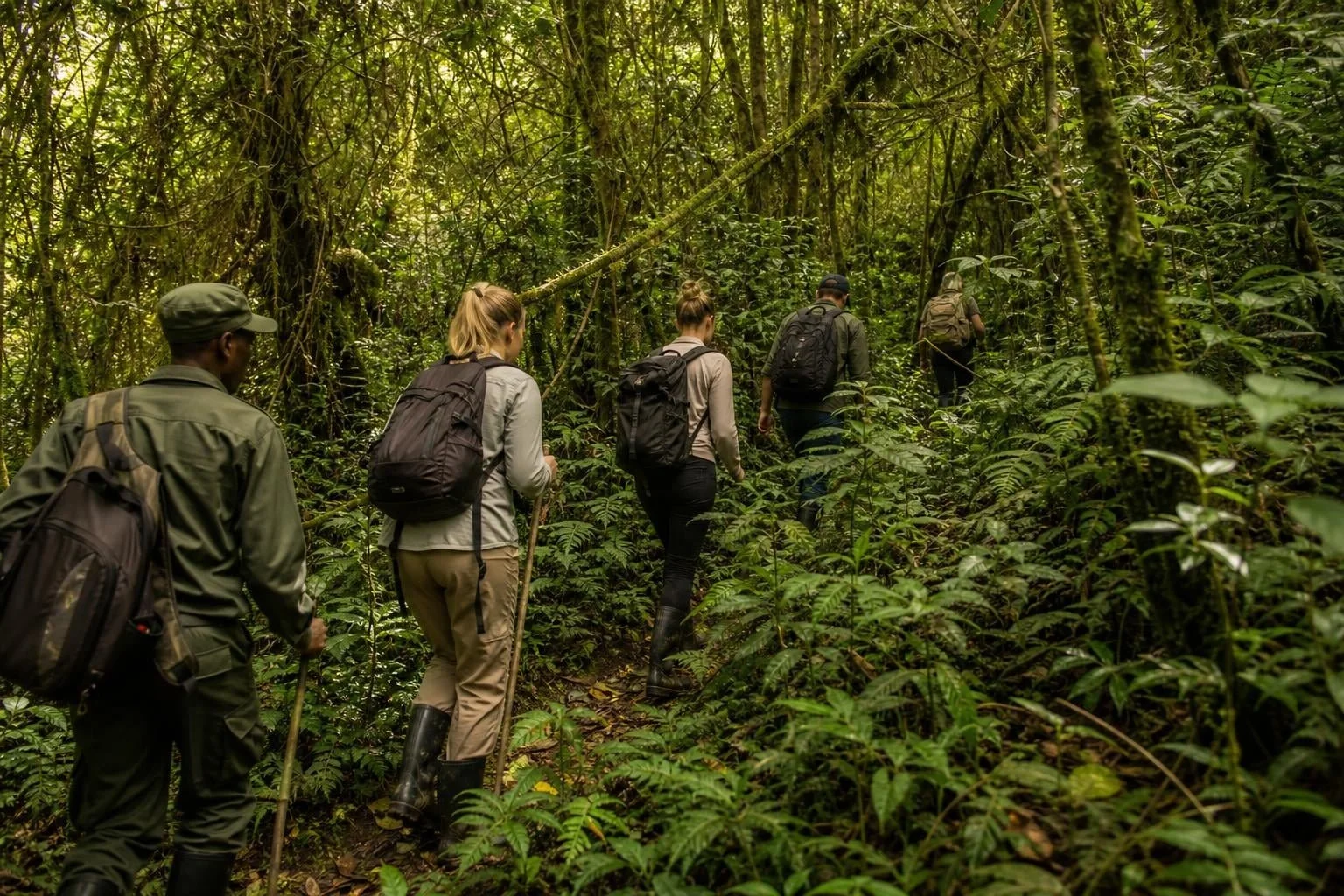
TLDR
Gorilla trekking is a guided hike through montane forest to see a habituated mountain gorilla family in Uganda or Rwanda. In both countries, visitors must be at least 15 years old, groups are limited to eight people, and the gorilla viewing period is limited to one hour. Rwanda charges US$1,500 per international visitor, while Uganda's applicable permit price depends on the current UWA tariff and visitor category. Because permits are limited and date-specific, book the permit before committing to flights and accommodation.
For most travelers, Rwanda is the easier choice for a short gorilla trip because Volcanoes National Park is relatively accessible from Kigali. Uganda is often the better choice for travelers who want a lower permit cost under the applicable tariff and a longer safari combining gorillas with chimpanzees or savanna wildlife. Trek difficulty varies substantially because the gorillas determine how far the group must travel that day.
Quick Answers to the Top Gorilla Trekking FAQs
Before getting into the details, here are the answers most travelers need first.
-
Where can you trek? Uganda and Rwanda are the main practical choices for mountain gorilla trekking in 2026.
-
How much is a permit? Rwanda charges US$1,500 for international visitors. Uganda's current applicable tariff should be confirmed at booking because UWA has published different tariff periods and rates.
-
Minimum age: 15 in both Uganda and Rwanda.
-
Time with gorillas: Maximum one hour.
-
Group size: Maximum eight visitors per gorilla group.
-
How long is the trek? Expect anything from a relatively short hike to several hours of difficult terrain. UWA currently describes Uganda treks as typically lasting 2–7 hours.
-
Is it difficult? It can be. Terrain is steep, muddy, wet, and uneven, and the distance depends on where the gorillas move.
-
Should you hire a porter? Yes. A porter can carry your daypack and help on difficult terrain while providing direct local employment.
-
Can you trek while sick? No. Respiratory infections can spread from humans to gorillas.
-
Can you take photos? Yes, but flash photography is prohibited.
-
When should you book? Before finalizing flights and accommodation because permits are limited and tied to specific dates.
These gorilla trekking FAQs come up in nearly every planning conversation. The sections below explain each answer in detail.
For a closer look at what the full trip actually costs beyond the permit, see this gorilla trek cost breakdown.
What Changed for Gorilla Trekking in 2026?
Gorilla trekking rules and prices can change between tariff periods, so 2026 travelers should not rely on older guides published before the current season.
Uganda permit prices and booking rules
Uganda's UWA has published tariff information covering different periods, so travelers should confirm the applicable rate for their permit date rather than assuming that the US$800 rate from the previous 2024–2026 tariff is still current. UWA's newer published tariff material shows a US$700 foreign non-resident gorilla permit, while its older July 2024–June 2026 tariff listed US$800.
This distinction matters because many gorilla trekking guides continue to display older prices.
Why this matters when booking
Do not compare Uganda and Rwanda using an outdated Uganda permit price. Check the UWA tariff that applies to your actual trekking date, then compare the total trip cost, including transfers, accommodation, and additional safari activities.
Rwanda's permit remains US$1,500 for international visitors
Rwanda's official tourism information currently lists the standard gorilla tracking permit at US$1,500 per person per day for international visitors. Rwanda also limits gorilla groups to eight visitors and allows a maximum of one hour with a habituated group.
Always confirm the final permit price and availability with the relevant tourism authority or licensed operator before payment.
Gorilla Trekking Basics
What is gorilla trekking?
Gorilla trekking is a guided hike through montane forest to find and observe a habituated wild gorilla family. It is not a zoo visit or a staged encounter. You hike to where the gorillas happen to be that day, led by rangers and trackers who located the family earlier that morning.
The CDC’s Yellow Book notes that Bwindi’s “impenetrable” name reflects the dense undergrowth, vines, and challenging hiking that trekkers should expect. The experience is raw, physical, and weather-dependent.
Gorilla tracking vs. gorilla trekking
These terms are used interchangeably. Official authorities in Uganda and Rwanda tend to say “tracking” because field trackers locate the gorilla families before tourists set out. Travelers tend to say “trekking” because the hike itself feels like a trek. Both mean the same activity.
Mountain gorilla
The mountain gorilla is the subspecies visitors see on classic Uganda and Rwanda treks. The most recent combined official population figure is 1,063 individuals, based on the Virunga and Bwindi-Sarambwe censuses. IUCN moved mountain gorillas from Critically Endangered to Endangered in 2018, reflecting conservation gains. That is good news, but the population remains small and heavily protected.
Many competing guides still say “critically endangered” or cite a population of 900. Both are outdated.
Habituated gorilla family
A habituated family is a wild gorilla group that has been gradually accustomed to human presence over months or years. Habituation does not mean tame. The gorillas are still wild animals, and visitors must follow strict behavioral rules during encounters.
Rwanda’s tourism authority describes how visitors are introduced to fully habituated families, and Uganda’s Bwindi page lists the habituated groups available for tourism and research.
Gorilla permit
The permit is the official document that gives one person access to a specific gorilla trek on a specific date. Permits are limited by the number of habituated groups and the eight-person cap per group. Rwanda’s official portal states that bookings are first-come, first-served, and Uganda’s tariff notes that permits for foreign non-residents and Rest of Africa visitors can only be booked through licensed tour operators.
The single most important planning rule: secure permits before finalizing lodges and flights.
Rangers, trackers, and porters
Rangers are park authority staff who guide and protect visitors. Trackers are local field staff who locate gorilla groups each morning, often starting before dawn. Porters are hired helpers who carry your daypack, assist on difficult terrain, and put money directly into local communities.
Travelers on Reddit consistently say porters are worth far more than bag-carrying. One trip report from a Rwanda and Uganda trekker noted that the porter cost about US$20 and that navigating difficult terrain was the real service, not carrying the bag. Other travelers in a separate discussion strongly recommended hiring a porter even if fit, emphasizing that porters depend on that income.
The recommendation is simple: hire a porter. It is cheap insurance for you and meaningful income locally.
Where to Go: Countries and Parks
Volcanoes National Park, Rwanda
Rwanda’s gorilla trekking park sits near Musanze (formerly Ruhengeri) in the northwestern part of the country. The drive from Kigali to Musanze takes roughly 90 minutes on good roads. Trekkers check in at the visitor registration center at 7:00 AM.
Rwanda is the best fit for travelers who want the simplest logistics and can afford the higher permit. Practitioners on Reddit repeatedly describe Rwanda as easier for first-time East Africa travelers because the roads are good, the gateway city is close, and the lodge ecosystem is polished.
Bwindi Impenetrable National Park, Uganda
Bwindi is Uganda’s most famous gorilla trekking park and a UNESCO World Heritage Site. UWA lists Bwindi’s altitude at 1,160m to 2,607m, with a park size of 321 square kilometers protecting approximately 459 mountain gorillas, nearly half the world’s population.
Bwindi is organized into four trekking sectors: Buhoma, Ruhija, Rushaga, and Nkuringo. Each sector has different lodge options, trail characteristics, and numbers of habituated groups. Sector choice affects transfer times, lodge availability, and trek difficulty. For a detailed look at how sectors compare, see the Bwindi sectors guide.
Bwindi is best for travelers who want a classic forest trek, lower permit cost than Rwanda, and strong Uganda safari and chimpanzee combinations.
Mgahinga Gorilla National Park, Uganda
Mgahinga is Uganda’s smallest national park at 33.7 square kilometers, located near Kisoro on the Virunga range. UWA describes it as having one habituated transboundary gorilla group, with altitudes between 2,227m and 4,127m.
Mgahinga is good for Virunga scenery and golden monkey trekking, but gorilla permit availability is more limited because of fewer groups.
Virunga National Park, DRC
Virunga is historically part of the gorilla trekking story, but it is not a normal planning option right now. The park’s official tourism page states that gorilla and Nyiragongo treks are closed until further notice. The U.S. State Department’s DRC advisory is Level 4: Do Not Travel, and UK FCDO advice warns against all travel to North Kivu, which includes Virunga.
For 2026 planning, focus on Uganda and Rwanda.
What Is the Best Time for Gorilla Trekking?
Gorilla trekking is possible year-round in both Uganda and Rwanda, so there is no single month that guarantees a better gorilla encounter. The main seasonal trade-off is between trekking conditions, rainfall, visitor demand, and permit pricing or availability.
|
Travel period |
Typical consideration |
Best for |
|---|---|---|
|
June–September |
Generally popular for East Africa travel; demand can be high |
Travelers prioritizing generally drier conditions |
|
October–November |
Increasing rainfall in parts of the region |
Travelers seeking potentially lower-season conditions |
|
December–February |
Popular travel period |
Travelers combining gorillas with broader East Africa trips |
|
March–May |
Wetter conditions |
Travelers comfortable with rain and muddy trails |
Is the rainy season a bad time for gorilla trekking?
Not necessarily. Rain can make trails muddier and more difficult, but it does not mean the gorillas are impossible to find. The forests are naturally wet environments, and gorilla trekking operates throughout the year.
If your priority is the easiest possible hiking conditions, consider the generally drier periods. If your priority is lower-season pricing or availability, check the current permit offers for your specific travel dates.
Weather patterns can vary by location, so confirm current conditions before departure.
Rwanda vs. Uganda Gorilla Trekking: Which Is Better?
There is no universal winner. Rwanda is usually better for travelers prioritizing convenience and a shorter itinerary, while Uganda is often more attractive to travelers building a broader wildlife trip.
|
Factor |
Rwanda |
Uganda |
|---|---|---|
|
Main gorilla destination |
Volcanoes National Park |
Bwindi and Mgahinga |
|
International visitor permit |
US$1,500 |
Confirm applicable UWA tariff |
|
Access |
Relatively straightforward from Kigali |
Longer road transfers are common |
|
Trekking environment |
Virunga volcanic forest |
Bwindi rainforest or Virunga forest |
|
Gorilla trekking sectors |
Volcanoes National Park |
Buhoma, Ruhija, Rushaga, Nkuringo, plus Mgahinga |
|
Best for |
Shorter, simpler gorilla trips |
Broader Uganda wildlife itineraries |
|
Chimpanzee combination |
Possible elsewhere in Rwanda |
Particularly strong with Kibale |
|
Safari combination |
Good |
Excellent for multi-park Uganda itineraries |
|
Best reason to choose it |
Convenience |
Variety and itinerary flexibility |
Choose Rwanda if convenience matters most
Rwanda is the stronger choice when your priority is minimizing transfer complexity, especially if you are flying into Kigali and have limited time.
Choose Uganda if the gorilla trek is part of a larger safari
Uganda becomes especially compelling when you want to combine gorillas with chimpanzee tracking, savanna parks, or a longer wildlife itinerary.
The cheapest permit is not necessarily the cheapest trip
Compare the entire itinerary rather than the permit alone. A lower permit price can be offset by longer transfers, additional hotel nights, or internal flights.
Permits and Costs
Permit questions make up the largest share of gorilla trekking FAQs, and for good reason. The permit is the single most expensive, least flexible component of the trip.
Gorilla Trekking Cost Comparison for 2026
The permit is only the largest single expense. Your total gorilla trekking budget also depends on accommodation, transportation, porter fees, meals, flights, and whether you combine the trek with a wider safari.
|
Cost |
Rwanda |
Uganda |
|---|---|---|
|
Standard international gorilla permit |
US$1,500 |
Confirm current UWA tariff for your trekking date |
|
Minimum trekking age |
15 |
15 |
|
Gorilla viewing time |
1 hour |
1 hour |
|
Maximum visitors per gorilla group |
8 |
8 |
|
Guide/ranger |
Included in permit |
Included in permit |
|
Park entrance for tracking day |
Included |
Included |
|
Community contribution |
Included in applicable permit structure |
Included |
|
Accommodation |
Extra |
Extra |
|
Transport to park |
Extra |
Extra |
|
Porter |
Extra |
Extra |
|
Meals |
Usually extra depending on package |
Usually extra depending on package |
What should you budget beyond the permit?
Do not build your budget around the permit alone. A realistic trip budget needs to account for accommodation near the park, airport or border transfers, meals, porter hire, tips, travel insurance, internal flights or long-distance road transfers, and any additional safari or primate activities.
For that reason, the cheapest permit does not automatically produce the cheapest overall gorilla trip.
Rwanda gorilla permit
Rwanda’s current official foreign visitor adult permit is US$1,500. Reduced rates exist for Rwandan citizens, East African citizens, foreign residents, and African citizens or foreign residents in Africa. The minimum age is 15.
Rwanda’s refund terms are strict. There is no refund for late arrival, flight delay, absence, or cancellation for personal reasons. If the gorilla group’s movement prevents tracking, the policy allows another chance or a refund. If visitors tracked all day but failed to make contact, the stated refund is 75% of the tracking fee.
Uganda gorilla permit
Uganda’s 2024 to 2026 official tariff lists gorilla tracking at US$800 for foreign non-residents, US$700 for foreign residents, US$500 for Rest of Africa, and UGX 300,000 for East African citizens. The permit includes the guide fee, park entrance for the day, and a community development contribution.
Uganda’s official February 26, 2026 notice introduced low-season gorilla tracking rates for April, May, and November: US$600 for foreign non-residents and US$500 for foreign residents. Low-season permits cannot be rescheduled.
The same notice suspended the previous seven-day unpaid reservation window, effective March 1, 2026. Permits can now be secured only upon full payment at booking. This is a significant change that many competing guides have not yet covered.
What the permit includes (and what it does not)
The permit covers access to the gorilla trek, a ranger guide, park entrance fees for the day, and (in Uganda) a community development contribution. It does not cover accommodation, transport to the park, meals, porter hire, or tips. The permit is only one part of the total trip cost.
How far ahead should I book?
As far ahead as possible. Peak-season dates (June through September, December through February) can sell out months in advance. Because Uganda no longer allows unpaid holds, the booking process requires earlier financial commitment than before.
Given strict refund and rescheduling policies, travel insurance for gorilla trekking is not optional. It should cover trip cancellation, interruption, and emergency evacuation.
Why are gorilla permits expensive?
The price reflects scarcity and conservation economics. Only a small number of permits are available each day because of the eight-person group cap and the limited number of habituated families. Revenue funds park operations, anti-poaching patrols, veterinary care, and community development. Higher prices also help control visitor volume, which reduces stress on the gorillas.
How Far in Advance Should You Book Gorilla Trekking?
Book your gorilla permit before finalizing non-refundable flights and accommodation.
Gorilla permits are limited because each habituated gorilla group can receive only a small number of visitors per day. Rwanda currently states that eight tracking permits are issued per troop per day, while Uganda's rules also cap visitor numbers at eight per gorilla group.
A practical booking order
-
Choose Uganda or Rwanda.
-
Check permit availability for your preferred date.
-
Purchase or secure the permit through the appropriate official channel or licensed operator.
-
Book accommodation close to your trekking sector.
-
Arrange airport, border, or internal transfers.
-
Book international flights around the fixed trekking date.
-
Add buffer time before the trek.
Why permits should come first
The permit date is the least flexible part of the itinerary. A delayed flight, long transfer, or accommodation problem is much easier to solve than a sold-out gorilla permit.
What Happens If You Are Sick Before Gorilla Trekking?
Do not trek if you have a cold, flu, or another respiratory or infectious illness.
This is not simply a visitor-safety issue. Mountain gorillas are susceptible to human respiratory pathogens, so close contact with a sick visitor can create a serious conservation risk. Uganda's gorilla tracking rules specifically prohibit visitors with colds or other infectious illnesses from visiting the gorillas. The CDC likewise advises travelers with respiratory illness to refrain from wildlife trekking or other activities involving close contact with wildlife.
If you become sick before your permit date:
-
Contact your tour operator immediately.
-
Ask whether the permit can be rescheduled under the applicable authority's rules.
-
Check your travel insurance for illness-related cancellation or interruption coverage.
-
Do not conceal symptoms simply to avoid losing the permit.
-
Follow the ranger team's instructions on the day of the trek.
Because permit refund and rescheduling policies can be strict, travel insurance should be arranged before the trip rather than after a problem occurs.
What Happens on Trek Day
Morning briefing
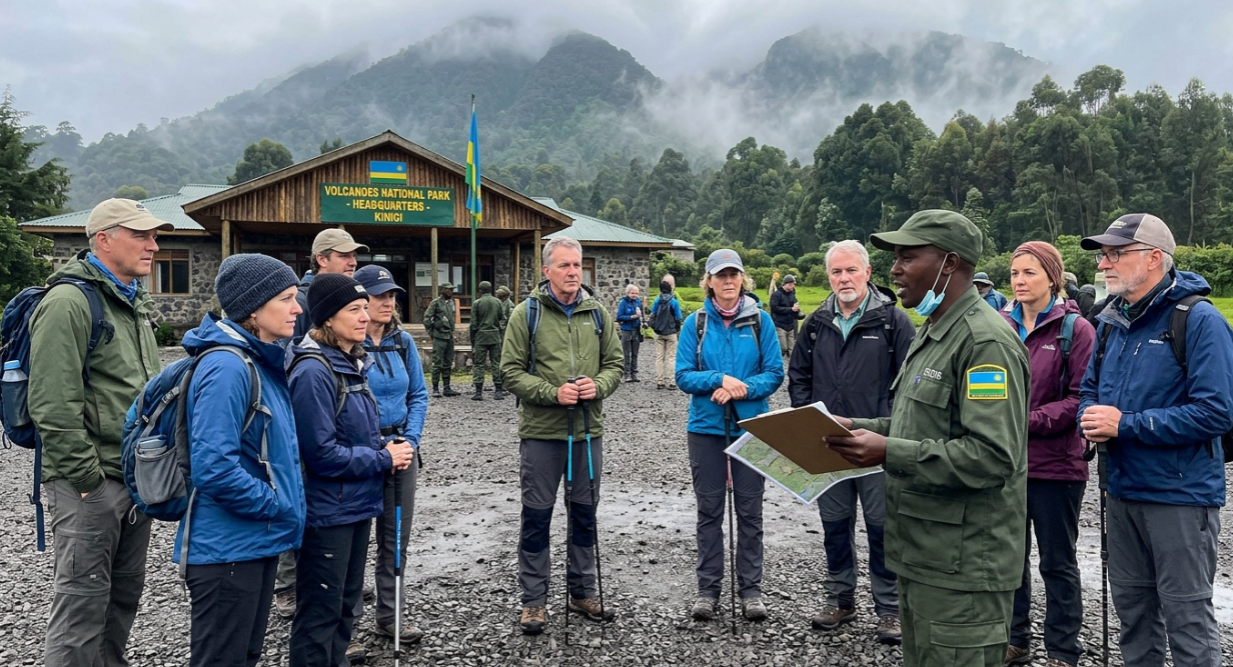
The day starts early. In Rwanda, visitors report to the Kinigi registration center at 7:00 AM. In Uganda, similar briefings happen at the relevant sector headquarters. Bring your passport, permit documents, and payment receipts. Arrive wearing your trekking clothes, not planning to change.
During the briefing, rangers review rules, explain what to expect, and assign visitor groups to gorilla families.
Gorilla family assignment
You generally cannot guarantee a specific family. Assignment depends on availability, group logistics, and conditions that morning. You can request an easier or harder trek. Rangers factor in fitness levels when possible, but the gorillas have the final say on how far you walk.
Trek duration
Rwanda’s official page says hikes can last from 30 minutes to four or more hours depending on family allocation and movement. Community reports push that upper range further. One Reddit user described a Rwanda day that turned into a brutal five to six hour experience after the gorillas kept moving. Another said Uganda treks are sometimes grouped by requested difficulty but still depend entirely on where the gorillas went overnight.
Do not schedule a tight afternoon flight or transfer. Leave the rest of trek day open.
How Difficult Is Gorilla Trekking?
Gorilla trekking is physically demanding but does not require technical climbing or mountaineering skills. The main challenge is walking through steep, muddy, uneven forest terrain for several hours while the gorilla family moves through its habitat.
Difficulty is unpredictable because you cannot know exactly where the gorillas will be when the trek begins.
What makes gorilla trekking difficult?
-
Steep slopes and uneven ground
-
Mud and slippery trails
-
Dense vegetation
-
High elevation in some trekking areas
-
Rain and changing weather
-
Long periods of walking
-
Descending steep terrain after reaching the gorillas
-
The possibility that the family continues moving
Uganda Wildlife Authority currently describes gorilla treks as typically lasting between 2 and 7 hours, with one hour spent observing the gorillas. Rwanda likewise notes that the length and terrain depend on the location of the assigned gorilla group.
How fit do you need to be?
You do not need to be an elite athlete, but you should be comfortable walking for several hours on uneven terrain. If you have mobility or fitness concerns, tell the ranger team during the morning briefing and ask about the available trekking options.
A porter can also make the experience considerably easier because you do not need to carry your own daypack throughout the hike.
What you can and cannot control
|
You can control |
You cannot fully control |
|---|---|
|
Permit date |
Which family is available |
|
Lodge location near the park |
Where gorillas moved overnight |
|
Boots and gear |
Rain and mud |
|
Fitness preparation |
Trek length |
|
Hiring a porter |
Wildlife behavior |
|
Telling guides your fitness level |
Exact photo opportunities |
What Does a Gorilla Trekking Day Look Like?
A typical gorilla trekking day follows a simple sequence, although the actual hiking time is unpredictable.
1. Arrive at the park headquarters
Arrive early for registration and the pre-trek briefing. In Rwanda, visitors currently gather at the Volcanoes National Park headquarters in Kinigi at 7:00 AM.
2. Receive your gorilla family assignment
Rangers assign visitors to a habituated gorilla group. Fitness and the expected difficulty of the trek can influence the assignment, but the final experience depends on where the gorillas are located that morning.
3. Meet your guides and trackers
Rangers and trackers lead the group into the forest. Trackers work ahead to locate the gorillas and communicate their position to the trekking party.
4. Hike through the forest
The hike can be short or last several hours. Expect steep, muddy, wet, and uneven terrain rather than a maintained hiking trail.
5. Find the gorillas
Once the group reaches the gorillas, your ranger will explain how to behave, where to stand, and how to move.
6. Spend up to one hour with the family
The gorilla viewing period is limited to one hour. The group may move during that time, so you may spend part of the hour walking slowly with the gorillas.
7. Hike back out
After the viewing period ends, the group returns through the forest. Depending on the location and terrain, you may arrive back at the park headquarters around late morning or later in the day.
Keep the rest of the day flexible. Do not plan an important flight immediately after your trek.
Rules and Conservation Ethics
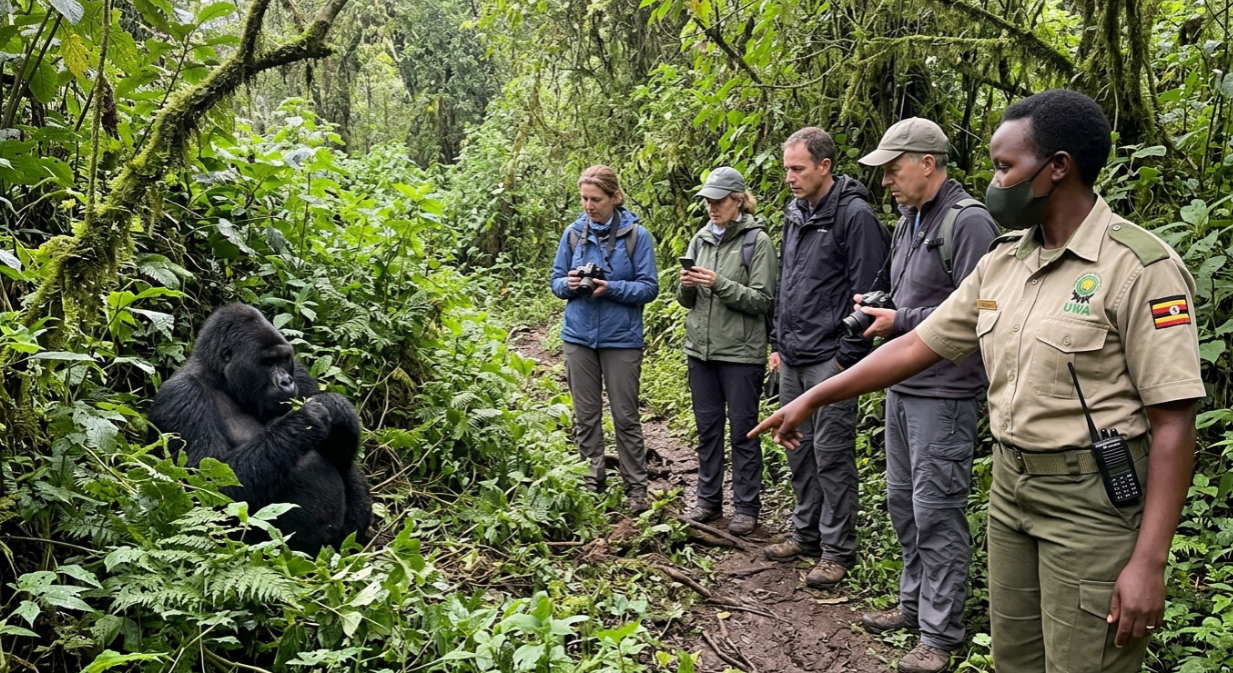
Rules come up constantly in gorilla trekking FAQs, and they deserve more than a bullet list. Each rule exists for a specific conservation reason.
Minimum age: 15
Both Uganda and Rwanda set the minimum trekking age at 15. Some unofficial pages create confusion by suggesting younger ages, but the official sources are clear. The Rwanda Development Board and Uganda Wildlife Authority both state minimum age 15.
One-hour rule
After reaching the gorillas, visitors have a maximum of one hour with the family. The hike to get there and back may take much longer, but the actual viewing window is strictly limited. This protects the gorillas from prolonged human exposure.
Eight-person rule
Each gorilla family receives a maximum of eight visitors per day. This cap limits the total number of daily permits and is one reason permits are expensive and scarce.
Distance rule
Rwanda’s official guidance says keep seven meters from gorillas. Uganda’s rules say maintain ten meters. In practice, follow whatever instruction your ranger gives on the day. If gorillas approach you, stay calm and move back if instructed.
No flash photography
Flash photography is banned in both Uganda and Rwanda. Bring a camera that handles low light well, learn how to disable flash before the trek, and use silent mode if available. For detailed camera advice, see this safari photography gear guide.
The sick visitor rule
This is arguably the most important rule, and the one travelers most often underestimate. Rwanda says visitors may be denied park access if sick with a cold, flu, or other contagious illness. Uganda says not to visit gorillas with a cold or infectious illness. The CDC states that responsible tourism requires people with respiratory illness to refrain from close-contact wildlife trekking.
The reason is biological. Gorilla Doctors explains that gorillas are susceptible to human-borne pathogens and that respiratory disease is a leading health concern for mountain gorillas. Even a mild cold that you would ignore at home can be dangerous for a gorilla family.
If you trek sick, you are not just risking your trip. You are risking the gorillas. Bring face masks as well, even if you feel healthy, because some parks require or recommend them during viewing.
How gorilla trekking helps conservation
Permit revenue directly funds park operations, ranger salaries, anti-poaching patrols, and community development. Uganda’s permit explicitly includes a community development contribution. The financial incentive for local communities to protect gorillas rather than encroach on habitat is one of the strongest conservation tools available.
The results speak for themselves. The mountain gorilla population has grown from an estimated low of around 620 in the 1980s to 1,063 in the most recent census, and IUCN upgraded the conservation status from Critically Endangered to Endangered in 2018. For a deeper look at whether the experience justifies the cost, see is gorilla trekking worth it.
For complete behavioral guidelines during the trek, the gorilla trekking etiquette guide covers distance, noise, eye contact, and what to do during a mock charge.
Packing for Gorilla Trekking
Packing for gorilla trekking is different from packing for a savanna safari game drive. The forest is wet, uneven, and full of vegetation that grabs at clothing and skin.
Hiking boots
Sturdy, broken-in boots with ankle support and good traction. Rwanda recommends steady walking shoes or hiking boots, and experienced trekkers universally agree. Do not wear new boots for the first time on trek day.
Gaiters
Fabric covers worn over boots and lower legs to keep mud, insects, and vegetation out. Optional but useful, especially during wetter months.
Gloves
Lightweight garden or trekking gloves protect hands from vines, nettles, mud, and branches. Trekkers often grab vegetation for balance on steep sections, so gloves provide a high comfort payoff for very little cost or weight.
Long sleeves and long pants
Rwanda recommends long trousers and shirts in the forest to avoid nettle stings. Safari shorts are wrong for gorilla trekking.
Rain jacket
Mountain weather is unpredictable. Rwanda’s tourism authority notes that Musanze’s climate is changeable and visitors can expect both sun and rainfall during the same day. Pack rain protection year-round.
Camera
Photos are allowed. Flash is not. Bring a camera that performs well in low light, set it up before the trek, and avoid chasing a better angle at the expense of the experience or the group.
Daypack essentials
Water, snacks, rain cover, and cash for your porter tip. A porter will carry the pack, but keep essentials accessible.
Health, Safety, and Travel Medicine
Malaria prevention
The CDC recommends malaria prophylaxis for travelers to both Uganda and Rwanda, listing malaria transmission as present in all areas. Speak with a travel medicine clinician at least a month before departure.
Yellow fever certificate
Requirements depend on your itinerary. CDC says yellow fever vaccine is recommended for all travelers aged nine months or older going to Uganda and required for arriving travelers aged one year or older. For Rwanda, yellow fever vaccine is generally not recommended for direct U.S. travel but is required if arriving from a country with yellow fever transmission risk.
This is itinerary-dependent. A multi-country East Africa trip can change requirements significantly.
Travel insurance
Given the strict refund policies on gorilla permits, travel insurance should cover trip cancellation, interruption, and emergency medical evacuation, not just lost luggage. Rwanda’s rules make clear there is no refund for flight delays, late arrivals, or personal cancellations.
Border-area security
UK travel advice notes that security personnel routinely accompany tourists on gorilla tracking visits near the DRC and Rwanda borders in Uganda. Use reputable, registered operators and check current official advisories before travel.
Planning Recommendations
Choose Rwanda if:
-
Limited time is your biggest constraint
-
You want the simplest logistics from Kigali
-
You are comfortable with the US$1,500 permit
-
You want a polished, high-end lodge experience
-
You are adding gorillas as a short extension to another East Africa trip
Choose Uganda if:
-
You want lower permit cost (US$800 standard, or US$600 low-season)
-
You want gorillas plus chimpanzees plus savanna safari
-
You have more days available
-
You want Bwindi’s dense forest experience
-
You are comfortable with longer road transfers or internal flights
Consider two treks if:
Travelers on Reddit who did two gorilla treks reported it was worth the cost. One hour goes fast, gorilla behavior varies daily, and weather or lighting can differ dramatically between days. A second trek reduces the risk of feeling like the entire trip depended on one encounter. For most travelers, one trek is enough. For serious wildlife lovers or photographers, two permits are worth considering.
Build buffer days
A Reddit trip report explained that because the gorilla permit is date-specific and difficult to reschedule or refund, the traveler intentionally built padding into the itinerary to protect against flight delays. This is smart planning. Stay near the park the night before your trek, and avoid scheduling gorilla trekking the morning after a long-haul international arrival.
Common planning mistakes
-
Booking flights before permits
-
Staying too far from the briefing point
-
Assuming “Uganda is cheap” without accounting for transfers and extra nights
-
Assuming “Rwanda is expensive” without valuing time saved
-
Wearing safari clothes instead of forest trekking clothes
-
Skipping a porter to save US$20
-
Trekking sick
-
Scheduling a same-day international connection around a non-flexible permit
-
Treating DRC as a standard option without checking current closures
For help building an itinerary that puts all these pieces together, see the gorilla trekking itineraries glossary.
Frequently Asked Questions
Can beginners do gorilla trekking?
Yes. No technical climbing skills are required. The challenge is fitness and terrain, not mountaineering. Tell your guides your fitness level at the morning briefing so they can assign an appropriate group when possible. Hire a porter. Wear proper boots. Prepare for mud.
What happens if you do not find the gorillas?
It is rare but possible. Trackers locate gorilla families before tourists set out, so sighting rates are very high. Rwanda’s official policy states that if the gorilla group’s movement prevents tracking, visitors may get another chance or a refund. If visitors tracked all day but failed to make contact, Rwanda offers a 75% refund of the tracking fee. Do not assume a guaranteed sighting, but understand that the odds are strongly in your favor.
Can I fly into Kigali and trek in Uganda?
Yes. Some travelers access Bwindi’s southern sectors from Kigali because the road transfer can be shorter than driving from Entebbe. This routing works well for travelers adding gorilla trekking to an itinerary that already passes through Rwanda.
Do operators get cheaper gorilla permits?
Generally no for standard tourist categories. Official authorities set permit prices by visitor category. Operators add value through logistics management, availability tracking, routing, transfers, lodge coordination, and reducing the risk of costly mistakes.
Can I combine gorilla trekking with a Tanzania safari?
Yes. Many travelers add gorilla trekking in Uganda or Rwanda before or after a Tanzania safari. The routing depends on flight connections, time available, and whether Uganda or Rwanda is the better fit. This is where having one operator coordinate permits, lodges, transfers, and multi-country timing across the full trip matters most.
Should I arrive the night before my trek?
Absolutely. Stay near the park the night before your permit date. The briefing starts at 7:00 AM, and some park gates are in remote areas. Arriving the evening before eliminates the risk of a delayed transfer ruining a nonrefundable permit day.
Choosing the right lodge near the right sector is part of this decision. The best gorilla trekking lodges guide covers options in both Uganda and Rwanda by location and budget.
Is Gorilla Trekking Ethical?
Gorilla trekking can be an important conservation tool when it is managed under strict visitor limits and wildlife-health rules. The model deliberately restricts the number of visitors, limits viewing time, and requires tourists to maintain distance and avoid visiting when sick.
The ethical question is not simply whether tourists are near wild gorillas. It is whether tourism is managed in a way that minimizes disturbance while generating enough conservation and community benefits to justify the interaction.
Responsible visitors should:
-
Follow every ranger instruction.
-
Maintain the required distance.
-
Never chase or surround gorillas.
-
Never use flash photography.
-
Never visit while sick.
-
Keep noise low.
-
Avoid littering.
-
Hire local porters when appropriate.
-
Use licensed operators and official permit channels.
-
Respect restrictions designed to protect gorillas and their habitat.
The conservation model is particularly sensitive to disease transmission. The CDC notes that gorillas and other wildlife can be susceptible to human respiratory illnesses and recommends that people with respiratory illness avoid close-contact wildlife trekking.
Permit rules and fees change. Fees referenced in this article were checked against official Rwanda and Uganda sources during research in August 2026. Confirm final availability and pricing at booking.