The Baobab Tree: Africa’s Iconic Tree of Life
How a 2,000-year-old tree sustains ecosystems, cultures, and communities across the African savanna
Updated March 2026 · 8 min read
Tarangire is the easiest place to see these trees on a northern Tanzania safari.
See Tanzania safari itineraries → https://www.dumaexplorer.com/tanzania
Get a custom quote → https://www.dumaexplorer.com/contact-us
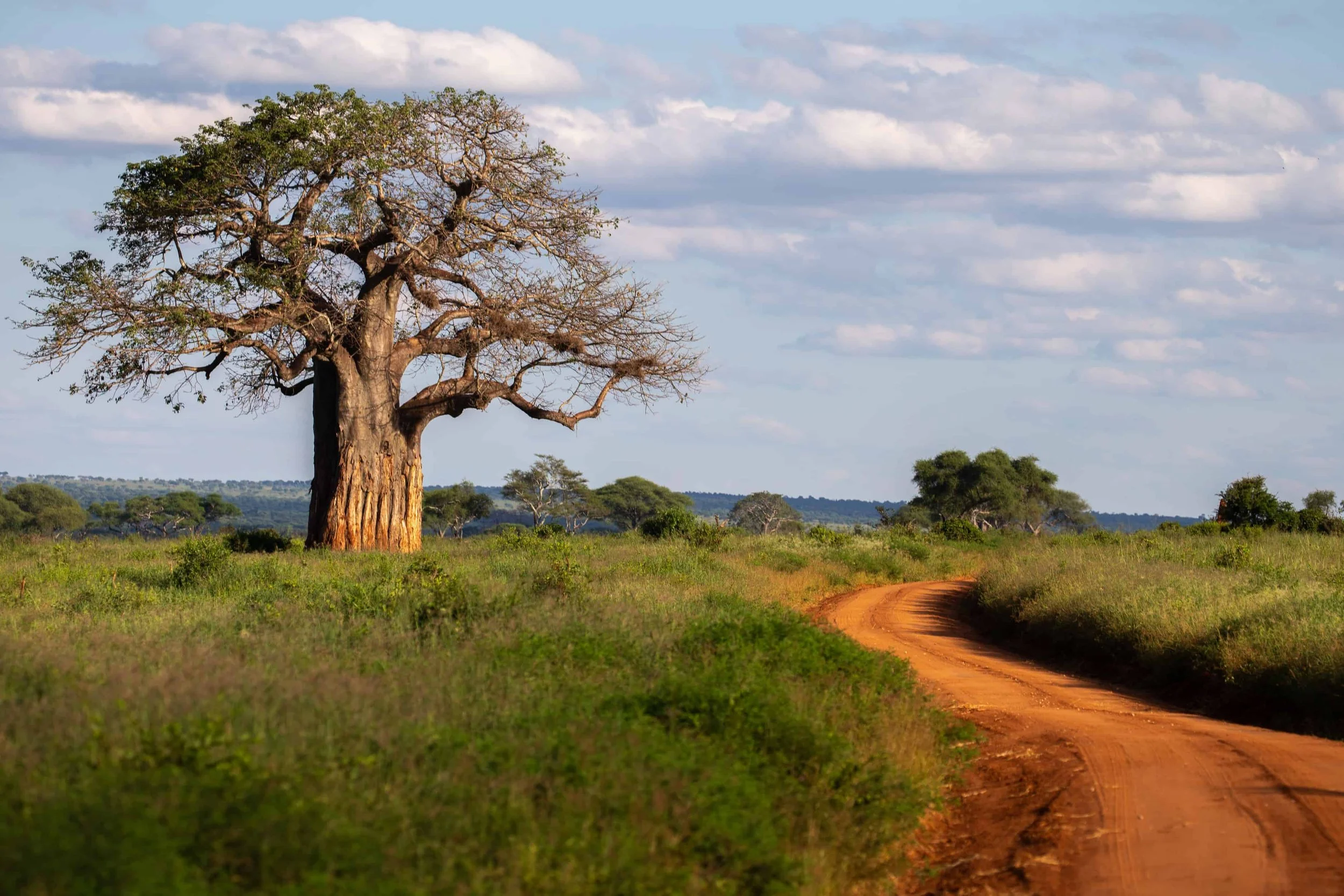
Photo courtesy of J.H. Marden
Originally from Madagascar — where the genus first evolved over 21 million years ago — the iconic baobab tree is one of the most recognizable trees on earth. From there, baobab seeds traveled extraordinary distances on ocean currents, eventually reaching mainland Africa and Australia, where they evolved into the species found today.
With its enormous trunk, tangled crown of branches, and a lifespan stretching well beyond 1,000 years, the baobab has earned its reputation as Africa’s “Tree of Life.” Belonging to the genus Adansonia, eight species exist worldwide — one in mainland Africa, one in Australia, and six endemic to Madagascar — yet it is the African baobab (Adansonia digitata) that most travelers encounter on safari. Seeing one of these giants rise from the savanna for the first time is an experience that stays with you long after you leave.
A particularly large concentration of baobab trees is found in Tarangire National Park in northern Tanzania, which has earned the unofficial title of the “baobab capital of the world.” Here, hundreds of ancient baobabs dot the landscape among herds of elephants, offering one of the most photogenic safari settings in all of East Africa. Travelers who want to wake up surrounded by these giants can stay at Hilala Camp or Siringit Tarangire Camp, both set within the park.
IN THIS ARTICLE
BAOBAB TREE AT A GLANCE
Scientific Name Adansonia
Height Up to 65 feet (20 meters)
Trunk Diameter 36 to 46+ feet (11–14 meters)
Lifespan 1,000–2,000+ years
Water Storage Up to 650 liters per cubic meter
Native Range Sub-Saharan Africa, Madagascar, parts of India & Australia
Known Uses Nearly 300 documented (food, medicine, fiber, cosmetics)
Where Are Baobab Trees Found?
The African baobab tree is native to the dry, semi-arid regions of sub-Saharan Africa. It thrives in the savanna woodlands of Tanzania, Kenya, Mozambique, Zimbabwe, South Africa, Senegal, and many other countries across the continent. Related species also grow in Madagascar, parts of India, and northern Australia, though the African baobab remains the most widespread and well-known.
In East Africa, Tanzania offers some of the most spectacular baobab landscapes on the continent. Tarangire National Park — located just two hours from Arusha — is widely considered the baobab capital of the world. Vast groves of ancient baobabs stand sentinel across golden savannahs, and during the dry season (June through October), thousands of elephants congregate along the Tarangire River, creating unforgettable scenes framed by towering trunks. With far fewer visitors than the Serengeti, Tarangire feels peaceful and unhurried. The baobab-dotted landscape gives the park a character unlike anywhere else on the Northern Tanzania safari circuit — dramatic and almost otherworldly compared to the open grasslands of the Serengeti or the forested crater walls of Ngorongoro. It's a place where the ancient trees themselves become as much a part of the safari experience as the wildlife, and it's no coincidence that Tarangire is Duma Explorer owner Stacy's favorite park.
You’ll also find impressive baobabs in Mkomazi National Park, along the coast near Bagamoyo, and scattered through the dry woodlands of the Ruaha ecosystem. In Kenya, the baobab appears prominently in Tsavo, Amboseli, and the coastal Mijikenda Kaya forests.
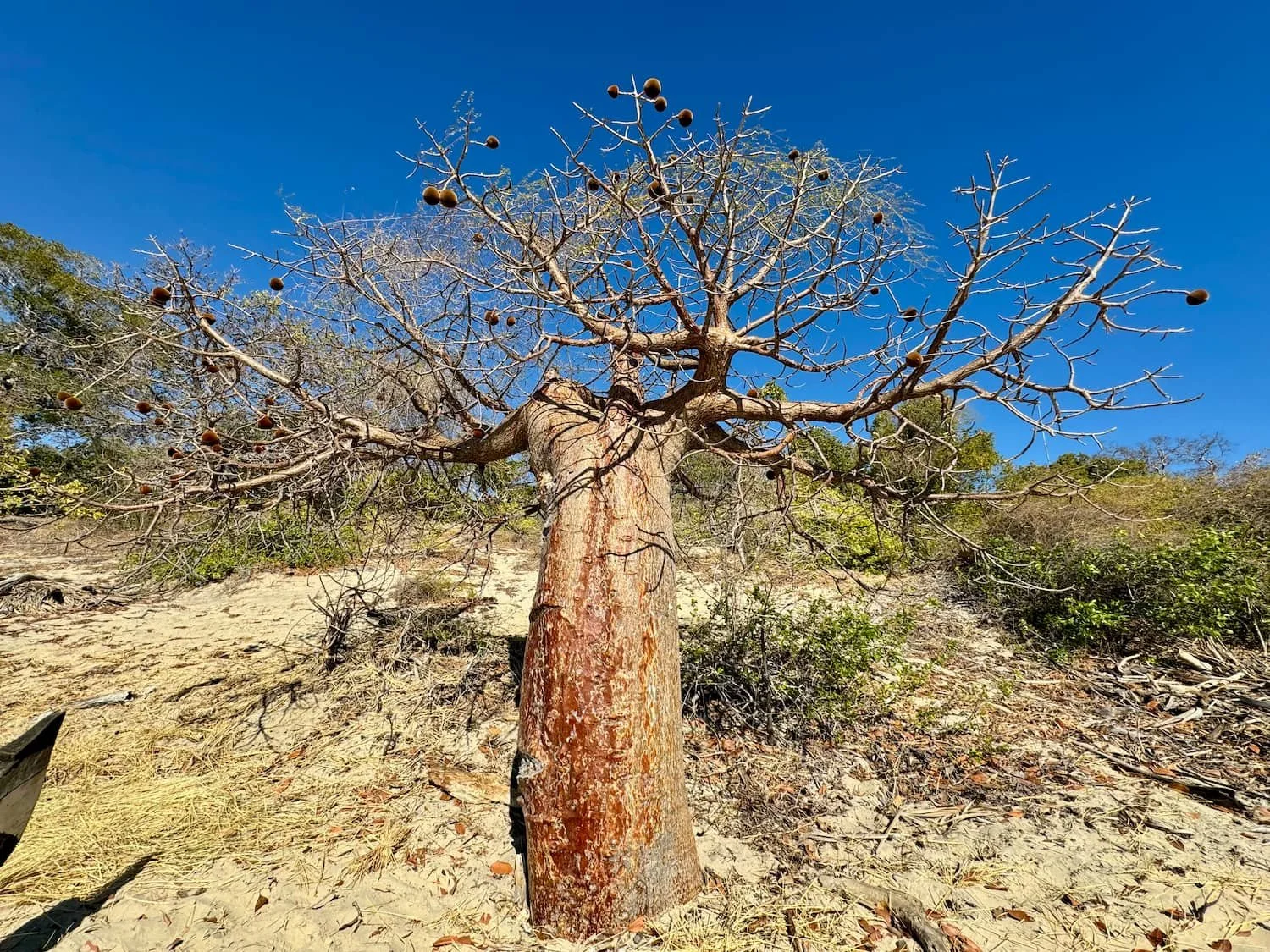
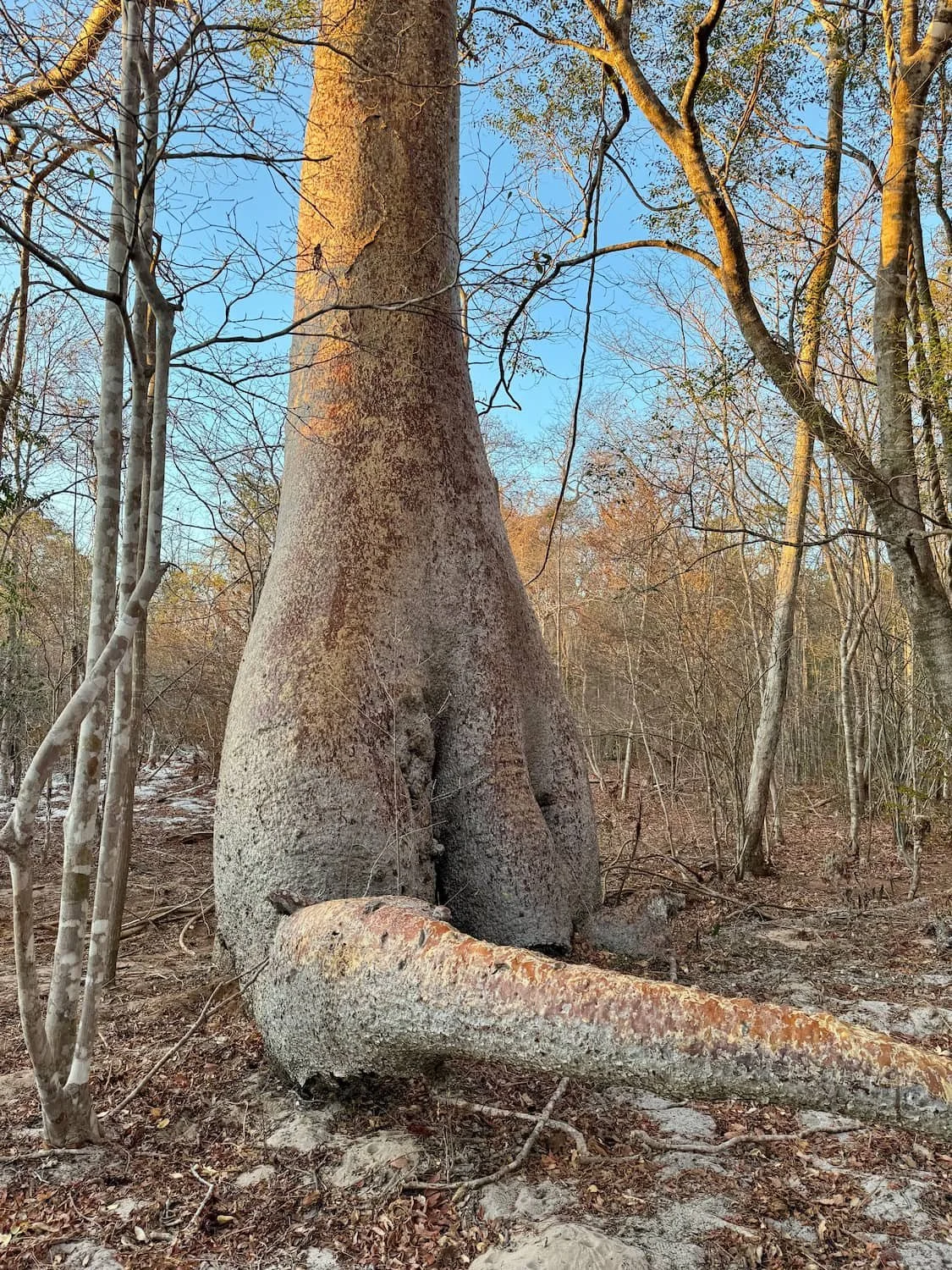
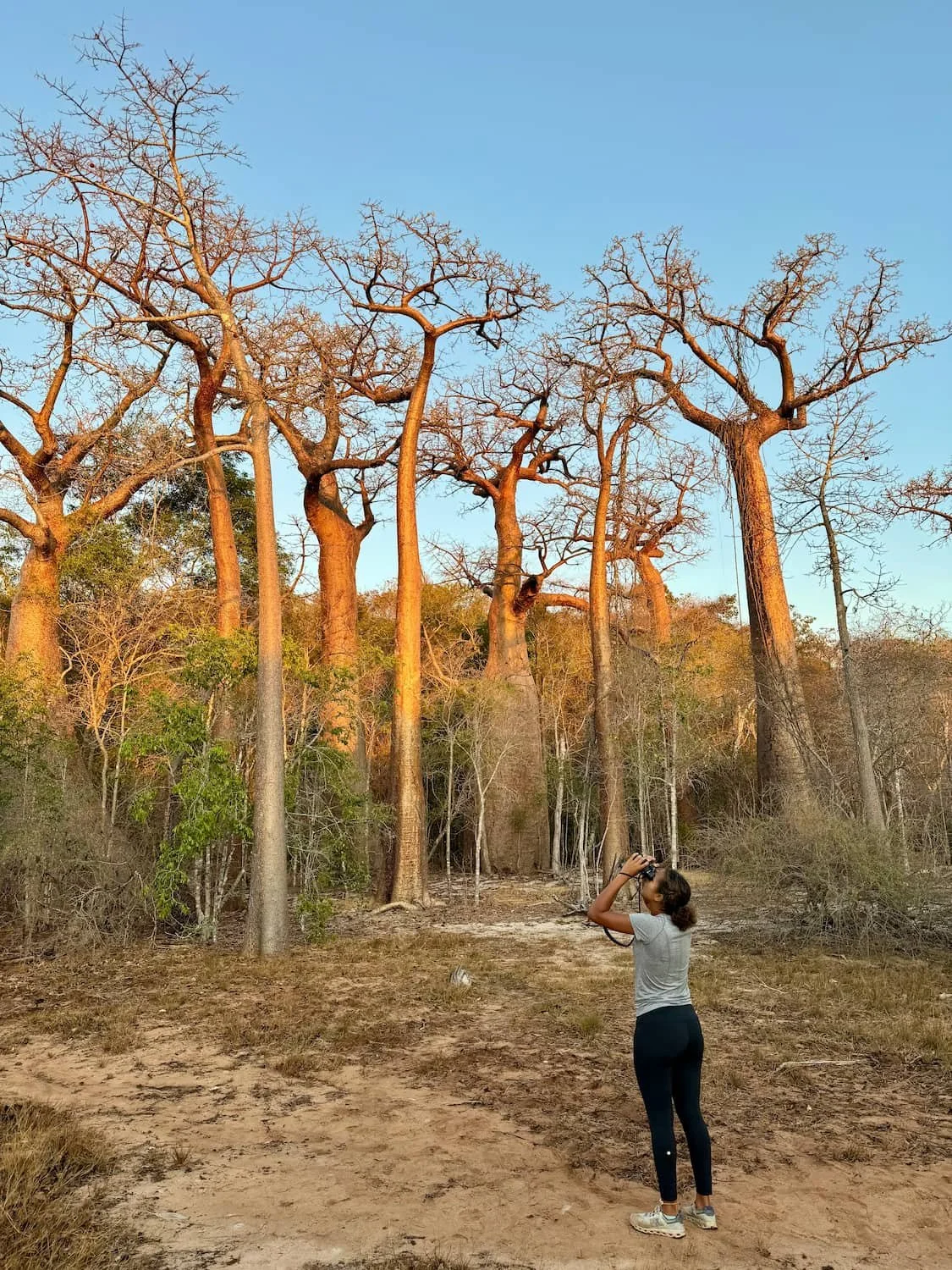
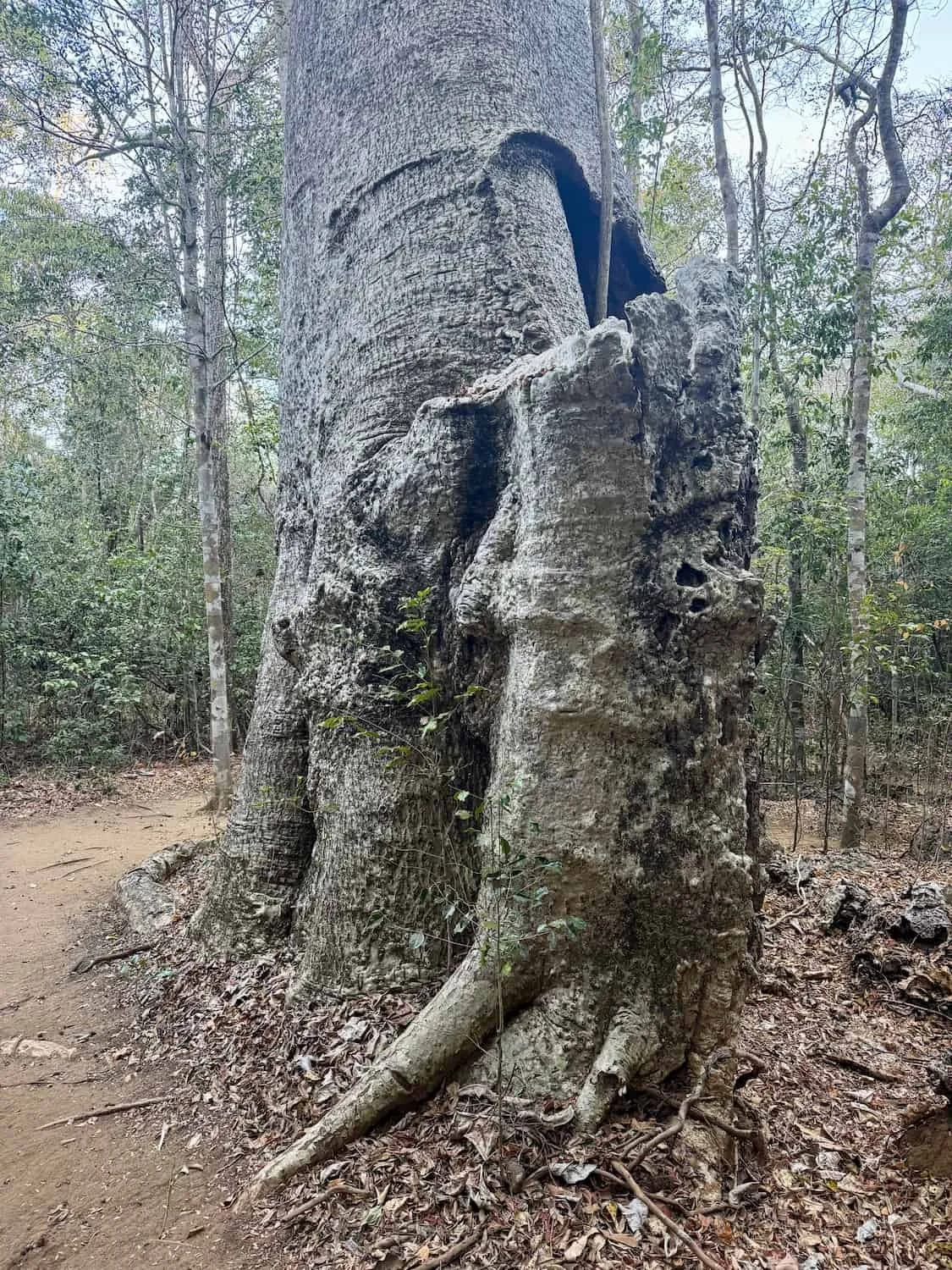
For those wanting to see Madagascar's baobabs firsthand, Anjajavy Lodge on the island's remote northwest coast offers a rare opportunity to experience baobabs in three distinct settings — rising from white sand beaches, clustered in ancient groves, and scattered through the surrounding deciduous forest. The lodge sits within a privately protected reserve where active conservation programs safeguard these trees alongside the wildlife that depends on them, including playful sifaka lemurs and an extraordinary variety of chameleons. Between forest walks, guests can swim in the warm Indian Ocean from deserted beaches that feel untouched by time — making Anjajavy one of the few places where baobab conservation, wildlife viewing, and coastal relaxation come together in a single destination.
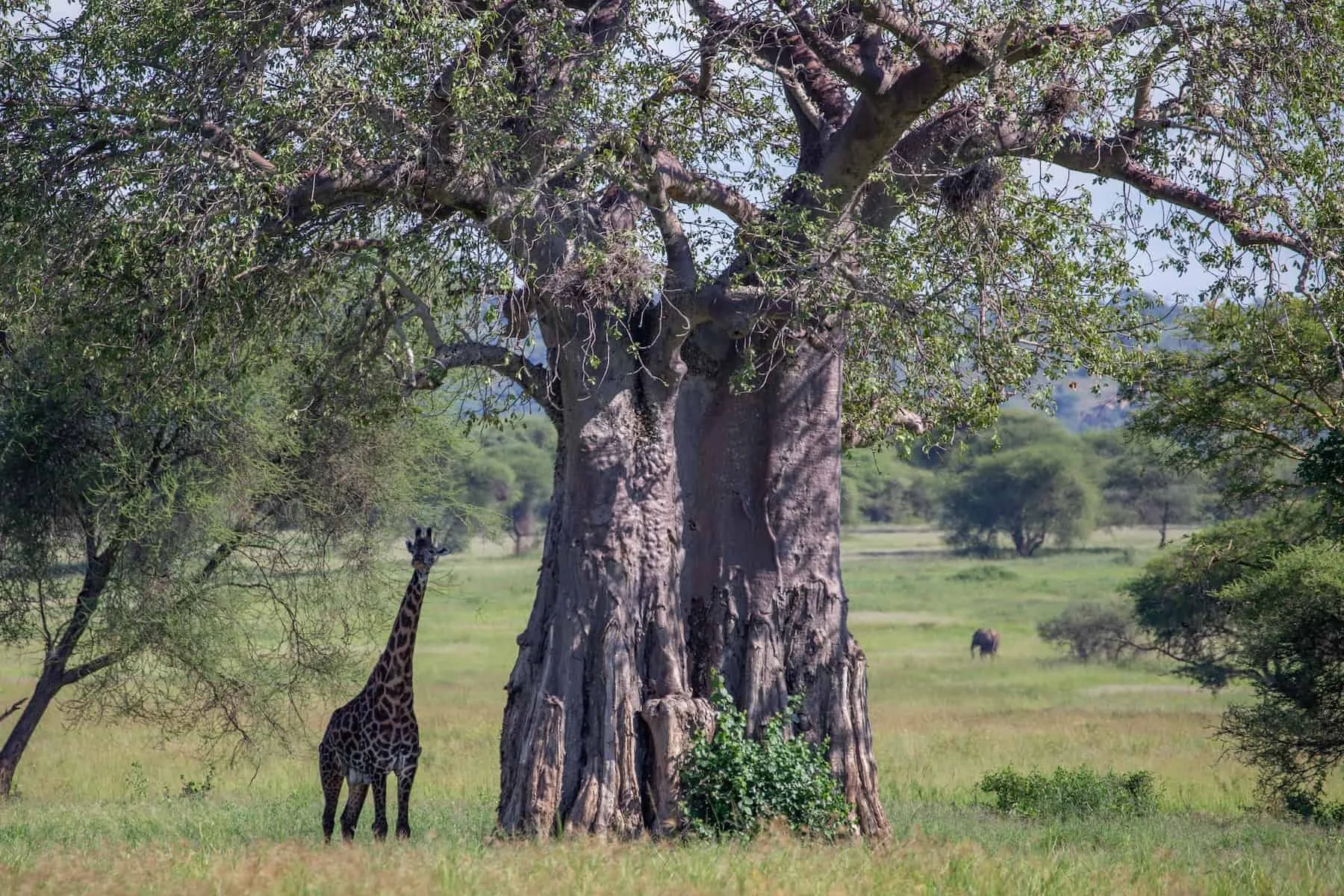
Giraffe resting under a Tarangire baobab
How Long Do Baobab Trees Live?
Baobab trees live for over 1,000 years on average, with carbon dating confirming specimens as old as 2,450 years.That makes them among the longest-lived flowering plants on the planet. To put this in perspective, a baobab standing in Tarangire today may have been a sapling when the Roman Empire was at its height.
Sadly, some of the oldest and most iconic African baobabs have been dying in recent years. Researchers believe climate change, rising temperatures, and prolonged drought cycles are contributing factors. This makes conservation efforts—and the protected national parks where these trees thrive—more important than ever.
How Big Do Baobab Trees Get?
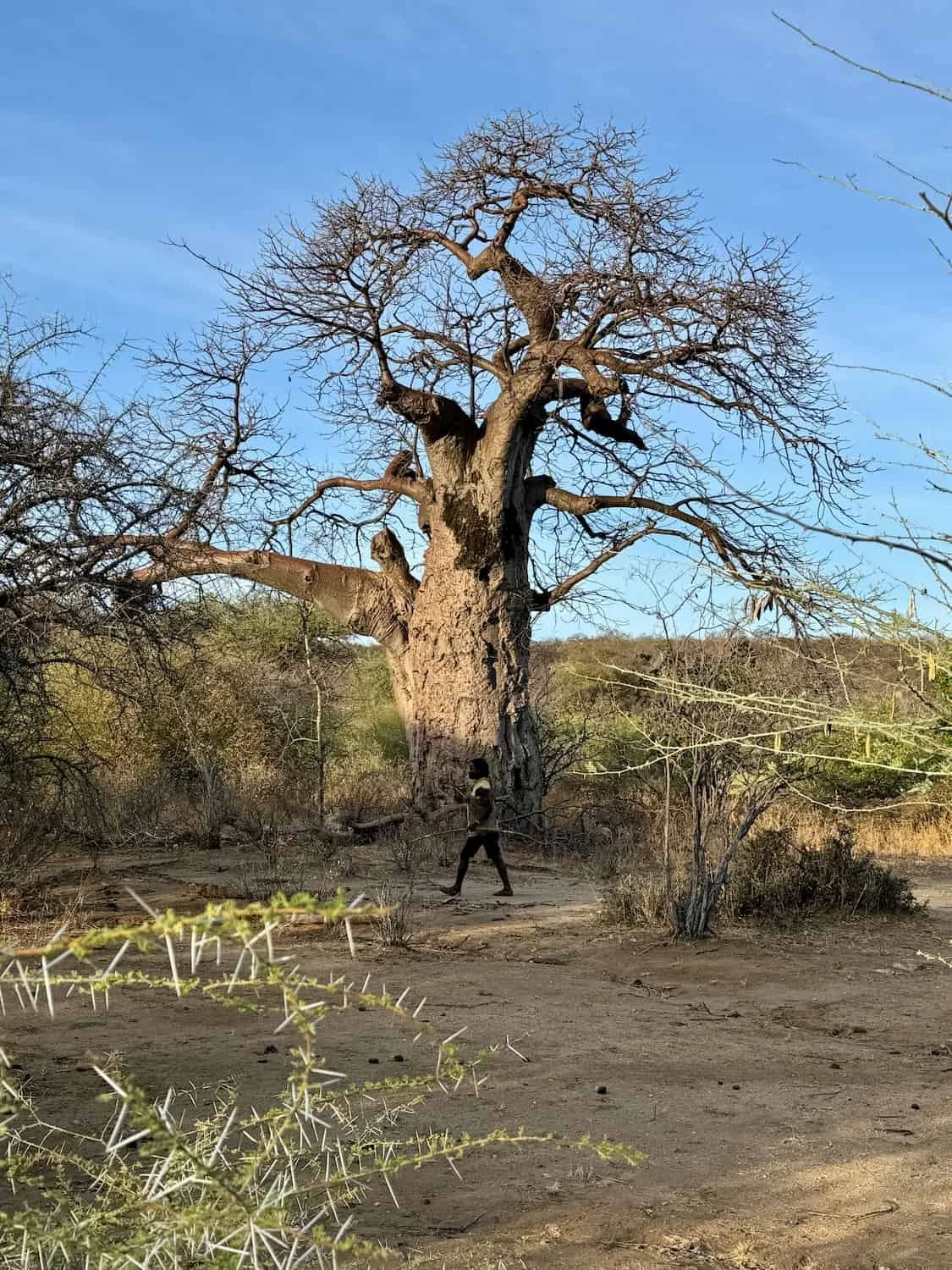
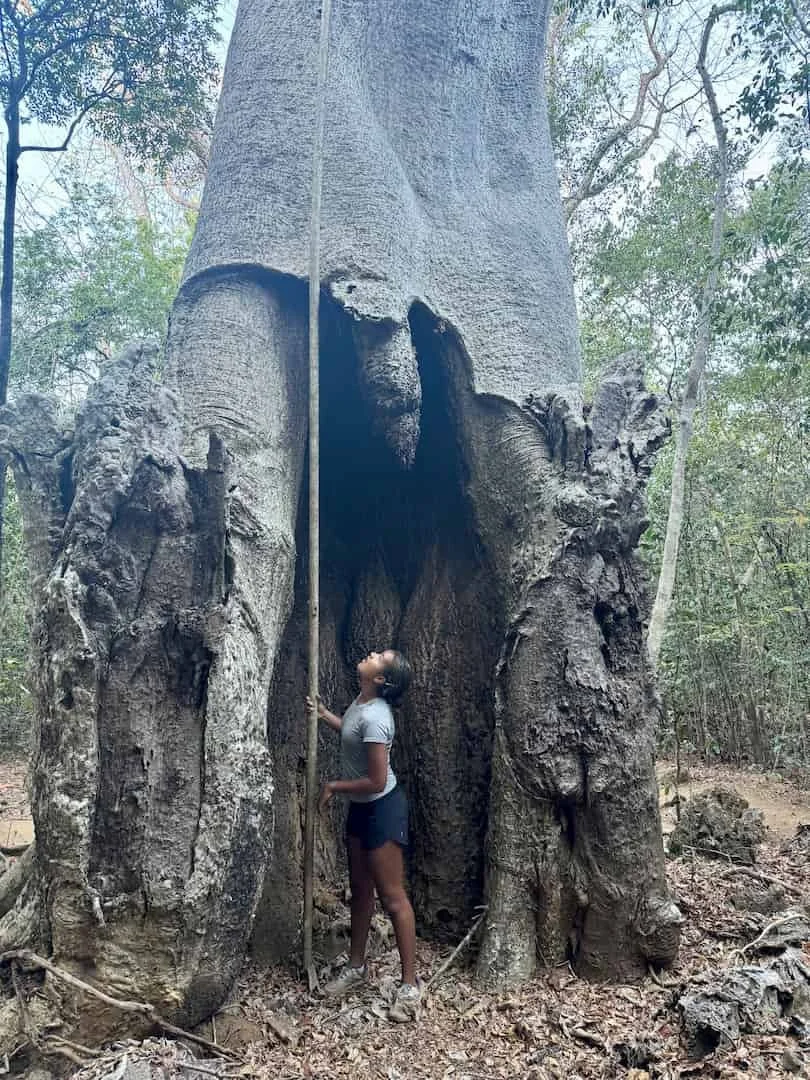
A mature baobab tree can reach up to 65 feet (20 meters) in height, but it’s the trunk that truly sets the baobab apart. The trunk is actually a series of branches that have grown together over centuries, creating a structure of monumental size—commonly 36 to 46 feet or more in diameter. The inside of the trunk is hollow and fibrous, and some trunks have grown large enough to be used as shelters, storage rooms, and even—in one famous case in South Africa—a bar.
The baobab’s trademark appearance is its enormous, swollen trunk topped with a sparse crown of scrawny, scraggly branches. For most of the year (eight to ten months), the tree stands leafless, which gives rise to its other famous nickname: the “upside-down tree.” An old legend says that the gods became displeased with the baobab because it thought itself superior to all other trees, and so they yanked it from the ground and replanted it upside down to teach it humility.
| Species | Common Name | Location | Max Height | Max Trunk Diameter | Estimated Max Age | Conservation Status |
|---|---|---|---|---|---|---|
| Adansonia digitata | African Baobab | Sub-Saharan Africa, Arabian Peninsula | 30 m (98 ft) | 10 m (33 ft) | 2,450+ years | Least Concern |
| Adansonia grandidieri | Grandidier's Baobab | Western Madagascar | 25–30 m (82–98 ft) | 3 m (10 ft) | ~1,000 years | Endangered |
| Adansonia gregorii | Australian Boab | Kimberley region, Western Australia | 12 m (39 ft) | 5 m (16 ft) | ~1,500 years | Least Concern |
| Adansonia madagascariensis | Madagascar Baobab | Northern Madagascar, Mayotte Island | 15 m (49 ft) | 2 m (7 ft) | ~500 years | Least Concern |
| Adansonia perrieri | Perrier's Baobab | Northern Madagascar | 30 m (98 ft) | 2 m (7 ft) | Unknown | Critically Endangered |
| Adansonia rubrostipa | Fony Baobab | South, west & northwest Madagascar | 8 m (26 ft) | 2 m (7 ft) | ~1,000 years | Least Concern |
| Adansonia suarezensis | Suarez Baobab | Northern Madagascar | 25 m (82 ft) | 2 m (7 ft) | Unknown | Endangered |
| Adansonia za | Za Baobab | Western & southern Madagascar | 20 m (66 ft) | 3 m (10 ft) | Unknown | Near Threatened |
How the Baobab Tree Survives in Harsh Climates
The baobab’s remarkable adaptations allow it to thrive in some of Africa’s harshest environments. Perhaps most impressive is the baobab’s ability to store water. The largest and oldest specimens can hold up to 120,000 liters (over 30,000 gallons) of water in their thick, fibrous trunks, allowing them to survive prolonged dry seasons. This water-storage ability makes the baobab a lifeline for surrounding wildlife, especially during drought. Elephants are frequently seen stripping bark from baobab trunks to access this hidden moisture — a behavior especially common in Tarangire, which is home to one of the largest elephant populations in East Africa.
The tree only produces leaves during the rainy season, which typically lasts two to four months. By shedding its leaves for the rest of the year, the baobab dramatically reduces water loss through evaporation. Its thick, fire-resistant bark provides further protection against the bushfires that sweep through the savanna. Together, these adaptations have allowed baobabs to survive and regenerate for millennia, making them living monuments to the resilience of Africa’s ecosystems.
Uses of the Baobab Tree
Nearly 300 uses of the baobab tree have been documented, which is why it is called the “Tree of Life.” Humans have relied on virtually every part of the tree for centuries.
Food and Nutrition
The seeds, leaves, roots, flowers, fruit pulp, and bark of the baobab are all edible. Baobab leaves are used in soups and sauces, while the seeds serve as a thickening agent and can be roasted as a snack. The fruit is unique: it dries naturally on the branch over about six months, and once the green exterior hardens, the chalky pulp inside is ready to eat.
Baobab fruit pulp has gained global attention as a superfood. It contains an estimated ten times more Vitamin C than oranges and 50% more calcium than spinach, along with high concentrations of antioxidants. Both the United States and Europe have approved baobab pulp as a food ingredient, and powdered baobab supplements are now widely available in health food stores.
Bark, Wood, and Fiber
The fibrous bark is stripped and processed into textiles, rope, and baskets. Remarkably, the baobab can regenerate its bark after harvesting, making it a sustainable resource. The pulp of the wood is used to make paper and other supplies, while the sap has traditional uses as glue and in soap-making.
Medicine and Cosmetics
Traditional medicine across Africa has long used baobab leaves and seed pulp for their anti-inflammatory and antiseptic properties, treating everything from fevers and infections to digestive complaints. It has even been used as a prophylactic against malaria. Modern research has confirmed that the baobab has some of the highest antioxidant levels of any native African plant.
The cosmetics industry has also taken notice. Baobab oil, extracted from the seeds, is rich in vitamins A, D, and E and has been shown to promote skin cell regeneration, moisturize dry skin, and help prevent wrinkles. It is now a sought-after ingredient in premium skincare products worldwide.
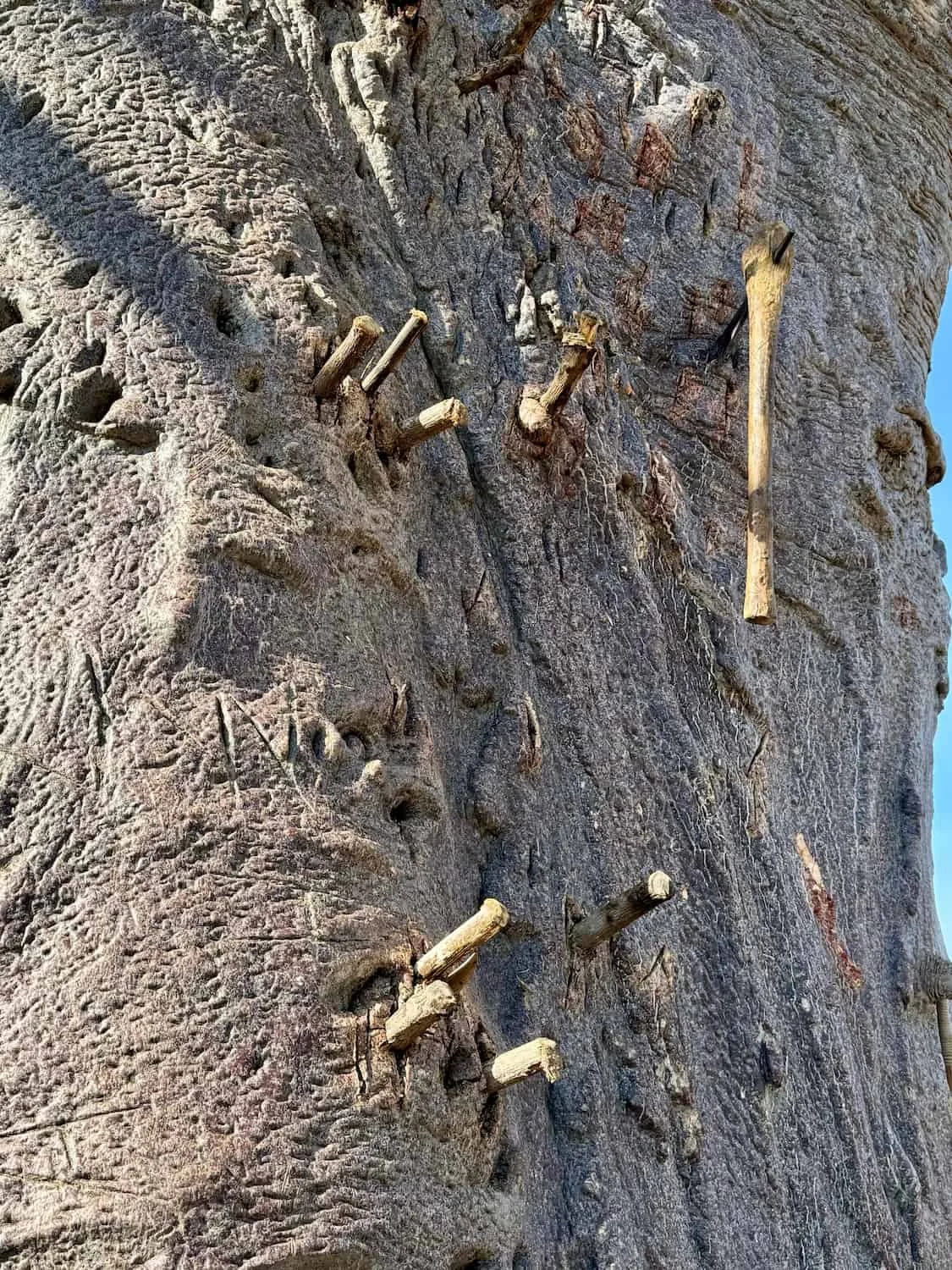
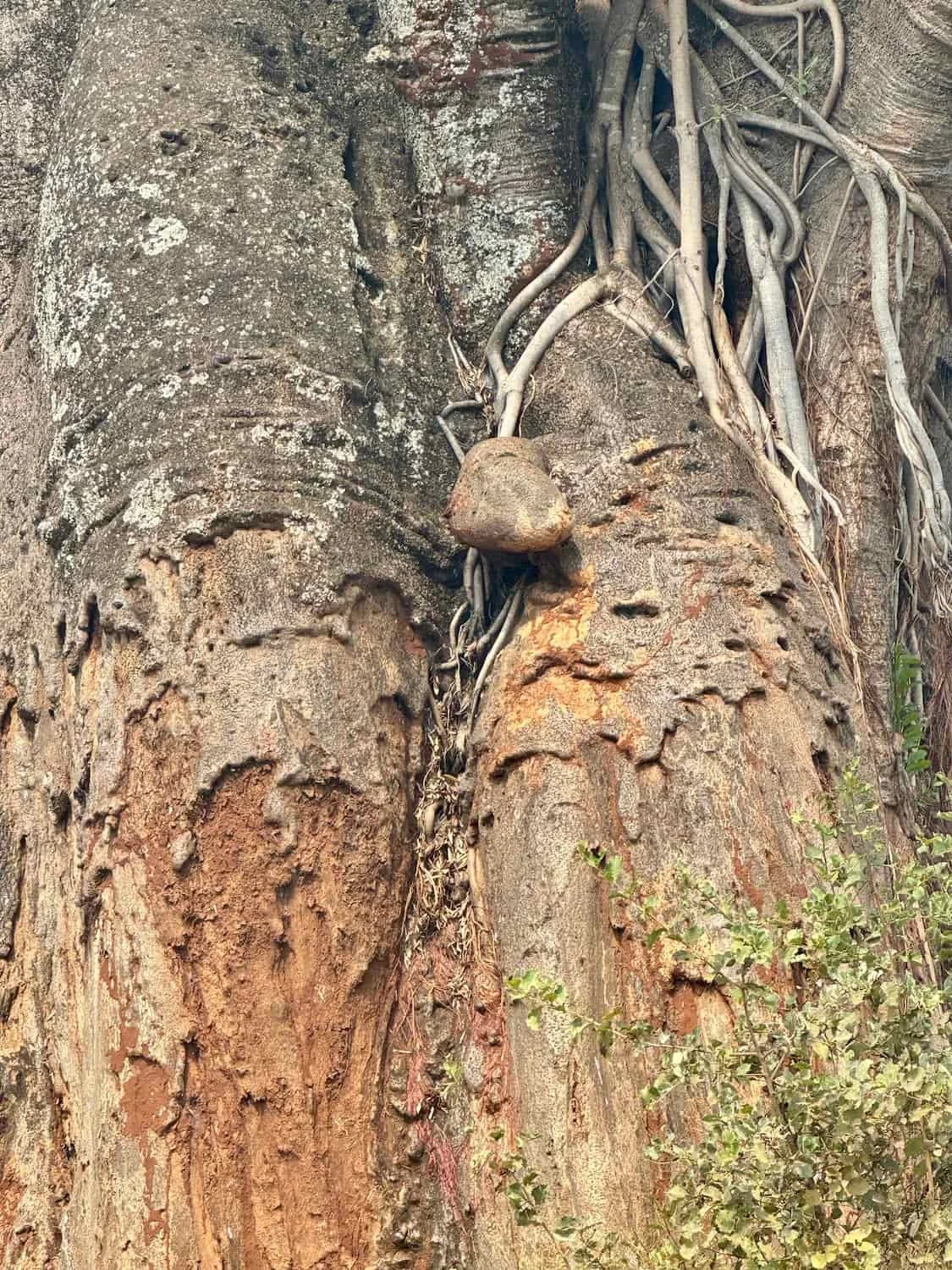
Baobab Flowers and Pollination
When a baobab tree reaches roughly 8 to 23 years of age, it begins to produce large, pendulous white flowers. These blossoms are beautifully fragrant when they first open in the late afternoon, but they last for only a single night. As the flower ages, its scent shifts to a pungent, carrion-like smell—an adaptation that attracts fruit bats, the tree’s primary pollinators, along with insects.
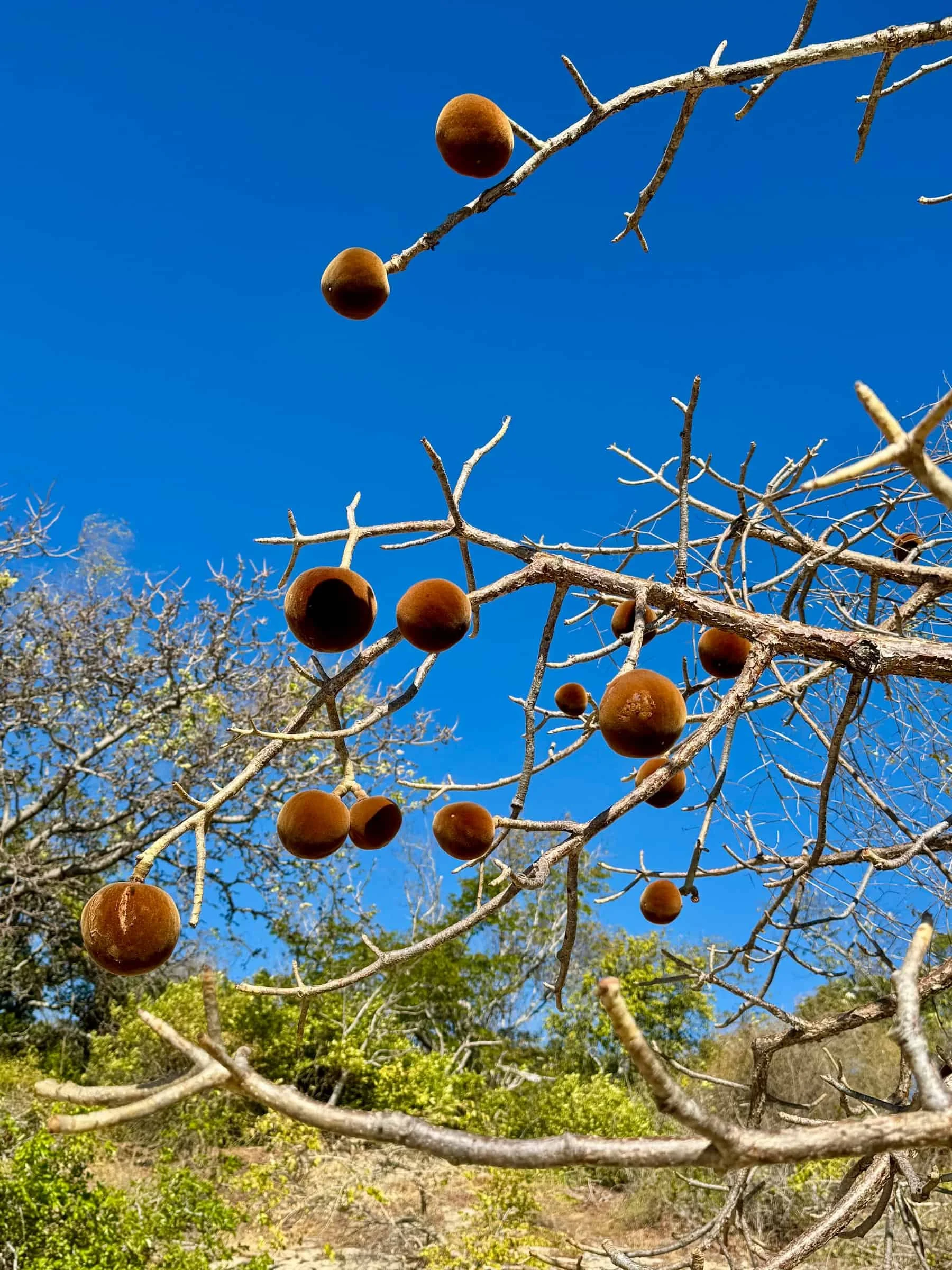
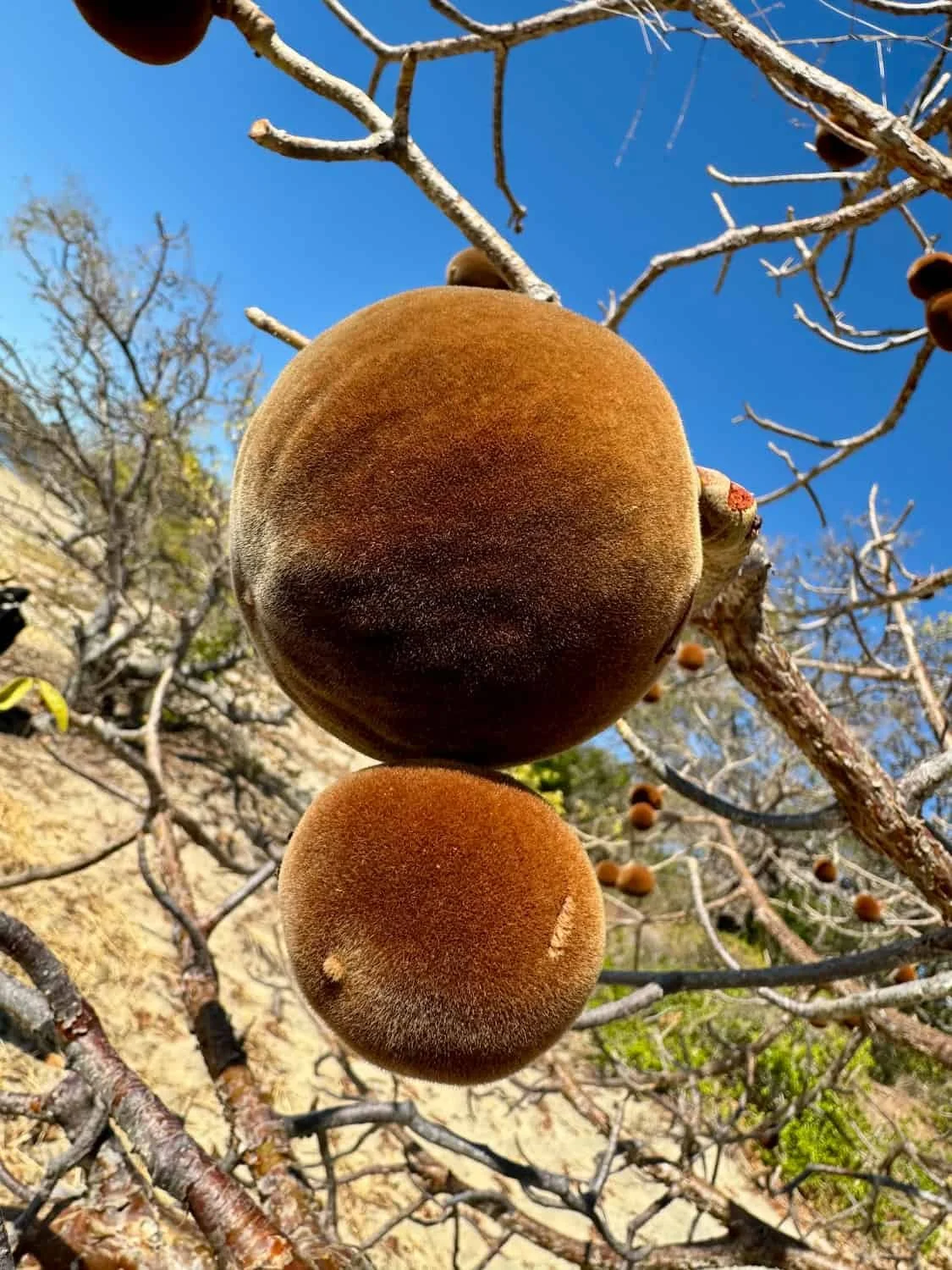
Once the flower fades, a seed pod develops that dangles from the branches like a large, velvet-covered gourd. These pods themselves have practical uses: dried pods serve as food containers and drinking vessels in many communities. Because of the enormous economic potential of baobab fruit, researchers are studying ways to shorten the time it takes for young trees to begin flowering.
Ecological Role and Wildlife
In Tarangire and across the African savannah, baobabs are ecosystem anchors. Their hollow trunks provide shelter for bats, birds, mongoose, and even snakes. The flowers feed nocturnal pollinators, the fruit sustains baboons and other primates, and the water-rich bark nourishes elephants during drought. Baobabs also help keep soil conditions humid, promote nutrient recycling, and prevent soil erosion — making them critical to the health of the entire savannah ecosystem.
The Cultural Meaning of the Baobab in Africa
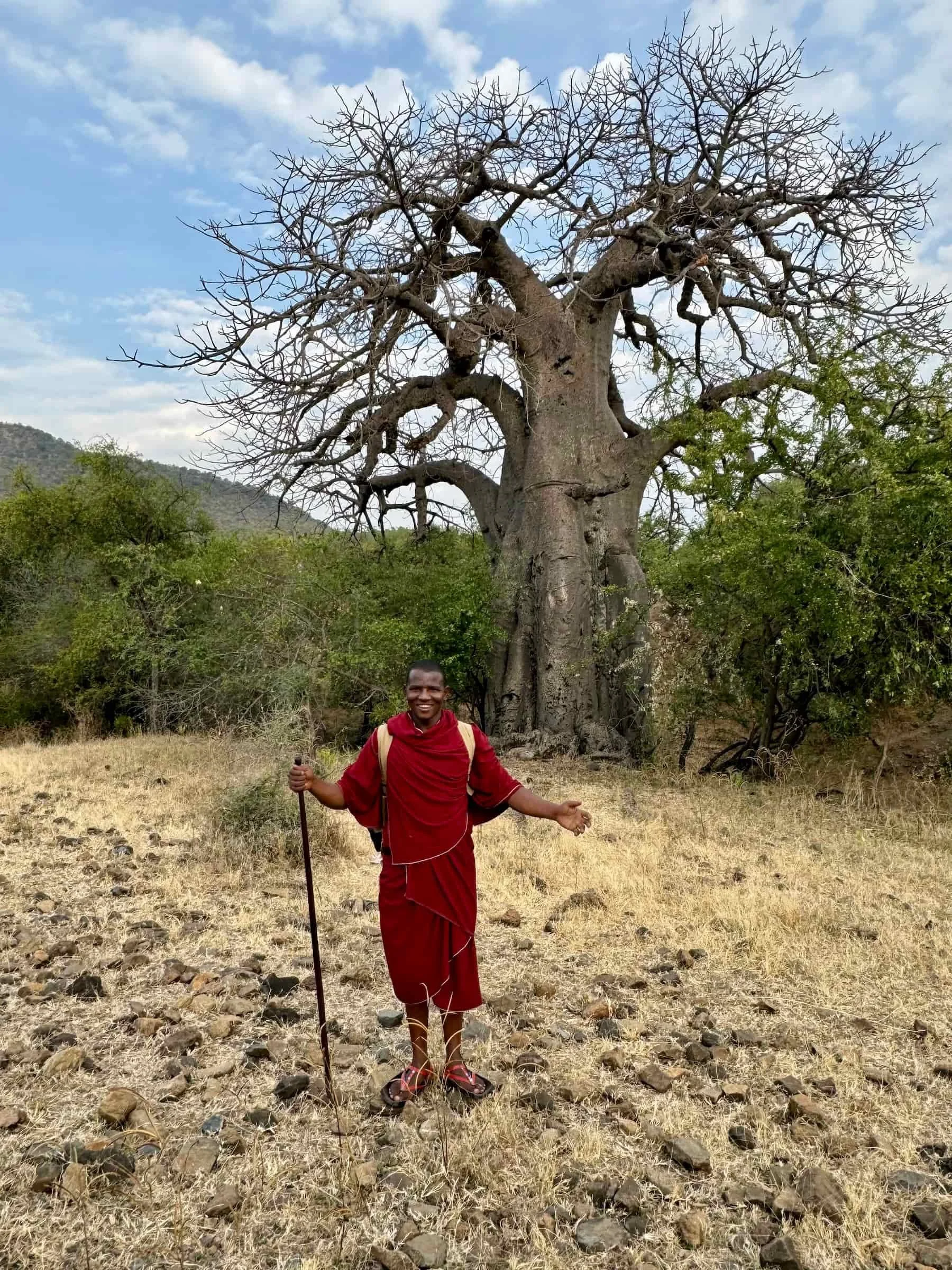
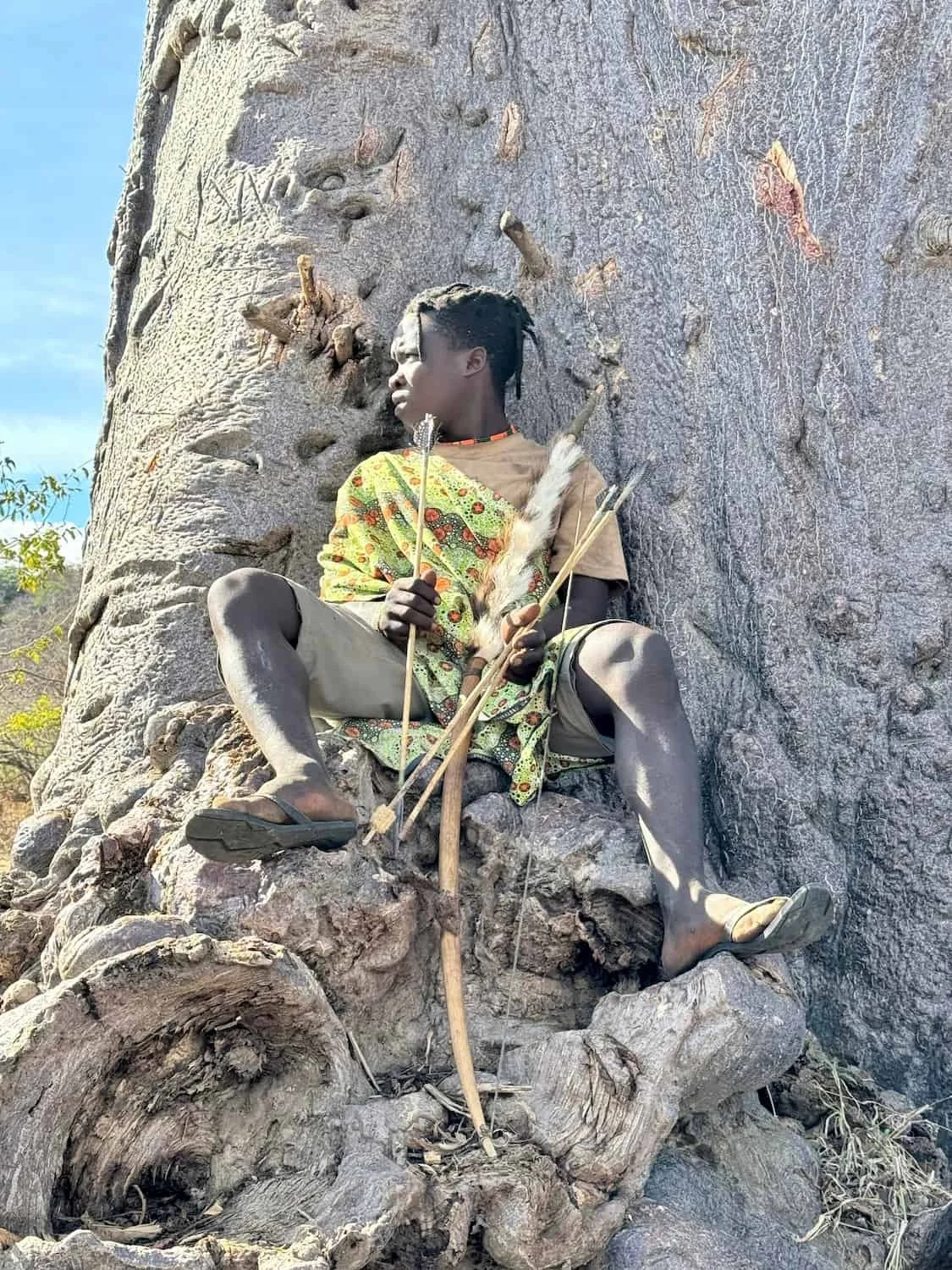
Across the continent, the baobab holds deep cultural and spiritual significance. In many communities, baobabs serve as gathering places for village meetings, ceremonies, and storytelling. Each African country—and often each region within a country—has its own legends and traditions surrounding the tree.
In Tanzania, the cultural traditions surrounding the baobab are closely tied to the rhythms of rural life. Your safari guides will be familiar with the local tales and can share the stories that have been passed down through generations in the communities around places like Tarangire and the Maasai Steppe.
“Seeing one of these giant trees in Africa and being inside one of them is certainly an unforgettable experience. Hearing the stories about the tree is even better because they tell of a deep respect for this important tree by the African people.”
Threats to the Baobab Tree
Despite their remarkable resilience, baobabs face growing threats across their range. Scientists have documented the collapse and death of some of Africa's oldest and largest baobabs since the early 2000s, likely driven by a combination of rising temperatures, prolonged drought, and disease. Climate change is altering the conditions these ancient trees have relied on for millennia.
Nowhere is the situation more urgent than in Madagascar, home to six endemic baobab species found nowhere else on earth. Madagascar has lost nearly a quarter of its tree cover in the past two decades, with roughly 4,000 hectares of forest disappearing each year. Slash-and-burn agriculture, large-scale maize cultivation, mining operations, and illegal logging are destroying baobab habitat at an alarming rate. Perrier's baobab (Adansonia perrieri) is now critically endangered, with fewer than 250 mature trees remaining across just ten known locations in the north of the island. The largest single population has only 43 trees. Grandidier's baobab and the Suarez baobab are both classified as Endangered, and research published in Biological Conservation warns that two of Madagascar's endemic species could lose the majority of their habitat within the next 70 years. Having visited Madagascar and witnessed firsthand how these protected trees are still dying, Duma Explorer owner Stacy can attest that the threat is not abstract — it is visible and heartbreaking.
Compounding the problem, the giant lemurs and giant tortoises that once dispersed baobab seeds in their dung went extinct roughly 500 years ago. Without these natural seed-spreaders, wild baobab regeneration has slowed dramatically — it is now rare to find a baobab seedling even 20 years old in Madagascar's forests.
The protected national parks and conservation areas of Tanzania and Kenya play a vital role in safeguarding these ancient trees. In East Africa, baobabs within parks like Tarangire benefit from habitat protection that their Malagasy cousins often lack. When you visit a park like Tarangire, your park fees directly support the conservation of the ecosystems that baobabs and countless other species depend on.
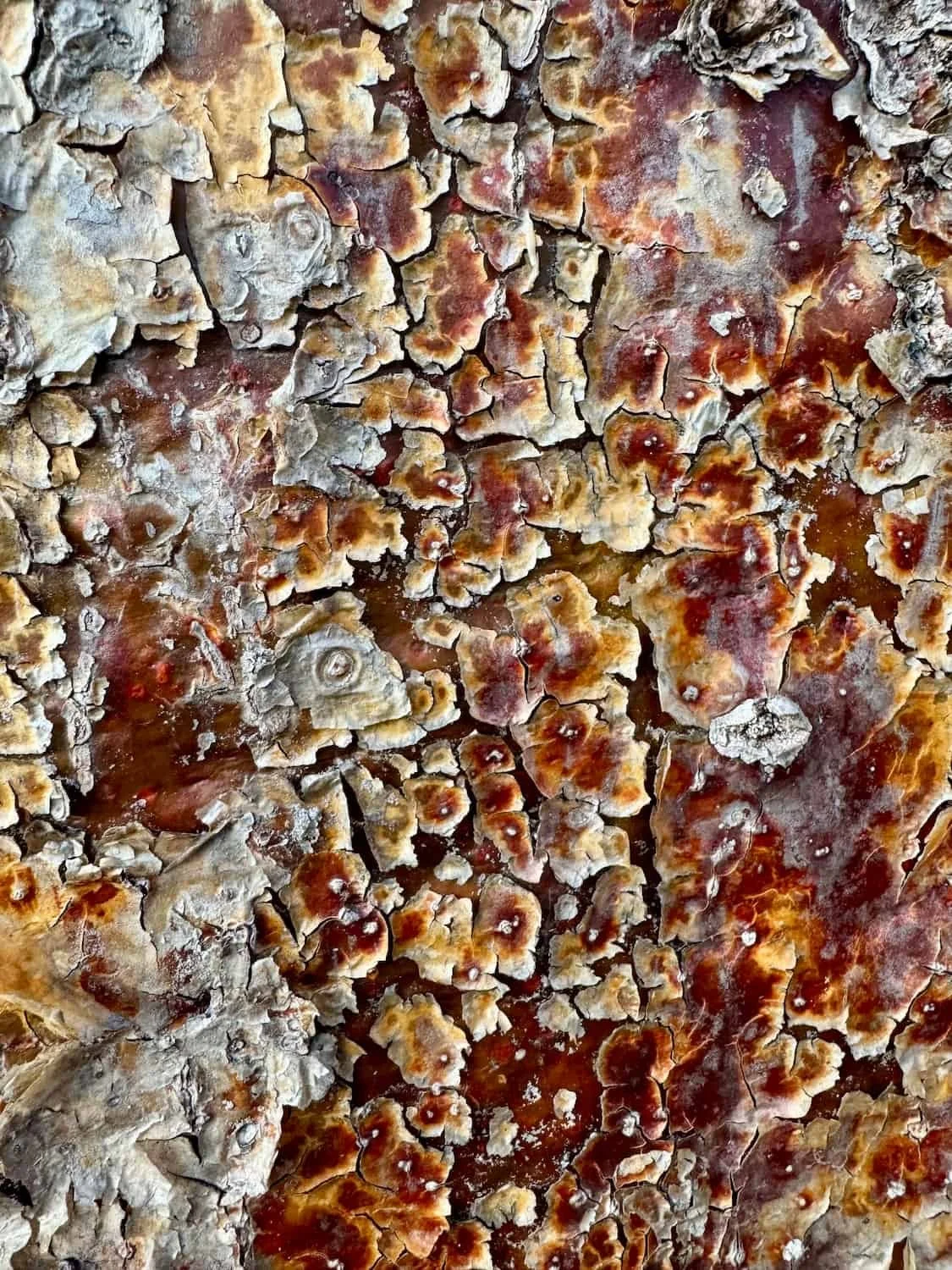
The Baobabs of Anjajavy Forest, Western Madagascar
Frequently Asked Questions About Baobab Trees
-
For decades, scientists debated whether baobabs originated in mainland Africa, Australia, or Madagascar. A landmark 2024 genomic study published in Nature settled the question: all eight baobab species trace their lineage back to Madagascar, where the genus first diversified roughly 21 million years ago. Over millions of years, ecological competition, volcanic activity, and shifting sea levels drove the evolution of six distinct species across the island. Two species then made astonishing oceanic voyages — their buoyant seed pods carried by the Indian Ocean gyre, a system of rotating currents that circulates clockwise past Madagascar, east to Australia, and back west to the African coast. This is how the African baobab and the Australian boab each arrived on their respective continents and evolved into the species we see today.
-
Baobab trees are among the longest-lived flowering plants on earth. The oldest specimen ever documented — the Panke baobab in Zimbabwe — was approximately 2,450 years old when it died in 2011. Many baobabs in Tanzania's Tarangire National Park are believed to be over 1,000 years old.
-
Nearly 300 uses have been documented. The fruit pulp is a nutritional superfood rich in Vitamin C and antioxidants. The bark provides fiber for rope and textiles. The leaves and seeds are used in food and traditional medicine. The oil is used in cosmetics for skin care.
-
Yes. Baobab fruit dries naturally on the branch and contains a powdery white pulp with a tangy, citrus-like flavor. It is exceptionally high in vitamin C (up to six times more than oranges), calcium, potassium, and dietary fiber. Baobab powder is increasingly popular as a superfood ingredient in smoothies, juices, and health foods worldwide.
-
Baobab trunks are made of soft, fibrous wood that acts like a sponge, absorbing and storing vast quantities of water during the rainy season. The largest specimens can hold up to 120,000 liters (over 30,000 gallons). During the dry season, the tree draws on these reserves to survive, and its trunk can visibly shrink in circumference by several centimeters as the water is consumed. This adaptation is what allows baobabs to thrive in some of Africa's driest landscapes, and it also makes them a critical resource for elephants, who strip the bark to access the moisture inside.
-
During the dry season, baobabs shed all of their leaves, leaving only bare, gnarled branches that resemble roots sticking into the sky. This distinctive appearance has inspired legends across Africa that the gods planted the tree upside down. The branch structure is actually an adaptation that reduces water loss during drought.
-
Baobab trees can reach up to 65 feet (20 meters) in height. However, they are more remarkable for their width: trunks commonly measure 36 to 46 feet (11–14 meters) in diameter.
-
The baobab earned this name because it provides food, water, and shelter to both humans and wildlife. Its fruit is a nutrient-rich superfood, its bark is used for rope and textiles, its leaves are edible, and its trunk can store up to 120,000 liters of water. Hollow trunks also serve as shelter for animals and have historically been used by humans as storage, shelter, and even as places of worship.
-
Tarangire National Park in northern Tanzania is widely considered the best place to see baobab trees in Africa. Often called the “baobab capital of the world,” Tarangire has hundreds of enormous ancient baobabs scattered across its savannahs. Madagascar's Avenue of the Baobabs near Morondava is another famous location, featuring the striking Grandidier's baobab species.
-
Tarangire is spectacular year-round, and the best time to visit depends on what you want to see. The dry season from June through October is peak safari season — wildlife concentrates along the Tarangire River, creating dramatic scenes of elephants, zebras, and wildebeest gathered beneath ancient baobab trunks. If you want to see the baobabs in full leaf with lush green canopies, visit during the wet season from November through May, when the rains transform the landscape and the trees come alive with foliage. The park is just two hours from Arusha and is easily combined with visits to the Serengeti and Ngorongoro Crater.
-
There are eight recognized species of baobab in the genus Adansonia. One species (Adansonia digitata) is found across mainland Africa, one species (Adansonia gregorii) is native to Australia, and six species are endemic to Madagascar. The African baobab is the largest and most widespread of the eight species.
-
The African baobab (Adansonia digitata) is currently listed as Least Concern, but scientists have raised alarms after many of Africa's oldest and largest baobabs died in the early 2000s, likely due to climate change. Several Madagascar species are in more immediate danger — Perrier's baobab is Critically Endangered with fewer than 10 known populations remaining, and both Grandidier's baobab and the Suarez baobab are classified as Endangered.
See Ancient Baobabs in Person
Wander beneath 1,000-year-old baobab trees in Tarangire National Park on a guided Tanzania safari with Duma Explorer. Our expert guides share the legends, ecology, and hidden secrets of these magnificent trees — an experience no photograph can capture.
Start Planning Your SafariThis article draws on research by Maryann Readal of The Herb Society of America, who has joined more than fifteen safaris with Duma Explorer and interviewed safari rangers and guides about the baobab tree during a 2022 trip to Kenya.