Explore Kenya: 2026 Safari Glossary & Itinerary Decoder
TLDR
Kenya is one of the world’s great safari destinations, but the planning vocabulary can be confusing. This glossary explains the terms you will encounter while comparing itineraries and quotes, from “conservancy” to “park fees” to “fly-in safari.” Understanding these words turns vague excitement into clear booking decisions. Use this guide alongside any Kenya itinerary to decode what operators actually mean and ask the right questions before committing money.
2026 Kenya Safari Planning: Key Takeaways Daily Entry Fees: Non-resident adults pay $100 (Low Season: Jan–June) or $200 (Peak Season: July–Dec) for the Maasai Mara. KWS-managed parks (Amboseli, Nakuru) range from $50–$90. Entry Logistics: All international travelers must apply for a Kenya eTA via the official portal at least 72 hours before departure. Maasai Mara tickets are valid for 12 hours (6 AM to 6 PM) for guests staying outside the reserve, meaning a morning game drive on departure day requires a new ticket. Best Time to Visit: Peak migration activity occurs from July to September, but the "Green Season" (April–May) offers the best value with 50% lower park fees.
What Does “Explore Kenya” Actually Mean?
When travelers talk about exploring Kenya, they usually mean a safari-first trip anchored by the Maasai Mara, Amboseli, or both, then expanded with Rift Valley lakes, Nairobi, Mount Kenya, or the Indian Ocean coast. But Kenya is broader than safari. The country offers alpine trekking, Swahili Coast culture, freshwater lake adventures, and logical connections to Tanzania, Uganda, Rwanda, and Zanzibar.
Holiday and leisure travel accounted for 44.2% of all international arrivals to Kenya in 2024, the largest single category source. That same year, Kenya recorded roughly 2.4 million international visitors, a 15% increase from the year before, with the United States as the top source market contributing 306,501 arrivals source. Demand is strong and growing. The question is not whether to explore Kenya but how to plan it well.
Planning gets easier once the vocabulary makes sense. This glossary covers the safari terms, destination names, cost structures, entry requirements, and seasonal concepts you will need before booking.
Explore Kenya at a Glance
Capital: Nairobi
Signature safari areas: Maasai Mara, Amboseli, Samburu, Tsavo East and West, Lake Nakuru, Ol Pejeta, Nairobi National Park
Adventure areas: Mount Kenya (Africa’s second-highest peak at 5,199 m, a UNESCO World Heritage Site), Hell’s Gate, Lake Naivasha source
Beach and coast: Diani, Mombasa, Watamu, Lamu
Entry requirement: Electronic Travel Authorization (eTA) required before arrival unless exempt source
Health: Consult a travel clinic before departure. Malaria precautions are recommended for most safari areas below 2,500 m source
Best classic safari windows: Late June through September and December through February, with important caveats depending on region and wildlife goals
Climate pattern: December through March is fairly dry, late March through May is the main rainy season, and June through August sees little precipitation source
How to Use This Kenya Travel Glossary
Use this glossary in three ways: to decode safari quotes, to compare destinations, and to ask better questions before booking.
When you receive a quote from any operator, check whether these items are explicitly addressed:
-
Are park fees and conservancy fees included at the correct seasonal rate?
-
Is the vehicle private or shared?
-
Is the safari by road, air, or both?
-
How many nights are actually spent in wildlife areas versus in transit?
-
Which fees reflect high-season versus low-season rates?
-
Does the route avoid unnecessary backtracking?
-
Is the trip designed around migration probability or just generic dates?
Every glossary entry below includes a plain definition, an explanation of why it matters, and a planning tip.
Essential Kenya Safari Terms
Big Five
What it means: Lion, leopard, elephant, rhino, and buffalo.
Why it matters: Many first-time travelers build their expectations around seeing all five, but a good safari should also value cheetahs, giraffes, wild dogs, birds, landscapes, and animal behavior. Do not choose a safari only by Big Five marketing claims. Choose by habitat diversity, guide quality, and time in the field.
Game Drive
What it means: A guided wildlife-viewing drive, usually in early morning and late afternoon.
Why it matters: This is the core safari activity. Morning and late-afternoon drives consistently outperform midday drives because wildlife is more active in cooler hours.
Private Vehicle
What it means: A safari vehicle reserved for your party alone.
Why it matters: Gives control over pace, photography stops, bathroom breaks, and wildlife priorities. Practitioners on Reddit report that private vehicles are most worth it when you have specific goals that might not match other guests, such as spending extra time with leopards instead of stopping at every lion sighting source.
Shared Vehicle
What it means: A safari vehicle shared with other lodge or camp guests.
Why it matters: Can reduce cost, but flexibility depends on the camp and the group dynamic. One common misconception is that shared drives are always limited to two hours. Reddit users pushed back on this, noting that some camps run longer morning and evening drives. Quality varies by lodge source.
4x4 Safari Vehicle
What it means: A four-wheel-drive vehicle, often a Land Cruiser type with a pop-up roof for game viewing.
Why it matters: Road and track conditions in Kenya parks can be rough, muddy, or slow. A traveler who visited Amboseli and Maasai Mara warned on Reddit that minivans were getting stuck in mud and recommended confirming a 4x4 jeep rather than assuming “safari vehicle” means four-wheel drive source.
Planning tip: Ask what vehicle type is guaranteed, not just whether transport is included.
Tented Camp
What it means: Safari accommodation using canvas-style tents, often with real beds and en-suite bathrooms.
Why it matters: “Tented” does not mean basic. Many tented camps in Kenya are luxury properties with hot showers, flush toilets, and dining under the stars. The spectrum ranges from simple camping to permanent luxury tented lodges that rival high-end hotels.
Mobile Camp
What it means: A camp that moves seasonally or is set up temporarily to follow wildlife patterns.
Why it matters: Mobile camps can put you closer to migration routes or remote areas that permanent lodges cannot reach.
Fly-in Safari
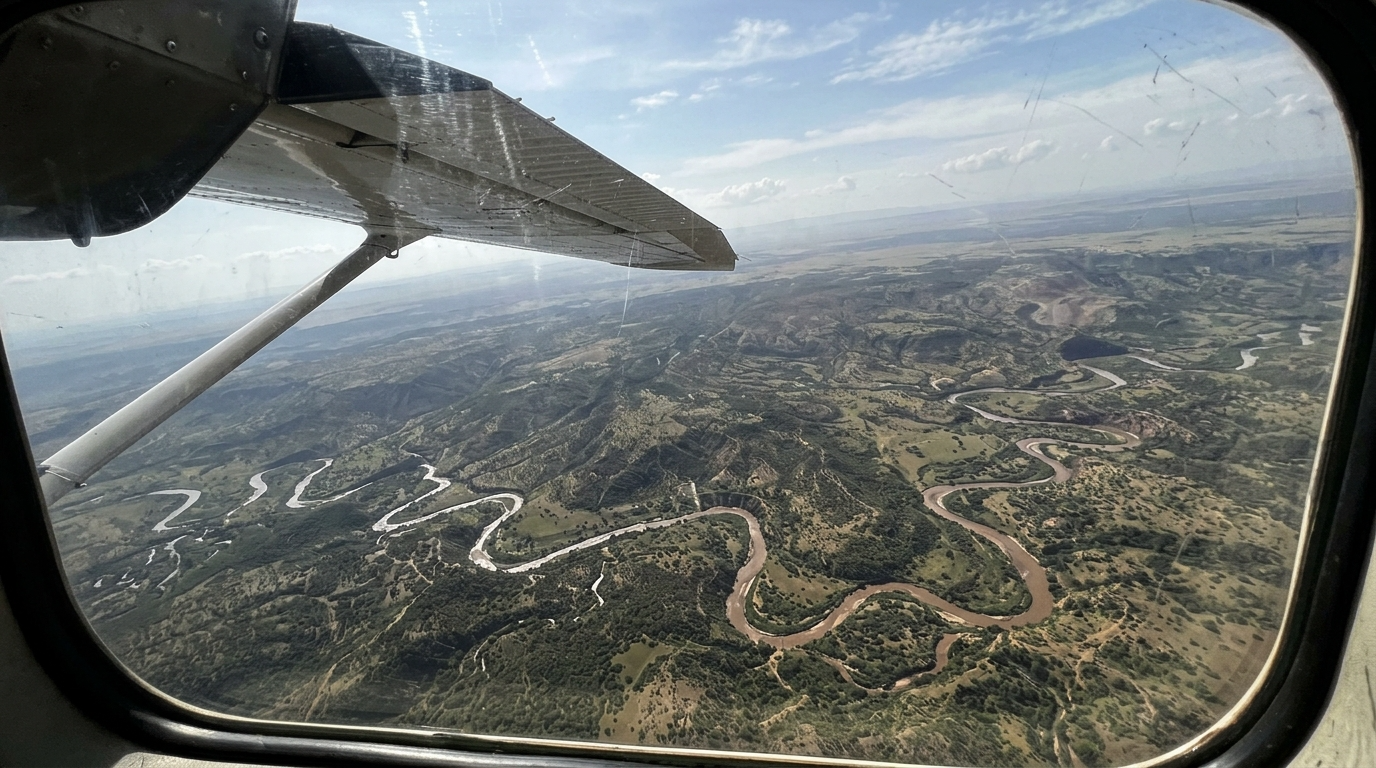
What it means: A safari using small aircraft or scheduled bush flights between parks and camps.
Why it matters: This is not just a luxury indulgence. It saves road-transfer time and can make a short trip feel dramatically richer. Forum users on Tripadvisor discussing Mara-to-Amboseli routing warned that road transfers can take around 9 hours source. Flying one leg can buy back a full game-drive day.
Planning tip: For short trips, flying may be a value decision, not a luxury decision.
Road Safari
What it means: A safari where most transfers between parks happen by vehicle rather than aircraft.
Why it matters: It can be economical and scenic, but Kenya distances are real. A Reddit traveler who did a compact 7-day Kenya trip warned that much of the trip was transit and long days in the vehicle source. A route that looks efficient on a map can feel exhausting on the ground.
Sundowner
What it means: A sunset drink or stop in the bush, usually after an afternoon game drive.
Why it matters: It is a classic safari ritual and a highlight for honeymooners or anyone wanting a quiet moment in the landscape. Most commonly offered in conservancies or private camps.
Safari Quote Decoder
When comparing Kenya safari quotes, watch for these terms:
“Park fees included” means entry and conservation fees are covered, but ask which parks and for how many days.
“Private 4x4” means your party has its own vehicle, but confirm this is guaranteed for all game drives, not just transfers.
“Shared game drives” means you share the vehicle with other guests. Ask what typical drive lengths are.
“Full board” means meals are included, but drinks, laundry, and tips may not be.
“Conservancy fee” is a separate charge for private or community conservation areas. Ask whether it is included in the quoted price.
Kenya Parks, Reserves, and Conservancies
The single most important distinction for Kenya safari planning is understanding the difference between national parks, national reserves, and private conservancies. It affects crowding, permitted activities, fees, wildlife density, and whether you are optimizing for migration drama or a more private experience.
National Park
What it means: A protected area managed by a government wildlife authority, in Kenya’s case the Kenya Wildlife Service (KWS).
Kenya examples: Nairobi National Park, Amboseli, Tsavo East, Tsavo West, Lake Nakuru, Mount Kenya.
Why it matters: National parks have formal entry fees, regulations, and gate hours. The KWS 2025 fee schedule shows non-resident adult rates of USD 90 for Amboseli and Lake Nakuru, USD 80 for Nairobi National Park and Tsavo East/West, USD 70 for Mount Kenya, and USD 50 for parks like Hell’s Gate and Mount Longonot source.
National Reserve
What it means: A protected area often managed at the county level rather than by KWS.
Kenya example: Maasai Mara National Reserve is managed by Narok County structures. Its fee schedule is separate from KWS. Narok County’s approved Finance Act lists non-resident adult fees at USD 200 during high season (July through December) and USD 100 during low season (January through June) source. Verify live fees close to booking because implementation can change.
For a deeper look at Mara planning, costs, and timing, see our Maasai Mara safari guide covering costs, best time, and tips.
Private Conservancy
What it means: A conservation area created through private or community land agreements, usually with controlled access and lodge partnerships.
Why it matters: Conservancies can offer fewer vehicles, night drives, guided bush walks, and off-road driving that national reserves may not permit. The Maasai Mara Wildlife Conservancies Association frames its mission around conserving the Greater Mara ecosystem through community protected areas that support biodiversity, Maasai prosperity, and tourism source.
A conservancy is not automatically better or worse than the reserve. It is a different safari style. A LuxurySafari Reddit thread showed real confusion about whether migration herds reach private conservancies. Several experienced travelers agreed that conservancies can have resident wildebeest and zebra and excellent guiding, but the biggest migration concentrations are time- and location-dependent source.
Planning tip: For the Mara, a strong itinerary may use a conservancy stay for lower crowding and day trips into the reserve for classic migration sightings.
Park Fees and Conservation Fees
What it means: Mandatory fees paid to enter parks, reserves, sanctuaries, or conservation areas.
Why it matters: These are not operator markups. They are required conservation-access charges that can meaningfully affect quote comparisons. A traveler comparing two Kenya safari quotes may think one operator is overcharging, but the difference may simply come from whether the quote includes current non-resident park fees.
When comparing quotes, ask: Are park fees included? Are conservancy fees included? Are fees based on 12-hour or 24-hour validity? Are peak-season rates reflected?
Non-Resident
What it means: Kenya’s fee regulations define “non-resident” as a national of any country other than an East African citizen or African citizen source.
Why it matters: Most U.S., Canadian, European, Australian, and Asian travelers pay non-resident rates. Understanding this classification helps when reading fee tables or comparing quotes that use different terminology.
Table: 2026 Kenya Park Fee Structure (Non-Resident Adult)
|
Destination |
Low Season (Jan - June) |
Peak Season (July - Dec) |
Management |
|
Maasai Mara National Reserve |
$100 |
$200 |
Narok County |
|
Amboseli National Park |
$90 |
$90 |
KWS |
|
Lake Nakuru National Park |
$90 |
$90 |
KWS |
|
Nairobi National Park |
$80 |
$80 |
KWS |
|
Tsavo East / West |
$80 |
$80 |
KWS |
|
Hell’s Gate / Mt. Longonot |
$50 |
$50 |
KWS |
Wildlife and Season Terms
Travelers should stop asking “What is the best month for Kenya?” and start asking “What wildlife behavior am I optimizing for?”
Great Migration
What it means: A year-round circular movement of wildebeest, zebra, and gazelles across the Serengeti-Mara ecosystem, driven by rainfall, fresh grass, and water availability, not fixed calendar dates source.
Why it matters: The migration is often oversold as a predictable event. It is not. The Mara is the northern dry-season refuge and seasonal climax of the broader migration, but the ecosystem spans both Kenya and Tanzania. A successful migration safari depends on time on the ground, guide quality, camp location, and flexibility.
For a month-by-month breakdown of migration patterns across both countries, read our guide to the wildebeest migration and where to see it.
Migration Claims vs. Reality
Here is what travelers commonly hear and what is actually closer to the truth:
“Go in August for the crossing.” August can be good, but crossings depend on rain, grass, herd movement, and patience.
“The migration is in Kenya.” The migration is a cross-border Serengeti-Mara ecosystem movement. The Mara is the northern seasonal phase.
“A crossing is guaranteed.” No ethical operator should guarantee a river crossing. It is a window of probability.
“More nights means luxury padding.” More nights increases odds because wildlife behavior is unpredictable.
“The Mara is always best.” The Mara is compact and productive. The Serengeti is larger and can feel less crowded outside crossing bottleneck periods. A Reddit discussion around Great Migration planning highlighted this trade-off: the Mara produces fast sightings in a compact area, but it can be crowded in peak migration season, while the Serengeti offers more room to spread out source.
If you are trying to decide between the two countries for migration, our Kenya vs Tanzania safari comparison breaks down the practical differences.
River Crossing
What it means: A dramatic moment when herds cross rivers such as the Mara River during migration.
Why it matters: This is what many travelers picture when they imagine a migration safari. Crossings are real and powerful, but they are unpredictable and can involve long waits at the river with no guarantees.
Calving Season
What it means: The period when many wildebeest calves are born, mainly in the southern Serengeti and Ndutu ecosystem in Tanzania. The Mara migration guide places calving in January through March on the southern Serengeti short-grass plains source.
Why it matters: Calving is a Tanzania-centered experience rather than a Kenya one. Travelers drawn to newborn wildlife and predator action during calving should consider a Tanzania safari itinerary for that portion of the migration cycle.
Dry Season
What it means: Lower-rainfall periods when wildlife viewing can be easier because animals gather near water and vegetation is thinner.
Kenya timing: December through March is fairly dry, and June through August has little precipitation source. These overlap with peak safari windows.
Green Season
What it means: Rainier, lusher periods with fewer crowds, potentially lower prices, and strong birding or photography conditions.
Why it matters: Green season is not bad season. A travel professional writing on LinkedIn described strong Mara wildlife sightings in April with few vehicles and limited rain source. It is a trade-off: fewer vehicles and beautiful landscapes versus more weather variability and less predictable migration positioning.
Shoulder Season
What it means: The transition period between peak and low seasons.
Why it matters: Can offer better value and fewer vehicles while still delivering good wildlife viewing. Worth considering for experienced travelers or those flexible on exact dates.
Birding Safari
What it means: A safari built around birdlife rather than only mammals.
Why it matters: Kenya has major Rift Valley lakes, wetlands, forests, and savannah habitats. Serious birders can find extraordinary variety, particularly around Lake Nakuru, Lake Naivasha, and the coastal forests.
Key Places to Know When You Explore Kenya
Classic Safari Destinations
Maasai Mara / Masai Mara. Kenya’s most famous safari reserve and the northern part of the Serengeti-Mara ecosystem. Best known for big-cat density and the migration’s Mara phase. The spelling variation exists because “Maasai” is more culturally accurate while “Masai Mara” remains common in search and marketing.
Mara Triangle. The western section of the Maasai Mara ecosystem, often discussed for migration access and lower crowding relative to some main-reserve areas.
Amboseli. A southern Kenya park renowned for elephants and views toward Mount Kilimanjaro. Often paired with the Mara for a classic first Kenya safari. An experienced itinerary writer recommends early and late game drives in Amboseli to catch elephant movement to and from the swamps source.
Lake Nakuru. A Rift Valley lake national park known for rhinos, birdlife, and its practical role breaking the long drive between the Mara and Amboseli.
Samburu. A northern Kenya safari area known for drier landscapes and species not typically found on southern circuits. Good for return visitors or those wanting Kenya beyond the Mara.
Tsavo East and Tsavo West. Two large national parks between the Nairobi/Amboseli area and the coast. Useful for bush-and-beach routing toward Mombasa or Diani. KWS lists non-resident adult fees at USD 80 for both source.
Nairobi National Park. Located about 10 km from Nairobi’s central business district, covering roughly 117 square kilometers. KWS describes it as a successful rhino sanctuary source. Useful for arrival-day or layover safari experiences.
Active and Adventure Destinations
Mount Kenya. Africa’s second-highest peak at 5,199 m and a UNESCO World Heritage Site, described as an ancient extinct volcano with glacier-clad summits and forested middle slopes source. Adds trekking and alpine scenery to a Kenya trip.
Hell’s Gate. A Rift Valley national park where cycling and walking are part of the appeal. Adds active adventure to a safari-heavy itinerary.
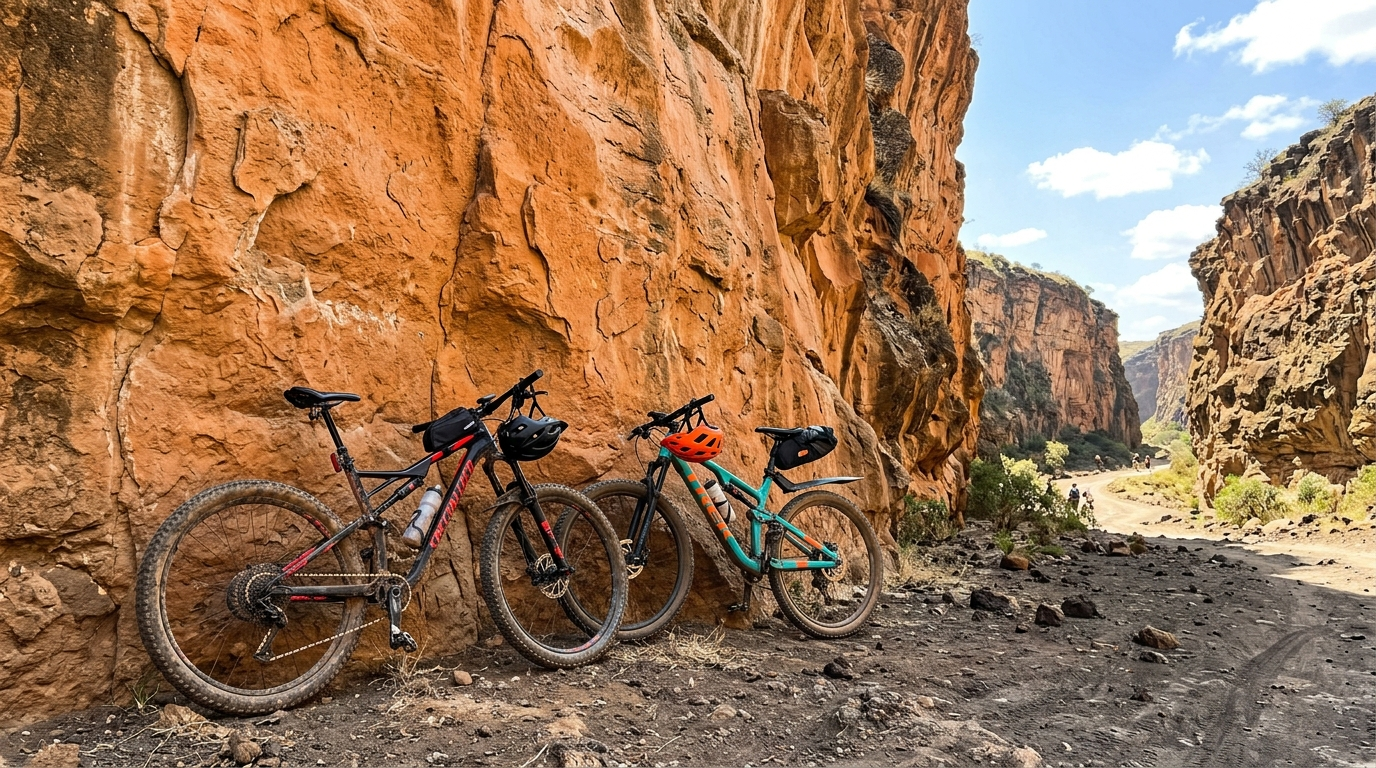
Lake Naivasha. A freshwater Rift Valley lake used for boat trips, hippo viewing, Crescent Island walks, and route breaks. Helps reduce road fatigue in itineraries that would otherwise involve very long drives.
Coast and Culture
Diani Beach. A south-coast beach destination often paired with safari. Popular for a safari-and-beach finish, particularly for honeymooners and families.
Lamu. A historic Swahili Coast destination known for culture, architecture, and island atmosphere. More cultural and atmospheric than a simple beach resort add-on. Check safety advisories because coastal-region advice can vary by area source.
Remote and Repeat-Traveler Destinations
Lake Turkana. A remote northern Kenya destination and UNESCO World Heritage landscape, described as East Africa’s most saline large lake and the world’s largest desert lake source. Better for adventurous repeat travelers than first-time safari itineraries.
Kenya Itinerary Terms
Bush Flight
A small-plane flight connecting safari airstrips. Saves time and can make a short itinerary far more comfortable.
Internal Transfer
The movement between airport, city hotel, camp, park, and beach. In Kenya, transfers can determine whether a trip feels smooth or exhausting.
Route reality check: If your itinerary has only one night in a park after a long transfer, you may be buying logistics more than safari.
Nairobi Overnight
A night in Nairobi before or after safari. Often needed for international flight schedules, jet-lag recovery, or onward domestic and bush flight connections.
Open-Jaw Itinerary
Flying into one city and out of another (for example, arriving in Nairobi and departing from Mombasa or Zanzibar). Can reduce backtracking and save a full day.
Cross-Border Safari
A safari that combines Kenya with Tanzania, Uganda, or Rwanda. The Serengeti-Mara ecosystem naturally spans two countries, and the best migration itinerary may follow the herds rather than stop at a border.
For travelers considering a multi-country trip, our guide on how to fit multiple experiences into one East Africa trip covers the logistics of combining safari, gorilla trekking, and beach in one journey.
Cost Terms That Affect Kenya Safari Quotes
Kenya is no longer automatically a budget safari destination. Park fees have increased materially, and one experienced travel writer benchmarks private Kenya safaris from roughly $300 per person per day including hotels, park fees, meals, transfers, and activities source. Understanding the cost vocabulary helps you compare quotes fairly.
Per Person Sharing
The standard pricing unit for safari quotes. It assumes two people sharing a room. Solo travelers pay more because of the single supplement.
Single Supplement
An additional fee for solo travelers occupying a room alone. Can add 30% to 60% to the per-person cost depending on the property.
Park Fees
Mandatory conservation access fees. As noted above, KWS 2025 non-resident adult rates range from USD 50 for scenic parks to USD 90 for premium parks like Amboseli, while Mara reserve fees are governed separately by Narok County and can reach USD 200 per person per day in high season.
Conservancy Fees
Separate fees charged for access to private or community conservancy land. These may or may not be included in your lodge rate. Always ask.
Internal Flights
Bush flights between parks. These add direct cost but can save full days of road travel. On a short trip, the math often favors flying.
High-Season and Low-Season Rates
Accommodation and park-fee prices that change by season. The Mara’s high-season fee is double its low-season rate. Lodges and camps follow similar patterns.
Tips
Gratuities for guides, camp staff, and sometimes drivers. Rarely included in quoted prices. Ask your operator for tipping guidance specific to your itinerary.
Balloon Safari
A hot-air balloon flight over the savannah, typically offered in the Maasai Mara and the Serengeti. It is a separate activity with its own fee, usually several hundred dollars per person. Worth it for many travelers, but not included in standard safari quotes.
Medical Evacuation Insurance
Insurance covering emergency transport to better medical care. The U.S. State Department recommends this for Kenya because medical facilities can be limited outside major cities source.
Entry, Health, and Safety Terms
A good planning glossary should reduce risk. This section does not replace personalized medical or legal advice, but it defines the terms and points to official sources.
eTA (Electronic Travel Authorization)
Kenya requires an electronic travel authorization before entry for most visitors. The official eTA portal is where travelers apply online. The Kenya Civil Aviation Authority confirms all travelers must apply and pay for eTA before travel unless exempt source. The U.S. State Department adds that visitors need a passport with at least two blank pages and six months’ validity source.
Planning tip: “Visa-free” does not mean “no paperwork.” Apply for the eTA well before your departure date.
Yellow Fever Certificate
Proof of yellow fever vaccination. The CDC says it is not required for direct travel from the United States to Kenya but is required for travelers arriving from countries with yellow fever transmission risk source. If your itinerary routes through a yellow-fever country (common with East Africa multi-country trips), you will need the certificate.
Malaria Prophylaxis
Prescription medication taken to prevent malaria. The CDC says malaria transmission occurs in all areas of Kenya including game parks below 2,500 m / 8,200 ft, with rare cases in highly urbanized central Nairobi. Recommended chemoprophylaxis options include atovaquone-proguanil, doxycycline, mefloquine, or tafenoquine source. Consult a travel clinic or healthcare provider before your trip.
Travel Advisory
Government guidance on safety and security risks. The U.S. State Department currently classifies Kenya as Level 2: Exercise Increased Caution due to crime, terrorism, civil unrest, kidnapping, and health, with some specific areas at higher risk levels source. The UK FCDO advises against all travel to specific parts of Kenya, particularly areas near the Kenya-Somalia border source.
Standard safari circuits (Mara, Amboseli, Nakuru, Tsavo, Diani) do not overlap with the highest-risk zones, but checking current advisories before finalizing an itinerary is essential.
Navigating the 2026 Kenya eTA
As of 2026, Kenya has fully transitioned from traditional visas to the Electronic Travel Authorization (eTA).
-
Application Window: Apply between 3 months and 3 days before travel.
-
Requirements: You will need a digital passport photo, flight itinerary, and proof of accommodation booking.
-
Fees: The eTA carries a standard processing fee (approximately $30–$35).
-
Yellow Fever: While not required for direct arrivals from Europe/USA, a certificate is mandatory if arriving from a country with risk of transmission (e.g., Ethiopia or Uganda).
Kenya vs Tanzania: Terms That Help You Choose
Kenya and Tanzania are not rivals. They are adjacent planning tools. The Great Migration does not belong to either country. It spans both.
Serengeti-Mara Ecosystem
The full migration circuit crosses from the Serengeti in Tanzania to the Masai Mara in Kenya and back. The Mara is the northern dry-season phase, while the Serengeti covers the broader annual cycle including calving, the western corridor, and the southern plains.
Northern Serengeti
The Tanzanian section closest to the Mara River crossings. For travelers who want river-crossing drama but prefer Tanzania’s larger ecosystem and potentially lower vehicle density, the northern Serengeti is the alternative to a Mara-based migration safari.
Ngorongoro Crater
A massive volcanic caldera in Tanzania’s northern circuit. Often combined with the Serengeti for travelers doing a broader East Africa trip.
Zanzibar and the Swahili Coast
Beach and culture add-ons that work after both Kenya and Tanzania safaris. Zanzibar connects easily from Dar es Salaam or Arusha. Diani Beach connects from Nairobi or Mombasa. The choice depends on your routing. For help deciding, see our Zanzibar vs mainland Tanzania beach guide.
Kenya is excellent for compact Mara-focused safaris and classic first-timer routes. Tanzania is powerful for the broader Serengeti migration cycle, Ngorongoro, Tarangire, and Zanzibar combinations. Many experienced travelers combine both.
Sample Ways to Explore Kenya
These sample routes show how the glossary terms translate into actual trip structures.
Route 1: First Kenya Safari (7 to 8 Days)
Nairobi overnight, Amboseli for 2 nights, Lake Naivasha or Lake Nakuru for 1 night, Maasai Mara for 3 nights, Nairobi departure.
Why this works: Covers elephants and Kilimanjaro views, a Rift Valley break, and Mara big-cat density. The Naivasha or Nakuru stop prevents an exhausting single-day drive between Amboseli and the Mara. Tripadvisor forum users discussing this routing warned that Mara to Amboseli can be around 9 hours by road, so breaking the journey is important source.
Route 2: Migration-Focused Kenya (6 to 7 Days)
Nairobi overnight, fly or drive to Maasai Mara, 4 to 5 nights in a Mara reserve and conservancy combination, Nairobi departure.
Why this works: More nights in one ecosystem increases chances of meaningful migration sightings. Splitting time between a conservancy (quieter, more activities) and the reserve (closer to classic migration action) gives the best balance.
Route 3: Kenya Plus Tanzania Migration Ecosystem (10 to 14 Days)
Maasai Mara or Nairobi, Northern Serengeti or Central Serengeti depending on season, Ngorongoro or Tarangire, optional Zanzibar or Swahili Coast.
Why this works: Treats the migration as one ecosystem across two countries rather than forcing it into one national itinerary. This is where an experienced East Africa trip designer adds the most value.
If a multi-country combination like this appeals to you, Duma Explorer designs custom itineraries across Tanzania, Kenya, Uganda, and Rwanda with in-house operations on the ground. The guide to fitting multiple experiences into one East Africa trip is a good starting point.
Route 4: Safari Plus Beach (10 to 12 Days)
Nairobi, Mara and/or Amboseli, Tsavo or flight connection, Diani Beach or Zanzibar depending on routing.
Why this works: Good for honeymooners and families who want decompression after early safari mornings. The coast provides a completely different rhythm.
Questions to Ask Before Booking
Before booking a Mara safari:
-
Are we staying in the reserve, a conservancy, or both?
-
Are Mara fees included at current seasonal rates?
-
How many full days are in the Mara versus in transit?
-
Is the vehicle private or shared?
-
Can we do full-day game drives?
-
What happens if the herds are not near camp?
Before booking a Kenya road safari:
-
What are the longest drive days?
-
Are roads paved, rough, or seasonal?
-
Can we fly one leg to save time?
-
Are we using a 4x4 or a minivan?
-
Are we losing prime game-drive hours to transfers?
Frequently Asked Questions
What does “explore Kenya” mean for travelers?
For most international visitors, exploring Kenya means a safari-centered trip built around the Maasai Mara and Amboseli, often extended with Rift Valley lakes, Nairobi city experiences, Mount Kenya, or a beach finish on the Indian Ocean coast. Kenya also connects naturally to Tanzania, Uganda, and Rwanda for broader East Africa itineraries.
How many days do you need to explore Kenya?
A focused first Kenya safari works well in 7 to 8 days covering Amboseli, a Rift Valley stop, and the Maasai Mara. Migration-focused trips benefit from 6 to 7 days concentrated in the Mara. Adding beach, Mount Kenya, or a cross-border extension to Tanzania pushes the trip to 10 to 14 days.
What is the difference between the Maasai Mara reserve and a Mara conservancy?
The reserve is the core public wildlife area managed by Narok County, with potentially more vehicles and stricter activity rules. Conservancies are adjacent community or private lands with controlled access, fewer vehicles, and often additional activities like night drives and bush walks. Wildlife moves freely between them, but the biggest migration herds tend to concentrate in the reserve during peak season.
When is the Great Migration in Kenya?
The migration’s Mara phase typically runs from roughly July through October, but crossings and herd positioning depend on rainfall and grazing conditions, not fixed dates. The broader migration is a year-round circular movement across the Serengeti-Mara ecosystem. For a complete timing guide, our Great Migration safari guide covers month-by-month patterns across both countries.
Are Kenya park fees included in safari quotes?
Not always. Some operators include all park and conservancy fees, while others list them separately. Ask explicitly whether the quote includes current-season fees for every park on the itinerary. This is one of the biggest sources of quote variation.
Do I need a visa or eTA for Kenya?
Most visitors need an electronic travel authorization (eTA) before arrival. Apply through Kenya’s official eTA portal before departure. You will also need a passport with at least two blank pages and six months’ validity.
Is Kenya safe for tourists?
The U.S. State Department rates Kenya as Level 2 (Exercise Increased Caution). Standard safari circuits like the Mara, Amboseli, Nakuru, and Diani do not overlap with the highest-risk zones. Check current advisories and avoid areas specifically flagged by your government’s travel guidance.
Should I choose Kenya or Tanzania for safari?
They serve different strengths and combine well. Kenya excels at compact Mara-focused safaris and classic first-timer routes. Tanzania offers the broader Serengeti migration cycle, Ngorongoro Crater, and Zanzibar. Our detailed Kenya vs Tanzania safari comparison walks through the trade-offs by wildlife, cost, crowding, and itinerary style.