

TL;DR
A photography group safari in Tanzania puts 3 to 8 photographers in a modified 4x4 with a pro photography guide or trained naturalist, typically running 7 to 14 days across the Serengeti, Ngorongoro, and Tarangire. Dedicated operators charge $6,990 to $17,700 per person depending on group size, trip length, and accommodation tier. The best departures sell out 6 to 12 months ahead. For some photographers, building a private group with friends and a skilled naturalist guide produces better results at a lower cost.
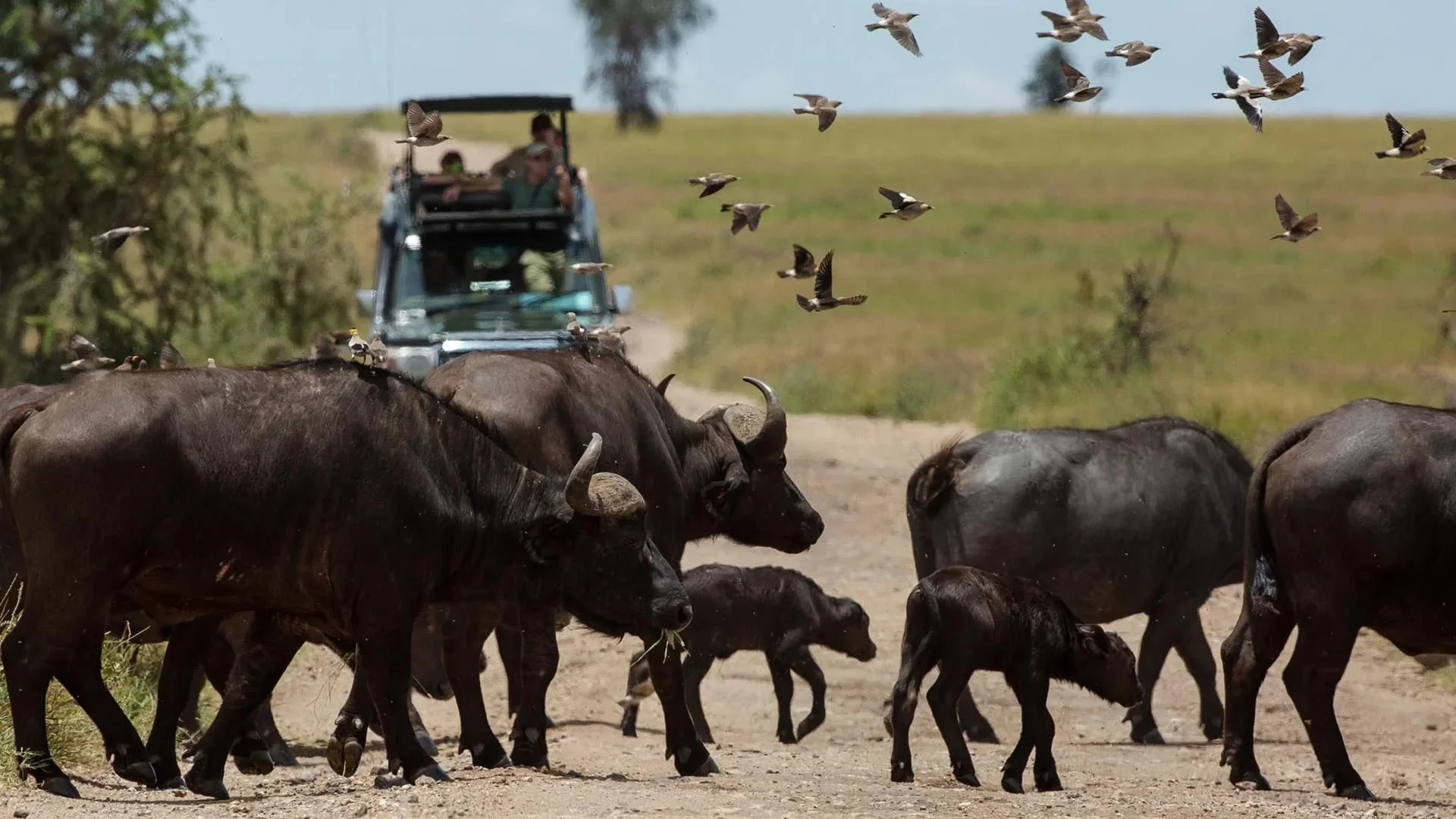
A photography group safari in Tanzania is not a standard game drive with a camera bag. It is a trip structured around light, animal behavior, and the patience required to capture a leopard descending a sausage tree or wildebeest pouring across the Mara River. Vehicles are modified with pop-up roofs and bean bag mounts. Schedules revolve around golden-hour departures rather than hotel breakfast times. Groups are kept small, typically four to six photographers per vehicle, so everyone has shooting space and the driver-guide can position for the best angles.
The challenge is choosing the right format. Dedicated photo safari companies run fixed-date group departures led by professional wildlife photographers, and they charge accordingly. But practitioners on Fodor’s Travel forums argue that a private vehicle with a great naturalist guide who understands animal behavior can deliver better images than a crowded group led by a famous photographer. Both paths have merit, and which one suits you depends on your skill level, budget, and how much creative control you want.
This guide compares the top operators running photography group safaris in Tanzania, breaks down what they cost, explains when to go for specific photographic moments, and makes the case for when building your own private photo safari is the smarter move.
Direct Answer: What Is the Best Photography Group Safari in Tanzania? The best photography group safari in Tanzania depends on your budget, photography experience, and preferred vehicle space. Dedicated photo safari operators offer fixed-date departures with professional photography instruction, while private safaris provide greater control over wildlife sightings, shooting positions, and daily schedules. Based on the options compared in this guide, listed 2026 group tour prices range from approximately $6,990 to $17,700 per person, although inclusions and trip lengths vary. Groups typically share a modified 4x4 vehicle with two to six photographers, depending on the operator. Choose a specialist photo tour for structured instruction and a private safari with an experienced naturalist guide if flexibility and personalized wildlife positioning matter most.
If you’re already leaning toward a custom approach, Duma Explorer designs private safari itineraries in Tanzania around your group’s specific wildlife and photography priorities.
At-a-Glance Comparison: Tanzania Photography Safari Operators
The main differences between Tanzania photography safari operators are group size, photographic instruction, vehicle space, trip duration, and price. The following comparison uses the published or estimated 2026 figures cited in this guide. Confirm current departures, availability, and inclusions directly with each operator before booking.
|
Operator |
Safari Format |
Duration |
Group or Vehicle Size |
Listed Price per Person |
Best For |
|---|---|---|---|---|---|
|
Duma Explorer |
Custom private safari |
7–14+ days |
Typically 2–6 travelers per vehicle |
Custom quote; varies by itinerary |
Friends, couples, and photographers wanting flexibility |
|
Wild4 Photographic Safaris |
Fixed-date photo tour |
Approximately 12 days |
Approximately 2–3 photographers per vehicle |
From $13,350 |
Advanced photographers prioritizing vehicle space |
|
ORYX Photo Tours |
Fixed-date photo tour |
Approximately 10 days |
Up to 6 participants |
Approximately $12,595 |
Photographers seeking guided instruction |
|
Untamed Photo Safaris |
Fixed-date photo tour |
8–12 days |
Small group; verify exact limit |
Request current quote |
Photographers seeking structured guidance |
|
Wild Images Photography Tours |
Fixed-date photo tour |
Approximately 14 days |
Up to 5 participants |
Approximately $9,700 for 2026 |
Travelers wanting a longer, immersive safari |
|
Viking International Photo Tours |
Fixed-date photo tour |
Approximately 10 days |
Up to 8 participants; verify vehicle allocation |
$6,990–$7,490 |
Travelers comparing lower-priced specialist tours |
|
Isaac Grant Photography |
Specialist photography tour |
Varies |
Approximately 3 participants |
Approximately $17,700 |
Bird and mammal photographers seeking a very small group |
How to use this comparison: Treat the listed prices as starting points for comparison, not guaranteed current offers. Check whether park fees, internal flights, single supplements, photography instruction, and gratuities are included. A custom private safari should be compared using the total cost for the same number of days, accommodation level, and vehicle arrangement.
What Makes a Photography Group Safari Different from a Standard Safari
Standard group safaris pack 12 to 15 people into a vehicle and move through parks on a fixed schedule designed to check off the Big Five. Photography safaris operate on entirely different principles.
Modified Vehicles Built for Photographers
Specialist operators equip their Land Cruisers with features that make a real difference: wide roof openings so multiple photographers can shoot simultaneously, swivel seats for repositioning without disturbing others, reinforced camera mounts for heavy telephoto lens setups, and charging ports for keeping batteries topped up during long drives. Bean bags filled with grain or rice are the standard platform for resting long lenses on the vehicle’s roof frame. These sound like small details until you’re trying to stabilize a 600mm prime on a windy Serengeti morning.
For a deeper look at vehicle types and modifications, see this guide to safari vehicles in Africa.
Golden-Hour Scheduling
Photo safaris don’t operate on an 8am-to-5pm schedule. Departures happen when the light is at its best: pre-dawn for sunrise over the Ndutu plains, and late afternoon for the warm side-lighting that separates a good wildlife image from a forgettable snapshot. Many operators schedule 4 to 6 hours of daily game drives compared to the standard 2 to 3 hours on a general safari. Midday downtime is used for image review, editing sessions, and technique instruction.
Smaller Groups, Longer Sightings
Photography safari companies limit groups to 4 to 8 people instead of 12 to 15. This matters for two reasons. First, fewer people means more physical space in the vehicle, which is critical when everyone has a 200-600mm lens and a backup body. Second, guides stay longer at wildlife sightings. A standard safari might pause five minutes at a cheetah before moving on. A photo safari will stay 30 to 45 minutes, waiting for the animal to hunt, stretch, or move into better light.
Instruction and Community
Group photo safaris often include structured instruction: post-drive editing sessions, composition critiques, and technique discussions. Everyone in the vehicle shares the same goal, which eliminates the tension between photographers who want to wait for the perfect moment and non-photographers who are ready for lunch.
Photography Safari Vehicles: How Many Photographers per 4x4?
The number of photographers sharing a safari vehicle affects shooting angles, equipment storage, and the ability to reposition quickly when wildlife moves. A smaller group usually provides more personal space, but the ideal arrangement depends on the vehicle design, roof configuration, and number of available shooting positions.
|
Photographers per Vehicle |
Main Advantage |
Main Trade-Off |
Best For |
|---|---|---|---|
|
2 photographers |
Maximum individual space and flexibility |
Usually a higher per-person cost |
Serious photographers with large telephoto lenses |
|
3–4 photographers |
Balance of space, cost, and shooting opportunities |
Positioning may still require coordination |
Most enthusiasts and experienced photographers |
|
5–6 photographers |
Shared vehicle costs across more travelers |
Less room and potentially more competition for angles |
Budget-conscious groups with a suitable vehicle |
|
7–8 photographers across a tour |
Can make a specialist departure more affordable |
Experience depends on whether the group uses one or multiple vehicles |
Travelers who value group instruction and shared experiences |
These are general planning guidelines, not universal vehicle-capacity standards. An eight-person tour may use two vehicles rather than placing everyone in one vehicle.
Questions to Ask Before Booking
-
How many photographers will share each vehicle?
-
Are seats and shooting positions assigned, or can participants reposition?
-
Does the vehicle have open sides, pop-up roof hatches, or removable windows?
-
Are bean bags, camera mounts, charging ports, and equipment storage provided?
-
Can the driver reposition the vehicle when the light or animal movement changes?
-
Are photography instruction and wildlife guiding provided by the same person?
Ask for photographs of the actual vehicle configuration. A small group does not automatically guarantee a better photographic experience if the vehicle has limited shooting positions or the guide cannot adapt to wildlife behavior.
Top Photography Group Safari Operators in Tanzania
How We Compare Tanzania Photography Safari Operators
This comparison evaluates operators using five practical criteria: published pricing, photographers per vehicle, availability of professional photography instruction, itinerary flexibility, and trip inclusions. Fixed-date photo tours and custom private safaris are assessed separately because they serve different travel needs.
Before booking, confirm the latest itinerary, departure status, group-size limit, photography leader, and included expenses directly with the operator. Prices and availability can change between seasons, and a tour's advertised maximum group size does not necessarily indicate how many photographers share each vehicle.
1. Duma Explorer (Custom Private Photography Safaris)
Best for: Couples, friends, and small groups who want a private vehicle and a safari itinerary built around their wildlife photography priorities.
Duma Explorer offers custom private safaris in Tanzania, allowing travelers to plan their route, accommodation level, and time in different wildlife areas around their interests. Depending on the itinerary, photographers can prioritize subjects such as Serengeti predators, the southern Serengeti's calving season, Tarangire's elephants, or Tanzania's birdlife.
Unlike a fixed-date photography workshop, a custom private safari does not automatically include a dedicated professional photography instructor or formal editing sessions. Its main advantage is the opportunity to coordinate the itinerary and vehicle arrangements around the group's interests.
-
Duration: Customizable, subject to itinerary and availability
-
Group size: Private arrangements; confirm vehicle capacity for the proposed group
-
Price: Quoted according to travel dates, group size, accommodation, and itinerary
-
Best use case: Photographers who value flexibility, wildlife interpretation, and control over their daily schedule
-
Before booking: Confirm the assigned guide's photography experience, vehicle setup, and whether any specialist photography instruction is included
A private itinerary can be particularly attractive to friends who already share a photography style or want to spend more time on specific subjects. Compare the full per-person quote against a fixed-date photography tour with equivalent trip length and inclusions before deciding.
2. Wild4 Photographic Safaris
Best for: Advanced and serious photographers willing to pay a premium for the lowest photographer-to-vehicle ratios in the industry.
Wild4, led by South Africa-based photographer Stu Porter, runs dedicated Tanzania departures including the “Secrets of Ndutu” itinerary focused on the calving season. The operation stands out for its vehicle configuration: just 2 photographers per vehicle across 2 vehicles, giving each shooter remarkable space and flexibility.
-
Duration: Approximately 12 days
-
Group size: 2-3 photographers per vehicle
-
Price: $13,350 per person sharing, $13,800 single occupancy
-
What’s included: Expert photo guidance, modified vehicles, lodging, meals, park fees
-
Operates across: Tanzania, Botswana, Kenya
Reviewer Bud Ralston noted that “though pricey, you get your money’s worth.” The premium buys something genuinely rare: enough vehicle space that you never compete with another photographer for position.
Limitations:
-
Among the most expensive group photo safaris available
-
Fixed departure dates with limited availability
-
Not ideal for beginners who need foundational instruction
3. ORYX Photo Tours
Best for: Intermediate to advanced photographers who want structured photographic guidance with a six-person group cap.
ORYX runs a dedicated Tanzania Migration Photo Safari with vehicles configured with pop-up roof hatches and open-sided layouts. The maximum group size of six keeps things intimate while spreading the cost more than ultra-small-group operators.
-
Duration: Approximately 10 days
-
Group size: Maximum 6 participants
-
Price: $12,595 per person (2026 Migration Photo Safari)
-
Vehicle setup: Pop-up roof hatches, open-sided configurations
Limitations:
-
Six photographers in one vehicle can still feel crowded during peak action
-
Premium pricing without the 2-per-vehicle ratio of Wild4
-
Less flexibility than a private arrangement
4. Untamed Photo Safaris
Best for: Photographers at any level who want professional instruction and are willing to book 12 or more months in advance.
Run by husband-and-wife team Mark and Jaren Fernley, Untamed offers multiple Tanzania departures ranging from 8 to 12 days. Their 2026 small-group departures are already fully booked, which reflects both the limited number of departures and strong demand among wildlife photography communities.
-
Duration: 8, 9, or 12 days depending on itinerary
-
Group size: Small (specific numbers not always published)
-
Price: Check availability for 2027
-
Destinations: Kenya, Tanzania, Uganda, Republic of the Congo
YouTube walkthroughs of Untamed’s 12-day Tanzania itineraries show detailed coverage of their Serengeti and Ngorongoro routing, giving prospective clients a realistic preview of daily schedules and photographic opportunities.
Limitations:
-
Sells out extremely early; 2026 already gone
-
Pricing not always transparently listed before inquiry
-
Popularity means less ability to customize
5. Wild Images Photography Tours
Best for: Photographers wanting a longer, more immersive trip with a very small group.
Wild Images runs a 14-day “Wildlife Spectacular” in Tanzania with a group size limit of just 5. The trip pairs a photography leader with a local naturalist driver-guide, combining photographic instruction with deep wildlife interpretation.
-
Duration: 14 days
-
Group size: Maximum 5
-
Price: Approximately £7,080 / $9,700 for 2026; provisionally £7,300 / $10,000 for 2027
-
Leadership: Photography leader plus local naturalist guide
The 14-day format allows for unhurried coverage of multiple ecosystems and better odds of witnessing specific events like predator hunts or river crossings.
Limitations:
-
Two-week commitment is longer than many photographers can take off work
-
Group chemistry is high-stakes with only 5 people
-
Single supplement adds significant cost
6. Viking International Photo Tours
Best for: Intermediate photographers seeking a well-priced, all-inclusive group departure.
Viking offers a 10-day all-inclusive photography safari at a price point that undercuts most specialist competitors while still maintaining reasonable group sizes. Maximum 8 participants with 4 clients per guide and vehicle.
-
Duration: 10 days
-
Group size: Maximum 8 (4 per vehicle)
-
Price: $6,990 double occupancy, $7,490 single occupancy
-
Includes: Award-winning professional photo guides, modified Land Cruisers, all meals, park fees, and permits
At roughly $7,000 all-inclusive, Viking represents the strongest value proposition among dedicated photo safari operators.
Limitations:
-
4 per vehicle is workable but not spacious for large telephoto setups
-
8-person groups mean less individual attention from the photo leader
-
Less prestige or name recognition than top-tier operators
7. Isaac Grant Photography
Best for: Serious bird and mammal photographers who want near-private attention and are willing to pay ultra-premium rates.
Isaac Grant runs Tanzania departures with just 3 photographers per trip, making it closer to a private safari with a world-class photography guide. The 2026 Tanzania departure is already sold out.
-
Duration: Varies by itinerary
-
Group size: 3 photographers
-
Price: $17,700 per person
-
Includes: All lodging, food, transportation, internal flights, park entrance fees, airport transfers
At $17,700, this is the most expensive group format on the list, but with only 3 participants it offers attention levels that approach a private charter.
Limitations:
-
Extremely limited availability (one departure, already sold out for 2026)
-
Price is close to what a custom private safari would cost for a small group
-
Focused on specific species niches that may not match all photographers’ priorities
Group Photography Safari vs. Private Safari: Which Is Better?
A group photography safari is usually the better choice for solo travelers who want photography instruction, shared experiences, and a fixed departure. A private photography safari is often better for couples, friends, or small groups who want greater control over the itinerary, wildlife sightings, and time spent at each location.
|
Factor |
Fixed-Date Group Photo Safari |
Private Photography Safari |
|---|---|---|
|
Travel companions |
Meet other photographers |
Travel with your chosen group |
|
Itinerary |
Generally follows a preset route |
Can be customized within logistical and park constraints |
|
Photography instruction |
May include workshops and image reviews |
Depends on the guide and any separately arranged instruction |
|
Vehicle arrangements |
Shared with other tour participants |
Reserved for your private group |
|
Time at sightings |
Shared group decisions and tour schedule |
More flexibility, subject to park rules and conditions |
|
Cost structure |
Published per-person tour price |
Total itinerary cost divided among travelers |
|
Best suited to |
Solo travelers and learners |
Couples, friends, and photographers with specific priorities |
When a Private Safari Offers Better Value
A private safari can become more competitive on a per-person basis when several travelers share the vehicle and fixed itinerary costs. However, savings are not guaranteed. Premium accommodation, private transfers, internal flights, and specialist guides can make a custom safari more expensive than a group departure.
Request comparable quotes for the same travel dates, trip length, accommodation standard, park visits, and included services. Compare the total cost per traveler as well as the number of photographers sharing each vehicle.
When a Group Photography Tour Is Worth the Premium
A specialist group tour may justify a higher price if it includes a respected photography leader, structured instruction, editing workshops, a carefully configured vehicle, and a small photographer-to-guide ratio. These benefits can be particularly valuable for travelers who want to improve their photography rather than simply return home with wildlife images.
The right choice depends on what you are paying for: technical instruction, access to wildlife, vehicle space, itinerary flexibility, or the convenience of joining an organized departure.
The Math Often Favors Private
Consider a group of 3 to 4 photographer friends splitting a private vehicle with a FGASA-trained or EcoTraining-certified naturalist guide. The per-person cost for a 10-day private safari often falls between $3,500 and $8,000 depending on accommodation choices, putting it at or below the price of joining a $10,000+ fixed-date group departure. You get the entire vehicle to yourselves, complete control over schedule and itinerary, and the ability to chase specific wildlife events in real time.
For a practical breakdown of how cost-splitting works when organizing a friends safari trip, including vehicle logistics and per-person math, that guide covers it in detail.
When a Group Photo Safari Is Still the Better Choice
Group departures make sense if you’re traveling solo and want photography companions, if you specifically want instruction from a named photographer whose work you admire, or if you’re newer to wildlife photography and want structured feedback loops. The editing sessions and group critiques that operators like Untamed and ORYX provide have genuine instructional value that a naturalist guide won’t replicate.
Best Months for Wildlife Photography in Tanzania
The best time for a Tanzania photography safari depends on the wildlife behavior, landscape, and lighting you want to capture. The Great Migration changes location throughout the year, while birdlife, vegetation, rainfall, and visibility vary by region and season.
|
Period |
Main Photography Opportunities |
Potential Trade-Off |
|---|---|---|
|
January–March |
Southern Serengeti and Ndutu calving season, predator activity, young wildlife |
Rain and changing conditions can affect access and light |
|
April–May |
Green landscapes, dramatic skies, birdlife, and fewer visitors in some areas |
Long rains may affect road conditions and itinerary logistics |
|
June–October |
Dry-season wildlife viewing, open sightlines, and strong opportunities for mammal photography |
Popular areas can be busy, and dust can affect equipment |
|
July–September |
Potential Great Migration river-crossing photography in northern Serengeti |
Crossings are unpredictable and cannot be guaranteed |
|
November–December |
Green-season scenery, migratory birds, and fresh vegetation |
Short rains and wildlife distribution can vary |
These periods are general planning windows, not guarantees of a particular sighting. Confirm the most appropriate region and travel dates with an operator who understands seasonal wildlife movements.
Choose Your Travel Dates Around Your Photography Goal
-
Predator and calving-season photography: Prioritize the southern Serengeti and Ndutu during the calving period.
-
Migration river crossings: Focus on northern Serengeti planning, while allowing flexibility because crossing dates and locations are unpredictable.
-
Elephants and savanna wildlife: Consider Tarangire and other suitable Northern Circuit locations according to seasonal conditions.
-
Bird and landscape photography: Compare wet- and green-season opportunities, including vegetation, migratory species, road conditions, and light.
A well-planned itinerary should prioritize the right region and sufficient time in the field instead of relying on a single date to guarantee a wildlife encounter.
Best Time for a Photography Safari in Tanzania
Timing matters more than gear. Being in the right place during the right two-week window produces better images than any lens upgrade.
June to October: Dry Season
The dry season concentrates animals around shrinking water sources, making them easier to find and photograph. Vegetation thins out, giving unobstructed sightlines. Clear skies provide consistent light, though the landscape can look dusty and monotone in images. This is the classic window for photography safaris, and the most popular. Book early.
January to March: Calving Season
As one experienced safari guide explained, “For photographers, January and February are unbeatable. That’s calving season in the southern Serengeti, when thousands of wildebeests are born within weeks, attracting predators and creating incredible photographic opportunities.” The Ndutu area during calving season offers some of the highest predator densities in Africa. One Duma Explorer client reported seeing 42 big cats in just 3 days during this period.
July to September: River Crossings
The Great Migration’s river crossings in northern Serengeti produce the single most iconic wildlife photograph in Africa: wildebeest plunging into the Mara River while crocodiles wait below. Another Duma Explorer traveler described witnessing a Mara River crossing as “the most memorable experience of my life.” Timing these crossings precisely requires a guide with deep local knowledge and real-time intelligence from the field.
For a comprehensive month-by-month breakdown, see this guide to the best time for safari in Tanzania.
November to December: Green Season
Green-season safaris bring dramatic skies, softer color palettes, newborn animals, prolific birdlife, and atmospheric landscapes that look nothing like the stereotypical dry-savanna shot. Fewer tourists means fewer vehicles at sightings. Prices drop. For landscape-oriented photographers or birding specialists, this is an underrated window.
Tanzania’s birding opportunities are exceptional year-round but peak during migration months. The bird-watching guide for Tanzania covers the best parks and seasonal timing.
What a Photography Group Safari Costs: Full Breakdown
How Much Does a Tanzania Photography Safari Cost?
The cost of a Tanzania photography safari depends on trip length, accommodation, group size, vehicle configuration, photography instruction, and which expenses are included. Specialist fixed-date tours and custom private safaris should be compared separately because their pricing structures differ.
The operator prices listed earlier provide examples of the market range, but they should not be treated as directly equivalent quotes.
What Determines the Total Cost?
|
Cost Factor |
Why It Matters |
What to Confirm |
|---|---|---|
|
Trip duration |
More days usually increase accommodation, guiding, transport, and park-related costs |
Total nights and game-drive days |
|
Group size |
Shared vehicle and guide costs may be divided among more travelers |
Maximum tour size and photographers per vehicle |
|
Accommodation |
Luxury camps and lodges can significantly increase the total |
Room category, meal plan, and single supplement |
|
Photography leader |
A specialist photographer may charge more than a standard guiding arrangement |
Whether instruction and image reviews are included |
|
Vehicle configuration |
Dedicated photography vehicles may cost more to operate |
Roof hatches, open sides, camera supports, and charging |
|
Park and conservation fees |
These can be substantial and may be bundled into or excluded from a tour price |
Every applicable fee and tax |
|
Internal flights |
Fly-in itineraries can save driving time but increase the budget |
Baggage limits and flight costs |
|
Extras |
Balloons, gratuities, insurance, and visa expenses can increase the final cost |
Which extras are optional or mandatory |
How to Compare Safari Quotes Fairly
Before choosing the lowest advertised price, request a written breakdown of inclusions and exclusions. Compare the cost per person for equivalent dates, duration, accommodation, park access, vehicle allocation, and photography instruction.
A lower-priced tour may be excellent value if it provides the experience you want. A higher-priced departure may be worthwhile if it includes a specialist leader, a smaller vehicle group, or services that would otherwise need to be purchased separately.
Park Fees (2026)
Park fees add up quickly and are sometimes excluded from headline prices. According to TANAPA (Tanzania National Parks Authority), current non-resident adult entry fees are:
-
Serengeti National Park: $83 per person per day
-
Tarangire National Park: $59 per person per day
-
Lake Manyara National Park: $59 per person per day
-
Ngorongoro Crater: $295 per vehicle (not per person)
The Ngorongoro Crater fee structure is worth noting. The $295 vehicle fee is charged regardless of how many people are inside, so traveling in a group of 4 to 6 splits that cost down to $50 to $75 per person. This is one area where group travel delivers a clear financial advantage.
For a deeper look at how all these costs add up, the Tanzania safari cost guide breaks down every line item.
Costs Typically Excluded from Advertised Prices
-
Tips: $10 to $20 per day to your driver-guide, plus separate tips for camp staff
-
Balloon safari: Approximately $500 to $600 per person over the Serengeti (multiple Duma Explorer travelers have called this a photography highlight)
-
Single supplement: $2,000 to $3,000+ on most group departures
-
International flights: Almost always excluded
-
Travel insurance: Essential and excluded; see the Tanzania travel insurance guide for coverage recommendations
-
Visa fees: Currently $50 for most nationalities via e-visa
Essential Gear for a Tanzania Photography Safari
Tanzania Photography Safari Gear Checklist
Packing for a wildlife photography safari means balancing reach, stability, dust protection, and backup storage. The right equipment depends on the species you want to photograph, your camera system, and the vehicle configuration provided by the operator.
Essential Photography Equipment
-
Camera body: Bring a camera you know how to operate confidently; a backup body is useful for longer trips.
-
Telephoto lens: A 100–400mm or similar zoom is a versatile starting point for many wildlife subjects.
-
Longer telephoto lens: Consider a 150–600mm, 200–600mm, or comparable lens if distant wildlife is a priority.
-
Wide-angle lens: Useful for landscapes, large herds, and environmental wildlife portraits.
-
Bean bag or camera support: Confirm whether the operator supplies vehicle supports before packing one.
-
Memory cards: Carry enough capacity for sustained shooting and keep spare cards protected.
-
Backup storage: Use a portable drive or another reliable backup system to protect your images.
-
Batteries and chargers: Bring spares and confirm charging options in the vehicle and accommodation.
-
Dust protection: Pack a blower, microfiber cloths, a lens-cleaning kit, and protective bags.
-
Weather protection: Use suitable covers for rain and dust, even during the dry season.
Check Your Vehicle Before Finalizing Your Kit
Ask the operator about roof openings, camera supports, available charging ports, luggage restrictions, and whether you will share shooting positions. Your vehicle setup may determine which lenses and accessories are practical.
Pack for the photographic opportunities you want rather than assuming the longest or most expensive lens will always produce the best results.
Camera Bodies and Lenses
A 100-400mm zoom is the workhorse lens for Tanzania safari photography. It covers everything from full-body shots of elephants at close range to tighter compositions of birds and predators at distance. Serious shooters add a 600mm prime or a 200-600mm zoom for distant subjects and frame-filling portraits. Bring a wide-angle lens (16-35mm or equivalent) for landscapes, vehicle-top panoramas, and Ngorongoro Crater rim shots.
The Most Important Accessory: A Bean Bag
Bean bags filled with grain or rice are the standard lens support on safari vehicles. They conform to the vehicle’s roof frame, dampen vibration, and provide a stable platform for heavy telephoto setups. Many operators provide them, but bring your own unfilled bag and purchase rice locally in Arusha if you want to be certain.
Dust Protection and Backup
Tanzania’s roads generate extraordinary amounts of fine dust, especially during dry season. Zip-lock bags for lenses when driving between parks, a lens cleaning pen, and microfiber cloths are non-negotiable. Bring more memory cards than you think you’ll need (shooting 1,000+ frames per day is normal), a portable hard drive for nightly backups, and at least two spare batteries per body.
For a complete equipment checklist including terminology, settings guidance, and packing tips, the safari photography gear guide covers everything in detail.
How to Choose the Right Photography Group Safari
The decision comes down to five factors.
Your skill level. Beginners and advancing amateurs benefit from group departures with structured instruction (Untamed, ORYX). Advanced photographers who already know their systems should prioritize vehicle space and guide quality over instruction.
Your budget. If $7,000 is your ceiling, Viking offers the best all-inclusive value. If you have $12,000 or more, you’re choosing between operators like Wild4 and ORYX or building a custom private trip with equivalent photographic potential.
Your travel companions. Solo photographers almost always benefit from joining a fixed-date group. Couples or groups of friends who shoot together should seriously consider a private arrangement, where per-person costs often match or beat group rates while delivering more flexibility.
Your priority species and moments. If you’re chasing the Great Migration’s river crossings, you need an operator or guide who can time the trip precisely and reposition day-by-day based on herd movements. Fixed-date group departures can’t adjust once booked. A private safari with real-time routing decisions from a guide with deep local intelligence can.
Trip length. A 7-day trip covers the Northern Circuit basics. Ten to 14 days allows for deeper exploration, multiple ecosystems, and better odds of witnessing rare behaviors.
Travelers who want to build a private photography safari around specific migration timing or predator concentrations can ask Duma Explorer to design a custom safari itinerary.
Frequently Asked Questions
How many photographers should share a safari vehicle?
Four is the sweet spot for most situations. It gives everyone a window or roof position, leaves space for bags and backup bodies, and keeps the vehicle weight reasonable for off-road conditions. Two to three per vehicle is the premium standard. Six is workable but tight when everyone has long telephoto lenses.
Do I need professional equipment for a photography group safari?
No. A modern mirrorless or DSLR body with a 100-400mm zoom lens will produce excellent results. Several group operators cater to enthusiasts with crop-sensor cameras and consumer-grade zooms. That said, if the group departure costs $12,000 or more, most of your fellow participants will be shooting with professional-grade equipment, and instruction may be calibrated accordingly.
Can I combine a photography safari with Zanzibar?
Yes, and many photographers do. A 7 to 10 day photography safari followed by 3 to 4 days on Zanzibar is a common structure. Flights from the Serengeti to Zanzibar take about 90 minutes. The Zanzibar extension planning guide covers logistics, timing, and what to expect.
Is a balloon safari worth it for photographers?
For many, yes. A hot-air balloon over the Serengeti at dawn provides perspectives impossible to get from a vehicle: wide views of herds on the plains, the Mara River’s curves, and soft early light across the savanna. Multiple Duma Explorer travelers have singled it out as a photographic highlight. Budget approximately $500 to $600 per person.
How far ahead should I book a group photo safari in Tanzania?
Twelve months minimum for specialist operators. Untamed Photo Safaris’ 2026 departures sold out before the year began. Even mid-range operators like Viking fill their Tanzania departures 6 to 9 months ahead, especially for dry-season and Great Migration dates. If you’re considering a custom private safari, 6 months gives adequate planning time, though peak-season lodge availability tightens earlier.
Should I tip my safari guide extra for photography patience?
Yes. A guide who repositions the vehicle multiple times for better light, waits 45 minutes at a leopard sighting, and gets up before dawn deserves recognition beyond standard tipping. An extra $10 to $20 per day on top of normal gratuities is appropriate for a guide who genuinely enhances your photography.
What’s the difference between a “photo safari” and a “photography safari”?
In practice, these terms are used interchangeably. Some operators use “photographic safari” to signal a more structured, instruction-heavy format with a professional photographer leading the trip, while “photo safari” sometimes describes a vehicle configured for photography without formal instruction. Always check what’s actually included rather than relying on terminology.
What Is the Ideal Group Size for a Tanzania Photography Safari?
For many photographers, two to four photographers per vehicle offers a useful balance between shooting space and shared costs. However, vehicle design, available shooting positions, and guide arrangements matter as much as the number of participants. Always confirm the actual vehicle allocation before booking.
Are Photography Safaris in Tanzania Suitable for Beginners?
Yes. Beginners can benefit from a tour that includes camera-setting guidance, composition instruction, and feedback from an experienced photography leader. Travelers who already understand their camera systems may prefer a smaller group or private vehicle that offers more flexibility at wildlife sightings.
Can a Private Safari Be Cheaper Than a Group Photography Tour?
Sometimes. A private safari can become competitive when several travelers share the vehicle and other fixed costs. However, the final price depends on accommodation, park fees, trip duration, flights, and guide arrangements. Compare complete quotes for equivalent itineraries rather than assuming a private safari is always cheaper.
Are Great Migration River Crossings Guaranteed on a Photography Safari?
No. River crossings depend on herd movements, weather, and other natural conditions. An operator can plan around likely migration areas and adjust the itinerary where possible, but no specific crossing or wildlife encounter can be guaranteed.
What Should Be Included in a Photography Safari Package?
Check whether the price covers accommodation, meals, park fees, vehicle and guide services, airport transfers, internal flights, and photography instruction. Also ask about single supplements, gratuities, visas, insurance, and optional activities so you can estimate the full cost before booking.
Ready to build a photography safari around your group’s priorities, timing, and budget?
Request a Custom Photography Safari Itinerary