

Tanzania Safari with Teenagers: 2026 Glossary & Guide
TL;DR
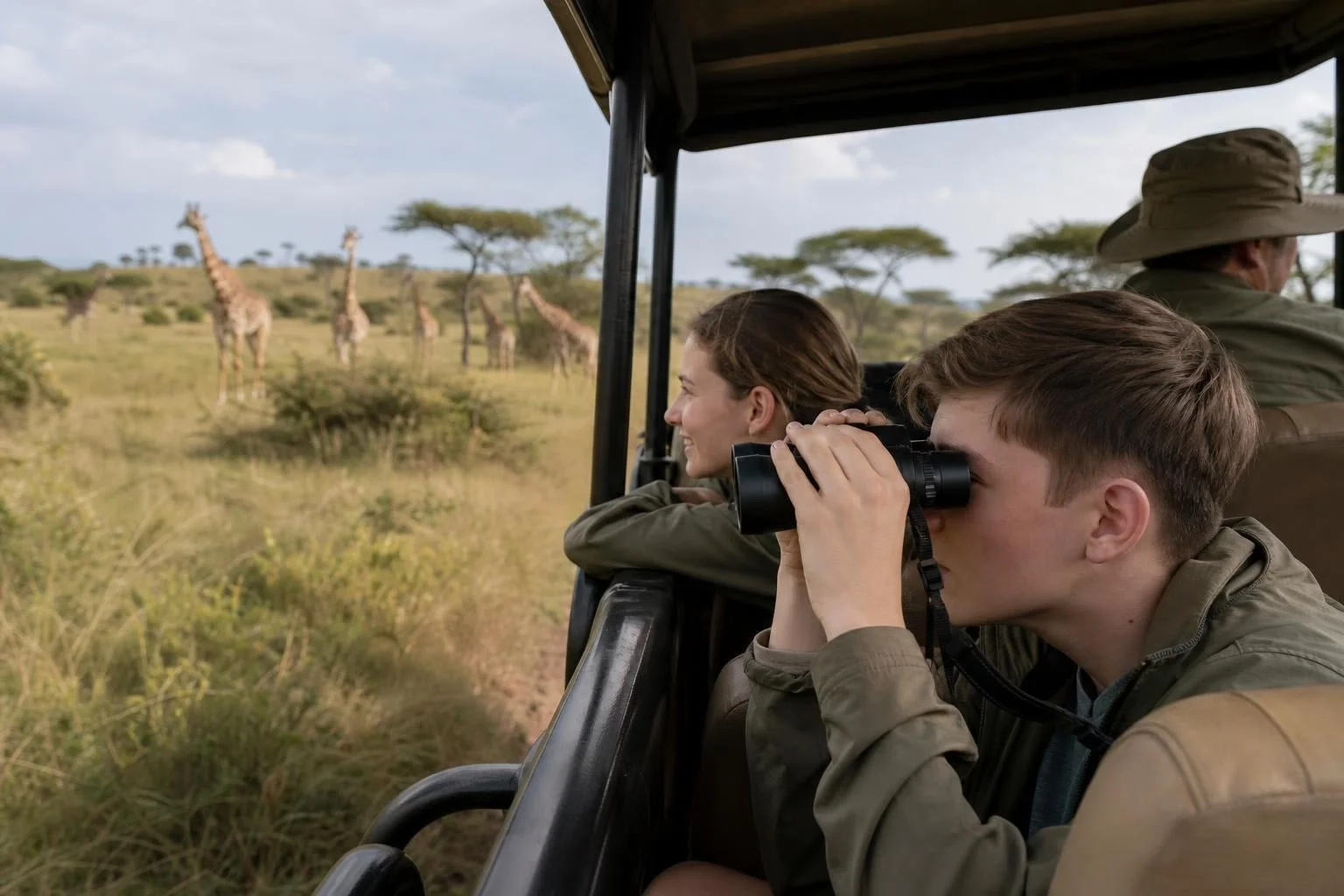
A Tanzania safari with teenagers works best when the trip combines wildlife viewing with active experiences, flexibility and downtime. For most families, 7 to 10 days provides enough time to experience several parks without making every day a full-day game drive.
The most important planning decisions are your teenager's age, private versus shared vehicle, activity mix, accommodation setup and itinerary pace. Walking safaris and other activities have location-specific age restrictions, while gorilla trekking has a minimum age of 15 in the main destinations. A Zanzibar extension can add snorkeling, kayaking, paddleboarding and other water-based activities after the safari.
This guide explains the key Tanzania safari terms parents need to know, including activities, destinations, accommodation, transportation, costs, age requirements and strategies for keeping teenagers engaged.
A safari with teenagers succeeds or fails based on trip design. The wildlife is guaranteed to impress, but the itinerary structure, the activity mix, the accommodation choices, and even the vehicle arrangement determine whether your teen talks about the trip for years or spends it staring at a phone.
The problem most parents face is jargon. Safari planning involves dozens of unfamiliar terms, from “conservancy” to “fly-in safari” to “bush breakfast,” and understanding what they mean (and which ones matter for teens specifically) is the difference between a well-paced trip and an expensive mistake.
This glossary defines the terms you’ll actually encounter while planning, organized by category, with teen-specific context throughout. If you’re already thinking about itinerary structure, start with a private family safari in Tanzania to see how the pieces fit together.
Tanzania Safari With Teenagers: What You Need to Know A Tanzania safari is an excellent trip for teenagers when the itinerary is designed around variety, flexibility and downtime rather than consecutive full days of game drives. For most families, 7 to 10 days is a practical length, with a private safari vehicle, a mix of game drives and active experiences, and optional downtime or a Zanzibar beach extension. Teenagers generally enjoy safaris most when they can participate rather than simply observe. Walking safaris, night drives where permitted, photography, cultural experiences, hot-air balloon flights and Zanzibar water sports can break up long periods in a vehicle. Before booking, check the minimum age for every activity and accommodation, because restrictions vary by park, concession, operator and activity. In particular, walking safaris, balloon flights and gorilla trekking have specific age requirements. Best formula for most families: 5–7 safari days + 2–4 days of beach time, with a private vehicle and at least one active experience every few days.
Quick Reference: Tanzania Safari Activities for Teenagers
|
Activity |
Typical age considerations |
Teen appeal |
Best use in an itinerary |
|---|---|---|---|
|
Game drive |
Generally suitable for families; operator rules apply |
High |
Core safari activity |
|
Walking safari |
Minimum age varies by location and operator |
Very high |
Break up vehicle-based days |
|
Hot-air balloon safari |
Minimum age varies by operator; commonly 7+ |
Very high |
Special once-in-a-trip experience |
|
Night drive |
Usually available only in permitted private areas/concessions |
High |
Add variety after daytime drives |
|
Maasai cultural visit |
Usually family-friendly; experience varies |
Moderate–high |
Add cultural context |
|
Hadzabe experience |
Age and activity restrictions vary |
High |
Active cultural experience |
|
Zanzibar water sports |
Depends on activity and operator |
Very high |
Post-safari adventure |
|
Gorilla trekking |
Minimum age generally 15 |
Exceptional |
Optional extension outside Tanzania |
Best Tanzania Safari Approach by Teenager's Age
There is no single itinerary that works equally well for every teenager. Age affects which activities are available, how much driving they can comfortably handle, and how much independence they want.
|
Teen age |
What usually works best |
Activities to consider |
Planning priority |
|---|---|---|---|
|
12–13 |
Shorter drives + active experiences |
Walking experiences where permitted, cultural visits, photography, pool time, Zanzibar |
Avoid overly long driving days |
|
14–15 |
More adventurous itinerary |
Walking safari, balloon safari, cultural experiences, snorkeling, kayaking |
Check age restrictions carefully |
|
16–17 |
More independence + challenging activities |
Walking safari, photography, night drives where permitted, water sports, adventure activities |
Give teens more control over activities |
|
18+ |
Almost full adult itinerary |
Full range of age-appropriate safari activities |
Focus on interests and budget |
Important: Minimum ages are not universal. Each park, concession, camp and activity operator can have its own rules, so confirm the specific age requirement before booking.
How Many Days Is Best for a Tanzania Safari With Teenagers?
For most families, 7 to 10 days is a practical Tanzania safari length for teenagers. This provides enough time to experience several destinations while leaving room for rest, swimming, active experiences and shorter travel days.
A useful structure is:
|
Trip length |
Best for |
Example structure |
|---|---|---|
|
4–5 days |
First-time safari or limited vacation time |
Tarangire + Ngorongoro + Serengeti |
|
6–7 days |
Families wanting a focused safari |
Tarangire + Ngorongoro + Serengeti |
|
8–10 days |
Most families with teenagers |
Northern Circuit + active experiences + downtime |
|
10–14 days |
Families adding Zanzibar or another major experience |
Safari + Zanzibar |
|
14+ days |
Multi-country or highly customized trips |
Tanzania + Zanzibar + optional extension |
The key is not simply the number of days. Pacing matters more than duration. A 10-day itinerary with daily 8-hour drives can feel more exhausting than a 7-day itinerary with shorter drives, private vehicles and regular downtime.
For teenagers, consider alternating high-energy safari days with shorter activities, pool time or a slower afternoon.
Safari Types and Formats
Game Drive
A game drive is a wildlife-viewing excursion in a 4x4 vehicle, typically lasting 3 to 4 hours in the early morning or late afternoon when animals are most active. This is the core activity on any Tanzania safari. There is no legal minimum age for vehicle-based game drives under TANAPA (Tanzania National Parks Authority) rules.
Why it matters for teens: Game drives are thrilling for the first few days, but teenagers have less patience than adults for long, slow drives across open plains. Practitioners on Reddit and travel forums consistently report that teens hit a wall around day 3 or 4 of all-day driving. The solution is mixing game drives with other activities rather than stacking them back to back for a full week.
Walking Safari
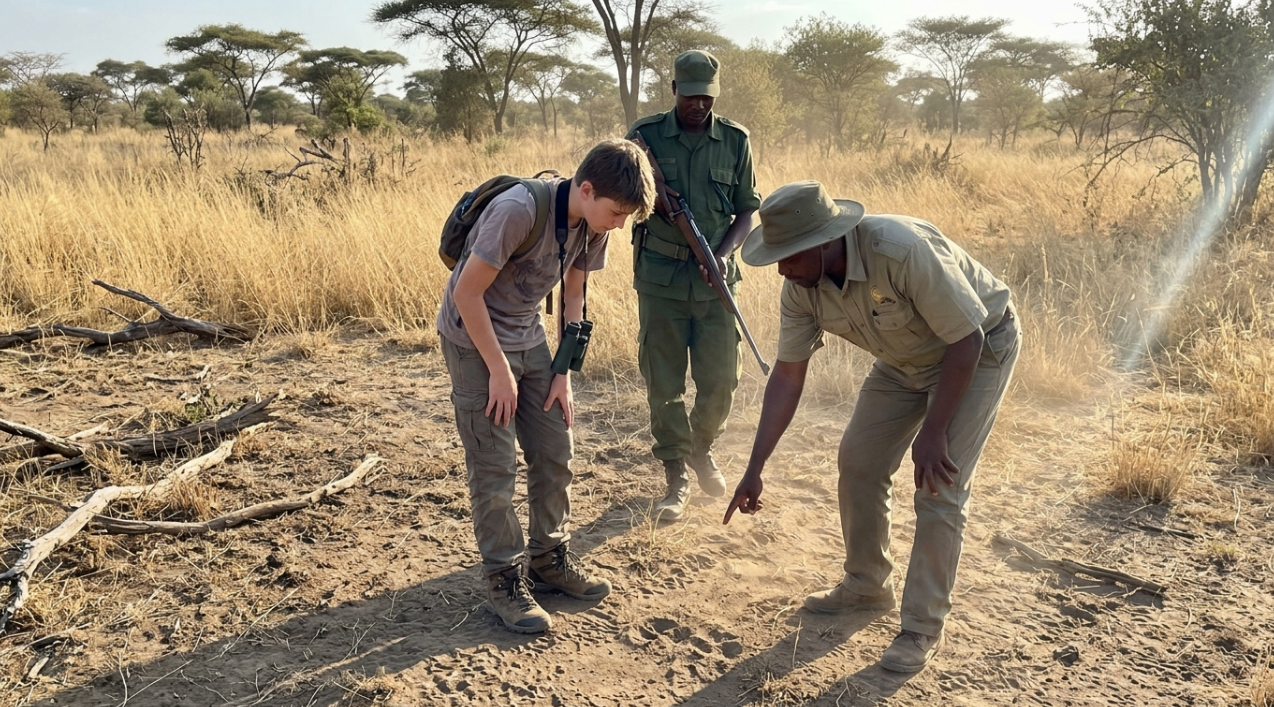
A guided walk through the bush on foot, accompanied by an armed ranger and a qualified walking guide. Participants move slowly, tracking animals, identifying plants, and reading the landscape at ground level.
The minimum age for walking safaris in Tanzania varies. TAWA (Tanzania Wildlife Management Authority) sets the minimum at 16 years in national parks, though some private conservancies and camps offer family-friendly walks for children as young as 12. In practice, most operators recommend walking safaris for ages 12 and above.
Why it matters for teens: Walking safaris are often the highlight for teenagers. They’re physical, slightly adrenaline-producing, and completely different from sitting in a vehicle. Duma Explorer’s own experience confirms that walking safaris are excellent for tweens and teenagers who need to burn off energy.
Night Drive
A game drive conducted after dark using a spotlight to find nocturnal species like bush babies, aardvarks, genets, and hunting predators. Night drives are not permitted inside Tanzania’s national parks but are available in private conservancies and concession areas.
Why it matters for teens: The novelty factor is high. Seeing a leopard hunting or a porcupine shuffling through camp feels completely different from daytime wildlife viewing.
Fly-In Safari
A safari itinerary that uses small bush planes to travel between parks or camps rather than driving. Flights typically use Cessna Caravans or similar aircraft, departing from bush airstrips. This dramatically reduces transit time (a 10-hour drive from Arusha to the central Serengeti becomes a 90-minute flight).
Why it matters for teens: Less time in a car means more time on activities. For families combining multiple parks, fly-in segments prevent the road fatigue that makes teenagers miserable. Learn more about how types of safari vehicles and transport options affect the trip experience.
Photography Safari
A safari focused on wildlife photography, sometimes with a dedicated photography guide or specialized vehicle (lower sides, beanbag mounts, charging stations). Some camps offer structured photography workshops.
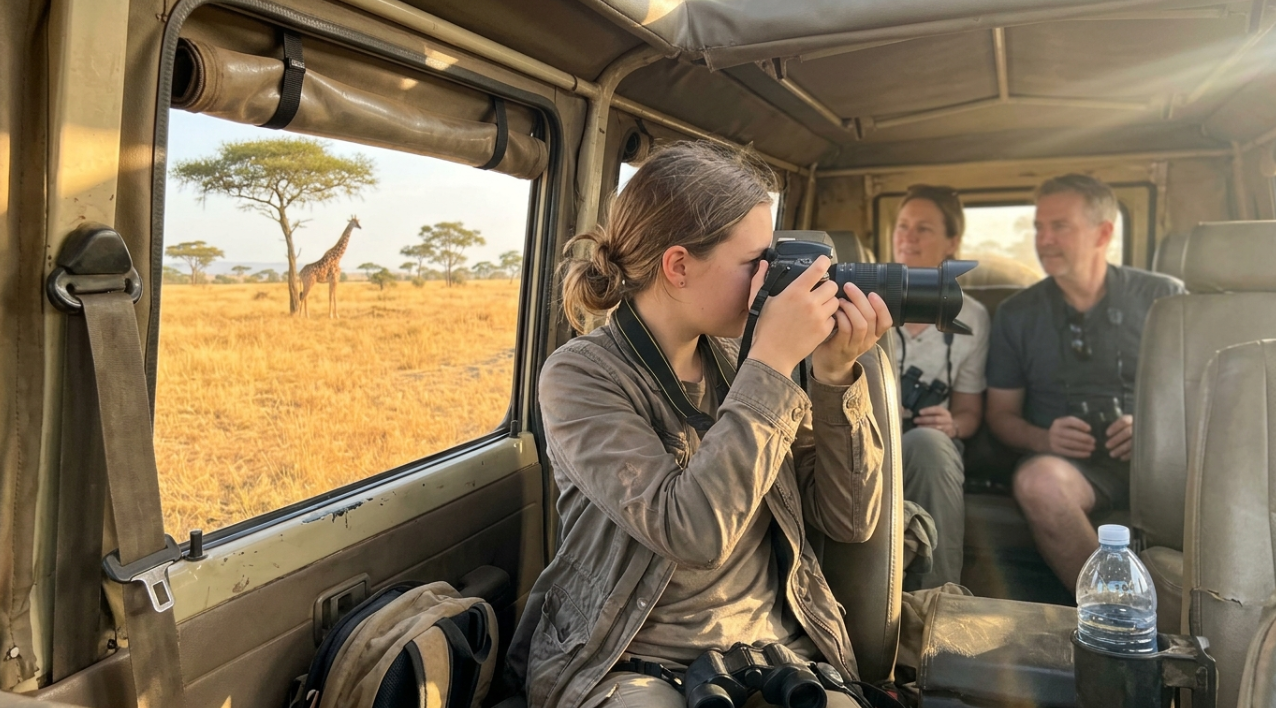
Why it matters for teens: Teenagers who are active on social media or interested in photography respond extremely well to this format. Giving a teen a camera and a photography goal transforms passive observation into active engagement. Several family travel practitioners note that a daily photography project or short video diary turns the entire safari into a creative exercise. For gear considerations, see this safari photography gear guide.
Bush-to-Beach
An itinerary combining a wildlife safari with a beach extension, most commonly in Zanzibar. The typical structure is 6 to 7 days of safari followed by 3 to 4 days on the coast.
Why it matters for teens: This is the single most effective pacing strategy for a safari with teenagers. Early morning wake-up calls are hard to sell to a 15-year-old. But the promise of snorkeling, kitesurfing, and beach time at the end of the trip makes those 5 AM alarms more tolerable. Multiple operators describe this as a “reward structure,” and parents on TripAdvisor forums confirm it works.
Teen-Specific Activities and Experiences
Hot Air Balloon Safari
A sunrise flight over the Serengeti (or occasionally other parks), lasting approximately one hour, followed by a champagne bush breakfast upon landing. Children under 7 are not permitted. Children aged 7 to 16 may qualify for child rates at some operators, with prices for the 2026 Serengeti season ranging from $600 to $799 per person.
Why it matters for teens: This is one of the most visually dramatic experiences available on safari, and teenagers universally love it. The views are extraordinary and the photos are exactly the kind of content teens want to share.
Gorilla Trekking
Hiking through montane forest in Uganda, Rwanda, or the Democratic Republic of Congo to spend one hour observing a habituated mountain gorilla family. The official minimum age is 15 years old, strictly enforced via passport checks on the morning of the trek. Rwanda maintains a zero-tolerance policy. Uganda Wildlife Authority may occasionally grant written exceptions for children who are 14 and turn 15 within the same calendar year, but this is not guaranteed.
Why it matters for teens: Parents consistently describe gorilla trekking as the single most impactful wildlife experience their teenagers have ever had. The physical challenge (treks can last 2 to 8 hours through steep, muddy terrain) appeals to teens who want something demanding. The emotional impact of sitting meters from a silverback gorilla is profound. For permit details and planning logistics, see this guide to gorilla trekking permits and rules.
Cultural Visit / Boma Visit
A visit to a traditional Maasai homestead (boma) or other community, typically including demonstrations of daily life, traditional jumping dances, beadwork, fire-making, and conversation with community members. “Boma” refers to the circular enclosure of houses surrounded by a thorn fence.
Why it matters for teens: The level of engagement depends entirely on how interactive the visit is. A lecture-style tour bores teenagers. A hands-on experience where they try fire-making, learn beadwork, or join in dancing holds their attention. Ask your operator how participatory the visit actually is before booking.
Hadzabe Experience
Time spent with the Hadzabe people, one of the last remaining hunter-gatherer communities in East Africa, near Lake Eyasi in northern Tanzania. Activities typically include an early morning hunt with bows and arrows, foraging for wild tubers and honey, and learning tracking skills.
Why it matters for teens: This is consistently rated as one of the most engaging cultural experiences for teenagers. The hunting and tracking component is physical and genuinely interactive, not performative.
Junior Ranger / Young Explorer Program
Structured programs offered by some safari camps specifically for children and teenagers. These typically involve guided nature walks, animal tracking, bush skills, and sometimes conservation-focused activities. The quality varies enormously between camps.
Why it matters for teens: Be careful here. Most “kids’ club” programs target younger children (ages 4 to 12), and teenagers find them patronizing. As one safari operator put it, teenagers don’t want a kids’ programme; they want agency, immersion, and a challenge. Look for camps with genuine teen programs that involve real bush skills rather than coloring sheets and bead games.
Zanzibar Extension
Adding 3 to 5 days on the Zanzibar archipelago after a mainland safari. Activities include snorkeling at Mnemba Atoll, kitesurfing at Paje Beach, stand-up paddleboarding, kayaking, Stone Town exploration, spice tours, and general beach relaxation. The east coast (Paje and Jambiani) is better for active teens, with shallow lagoons and kitesurfing focus. The north coast (Nungwi and Kendwa) offers calmer swimming with less tidal variation.
Why it matters for teens: Zanzibar is where teenagers decompress after early mornings and long drives. The water activities provide the adrenaline hit that game drives eventually stop delivering. For excursion ideas, see this Zanzibar day trips guide.
Best Tanzania Safari Parks for Teenagers
Different parks create different experiences. For families traveling with teenagers, the best choice is not necessarily the park with the most wildlife. Variety, accessibility and the ability to combine different activities can be just as important.
|
Destination |
Why teens may enjoy it |
Ideal stay |
|---|---|---|
|
Serengeti |
Big cats, dramatic landscapes and Great Migration viewing |
2–3 nights |
|
Ngorongoro Crater |
High wildlife density and relatively compact game drives |
1–2 nights |
|
Tarangire |
Elephants, baobabs and a different landscape from the Serengeti |
1–2 nights |
|
Arusha National Park |
Walking and active experiences close to Arusha |
1–2 nights |
|
Lake Manyara |
Forest, wildlife and a shorter stop between destinations |
1 night |
For many first-time family safaris, a combination of Tarangire, Ngorongoro and Serengeti provides a good balance of wildlife, landscapes and travel time. Families wanting more active experiences should also consider destinations where walking or other activities are permitted for their teenager's age.
Destinations and Geography
Northern Circuit
Tanzania’s most popular safari route, connecting Arusha, Tarangire National Park, Lake Manyara, Ngorongoro Crater, and the Serengeti. A typical Northern Circuit itinerary runs 7 to 10 days. Park fees range from $70 to $83 per person per day at major parks.
Why it matters for teens: This is the standard route for a first family safari in Tanzania, and for good reason. The wildlife density is high, the parks are diverse, and the infrastructure supports a range of accommodation levels. For a detailed breakdown of routing and costs, see this Tanzania safari itinerary and costs guide.
Serengeti
Tanzania’s most famous national park, covering 14,763 square kilometers. Home to the Great Migration (over 1.5 million wildebeest plus hundreds of thousands of zebra and gazelle), the Serengeti offers year-round predator viewing and some of the most dramatic wildlife spectacles on earth.
Why it matters for teens: The Serengeti delivers the “wow” moments that make safaris memorable: river crossings, lion hunts, cheetah chases. Two to three nights here is typical for families with teens.
Ngorongoro Crater
A collapsed volcanic caldera roughly 20 kilometers across, containing one of the densest concentrations of wildlife in Africa. Game drives in the crater are compact (typically a half-day) because the area is relatively small.
Why it matters for teens: The crater is excellent for attention spans. Because the wildlife density is so high, you see animals quickly and consistently. A half-day descent works well as a “short” game drive day that leaves the afternoon free for the pool or a walk.
Conservancy / Concession Area
A privately managed wildlife area adjacent to or near a national park. Conservancies operate under different rules than national parks: they permit night drives, off-road driving, walking safaris, and bush meals that are prohibited inside park boundaries. They also have strict limits on the number of vehicles and visitors.
Why it matters for teens: Conservancies unlock the activities that make safaris most engaging for teenagers. Walking safaris, night drives, off-road tracking, and bush dinners under the stars are all conservancy benefits. If your itinerary includes at least one conservancy stay, the variety of experiences increases dramatically.
Accommodation and Comfort
Tented Camp
Accommodation in large canvas tents, typically on raised platforms, with full beds, en-suite bathrooms, and sometimes verandas. “Tented camp” on safari does not mean camping in the backpacking sense. These are proper rooms that happen to be made of canvas.
Why it matters for teens: The novelty of sleeping in a tent with wildlife sounds outside genuinely excites teenagers. But clarify the setup. Teens are happier when they have their own tent rather than sharing a family unit. Room configuration matters more than star rating for this age group.
Lodge
A permanent, built structure offering hotel-style accommodation in a safari setting. Lodges range from simple to ultra-luxurious and typically include restaurants, bars, swimming pools, and sometimes spa facilities.
Why it matters for teens: Pools. TripAdvisor threads about safari with teenagers return to this point repeatedly: a swimming pool during midday downtime is not optional, it’s essential. When comparing lodges, check for a pool, some degree of Wi-Fi, and separate rooms for teens. One family safari planner summed it up well: the right accommodation is “not so high end that we didn’t feel like we were on a safari and not so basic that the kids wouldn’t want to return to Africa when they got older.”
For families comparing camp and lodge options across Tanzania, this family safari lodges guide covers the specifics.
Full Board (FB) vs. All-Inclusive
Full board means breakfast, lunch, and dinner are included but drinks (especially alcohol) and some activities are extra. All-inclusive covers meals, house drinks, and often laundry and some activities. Understanding which meal plan your camp offers prevents unexpected charges.
Why it matters for teens: Teenagers eat constantly. Full board covers the meals, but snacks and soft drinks between meals may not be included at every property. All-inclusive removes that friction entirely.
Should You Book a Private Safari Vehicle for Teenagers?
For families traveling with teenagers, a private safari vehicle is often worth considering because it gives the family greater control over the day.
With a private vehicle, you can:
-
Start or finish a game drive around your teenager's energy level.
-
Spend longer watching an animal when everyone is interested.
-
Return to camp when the family needs a break.
-
Stop for photography without coordinating with other travelers.
-
Adjust the schedule when weather or wildlife conditions change.
-
Combine shorter game drives with other activities.
A shared vehicle can reduce the cost of a safari, but it also means your family must follow a schedule designed around other travelers. For teenagers with different energy levels or interests, that loss of flexibility can be frustrating.
Planning rule: If your budget allows it, prioritize a private vehicle before upgrading to a more luxurious room category.
Logistics and Planning
Park Fees / Conservation Fees
Daily fees charged by TANAPA for each visitor entering a national park. In Tanzania’s major parks (Serengeti, Ngorongoro, Tarangire), fees range from $70 to $83 per person per day for adults. Children typically receive discounted rates. These fees are usually included in your safari package price but represent a significant portion of total cost.
TANAPA (Tanzania National Parks Authority)
The government authority responsible for managing Tanzania’s 22 national parks, including the Serengeti, Tarangire, and Arusha National Park. TANAPA sets park regulations, entry fees, and activity rules within park boundaries.
TAWA (Tanzania Wildlife Management Authority)
The authority managing game reserves, wildlife management areas, and conservation areas outside the national park system. TAWA’s regulations differ from TANAPA’s, which is why activities like walking safaris may have different age restrictions depending on whether you’re inside a national park or a game reserve.
Safari Fatigue
The mental and physical exhaustion that sets in after consecutive days of early wake-ups (often 5:30 AM), long hours in a bouncing vehicle, and information overload. Safari fatigue is real, and teenagers are especially susceptible.
Why it matters for teens: The typical recommendation is no more than 3 to 4 consecutive days of full game drives before mixing in a different activity, a rest day, or a beach extension. Spending 8 hours a day in a 4x4 on bumpy roads is exhausting for anyone, and teenagers will let you know it. A bush-to-beach approach (7 days safari, 3 to 4 days Zanzibar) is the most effective countermeasure.
Fly-Out / Bush Flight
A scheduled or charter flight departing from a bush airstrip, typically on a small prop plane. Bush flights connect remote safari areas to each other and to Arusha, Kilimanjaro International Airport, or Zanzibar. Luggage is usually limited to soft-sided bags weighing 15 to 20 kilograms.
Why it matters for teens: The weight restriction catches families off guard. Teens accustomed to packing large suitcases need to pare down to a soft duffel. Clarify luggage limits early to avoid arguments at the airstrip.
Tipping (Guide and Camp Staff)
Gratuities for your driver-guide, camp staff, and activity guides. Tipping is customary on safari and typically runs $15 to $25 per day for a driver-guide and $10 to $20 per day per family for camp staff, though amounts vary. Your operator should provide a tipping guide before departure.
Malaria Prevention
Malaria prevention is an important consideration for travel to Tanzania, including many safari areas and Zanzibar. Prevention may involve mosquito-bite precautions and, for some travelers, prescription medication.
The appropriate medication depends on factors such as destination, travel dates, age, medical history and other medications. Families should speak with a qualified travel-health professional before departure rather than choosing a medication based solely on another traveler's experience.
For teenagers, also ask about potential side effects and practical considerations such as sun exposure during long days outdoors.
Travel Insurance
A policy covering trip cancellation, medical emergencies, evacuation, and baggage loss. Safari travel insurance should specifically include emergency medical evacuation by air ambulance, which can cost $50,000 or more without coverage. For detailed guidance, see this Tanzania travel insurance guide.
Private vs. Shared Safari
A private safari means your family has its own vehicle, guide, and itinerary. A shared (or group) safari means you join other travelers on a fixed schedule. Private safaris cost more but offer complete flexibility on pacing, stops, and daily schedule.
Why it matters for teens: Shared safaris work fine for budget-minded adult travelers, but they’re a poor fit for families with teenagers. Your teen’s energy level, attention span, and bathroom needs don’t align with strangers’ preferences. The cost difference is real, but parents who’ve done both consistently say private is worth it for families.
Families building a custom itinerary around teen ages and interests can plan a family safari that matches each activity to the right age and pace.
7 Mistakes That Can Make a Tanzania Safari Boring for Teenagers
Even an extraordinary wildlife destination can become tiring if the itinerary is poorly designed. The most common problems are:
-
Scheduling too many consecutive full-day game drives.
-
Choosing a shared vehicle when the family needs flexibility.
-
Ignoring the teenager's interests when choosing activities.
-
Booking accommodation without checking room configuration.
-
Leaving no time for swimming, relaxing or using the hotel facilities.
-
Treating every cultural visit as a formal educational tour.
-
Saving all the exciting activities for a single day instead of spreading them throughout the trip.
The solution is not to eliminate game drives. Wildlife viewing is still the reason to visit Tanzania. Instead, build an itinerary where game drives are balanced with active experiences, cultural encounters, photography, downtime and, if desired, a Zanzibar beach extension.
How to Keep Teenagers Engaged on Safari
Understanding the glossary terms above is half the battle. The other half is trip design. Here’s what actually works, based on operator experience and parent feedback from forums and reviews.
Let them help plan the trip. Involve your teenager in researching camps, choosing activities, and shaping the itinerary. When they have ownership over the trip, they’re far more likely to be engaged from day one. Let them pick the Zanzibar water sport. Let them choose between a hot air balloon and an extra walking safari.
Give them a creative project. A photography challenge, a daily journal, or a video diary transforms a teenager from a passive passenger into an active participant. Some families create a shared Instagram account for the trip. Others challenge their teen to photograph each member of the Big Five.
Mix activities aggressively. The difference between a safari teenagers endure and one they rave about comes down to variety. Alternate game drives with walking safaris, cultural visits, balloon flights, and downtime. Never schedule more than two consecutive full-day game drives.
Protect downtime. An overly packed trip quickly becomes tiring. Teenagers need space, a free afternoon, a pool at sunset, time to process what they’ve seen. Build at least one “slow” day into every three active days.
End with the beach. The bush-to-beach structure works because it gives teenagers something to look forward to during the safari portion and something to unwind with afterward.
Families trying to balance the right mix of activities can ask Duma Explorer to structure the itinerary pacing around their teens’ specific ages and interests, since the balance between game drives and active experiences matters as much as the destinations.
Example 9-Day Tanzania Safari Itinerary With Teenagers
A 9-day itinerary can provide a good balance between wildlife, active experiences and downtime without requiring every day to be a full-day game drive.
|
Day |
Destination / activity |
Teen-friendly focus |
|---|---|---|
|
1 |
Arusha |
Arrival, pool and recovery |
|
2 |
Tarangire |
Game drive + shorter afternoon |
|
3 |
Tarangire / Arusha area |
Walking or other active experience where permitted |
|
4 |
Ngorongoro |
Crater game drive |
|
5 |
Serengeti |
Transfer + afternoon wildlife viewing |
|
6 |
Serengeti |
Full game-drive day |
|
7 |
Serengeti |
Flexible wildlife/photography morning + downtime |
|
8 |
Zanzibar |
Flight to the coast + beach |
|
9 |
Zanzibar |
Snorkeling, kayaking, paddleboarding or free beach time |
The exact route should be adjusted according to the teenager's age, interests, travel dates, wildlife priorities and available activities. Age restrictions and seasonal conditions should be confirmed with the safari operator before booking.
What a Teen Safari Actually Looks Like: Real Examples
Duma Explorer has organized family safaris with teenagers across Tanzania. One documented family of four (including two teenagers) completed a walking safari in Arusha National Park followed by 2 nights each in Western Serengeti, Central Serengeti, Ngorongoro, and Tarangire. The trip planner calibrated accommodations to strike the right balance between comfort and authenticity. The family witnessed a wildebeest crossing of the Mara River on their very first safari afternoon.
A separate multigenerational group of 13 family members, spanning ages 11 to 62, completed a Tanzania safari described as a “trip of a lifetime.” Managing that age range requires careful itinerary design, pairing high-energy activities for the younger members with comfortable pacing for the older ones. For families bringing multiple generations, this multigenerational safari planning guide covers the logistics.
How Much Does a Tanzania Safari With Teenagers Cost?
The cost of a Tanzania safari varies substantially depending on accommodation level, travel season, number of travelers, private versus shared transportation, internal flights and optional experiences.
For planning purposes, families should separate the budget into several categories:
|
Cost category |
What affects the price |
|---|---|
|
Safari accommodation |
Lodge or tented camp, location and season |
|
Safari vehicle |
Private versus shared vehicle |
|
Park and conservation fees |
Destination, age and applicable fee category |
|
Internal flights |
Number of flights and route |
|
Activities |
Balloon safari, walking experiences and other excursions |
|
Meals and drinks |
Meal plan and camp policies |
|
Zanzibar extension |
Hotel, transfers and water activities |
|
Travel insurance |
Coverage level and travelers' ages |
|
Tips |
Guide, camp and activity staff |
A private family safari generally costs more than a group safari because the family has exclusive use of the vehicle and guide. Premium camps, peak-season travel, internal flights and add-on experiences can increase the total significantly.
Rather than choosing an itinerary based only on the headline price, compare what is included: accommodation, meals, park fees, vehicle, guide, transfers, flights and activities.
Frequently Asked Questions
How many days should a safari with teenagers be?
Seven to ten days is the sweet spot for most families. This allows 5 to 7 days of actual game drives and activities after accounting for travel and rest days. Parents on the Fodors forum with teens aged 13 and 16 reported that 6 to 7 days of game drives was sufficient without boredom setting in. For ages 14 to 17, some operators recommend up to 14 days when the itinerary includes photography focus, a gorilla trekking extension, or a Zanzibar beach add-on.
Will my teenager get bored on safari?
Not if the trip is designed correctly. Boredom happens when the itinerary is nothing but game drives for a week straight. It does not happen when walking safaris, balloon flights, cultural visits, and beach time are woven in. A private vehicle is also critical because it lets you control pace. If your teen is fading, you head back to camp and the pool.
Can a 14-year-old do gorilla trekking?
The official minimum age is 15 in Uganda, Rwanda, and the DRC. Rwanda enforces this with zero exceptions. Uganda may occasionally grant written exceptions for a 14-year-old who turns 15 within the same calendar year, but this is not reliable. Plan around the rule, not the exception. Read the full gorilla trekking age limit breakdown for details.
What is the minimum age for a walking safari in Tanzania?
It depends on location. TAWA regulations set the minimum at 16 years old within national parks. Private conservancies and some camps accept participants as young as 12. Always confirm the specific age policy for each camp or conservancy on your itinerary.
Is a Zanzibar extension worth adding for teens?
Yes. Overwhelmingly yes. The beach extension serves a dual purpose: it rewards teens for those early mornings, and it provides the water-sport adrenaline (kitesurfing, snorkeling, paddleboarding) that game drives can’t deliver. Three to four days is enough. The east coast, particularly Paje, is the best choice for active teenagers.
Do teenagers need their own tent or room on safari?
They strongly prefer it, and most safari operators recommend it. Teens aged 13 and up generally want their own space, and sharing a family tent with parents can create friction that affects the whole trip. Most tented camps and lodges offer family configurations with connected or adjacent tents. Clarify room arrangements during the booking stage.
How much does a safari with teenagers cost per person?
A well-designed private family safari in Tanzania typically ranges from $5,000 to $15,000+ per person for a 7 to 14 day trip, depending on accommodation level, number of parks, internal flights, and optional activities like balloon safaris or gorilla trekking extensions. Park fees alone account for $70 to $83 per person per day at major parks. Children and teens sometimes receive discounted rates at certain camps.
What is the best Tanzania safari itinerary for teenagers?
For many families, a 7- to 10-day itinerary combining two or three wildlife destinations with active experiences and downtime works well. A private vehicle provides additional flexibility, while a Zanzibar extension can add water activities and relaxation.
Is Tanzania safe for teenagers?
Tanzania is a popular family safari destination, but families should follow their safari operator's safety guidance and park rules. Teenagers should remain with their guide during wildlife activities and follow instructions around animals, vehicles and accommodation areas.
What are the best safari activities for teenagers?
Game drives are the foundation, but teenagers often enjoy the trip more when the itinerary also includes activities such as walking experiences where permitted, photography, cultural visits, balloon flights, swimming and Zanzibar water sports.
Should teenagers have their own safari room or tent?
Many teenagers appreciate having their own space, particularly on longer trips. Depending on the property, families may be able to book adjacent rooms, connected rooms or separate tents. Confirm the exact configuration before booking.
Is Tanzania or Kenya better for a safari with teenagers?
Both can work well for families. The better choice depends on wildlife priorities, travel dates, itinerary length, budget, accommodation preferences and the activities available to your teenager. Compare the specific itineraries rather than choosing a destination based only on the country name.