

Best Age for Safari Tanzania 2026: Family Planning Guide
TLDR
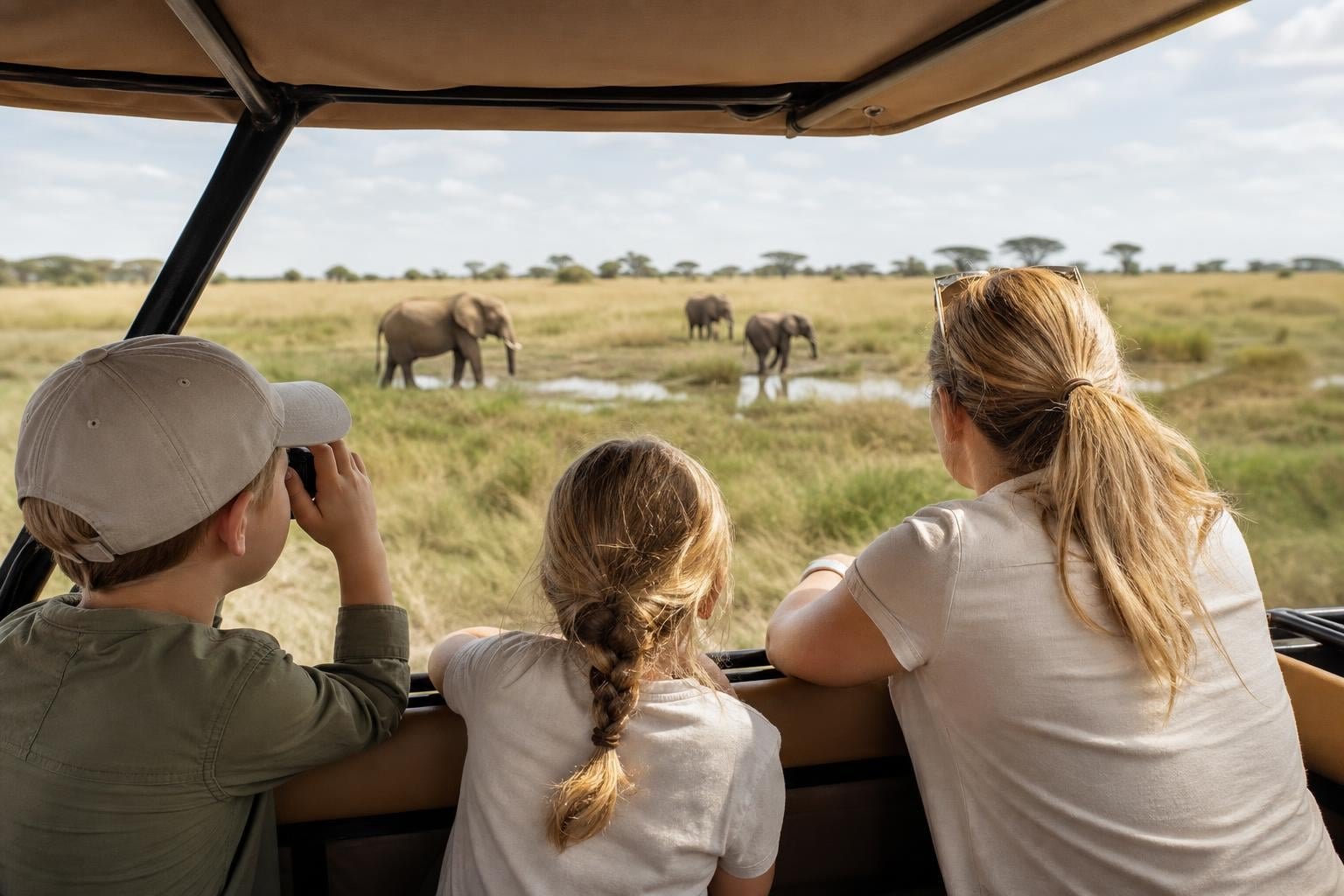
Most families find ages 8 to 12 the easiest window for a first Tanzania safari. Children aged 5 to 7 can have a great time with a private vehicle, shorter game drives, and family-friendly lodges. Kids under 5 can go, but the trip demands more logistical planning from parents. Teenagers are excellent safari travelers, especially when the itinerary includes photography, migration timing, or walking safaris.
The best age for a safari in Tanzania is usually 8 to 12 years old. Children in this range can sit through longer game drives, follow wildlife safety instructions, ask good questions, and remember the trip decades later. Ages 5 to 7 can also work well if the safari is private, paced slowly, and built around shorter drives in parks like Tarangire, Ngorongoro, or the central Serengeti. Children under 5 can go, but naps, heat, malaria prevention, lodge policies, and long transfers require more careful planning. Teenagers are excellent safari travelers when the itinerary includes photography goals, migration timing, cultural context, or active elements like walking safaris.
The answer is not just a number. It depends on matching your child’s age to the right vehicle type, parks, lodge style, game-drive rhythm, health preparation, and trip length.
What Is the Best Age for a Tanzania Safari? For most families, 8 to 12 is the best age for a first Tanzania safari. Children in this age range can usually handle longer game drives, follow wildlife safety instructions, tolerate early mornings and travel days, and remember the experience. However, there is no universal minimum age for a Tanzania safari. Children aged 5 to 7 can have an excellent safari with a private vehicle, shorter game drives, family-friendly lodges, and fewer hotel changes. Toddlers can travel to Tanzania, but the trip requires more planning around naps, heat, road transfers, malaria prevention, and accommodation policies. The best age therefore depends less on a child's birthday and more on their ability to handle vehicle time, follow safety instructions, manage the travel routine, and enjoy observing wildlife.
Tanzania Safari by Child's Age at a Glance
|
Age |
Overall suitability |
Ideal safari style |
Typical game-drive approach |
|---|---|---|---|
|
Under 3 |
Challenging |
Short, private, lodge-based |
Very short drives with flexibility |
|
3–4 |
Possible |
Private family safari |
About 2–3 hours at a time |
|
5–7 |
Good |
Private Northern Circuit safari |
Short morning drives plus downtime |
|
8–12 |
Best overall |
Classic Tanzania family safari |
Longer drives with rest periods |
|
13–17 |
Excellent |
Wildlife + adventure safari |
Full-day drives and specialized activities |
The key takeaway: There is no single age requirement for a Tanzania safari. For most first-time families, 8–12 is the easiest overall window, while children as young as 5 can have an excellent experience when the itinerary is designed around their needs.
Quick Guide: Best Age for Safari in Tanzania by Age Band
|
Child's age |
Safari suitability |
What usually works |
Main consideration |
|---|---|---|---|
|
Under 3 |
Possible, but challenging |
Private vehicle, short drives, lodge-based itinerary |
Naps, heat, transfers and health planning |
|
3–4 |
Possible with careful planning |
2–3 hour drives, pools, flexible meals |
Limited attention span and activity restrictions |
|
5–7 |
Good |
Private vehicle, shorter drives, family-friendly lodges |
Avoid overly ambitious itineraries |
|
8–12 |
Best overall age |
Longer drives, classic Northern Circuit, cultural activities |
Build in downtime between full safari days |
|
13–17 |
Excellent |
Photography, migration trips, walking activities where permitted |
Give teens autonomy and meaningful activities |
TANAPA’s official fee categories distinguish children under 5 (free entry) from children aged 5 to 15 (child rates), but these are fee categories, not readiness guidelines. Lodge policies, activity rules, and a child’s temperament matter more than the tariff structure when deciding the best time for a Tanzania safari with your family.
Is There a Minimum Age for Safari in Tanzania?
There is no single minimum age set by Tanzanian national parks. TANAPA’s official tariff page lists children under 5 as free and children 5 to 15 at reduced conservation fees. That means a two-year-old can technically enter Serengeti National Park.
But park entry and safari readiness are different things. The practical minimum age for a family safari in Tanzania comes from several overlapping rules:
Lodge age policies. Many safari camps set their own minimums. Asilia’s camps generally welcome children over age 5, but some properties like Usangu Expedition Camp and Kokoko Camp require guests to be at least 12. Nomad Tanzania recommends a private guide and exclusive vehicle for families with children.
Activity restrictions. Walking safaris commonly require children to be 12 or older. Elewana does not permit children under 16 on its bush walks. Night drives, balloon flights, and certain cultural activities may also carry age minimums.
Health considerations. Malaria prevention medications for children are age- and weight-dependent, which adds complexity for very young travelers (more on this below).
Behavioral readiness. TANAPA park rules require visitors to follow guide instructions, stay on designated roads, and avoid disturbing wildlife. A child who cannot sit still or follow directions quickly creates real safety concerns in a vehicle near elephants or lions.
The distinction between “minimum age” and “recommended age” matters. Minimum age is the youngest a park, camp, or activity allows. Recommended age is when a child is likely to enjoy the safari and the parents can enjoy it too. For Tanzania, the recommended age is almost always more important.
Families weighing these factors can explore how a private family safari in Tanzania handles age-related logistics like vehicle exclusivity, pacing, and lodge selection.
The Best Age for a Tanzania Safari, Stage by Stage
Under 3: Usually Better to Wait
Most families should wait unless they are experienced travelers with a compelling reason to go now, extra adult help, and the budget for a fully private arrangement.
The trip becomes more about parent logistics than wildlife immersion. Long transfers, heat, nap schedules, feeding routines, car seats, and malaria prevention dominate every decision. Children this young are unlikely to understand or remember the wildlife experience. Shared vehicles are a poor fit because a fussing toddler affects every other guest in the car.
This does not mean toddlers “cannot” go. It means the safari changes when they do.
Ages 3 to 4: Possible, but Parent-Heavy
A 3- or 4-year-old can enjoy watching elephants drink at a waterhole or hippos surfacing in a river. They will not, however, sit patiently for a two-hour search for a leopard in a tree.
What works at this age:
-
Private vehicle (non-negotiable)
-
Drives limited to 2 to 3 hours
-
Lodges with pools, flexible meal times, and family rooms
-
Minimal lodge changes (ideally two or three bases, not five)
-
Parks close to Arusha to reduce transfer time
-
One or two parks rather than an ambitious checklist route
“Possible” is not the same as “ideal.” A family with a 4-year-old and a 10-year-old should plan the itinerary around the 4-year-old’s limits, not the 10-year-old’s enthusiasm.
Ages 5 to 7: Works Well with the Right Plan
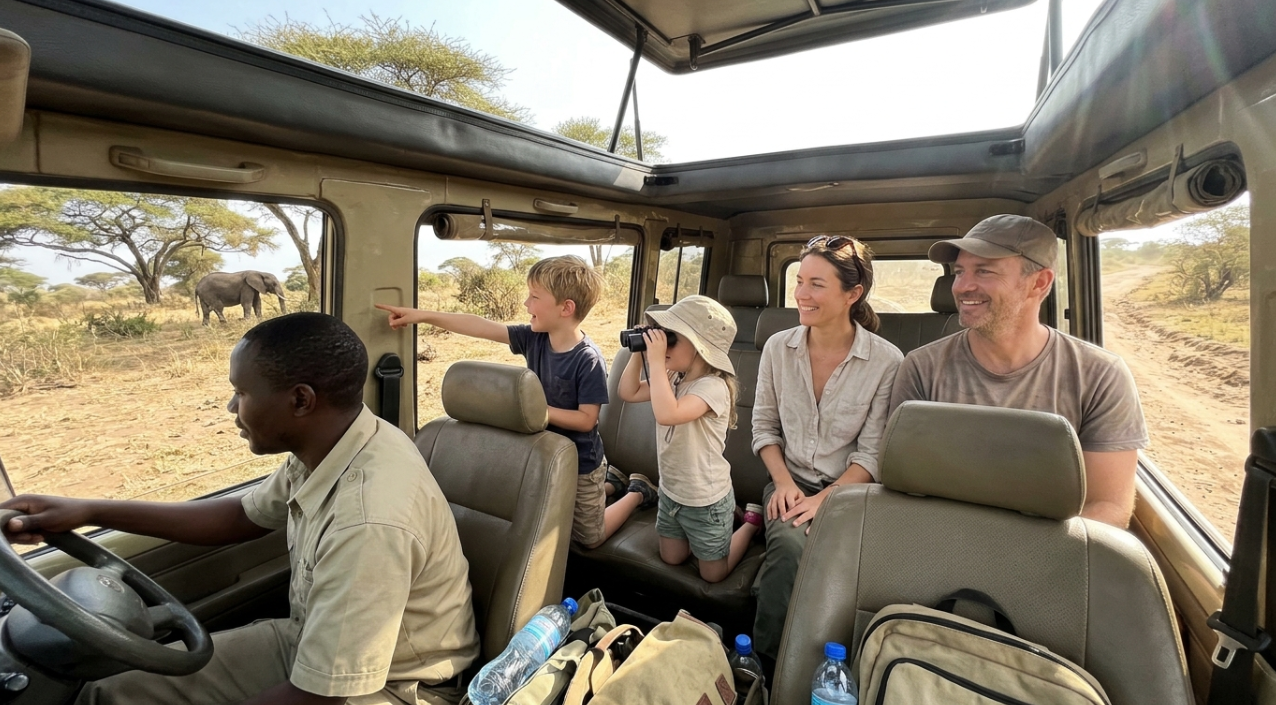
This is where many families start having genuinely rewarding safaris. Five or six years old is the practical floor that most experienced operators and community travelers identify as workable, provided the itinerary is designed for it.
Practitioners on Reddit report positive trips with children aged 5 and 6 when the family had their own guide and private vehicle. One user described a Tanzania trip with a 5- and 9-year-old that worked well because the pacing was realistic and the family could set its own schedule.
Best parks and routing for ages 5 to 7:
-
Tarangire for elephants and baobabs, a high-impact first safari stop
-
Ngorongoro Crater for concentrated sightings in a compact area
-
Lake Manyara or Arusha National Park for shorter introductions
-
Central Serengeti only if the transfer plan is reasonable or fly-in logistics make sense
Game-drive rhythm for younger children:
-
2 to 3 hour morning drives
-
Midday pool and rest time
-
Optional short afternoon drive
-
Snacks, binoculars, and an animal checklist to keep them engaged
Give each child a role: spotter, photographer, map reader, or animal checklist keeper. Put elephants early in the itinerary because they are high-impact and easy for young children to appreciate. Pool time is not wasted safari time. It is what makes the next morning’s drive possible.
Ages 8 to 12: The Best Overall Age for a Tanzania Safari
For most families, ages 8 to 12 are the best overall age for a first Tanzania safari. Children in this range are generally old enough to manage longer game drives, follow wildlife safety instructions, cope with early starts, and stay engaged during periods when animals are not immediately visible.
They can also understand more of what makes a Tanzania safari special: predator and prey behavior, migration, conservation, local communities, and the differences between habitats.
This age range also gives families more itinerary flexibility. Children can usually handle a classic Northern Circuit route that includes Tarangire, Ngorongoro Crater, and the Serengeti, provided the itinerary includes adequate rest and avoids unnecessary one-night stays.
What works best for ages 8–12
-
5–8 safari days for a well-paced trip
-
Two-night stays wherever practical
-
A private vehicle for maximum flexibility
-
A mixture of morning drives, afternoon activities, and downtime
-
Wildlife-focused activities such as photography, birdwatching, and animal tracking
-
Cultural or conservation experiences that add variety to game drives
-
Zanzibar after the safari if the family wants a slower finish
What to avoid
Avoid assuming that an 8-year-old can comfortably handle several consecutive full-day game drives simply because they are old enough for a longer safari. Safari fatigue can come from early mornings, long road transfers, heat, and repeated vehicle time—not just from the amount of wildlife viewing.
For this age group, the best itinerary is usually one that balances wildlife intensity with enough time to rest and enjoy the lodge.
Teens: More Options Open Up
Teenagers are excellent safari travelers. They can handle longer drives, more remote camps, migration-focused routing, and physically demanding activities.
What opens up for teens:
-
Walking safaris where camp rules allow (typically 12 or 16 and older)
-
Photography as a primary focus
-
Birding
-
More remote southern or western circuit parks
-
Migration river crossings that require patience
-
Conservation and cultural interpretation at a deeper level
-
Kilimanjaro or other active add-ons for fit, motivated teens
Important nuance: Teens are not just “easier children.” They may need privacy, downtime, charging access, and a sense of autonomy. A teenager who feels dragged along will be less engaged than one who helped choose the itinerary or has a photography goal.
Age Isn't the Only Factor: Is Your Child Actually Ready?
Two children of the same age can have very different safari experiences. A curious 6-year-old who enjoys animals and can sit quietly for two hours may cope better than an impatient 10-year-old who dislikes long drives.
Before booking, consider five factors:
|
Factor |
Why it matters |
|---|---|
|
Attention span |
Wildlife sightings can involve long periods of waiting |
|
Safety awareness |
Children must follow guide instructions around wild animals |
|
Vehicle tolerance |
Some transfers and game drives can be long and bumpy |
|
Early-morning tolerance |
Wildlife viewing often starts early |
|
Interest in nature |
Children who enjoy animals, photography, maps, or outdoor activities tend to engage more |
Age is a useful starting point, but readiness is the better test. If your child is young but comfortable with these demands, a carefully planned private safari can work. If your child is older but struggles with long vehicle journeys, the itinerary should still be adapted around their needs.
Best Tanzania Parks by Child Age
|
Park or area |
Best child age |
Why it works |
Planning note |
|---|---|---|---|
|
Tarangire |
5+ |
Elephants, baobabs, strong first-safari feel |
Best wildlife concentration during dry season |
|
Ngorongoro Crater |
5+ |
Compact area, frequent sightings, works for shorter attention spans |
Crater days can still be long; plan breaks |
|
Lake Manyara |
4 to 8 |
Compact, varied habitats, good short introduction |
Wildlife density varies; do not oversell tree-climbing lions |
|
Central Serengeti |
8+ |
Big-cat potential, classic plains, multiple-night stays work well |
Long drive access unless flying or routing carefully |
|
Northern Serengeti |
10+ |
Dramatic migration crossings for older kids and teens |
Crossings are unpredictable and require patience |
|
Ndutu / calving area |
7+ |
Baby animals and predator activity can captivate children |
Seasonal (late January to February); road logistics need planning |
|
Ruaha / Nyerere / remote south |
Teens or safari-experienced families |
Wilder, quieter, more adventurous |
Longer logistics, remote camps, advanced safari rhythm |
For families deciding between parks, the Serengeti safari guide explains how distances, seasons, and routing affect a family itinerary. The key insight for families: the best park for children is often the one that delivers rewarding sightings with the least road time, not necessarily the most famous park.
According to Visit Tanzania, the best wildlife viewing months are the dry season from late June to October, with the wildebeest migration moving through the Serengeti in June and July and calving happening in late January to February. For first-time families with children 5 to 8, prioritize comfortable, high-density wildlife seasons rather than chasing a river crossing that may require hours of patient waiting.
What Is the Best Time of Year for a Tanzania Safari With Children?
The best time for a Tanzania safari with children depends on whether your priority is comfortable travel, general wildlife viewing, or a specific event such as the wildebeest migration.
For many families with younger children, it is better to prioritize manageable road conditions, reliable wildlife viewing, and a comfortable itinerary rather than building the entire trip around a single unpredictable wildlife event.
|
Travel period |
Best for families who want |
Family planning consideration |
|---|---|---|
|
June–October |
Dry weather and strong general wildlife viewing |
Peak periods can be busier and more expensive |
|
January–February |
Calving season and young animals |
Excellent for wildlife-focused older children |
|
March–May |
Lower-season travel and potentially lower prices |
Rain can make roads and transfers more challenging |
|
November–December |
Greener landscapes and fewer peak-season crowds |
Short rains can affect some travel days |
For younger children, a predictable itinerary with fewer long transfers may be more valuable than choosing a specific week solely to maximize the chance of seeing a migration event.
If your children are 5–8, prioritize comfort and manageable travel days. If they are older and particularly interested in wildlife photography or migration, you can build the itinerary around a more specific seasonal goal.
Why Private Vehicles Matter More When Children Are Young
A private safari vehicle is a dedicated 4x4 and guide for one family. For families with children under about 10, it is often the difference between a safari that works and one that feels like endurance travel.
Private vs. Shared Safari Vehicles for Families
|
Feature |
Private vehicle |
Shared vehicle |
|---|---|---|
|
Departure time |
Family can usually set the schedule |
Set by group itinerary |
|
Breaks |
Easier to stop for snacks and bathrooms |
Must consider other guests |
|
Early return |
Easy to return to camp when children are tired |
May not be practical |
|
Child flexibility |
High |
Limited |
|
Cost |
Higher |
Lower |
|
Best for |
Families with young children or mixed ages |
Older children and budget-conscious families |
For families traveling with younger children, the main benefit of a private vehicle is flexibility rather than luxury. Parents can adapt the day when a child becomes tired, hungry, restless, or needs a break.
In a Tripadvisor thread about taking a 6-year-old on safari in Tanzania, multiple experienced travelers and destination experts strongly recommended a private vehicle because the family could set the pace, take bathroom breaks, stop for snacks, and avoid disrupting other guests. A Reddit commenter who traveled with children aged 8 and 11 said a private vehicle and guide were “highly recommended” because the family could leave after breakfast, pack lunch, and adjust on the go.
A shared or group vehicle costs less, but it locks the family into someone else’s schedule. An early morning start that excites a birder may exhaust a 6-year-old. A three-hour stakeout near a leopard sighting that thrills photographers may bore a child who has already seen enough.
For families comparing vehicle options, the safari vehicle types guide explains pop-up roofs, seating configurations, and comfort features that matter when kids are aboard.
The bottom line: If your youngest child is under about 10, a private vehicle is a planning tool, not a luxury add-on. It gives parents the ability to return to camp early, start later, or stretch a drive when the sightings are extraordinary.
How Many Safari Days Should Families Plan?
|
Youngest child’s age |
Safari-only duration |
Safari plus Zanzibar |
Notes |
|---|---|---|---|
|
Under 5 |
3 to 5 safari days |
8 to 10 total days |
Keep the safari portion short and lodge-based |
|
5 to 7 |
4 to 6 safari days |
9 to 12 total days |
Build in short drives and pool time |
|
8 to 12 |
5 to 8 safari days |
10 to 14 total days |
Best range for a classic Northern Circuit route |
|
Teens |
7 to 10+ safari days |
12 to 16 total days |
Can handle remote areas, migration routing, or adventure add-ons |
Children often love wildlife but struggle with the logistics adults accidentally build around it: repeated dawn starts, long transfers, single-night stays, and too many consecutive full-day drives. Safari fatigue usually comes from repetition and transfers, not from boredom with animals.
For most families with children 5 to 7, five safari nights plus Zanzibar is often stronger than eight safari nights. For ages 8 to 12, six to eight safari nights works well if not every day is a full-day drive. A Tanzania safari itinerary guide breaks down how to structure days, parks, and transfers for different trip lengths.
Sample Tanzania Safari Itineraries by Child's Age
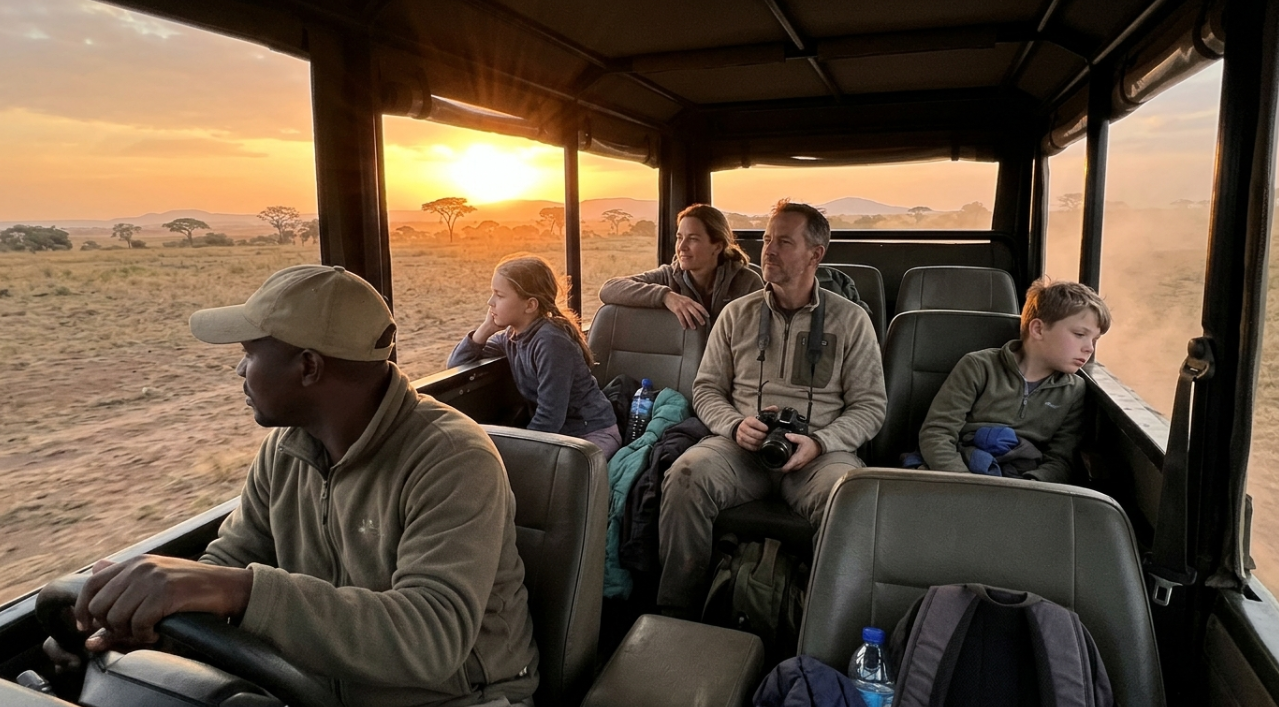
The ideal Tanzania itinerary changes significantly depending on the youngest child's age. These examples are starting points rather than fixed schedules.
Ages 5–7: Shorter and Slower
5–6 safari nights
-
Arrival and overnight near Arusha
-
Tarangire: 2 nights
-
Ngorongoro area: 2 nights
-
Serengeti or another wildlife area: 1–2 nights
-
Optional Zanzibar beach stay afterward
Prioritize private vehicles, shorter drives, pools or family-friendly lodge facilities, and two-night stays.
Ages 8–12: Classic First Safari
6–8 safari nights
-
Arusha: 1 night
-
Tarangire: 2 nights
-
Ngorongoro: 1–2 nights
-
Central Serengeti: 2–3 nights
-
Optional Zanzibar: 3–5 nights
This age group can usually handle a more complete Northern Circuit itinerary, but downtime should still be included.
Teens: Longer or More Specialized
7–10+ safari nights
-
Arusha
-
Tarangire or another introductory park
-
Ngorongoro
-
Serengeti
-
Optional Northern Serengeti, walking safari where permitted, photography activities, or other adventure experiences
Older children can handle longer drives and more specialized wildlife experiences, allowing families to choose an itinerary based on specific interests rather than simply minimizing travel time.
Health, Safety, and Travel Documents by Age
Malaria Prevention
Tanzania has malaria risk in all areas below 1,800 meters (5,900 feet), according to the CDC’s Tanzania traveler page. This includes every major safari park.
Pediatric malaria prophylaxis is age- and weight-dependent. The CDC’s Yellow Book notes that atovaquone-proguanil can be used for children weighing 5 kg or more, doxycycline for children over age 8, and tafenoquine only for those over 18. This matters because families with very young or very small children may have fewer medication options.
Talk to a pediatrician or travel-medicine clinic before booking. The consultation should cover your child’s age, weight, medication tolerance, and the specific itinerary elevation and duration.
Minor Travel Documents
The Embassy of Tanzania in Washington, D.C. states that visa applications for minors under 18 traveling alone or with only one parent should include a notarized consent letter jointly signed by both parents or legal guardians, plus a copy of their ID. This is relevant for divorced parents, one-parent trips, grandparents traveling with grandchildren, or blended families.
For families where grandparents are taking grandchildren, the safari with grandkids guide covers additional documentation and planning considerations.
Road Conditions and Transfer Planning
The U.S. State Department notes that many roads in Tanzania are bumpy, potholed, or unpaved, and during rainy seasons many roads are passable only with 4WD vehicles. This is not just a comfort issue. Long, rough transfers are the single biggest source of complaints from families traveling with young children.
The best age for a safari in Tanzania depends partly on how much road time the itinerary requires. A 6-year-old may do well on a 4- to 5-day private Northern Circuit safari, but struggle with long Serengeti transfer days unless the route is slowed down or supported by internal flights.
Park Rules and Child Safety
TANAPA park rules require visitors to follow designated roads, obey guide instructions, and avoid disturbing wildlife. Children must stay seated, keep hands inside the vehicle, and follow guide directions quickly. Before booking, honestly assess whether your child can do these things consistently.
Families should also carry travel insurance for Tanzania that covers medical evacuation, trip cancellation, and emergency care for children.
Family Tanzania Safari Health Checklist
Before traveling, families should discuss the itinerary with a travel-health professional and check current entry and health guidance.
Consider:
-
Recommended vaccinations and routine immunizations
-
Malaria prevention based on the child's age and weight
-
Prescription medications and allergies
-
Sun protection and hydration
-
Motion sickness if long road transfers are planned
-
Travel insurance and emergency medical coverage
-
Medical evacuation coverage for remote safari areas
-
A supply of any regular medications
-
Appropriate clothing and insect-bite protection
Health requirements can change, so check current official guidance before departure rather than relying on an old safari packing list or a previous family's experience.
Does Traveling Before Age 12 Save Money?
Child rates exist, but they rarely make a private family safari inexpensive. TANAPA’s official tariff structure offers reduced conservation fees for children 5 to 15, and many lodges provide child-sharing discounts when children stay in a parent’s room.
However, practitioners on Reddit note that child discounts do not always translate into big trip savings. Safari operators may quote blended per-person prices. Lodge child discounts can have blackout dates during peak season. And the fixed costs of a private vehicle, professional guide, domestic flights, and park fees remain regardless of your child’s age.
Ask for a family quote that separates child rates, adult rates, vehicle costs, flights, and lodge sharing assumptions. Transparency at the quoting stage prevents surprises later.
Common Mistakes When Choosing the Best Age for Safari in Tanzania
Mistake 1: Planning Too Many Single-Night Stays
Children do better with fewer moves and more predictable routines. Packing up every morning, driving to a new lodge, and settling into a new room is exhausting for kids and parents alike. Two-night minimums at each stop let children settle in, find the pool, and build a rhythm.
Mistake 2: Booking a Camp Without Checking Age Rules
A beautiful lodge may have a minimum age of 12, restrict children from shared game drives, or prohibit kids from walking safari activities. Always confirm camp age policies before falling in love with photos online.
Mistake 3: Assuming a Private Vehicle Is Optional
For younger children, a private vehicle is the control system that makes everything else work. It lets you start later, return early, take snack breaks, and adjust the day based on your child’s energy. Practitioners across Reddit and Tripadvisor consistently recommend private vehicles for families with children under 10.
Mistake 4: Chasing the Hardest Wildlife Spectacle with Young Kids
River crossings in the northern Serengeti can require hours of patience with no guarantee of action. Young children get more joy from elephants bathing, giraffes browsing, hippos surfacing, and lions resting near the road. Plan for the child’s memory, not the adult’s checklist.
Mistake 5: Ignoring What Kids Actually Remember
Adults focus on Big Five checklists. Children remember pools, vehicle routines, guides who taught them animal names, camp staff who played with them, and the smell of dust and acacia. A community member on Reddit argued that younger children may not recall every sighting, but they remember the warmth of staff, play, and the environment. Build the trip around experiences that resonate at their age.
Is Your Child Ready? 7 Questions to Decide
Use this as a practical self-assessment before booking:
-
Can they sit in a vehicle for 2 to 3 hours without constant movement or distress?
-
Can they follow instructions from a guide or parent immediately, without negotiation?
-
Can they stay quiet briefly near wildlife when asked?
-
Can they handle early mornings at least some days?
-
Can they tolerate heat, dust, and bumpy roads without becoming inconsolable?
-
Can they take travel medication or preventive health steps recommended by a clinician?
-
Do they enjoy observing animals, nature, maps, photography, or outdoor experiences?
If your child passes most of these, Tanzania is likely a good fit. If they struggle with two or more, the trip can still work, but only with a private vehicle, shorter routes, family-friendly lodges, and more downtime built into every day.
Plan Around Your Youngest Traveler
Real families often have one child ready and one not. A 4-year-old and a 10-year-old. A 6-year-old and a 13-year-old.
The youngest traveler sets the itinerary. A 13-year-old can handle a route designed for a 6-year-old. A 6-year-old cannot handle a route designed for a 13-year-old. This is the most important principle for mixed-age sibling groups.
For families with more than two children or three generations traveling together, planning a safari for a larger family covers vehicle capacity, room configurations, and how to keep different ages engaged on the same trip.
You do not have to wait until high school, but you should not plan a 6-year-old’s trip like an adult’s trip.
Glossary of Family Safari Terms
Best age for safari: The age when a child can enjoy game drives, follow safety instructions, manage early mornings, and remember the experience. For Tanzania, this is often 8 to 12 for first-time families, with 5 to 7 workable on a private, well-paced itinerary.
Minimum age: The youngest age allowed by a park, lodge, camp, or activity. This varies by property and is different from recommended age.
Child rate: A reduced fee for children, tied to age and room-sharing rules. TANAPA uses under-5 and 5-to-15 categories for park tariffs. Lodges set their own child policies separately.
Private safari vehicle: A dedicated 4x4 and guide for one family or group. The most important planning choice for families with children under about 10.
Game drive: A guided wildlife-viewing drive in a safari vehicle. With younger children, shorter drives (2 to 3 hours) usually work better than all-day outings.
Full-day game drive: A longer wildlife day with packed lunch and many hours away from camp. Better suited to children over 8 and teenagers.
Camp age policy: A property’s specific rules about children, including minimum ages for lodging, shared drives, walking safaris, night drives, and room setups. Always confirm before booking.
Unfenced camp: A safari camp without a hard barrier around the property. Wildlife may move through camp, so children need close supervision and must follow escort rules between tents at night.
Walking safari: A guided bush walk. Age limits are often stricter than standard game drives, typically 12 or 16 depending on camp and operator.
Fly-in safari: Using small aircraft between parks to reduce long road transfers. Useful for families with limited time or children who struggle with bumpy drives.
Northern Circuit: Tanzania’s most common first-safari route, usually including Tarangire, Lake Manyara, Ngorongoro, and the Serengeti.
Safari plus Zanzibar: A bush-and-beach trip pairing mainland wildlife viewing with Zanzibar beach time. Gives children a slower finish after early mornings and dusty drives.
Malaria prophylaxis: Prescription medication to reduce malaria risk. Options for children depend on age, weight, and medical history. Consult a pediatrician or travel clinic before travel.
Minor travel consent letter: A notarized letter sometimes required when a minor travels with only one parent, a grandparent, or a guardian. Tanzania’s embassy guidance mentions this for minors under 18.
When Should You Wait?
Waiting is sometimes the right answer. Consider postponing a Tanzania safari if:
-
Your child cannot sit in a vehicle for two hours without constant movement
-
Your child cannot follow safety instructions reliably
-
Your family budget only allows a shared group safari with a very young child
-
The itinerary requires multiple long transfer days without the budget for internal flights or private pacing
-
Your pediatrician or travel-medicine provider advises against the trip based on your child’s age, weight, or medical history
Waiting a year or two can turn a stressful trip into a formative one. The right age for a family safari in Tanzania is not just when your child can go. It is when the whole family can enjoy the experience without every day revolving around fatigue management.
When the timing is right, Duma Explorer can design a family route around your youngest traveler’s attention span, sleep rhythm, and comfort level rather than forcing your family into a fixed group schedule.
FAQs
What is the best age for a child’s first Tanzania safari?
Ages 8 to 12 are the easiest window for a first family safari in Tanzania. Children this age can handle longer drives, follow safety rules, ask meaningful questions, and remember the trip. Ages 5 to 7 work well with a private vehicle, shorter drives, and family-friendly lodges. Teens can handle more ambitious routes and activities.
Can toddlers go on safari in Tanzania?
Yes, but it is not ideal for most first-time safari families. Toddlers need very short drives, predictable routines, a private vehicle, child-friendly lodges, and malaria prevention guidance from a clinician. The trip becomes more about parent logistics than wildlife immersion.
Is a private safari vehicle worth the extra cost with kids?
For children under about 10, a private vehicle is worth it. It lets the family start later, return early, take bathroom and snack breaks, and avoid disrupting other guests. Travelers on Tripadvisor and Reddit consistently recommend private vehicles as the single most important booking decision for families with young children.
Which Tanzania parks are best for young children?
Tarangire, Ngorongoro Crater, and Lake Manyara are strong choices for younger children because they deliver rewarding sightings without requiring very long drives. The Serengeti is excellent for children 8 and older but needs more careful routing or internal flights to manage transfer distances.
How many safari days should a family plan?
For children 5 to 7, four to six safari days often works best. For ages 8 to 12, five to eight days is a strong range. Teens can handle seven to ten or more. Many families add Zanzibar afterward to give children a relaxed beach finish.
Do children get discounted park fees in Tanzania?
TANAPA offers free entry for children under 5 and reduced rates for children aged 5 to 15. Many lodges also have child-sharing policies. However, fixed costs like private vehicles, guides, and domestic flights remain the same regardless of the child’s age, so total trip savings from child rates can be modest.
What health preparation do children need for a Tanzania safari?
Children traveling to malaria-risk areas in Tanzania should take prescription malaria prevention medication, which is age- and weight-dependent. Families should consult a pediatrician or travel-medicine clinic well before departure to discuss prophylaxis options, routine vaccinations, sun protection, and hydration planning.