Saadani National Park Guide 2026: Beach & Bush Safari
TLDR
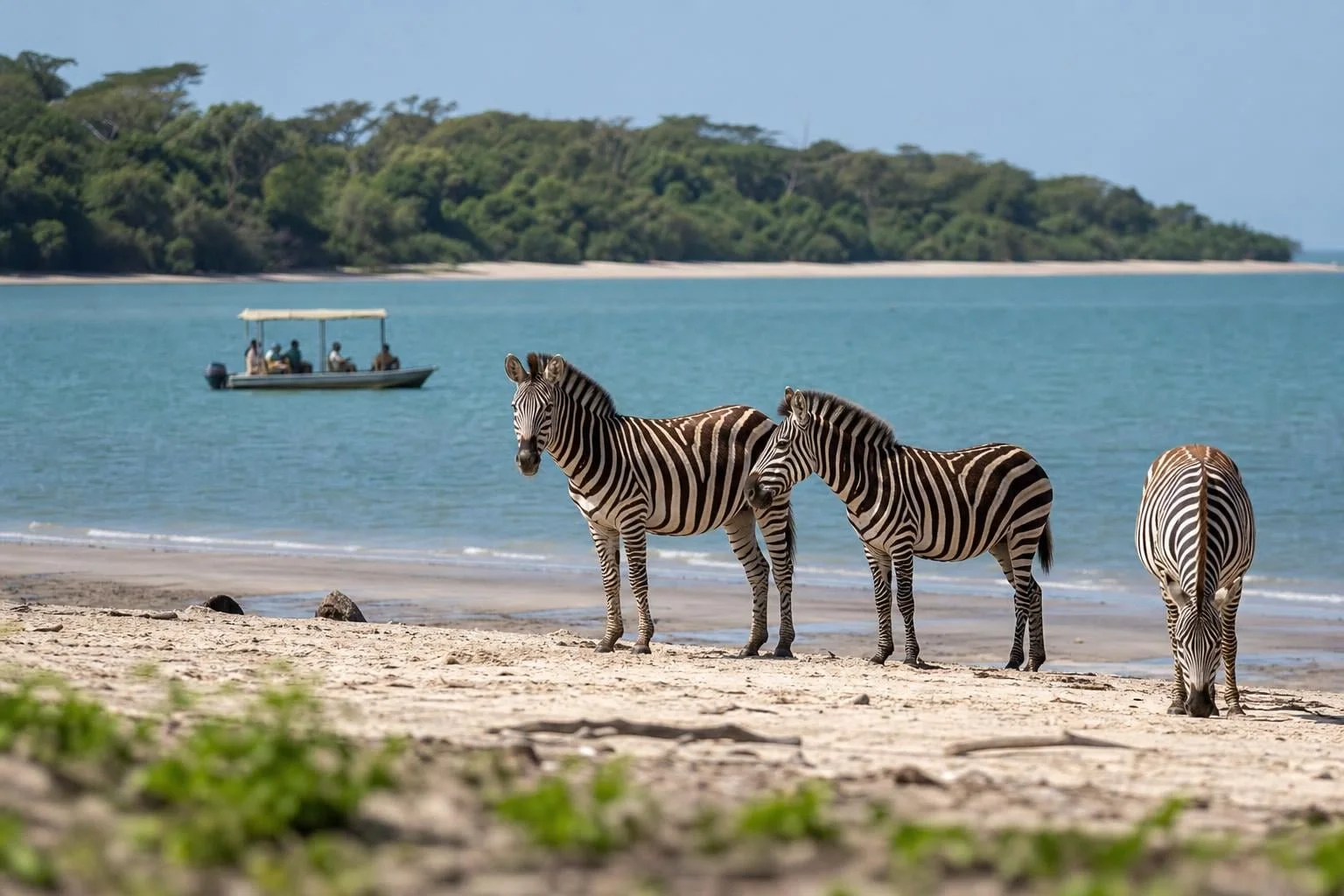
Saadani National Park is East Africa’s only national park where wildlife roams alongside an Indian Ocean coastline. Covering 1,062 km² on Tanzania’s northern coast, it combines savanna game drives, river safaris, turtle nesting beaches, and a 200 km² coastal rainforest. It’s best understood as a complement to a Northern Circuit safari or a wildlife extension from Zanzibar, not a replacement for the Serengeti.
Saadani National Park sits roughly 130 km northwest of Dar es Salaam on Tanzania’s Swahili Coast. It was gazetted in 2005 under the Tanzania National Parks Authority, absorbing the former Saadani Game Reserve, the Mkwaja Ranch area, the Wami River corridor, and the Zaraninge Forest into a single 1,062 km² protected area. The result is a park unlike anything else in East Africa: four distinct ecozones packed into a stretch of coast where elephants wander within earshot of the Indian Ocean.
Most travel content repeats the “beach meets bush” tagline without explaining what that actually means in practice, or what it doesn’t mean. This glossary breaks down every key term, habitat, species, and logistical detail you need to decide whether Saadani belongs in your Tanzania itinerary.
Planning a Swahili Coast trip that includes Saadani? Start with the practical details below.
Check out the cost calculator
Is Saadani National Park Worth Visiting?
Yes—if you're looking for a quieter safari that combines wildlife with the Indian Ocean.
Unlike the Serengeti or Ngorongoro, Saadani National Park is not about seeing huge concentrations of animals. Instead, it offers a unique combination of:
- Game drives through coastal savanna
- Boat safaris on the Wami River
- Walking safaris
- Turtle nesting beaches
- Coastal rainforest hikes
- Easy access from Zanzibar
It is best suited as a 2–3 day extension to a Zanzibar holiday or Northern Circuit safari rather than as a standalone safari destination.
Best for:
- Zanzibar visitors
- Repeat Tanzania travelers
- Birdwatchers
- Families
- Honeymooners
- Travelers wanting fewer crowds
Not ideal for:
- First-time safari visitors
- Big Five seekers
- Luxury beach vacations
Saadani National Park at a Glance
Feature
Details
Country
Tanzania
Established
2005
Size
1,062 km²
Famous For
Beach and bush safari
Best Time
June–October
Closest City
Dar es Salaam
Nearest Island
Zanzibar
Big Five
Big Four (no rhinos)
Main River
Wami River
Bird Species
370+
Main Activities
Game drives, boat safari, walking safari, birding, turtle watching
Typical Stay
2–3 days
Beach-and-Bush
The phrase “beach-and-bush” describes Saadani’s core identity: a national park where terrestrial safari habitat meets the Indian Ocean shoreline. In practice, this means you can do a morning game drive through acacia woodland and spend the afternoon on the beach listening to waves.
What it does not mean: animals parading along a pristine white-sand beach. As one candid TripAdvisor reviewer put it, “Don’t expect to see animals on the beach, this is very unfortunate and misleading campaign by TANAPA.” The beach itself has been described by safari experts as “scruffy and not the paradisiacal swathe of sand usually seen in East Africa.” That’s fine. Saadani’s value lies in the combination of experiences, not in delivering a Zanzibar-grade beach or a Serengeti-grade game drive simultaneously.
Big Four (Not Big Five)
Saadani National Park is home to four of Africa’s Big Five: lions, African bush elephants, Cape buffalo, and leopards. Rhinos are the missing fifth. While they once roamed this area, poaching has reduced their numbers to effectively zero.
No travel page should sell Saadani as a Big Five destination. It isn’t one. But the four species present are genuinely here, and the park’s recovering populations tell a more interesting story than a simple checklist.
Bimodal Rainfall
Saadani’s eastern African coastal climate produces two rainy seasons each year. The long rains fall from March through June, the short rains from October through December. Total annual rainfall ranges between 800 and 1,200 mm.
This bimodal pattern directly shapes when you should visit. The long rains (especially April and May) can make internal roads impassable. The dry intervals between rainy seasons concentrate wildlife near permanent water sources, improving sighting odds. For broader seasonal planning across all of East Africa, see our best time to visit guide.
Boat Safari (Wami River)
The Wami River boat safari is arguably Saadani’s single best activity. Multiple expert reviews and visitor accounts converge on this point. One TripAdvisor reviewer wrote: “The highlight of our stay was a boat trip on the Wami River. You’ll see plenty of crocodiles and hippos.”
The Wami River forms the park’s southern boundary and flows through mangrove-lined banks before reaching its Indian Ocean estuary. A typical boat excursion lasts two to three hours and regularly produces sightings of hippo pods, Nile crocodiles, Angola colobus monkeys in the canopy, and mangrove kingfishers along the banks. For birders, this single activity can account for dozens of species in one outing.
Dry Season
The primary dry season runs from June through October. A shorter dry window falls in January and February. These are the best months for wildlife viewing because animals congregate around the Wami River, seasonal pans, and other permanent water sources. Vegetation thins out, improving visibility from game drive vehicles.
Park guides with years of on-the-ground experience emphasize that game drives work best in the early morning (around 6 to 8 AM) and late afternoon (5 to 7 PM). Saadani’s coastal heat pushes animals into dense shade during midday, making those hours largely unproductive. One reviewer warned: “Animals in Saadani are adapted to coastal heat and they will stay put in the shade for most of the day.”
Ecozones (The Four)
Four ecozones make up Saadani National Park, and this layered biodiversity is what separates it from every other Tanzanian park:
Marine environment of the Indian Ocean, including coral reefs and the Mafui Sandbank. Over 40 fish species breed here, alongside gastropods, echinoderms, and corals.
Freshwater ecosystems of the Wami River and smaller watercourses, supporting hippos, crocodiles, and mangrove forests.
Coastal forests, including the Zaraninge Forest, a globally significant biodiversity hotspot.
Humid savanna, the dominant terrestrial habitat where most game drives take place, supporting elephants, lions, buffalo, and a range of antelope species.
No other national park in East Africa contains all four. That’s the honest version of “beach meets bush.”
Elephant Population
Saadani’s elephant population is estimated at roughly 200 individuals. That number is growing slowly as anti-poaching efforts take hold, but it’s a far cry from the thousands you’d encounter in Tarangire or the Serengeti ecosystem.
The odds of watching an elephant herd stroll along the beach are slim. Away from the coastline, though, especially near the Wami River during the dry season, elephant sightings are quite realistic. Manage your expectations and you’ll be pleasantly surprised rather than disappointed.
Entry Fees
Saadani falls in TANAPA’s lower fee tier, making it one of Tanzania’s more affordable parks. As of the most recent published rates:
Non-East African adults (16+): US$30 per person per 24 hours
East African Community citizens: TZS 5,000 per person per 24 hours
Expatriates and Tanzania residents: US$15 per person per 24 hours
Concession fee: Approximately US$29.50 per person per night
TANAPA fees are subject to change, so confirm current rates with your operator or directly with TANAPA before traveling. For a full breakdown of how park fees compare across Tanzania’s circuits, our safari cost glossary puts these numbers in context.
Game Drive
Game drives in Saadani cover the park’s humid savanna zone, where most large mammals concentrate. The habitat is relatively flat with scattered woodland, giving it a different feel from the dramatic kopjes of the Serengeti or the Ngorongoro Crater walls.
A park guide with nine years of experience summarized the appeal: “Our guests mainly like this park due to its proximity to the ocean. This unique combination of beach holiday and exciting safari game drives is what they enjoy most as they find all in one location.”
The honest caveat: wildlife densities are low compared to Northern Circuit parks. SafariBookings’ expert panel rates Saadani just 2.6 out of 5 stars, noting it is “not suited to those seeking a full-on safari experience.” Visitor ratings average a notably higher 3.7 out of 5, suggesting the gap is about mismatched expectations rather than poor quality. Go in knowing what Saadani is, and the experience rewards you.
A knowledgeable guide who understands animal movements makes an enormous difference here. As one TripAdvisor reviewer put it: “Most of negative reviews and criticism stem from people charging in on their own, without any knowledge of the roads, animal movements and usually at wrong time of the day.”
Green Sea Turtle
The beaches in and around Saadani National Park form one of the last major breeding sites in mainland Tanzania for green sea turtles. Nesting season runs from June through October, with roughly eight nests recorded during a typical season. After females bury their eggs in the sand, incubation takes 45 to 60 days before hatchlings emerge and make their scramble to the ocean.
Madete Beach is the primary nesting area within the park. Witnessing a hatching event is rare and seasonal, but the park’s turtle conservation program adds a layer of purpose to any visit during those months.
Green Season
November through May is Saadani’s green season. The landscape transforms into lush coastal vegetation, migratory birds arrive, and tourist numbers drop to near zero. Birders will find this period exceptional, with many of the park’s 370-plus recorded species more active and visible.
The trade-off: some internal roads become difficult or impassable during April and May’s heaviest rains, and large mammals disperse across the wider landscape, reducing sighting concentrations. Accommodations often offer lower rates during this period.
Month-by-Month Guide
Month
Wildlife
Birding
Weather
Recommended
Jan
Good
Good
Dry
✓
Feb
Good
Good
Dry
✓
Mar
Moderate
Excellent
Rain
Depends
Apr
Poor
Excellent
Heavy Rain
✗
May
Fair
Excellent
Wet
Depends
Jun
Excellent
Good
Dry
✓
Jul
Excellent
Good
Dry
✓
Aug
Excellent
Good
Dry
✓
Sep
Excellent
Good
Dry
✓
Oct
Very Good
Good
Dry
✓
Nov
Good
Excellent
Short Rains
✓
Dec
Good
Excellent
Rain
✓
Lion Prides
Saadani is home to approximately 50 lions organized into five resident prides, each occupying a defined territory within the park. These lions have distinctive physical traits: paler coats and noticeably smaller manes compared to their Serengeti or Ngorongoro counterparts, likely adaptations to the warmer, more humid coastal climate.
Sightings are far from guaranteed. Lions in dense coastal bush behave differently from those in open grasslands, spending more time concealed in shade. A guide who knows their territories and movement patterns dramatically improves your chances.
Mafui Sandbank
The Mafui Sandbank lies within Saadani’s marine zone, offshore from the main coastline. Its colorful coral reefs serve as an important breeding ground for many fish species and offer the park’s best snorkeling and diving opportunities.
This is one of the most consistently underexplained features of the park. Most guides and competitor pages mention it in passing, but for travelers who enjoy marine life, the Mafui Sandbank provides a genuinely different experience from the reefs around Zanzibar’s snorkeling spots, with far fewer boats and visitors.
Mkwaja Ranch
The Mkwaja Ranch area was a large-scale cattle operation that was absorbed into Saadani National Park during the 2005 expansion. Today, the former ranch lands have reverted to a mosaic of grassland and bush habitat, providing additional range for elephants, buffalo, and antelope.
The ranch’s history matters because it partly explains why Saadani’s wildlife populations are still recovering. Decades of ranching activity displaced or reduced wild animal numbers. Recovery takes time, which is why current densities remain modest compared to parks that never had commercial agricultural use.
Night Safari
Several lodges within and adjacent to Saadani offer night game drives using thermal scopes and spotlights. This is a genuinely distinctive activity. Many Tanzanian parks restrict after-dark driving, but Saadani’s concession areas permit it.
Night drives regularly produce sightings of civets, genets, bushbabies (including the globally rare Rondo dwarf galago in forested areas), and occasionally active predators. For travelers who have done standard daytime drives elsewhere, a Saadani night safari offers something they likely haven’t experienced before.
Park Gates
Saadani National Park has four entry gates:
Saadani Gate (south): The main entrance for visitors arriving from Dar es Salaam or Bagamoyo.
Mkwaja Gate (north): Primary access from Pangani or Tanga.
Madete Gate (north): Near the turtle nesting beaches, also accessed from the Pangani direction.
Gama Gate (southwest): A dry-season-only entrance. Impassable during heavy rains.
TANAPA processes fees electronically, and credit card payment is accepted at the gates.
Roosevelt’s Sable Antelope
One of Saadani’s most significant but least publicized residents. Roosevelt’s sable (Hippotragus niger roosevelti) is an endangered subspecies found in only three locations in East Africa: Saadani National Park, Nyerere National Park (formerly the Selous), and Kenya’s Shimba Hills National Reserve.
Sighting one is unusual and requires patience and luck, but for wildlife enthusiasts who understand what they’re looking at, a Roosevelt’s sable sighting in Saadani is genuinely special. This species alone justifies the park’s conservation importance. For other remote Tanzania safari destinations that protect rare species, Mkomazi and Ruaha share a similar profile.
Saadani Safari Express
A recent development that changes Saadani’s accessibility equation. The Saadani Safari Express is a fast boat connection between Zanzibar and Saadani National Park, taking just 60 to 90 minutes. This makes it possible to add a two or three day wildlife excursion to a Zanzibar beach holiday without backtracking through Dar es Salaam.
Most competitor pages haven’t picked up on this connection yet. For travelers already based on Zanzibar who want a taste of mainland safari without a full Northern Circuit commitment, this is a significant new option. Zanzibar itself is only about 40 km from the park; flights take roughly 14 minutes.
Saadani Village
The park takes its name from Saadani, a small Swahili fishing village of about 800 inhabitants located within the park boundary. The name has roots in the Arab settlement of the area during the 19th century.
Saadani was once an important harbor town and a center of the East African slave trade. Ruins from that period remain, and cultural visits to the village are available through park lodges. The broader Swahili Coast glossary covers the historical trade networks that made towns like Saadani, Pangani, and Bagamoyo pivotal along this coastline.
It’s worth noting that the park’s creation and expansion involved land-rights tensions between TANAPA and several surrounding villages. At least six communities have documented disputes over boundaries and resource access. This context is absent from most travel marketing but important for understanding the park’s social dynamics.
TANAPA
The Tanzania National Parks Authority manages Saadani along with all other national parks in the country. TANAPA sets fee structures, maintains infrastructure, deploys rangers, and regulates concession operators within the park.
For visitors, the practical implications are straightforward: carry a credit card for gate fees, follow ranger instructions, and respect the park rules regarding off-road driving and noise. Entry is based on 24-hour periods, not calendar days.
Walking Safari
Guided walking safaris in Saadani are led by armed TANAPA rangers and typically cover the mangrove forest edges, coastal woodland, or sections of the Zaraninge Forest. These walks focus on smaller details that game drives miss: primates, butterflies, medicinal plants, birdlife, and tracks.
Morning and evening walks are available. The experience is quieter and more intimate than vehicle-based game viewing, and it’s particularly rewarding for birders and photographers who want ground-level perspectives.
Wami River
The Wami River forms Saadani’s southern boundary and is the park’s most important permanent water source. Its lower reaches flow through mangrove-lined banks before opening into an estuary at the Indian Ocean.
During the dry season, the Wami becomes a magnet for wildlife. Hippo pods and Nile crocodiles are reliable residents. The river’s bird diversity is exceptional, with species like Pel’s fishing-owl, Goliath heron, lesser flamingos, and the striking mangrove kingfisher all recorded along its banks. The boat safari here (covered above) is the single activity most likely to produce consistent, high-quality wildlife encounters.
Zaraninge Forest
This is the entry that most travel content gets wrong by ignoring it almost entirely. The Zaraninge Forest is a 200 km² expanse of closed-canopy tropical forest within Saadani National Park. It is one of the larger coastal forests remaining in Tanzania and part of the globally recognized Eastern Arc and Coastal Forest Hotspot for Kenya and Tanzania.
The biodiversity numbers are striking: two endemic plant species, 17 forest-dependent reptiles, and 10 amphibian species. The forest is also one of only eight known habitat patches for the Rondo dwarf galago, an uncommon primate found nowhere outside Tanzania’s coastal forests. For context on Tanzania’s birding hotspots, the Zaraninge Forest contributes substantially to Saadani’s total of over 370 recorded bird species, including East African endemics like the Sokoke pipit, Fischer’s greenbul, Kretschmer’s longbill, and the plain-backed sunbird.
Walking safaris and guided forest hikes are the best ways to experience Zaraninge. You won’t see elephants here, but you might find a galago, a chameleon species found in only a handful of locations worldwide, or a bird that exists on no other continent.
Birding at Saadani
With over 370 recorded species, Saadani qualifies as an excellent birding destination by any standard. The park’s four ecozones create habitat diversity that concentrates species variety into a relatively compact area.
Key species include the mangrove kingfisher (best seen on the Wami River), lesser flamingos, little bittern, Goliath heron, and the elusive Pel’s fishing-owl. The Zaraninge Forest adds endemics like the little yellow flycatcher and the Sokoke pipit. The green season (November through May) brings migratory species and generally better birding conditions, though the trade-off is reduced access to some roads.
Wildlife You Can See in Saadani
Mammals
Lion
Leopard
Elephant
Buffalo
Hippo
Crocodile
Giraffe
Zebra
Warthog
Bushbuck
Waterbuck
Wildebeest
Eland
Sable Antelope
Yellow Baboon
Vervet Monkey
Angola Colobus
Birds
Pel's Fishing Owl
Goliath Heron
Mangrove Kingfisher
Little Bittern
Flamingos
Fischer's Greenbul
Sokoke Pipit
Getting to Saadani
Saadani National Park is accessible by road, air, and boat:
By road from Dar es Salaam: Approximately 130 km northwest, taking four to five hours depending on road conditions. The route passes through Chalinze and then follows a rougher track to the park.
By air from Dar es Salaam: Charter and scheduled flights take about 30 minutes to Saadani Airstrip.
By air from Zanzibar: A 14-minute flight.
By boat from Zanzibar: The Saadani Safari Express covers the crossing in 60 to 90 minutes.
The boat connection is particularly useful for Zanzibar-based family travelers who want a short wildlife detour without the hassle of flying to the Northern Circuit. Check Tanzania visa requirements before arrival, as you’ll need your documents in order regardless of which route you take.
Suggested 2-Day Saadani Itinerary
Day 1
Morning arrival
Afternoon game drive
Sunset on the beach
Night safari
Day 2
Sunrise boat safari on the Wami River
Walking safari
Visit Saadani Village
Return to Zanzibar or Dar es Salaam
Who Should Visit Saadani National Park
Saadani is a strong fit for:
Travelers already on Zanzibar who want a two or three day mainland safari without flying to Arusha
Honeymooners looking for a beach-and-bush combination in one location
Birders, especially those targeting East African coastal forest endemics
Families with children who enjoy beaches but also want some wildlife exposure
Photographers seeking solitude and uncrowded game drives
Repeat visitors to Tanzania who have already done the Northern Circuit and want something different
Saadani is not ideal as:
Your only Tanzania safari. Wildlife densities are too low to satisfy travelers who haven’t experienced the Serengeti, Tarangire, or the Ngorongoro Crater
A Big Five destination. With rhinos effectively absent, that expectation will lead to disappointment
A luxury beach holiday. The coastline is natural and undeveloped, not manicured resort territory
SafariBookings’ expert panel captured this positioning well: “Any wildlife-lover seeking a post-safari chill-out venue might want to consider it as an alternative to the more crowded and developed beaches around Zanzibar.”
If you’re building a broader Tanzania itinerary that includes Saadani, our Pangani and Saadani travel guide covers the full Swahili Coast stretch and how to connect it with other destinations.
Saadani vs Serengeti vs Nyerere
Feature
Saadani
Serengeti
Nyerere
Beach Access
✓
✗
✗
Big Five
Big Four
Yes
Yes
Boat Safari
Excellent
Limited
Excellent
Wildlife Density
Moderate
Very High
High
Crowds
Low
High
Moderate
Birding
Excellent
Excellent
Excellent
Walking Safari
Yes
Limited
Yes
Best For
Beach + Safari
Classic Safari
Wilderness
Sample Budget for a 2-Day Saadani Safari
Expense
Estimated Cost
Park Entry
US$30/day
Concession Fee
US$29.50/night
Lodge
US$100–350/night
Boat Safari
Usually included or US$30–60
Guide
Depends on operator
Transportation
Varies by route
Pros and Cons of Visiting Saadani National Park
Pros
Only beach-and-bush national park in East Africa
Easy from Zanzibar
Excellent birdwatching
Fantastic river safaris
Few crowds
Affordable park fees
Cons
Lower wildlife density
No rhinos
Rough access roads
Limited accommodations
Beach is natural rather than resort-style
Frequently Asked Questions
Is Saadani National Park worth visiting?
Yes, if your expectations match what the park actually delivers. Saadani is not a substitute for the Northern Circuit. It’s a distinctive add-on that works especially well as a two or three day extension from Zanzibar, combining coastal wildlife, river safaris, and genuine solitude. Visitor ratings on SafariBookings average 3.7 out of 5, notably higher than the expert panel’s 2.6, suggesting that travelers who arrive with calibrated expectations tend to enjoy it.
What animals can you see in Saadani?
Four of the Big Five (lion, elephant, buffalo, leopard) are present along with about 30 species of larger mammals. The elephant population is estimated at around 200, and roughly 50 lions are organized into five prides. Roosevelt’s sable antelope, an endangered subspecies found in only three locations in East Africa, is also here. Hippos and Nile crocodiles are reliable sightings on the Wami River. Over 370 bird species have been recorded.
When is the best time to visit Saadani National Park?
The dry season from June through October offers the best wildlife viewing, as animals concentrate near permanent water. January and February provide a secondary dry window with good conditions. The green season (November through May) is excellent for birding and offers lower prices, but some roads become impassable in April and May.
How much does it cost to enter Saadani?
Non-East African adults pay approximately US$30 per 24-hour period. East African Community citizens pay TZS 5,000. An overnight concession fee of roughly US$29.50 per person applies. These are among the lowest park fees in Tanzania. Always confirm current rates with TANAPA or your operator before traveling.
Can you visit Saadani from Zanzibar?
Yes. The Saadani Safari Express boat connection takes 60 to 90 minutes from Zanzibar. Charter flights cover the distance in about 14 minutes. This makes Saadani one of the easiest mainland wildlife experiences to access from Zanzibar, with ready-made two and three day packages available through operators.
Are there turtles at Saadani?
Green sea turtles nest on Madete Beach from June through October. Approximately eight nests are recorded per season, with eggs incubating for 45 to 60 days. Saadani’s beaches are among the last major mainland nesting sites in Tanzania for this species.
What is the Zaraninge Forest?
A 200 km² closed-canopy tropical rainforest within Saadani National Park. It’s part of the Eastern Arc and Coastal Forest Hotspot, home to endemic plants, 17 forest-dependent reptile species, and the critically rare Rondo dwarf galago. Most travel guides barely mention it, but for nature enthusiasts, Zaraninge is one of Saadani’s most compelling features.
Is Saadani safe to visit?
Yes. The park is managed by TANAPA with ranger patrols, and all walking safaris are accompanied by armed rangers. Standard East Africa travel safety practices apply: travel with a reputable operator, follow park rules, and stay in your vehicle during game drives unless accompanied by a guide.