

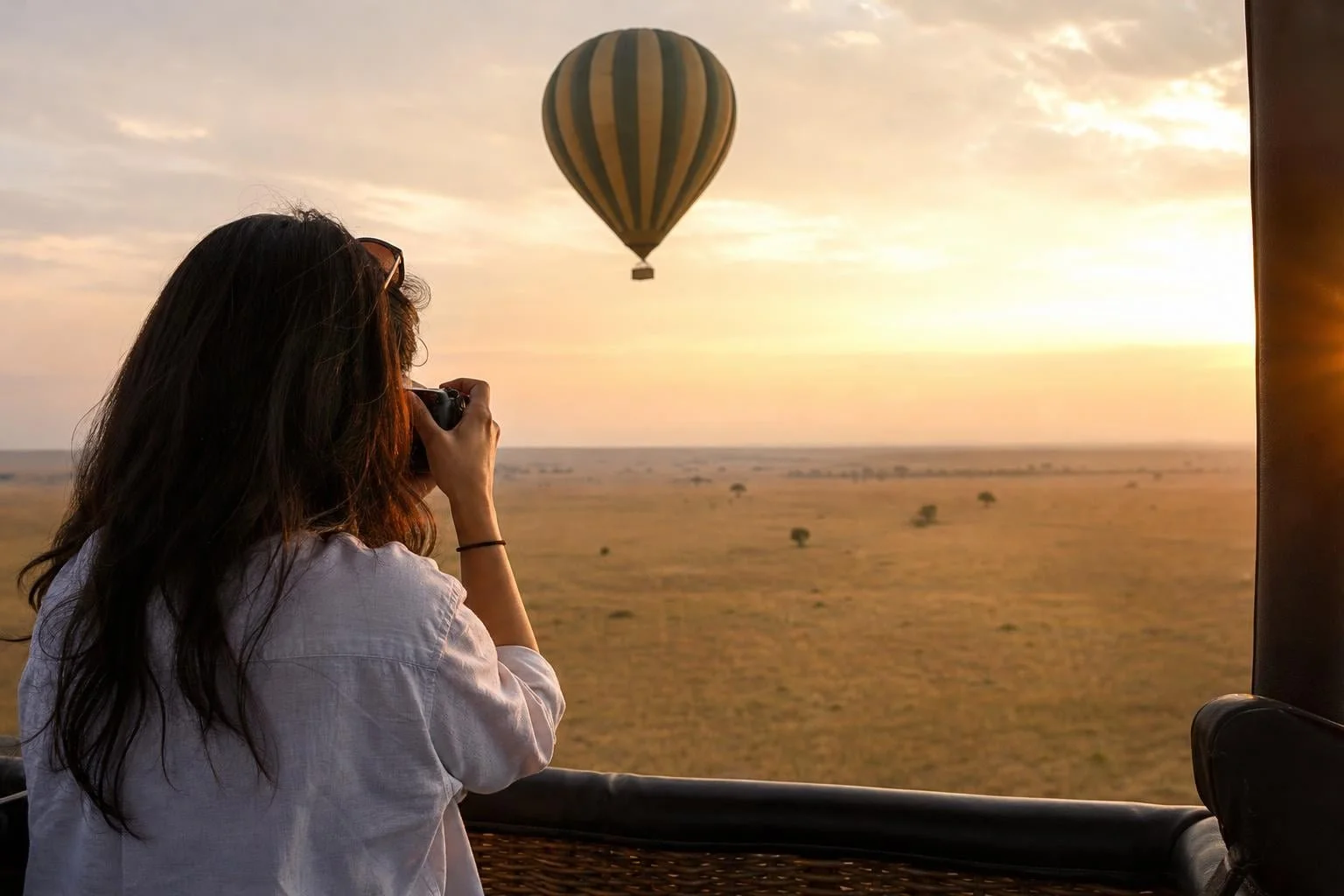
Quick answer: For most travelers spending three or more nights in the Serengeti, a balloon safari is worth the $599 cost. The sunrise flight offers an aerial perspective you cannot replicate from a vehicle, and the bush breakfast afterward is a genuine highlight. That said, this is not a game-viewing activity. If you have a short stay, a tight budget, or wildlife close-ups are your sole priority, the money may serve you better elsewhere.
What a Balloon Safari Actually Is
A balloon safari is a sunrise hot air balloon flight over a national park or wildlife area, lasting roughly 50 to 75 minutes, followed by a champagne bush breakfast on the plains. In the Serengeti, this experience has been running since the early 1990s and is operated by a small number of companies licensed by the Tanzania Civil Aviation Authority (TCAA).
The flight itself carries 8 to 16 passengers in a partitioned basket. Your pilot controls altitude precisely, sometimes dropping to treetop level where individual animals become visible below, then climbing to 1,000 feet for panoramic views across the plains. You do not steer toward animals the way a game-drive vehicle can. The balloon follows the wind.
This distinction matters. Setting expectations correctly is what separates people who love the experience from those who feel shortchanged. The balloon is about scale, silence, and a fundamentally different relationship with the landscape. It is not a substitute for a morning game drive.
If you’re weighing this add-on as part of a broader Serengeti trip, Duma Explorer can help you build a custom safari itinerary that accounts for balloon timing and your overall schedule.
Balloon Safari Cost in 2026: What You’ll Pay
| Location | Price (2026) | Season |
|---|---|---|
| Serengeti, Central/Seronera | $599 per person | Year-round |
| Serengeti, Northern/Kogatende | $650–$700 per person | July–October |
| Tarangire National Park | $550 per person | Primarily dry season |
| Masai Mara, Kenya | $450–$550 per person | Year-round |
| Private charter, Serengeti | $4,800 per balloon (max 4 guests) | Year-round |
What’s Included in the $599
The price covers your transfer from the lodge to the launch site, the TANAPA ballooning concession fee ($40 per passenger), the approximately one-hour flight, and a champagne bush breakfast served under acacia trees after landing.
What’s Not Included
Your daily Serengeti park entry fee (approximately $82.60 per person) is separate. Tips for the balloon crew are customary but not included. If you’re staying outside the park, additional transfer costs may apply.
Why It Costs What It Costs
The price feels steep until you understand the economics. A single balloon envelope costs over $100,000 and must be replaced every 850 flying hours to meet international safety standards. Each flight requires a licensed pilot plus a ground crew of roughly 20 people for launch, tracking, and recovery. Add the TANAPA concession fee, vehicle logistics across the Serengeti, and the full bush breakfast setup, and $599 starts to make more sense as an operating cost rather than a pure markup.
For context, $599 is roughly equivalent to one night in a mid-range Northern Serengeti tented camp. It’s also about half the cost of a domestic flight from Arusha to Kogatende and back. Within the frame of a Tanzania safari trip’s total cost, the balloon is a meaningful but not disproportionate addition.
Hour by Hour: What the Balloon Safari Experience Looks Like
Understanding the timeline helps you decide if a balloon safari is worth it for your specific schedule.
3:30–4:00 AM: Wake-up call. Your lodge or camp will have arranged an early departure. Coffee and a light snack are typically available before you leave.
4:30–5:00 AM: Arrive at the launch site. The balloon is already being inflated, which is worth watching. The envelope fills with flame and hot air in the dark, gradually taking shape against the pre-dawn sky.
5:00–5:15 AM: Safety briefing from your pilot. You’ll learn the landing position (essentially a brace position, lying flat in the basket compartment) and basic flight procedures.
5:30–6:00 AM: Takeoff at sunrise. The ground drops away silently. For the next hour or so, you float over the Serengeti at varying altitudes. At low altitude, you can see animals react (or not react) to the balloon’s shadow. At higher altitude, the scale of the ecosystem becomes clear in a way that’s impossible from a vehicle.
6:30–7:00 AM: Landing. The pilot selects a landing site based on wind conditions. The landing itself can be bumpy, so the brace position matters.
7:00–8:30 AM: Bush breakfast on the plains. White tablecloths, champagne or sparkling wine, hot food, and a certificate. This part of the experience tends to surprise people. It’s not a quick snack. It’s a full, atmospheric meal in the middle of the Serengeti.
9:00–10:00 AM: Return transfer to your lodge or camp. Some operators arrange a short game drive on the way back.
The total experience runs about five hours from pickup to return. You’ll be back at your lodge by mid-morning, usually in time for an afternoon game drive.
When a Balloon Safari Is Worth the Money
The question of whether a balloon safari is worth it depends less on the experience itself (which delivers consistently) and more on your circumstances.
Special Occasions
Honeymoons, milestone birthdays, anniversaries. The balloon is one of the most photogenic and emotionally resonant experiences available on a safari. Reviewers on TripAdvisor consistently describe it using words like “magical” and “once-in-a-lifetime,” and multiple Duma Explorer clients have highlighted the balloon as a trip highlight. If you’re planning a Serengeti honeymoon, this is the kind of add-on that justifies itself.
Multi-Day Serengeti Stays
If you’re spending three or more nights in the Serengeti, you have multiple morning game drives available. Giving up one morning for the balloon costs you relatively little in terms of wildlife viewing. You’ll still have your best dawn drives on other days.
Migration Season Alignment
When the Great Migration herds are within view of a launch site, the aerial perspective becomes extraordinary. Thousands of wildebeest visible from altitude create a view you simply cannot get from ground level. This is when the balloon safari reaches its highest value.
Photography
The light at that hour is superb, and the elevated angle creates compositions that are impossible from a vehicle. Practitioners on photography forums note that wide-angle lenses capture the landscape beautifully, though telephoto shots of specific animals are limited by distance and basket vibration.
Budget Permits It Without Sacrifice
The key test: does spending $599 per person on the balloon mean downgrading your lodge, shortening your trip, or cutting another meaningful activity? If not, it’s worth it. If so, read the next section.
When to Skip the Balloon Safari
Being honest about when the balloon is not worth it is what separates useful advice from cheerleading. The overwhelming majority of travelers who fly love the experience, but there are clear situations where you should skip it.
Short Serengeti Stays (1–2 Nights)
This is the biggest one. The balloon takes your best morning game-drive slot, the hours around sunrise when predators are most active and light is best for viewing. If you only have one or two mornings in the Serengeti, that trade-off is too steep. Practitioners on TripAdvisor forums consistently flag this: “If you’re only there for one night, use that morning for a game drive.”
Tight Budgets Where $600 Buys More Elsewhere
For a couple, the balloon costs $1,200. That money could extend your trip by a night, upgrade your accommodation for two nights, or fund a fly-in transfer that saves a full day of driving. If your overall budget is constrained, those alternatives may deliver more value per dollar.
Rain Season (April to Early May)
The risk of weather cancellation rises significantly during the heavy rains. Strong winds, downpours, or poor visibility will ground the flight. If the balloon cancels and you’re moving to a different park the next day, you lose the experience entirely with no option to reschedule. The dry season from June through October has the lowest cancellation rates.
Close-Up Wildlife Is Your Only Goal
One contributor on TripAdvisor put it bluntly: “Don’t bother. If you want to get close to wildlife, do it in a car.” That’s a minority view, but it’s accurate for a specific type of traveler. The balloon is about perspective, not proximity. If spotting a leopard in a sausage tree matters more to you than seeing the Serengeti from above, skip the balloon and use that morning in a vehicle with your private safari guide.
Best Time for a Serengeti Balloon Safari
Balloon flights operate year-round from central Serengeti (Seronera), but seasonal launch sites open and close based on where wildlife concentrates. Timing your balloon flight to coincide with the Great Migration dramatically increases what you’ll see from altitude.
Launch Sites by Season
| Season | Launch Site | What You’ll See | Notes |
|---|---|---|---|
| Year-round | Seronera (Central Serengeti) | Resident wildlife, big cats, hippo pools | Most accessible, standard $599 price |
| Late Dec – Mid March | Ndutu (Southern Serengeti) | Calving herds, predator action | Peak predator-prey drama |
| June – October | Western Corridor (Grumeti) | River crossings, large herds | Migration moving north |
| July – October | Kogatende (Northern Serengeti) | Mara River crossings, massive herds | Premium pricing ($650–700), complex logistics |
The northern Serengeti launch site at Kogatende costs $50 to $100 more than the standard Seronera flight due to more difficult ground logistics in that remote area.
If you can align your balloon flight with the migration’s location, the aerial view of vast herds crossing open plains is the highest-value version of this experience. Your safari operator should coordinate this timing when building your itinerary. Knowing the best time for a Tanzania safari overall helps anchor the rest of your trip planning around this.
How to Book a Balloon Safari (And the Scheduling Trick Most People Miss)
Book Through Your Safari Operator
The simplest approach is to have your safari operator add the balloon to your itinerary. They’ll coordinate the early-morning transfer, confirm availability, and handle payment. This avoids the logistics headache of booking directly while also ensuring the balloon morning fits properly into your game-drive schedule.
Duma Explorer handles balloon safari bookings as part of your overall itinerary, coordinating timing with your lodge location and Serengeti schedule.
Book Early in Peak Season
Between June and October, balloon flights sell out weeks in advance. If you’re traveling during this window, confirm your balloon booking at the same time you finalize your safari itinerary. Waiting until you arrive in the Serengeti often means no availability.
Schedule It on Day Two or Three (Not Day One)
This is the most useful piece of booking advice that most articles miss. Schedule your balloon flight for the second or third morning of your Serengeti stay, not the first. Two reasons:
-
Weather buffer. If the flight cancels due to wind or rain, you have a backup morning to reschedule. If you book it for your only morning or your last morning, a cancellation means you miss it entirely.
-
Acclimatization. By your second morning, you’re adjusted to the 4:00 AM wake-up rhythm and you’ve already had a sunrise game drive to calibrate your expectations.
Weather Cancellation Policy
Balloon flights are subject to suitable weather conditions. Strong winds, heavy rain, or poor visibility will result in cancellation. When this happens, passengers are either rebooked on a subsequent flight (if available) or refunded in full. This is standard across all TANAPA-licensed operators.
Safety and Restrictions
All commercial balloon operations in the Serengeti are regulated by the Tanzania Civil Aviation Authority (TCAA). Each pilot holds a commercial balloon pilot license issued by the TCAA plus a commercial license from at least one other country. Only certified and experienced pilots are permitted to operate commercial flights.
Who Can’t Fly
- Children under 7 years old are not permitted
- Passengers weighing over 120 kg (265 lbs) may need to reserve two places
- Pregnant women cannot fly
- Passengers must be able to adopt the landing brace position (lying flat in the basket compartment)
If you’re planning a family safari with younger children, the age restriction means the balloon won’t work for everyone. Some families split up for the morning, with one parent taking older children on the balloon while the other does an early game drive with younger kids.
Serengeti vs. Tarangire: Which Balloon Safari Is Worth It?
| Factor | Serengeti | Tarangire |
|---|---|---|
| Price (2026) | $599 per person | $550 per person |
| Landscape | Vast open plains, kopjes, rivers | Baobab-studded woodland, river valley |
| Wildlife highlight | Migration herds, big cats, variety | Elephants, baobabs, bird life |
| Atmosphere | Grand scale, iconic | Intimate, fewer balloons in the sky |
| Availability | Year-round (multiple launch sites) | Primarily dry season |
The Serengeti balloon is the classic experience, and it’s what most travelers picture when they ask if a balloon safari is worth it. The scale of the plains from altitude is unmatched.
Tarangire makes a strong case for travelers who value intimacy. Fewer balloons fly there, the baobab-studded landscape is visually striking from above, and the elephant herds in the Tarangire River valley create memorable aerial viewing. At $550, it’s also slightly cheaper. If your itinerary includes both parks and the Serengeti is very short, doing the balloon over Tarangire instead preserves your Serengeti mornings for game drives.
The Morning Trade-Off: What You Give Up
This is the honest calculation most balloon safari articles avoid. The hours around sunrise are the best wildlife-viewing hours on a safari. Big cats are active, light is golden, and animals are on the move before the heat of the day pushes them into shade.
When you take the balloon, you trade that prime game-drive window for an aerial experience. You get back to your lodge by mid-morning, in time for an afternoon drive, but you’ve lost the dawn hours in a vehicle.
For travelers with three or more Serengeti mornings, this trade is easy to make. You still have plenty of sunrise drives. For travelers with only one or two mornings, it’s a genuine sacrifice. The balloon gives you something a vehicle never can, but the vehicle gives you something the balloon never will: eye-level encounters with wildlife at close range.
This is why trip length matters more than almost any other factor when deciding if the balloon safari is worth your time and money.
The Private Balloon Option
For travelers seeking complete exclusivity, the Private Leopard Print Balloon is available from $4,800 for up to four guests. At $1,200 per person for a group of four, it’s double the standard price but buys a private pilot, a private basket, and a private bush breakfast.
This option works for honeymoons, proposals, or small groups celebrating a milestone. It eliminates the possibility of sharing the basket with strangers, which some travelers value highly on a private honeymoon safari.
Making Your Decision
Here is a simple framework:
Book the balloon if:
- You’re staying 3+ nights in the Serengeti
- You’re celebrating a special occasion
- Your budget absorbs $599/person without cutting something else
- You value the aerial perspective and atmospheric experience
- You’re traveling during dry season (lowest cancellation risk)
- The migration herds are near a launch site during your dates
Skip the balloon if:
- You have only 1–2 Serengeti mornings
- $600/person means downgrading your lodge or shortening your trip
- Close-up wildlife encounters are your only measure of value
- You’re visiting during heavy rains (April/May)
If you’re trying to fit a balloon flight into a broader Tanzania itinerary without losing critical game-drive time, Duma Explorer can design the routing and timing around your priorities.
Frequently Asked Questions
Can children go on a Serengeti balloon safari?
Children must be at least 7 years old. There is no upper age limit, but all passengers need to be able to adopt the landing brace position (lying flat in the basket). For families with younger children, the family safari planning guide covers how to structure mornings when not everyone can participate.
What happens if the balloon flight is cancelled due to weather?
You’ll either be rebooked on a subsequent flight (if you have additional mornings in the Serengeti and space is available) or refunded in full. This is why scheduling the flight on your second or third morning is so important.
Do you see animals up close from the balloon?
Sometimes. The pilot can descend to treetop level, and you may see elephants, giraffes, hippos, or herds of zebra and wildebeest at relatively close range. But you cannot direct the balloon toward specific animals. This is not a game drive. It’s a different kind of experience entirely.
Is a Serengeti balloon safari safe?
Commercial balloon operations in the Serengeti are regulated by the Tanzania Civil Aviation Authority. All pilots hold commercial licenses, and balloon envelopes are replaced on a strict schedule (every 850 flying hours). The safety record is strong, and operations have been running continuously since the early 1990s.
What should you wear on a balloon safari?
Layers. The pre-dawn transfer is cold, the balloon burners generate intense heat overhead, and by breakfast time the Serengeti sun is warming up. Long pants, a warm layer, a hat, and sunglasses are standard recommendations. Avoid loose scarves or anything that could catch on the basket.
Can you book a private balloon for just your group?
Yes. The Private Leopard Print Balloon accommodates up to four guests at $4,800 per flight. Standard shared flights carry 8 to 16 passengers. Both options include the same flight duration and bush breakfast.
Is the Masai Mara balloon safari cheaper than the Serengeti?
Slightly. Masai Mara balloon flights run $450 to $550 per person compared to $599 in the Serengeti. The experience is similar in format but covers different terrain. Travelers deciding between a Kenya or Tanzania safari may factor this price difference in, though it shouldn’t drive the broader itinerary decision.