

Is Gorilla Trekking Worth It in 2026? Costs, Odds, Impact
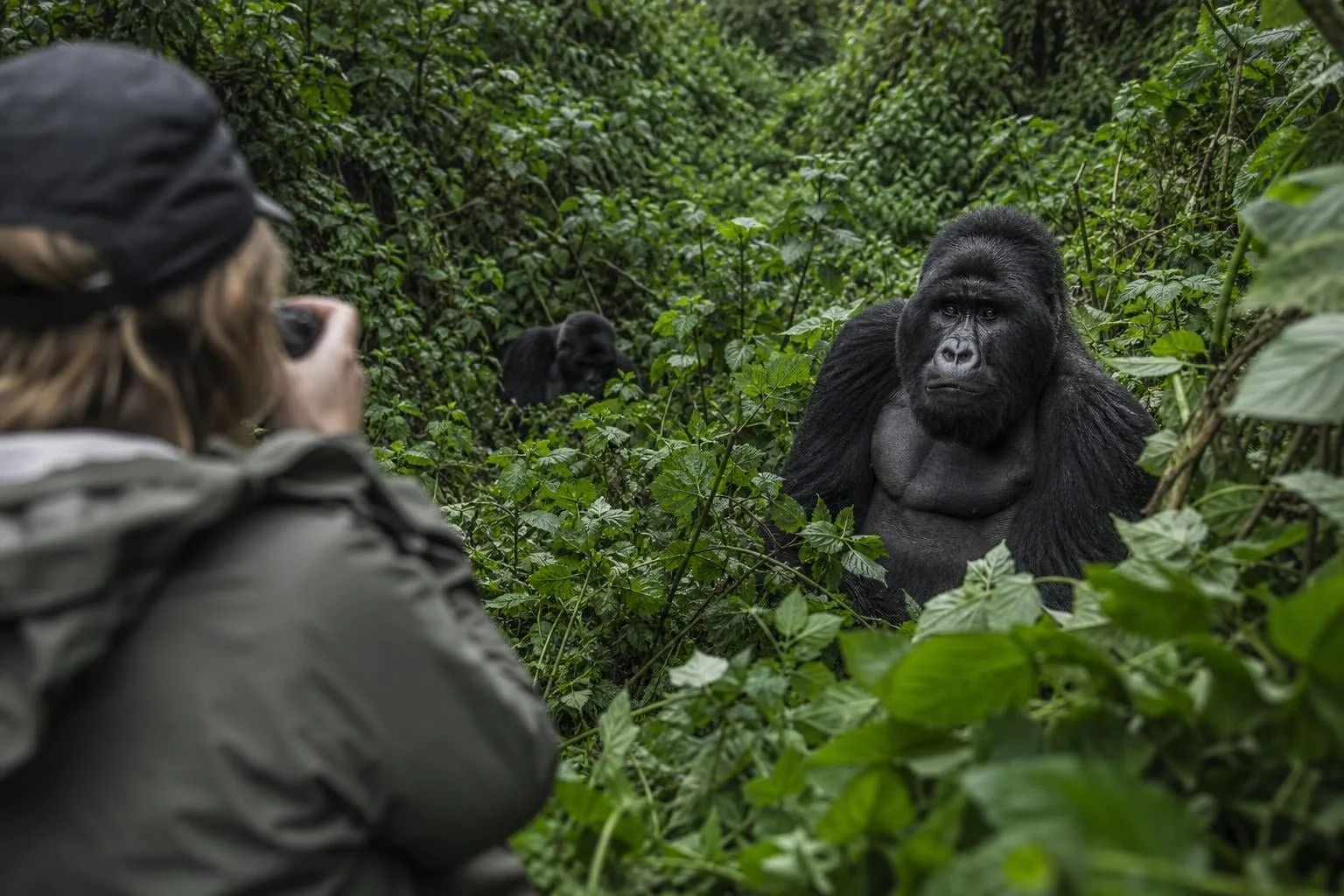
TL;DR
Gorilla trekking costs $800 to $1,500 for a single permit, plus transport, lodging, and tips. The sighting success rate sits at 95-99%, the hour with wild mountain gorillas is consistently described as life-changing, and your money directly funds conservation that brought the species back from 254 individuals to over 1,063. For most travelers, it is absolutely worth it.
The question comes up constantly on travel forums and in trip-planning conversations: is gorilla trekking worth it when a single permit costs as much as a round-trip international flight? It’s a fair question. Nobody should drop $800 to $1,500 without understanding exactly what they’re paying for.
This guide breaks down every concept that shapes the “worth it” calculation. Not a sales pitch, not a travel diary. Just the terms, the numbers, and the context you need to make a clear-eyed decision.
Planning a gorilla trekking trip? See our full Uganda gorilla safari guide with pricing, itineraries, and logistics.
Direct Answer: Is Gorilla Trekking Worth It? If your budget allows it, yes—gorilla trekking is worth it for most travelers. Despite permit prices of $800 to $1,500, the experience offers a 95–99% chance of seeing wild mountain gorillas, supports one of the world's greatest conservation success stories, and provides an encounter that cannot be replicated anywhere else. Travelers looking for unique wildlife experiences generally rate gorilla trekking among the best experiences in Africa because the permit fee directly funds gorilla protection, park management, and local communities.
Gorilla Trekking at a Glance
|
Factor |
Rating |
|---|---|
|
Chance of seeing gorillas |
95–99% |
|
Time with gorillas |
1 hour |
|
Permit price |
$800 (Uganda) / $1,500 (Rwanda) |
|
Physical difficulty |
Moderate to strenuous |
|
Conservation impact |
Extremely high |
|
Suitable for families |
Ages 15+ only |
|
Best for |
Wildlife lovers, photographers, bucket-list travelers |
|
Overall value |
Excellent despite high cost |
Who Should (and Shouldn't) Go Gorilla Trekking?
Gorilla trekking is worth it if you:
-
Want one of Africa's most unique wildlife encounters
-
Value conservation travel
-
Are comfortable hiking several hours
-
Have room in your travel budget
-
Prefer intimate wildlife experiences over large safaris
Gorilla trekking may not be worth it if you:
-
Prefer vehicle-based safaris
-
Have serious mobility limitations
-
Want to see many different animals in one day
-
Are traveling on a very tight budget
-
Dislike muddy hiking or humid rainforest conditions
The Core Experience
Gorilla Trekking
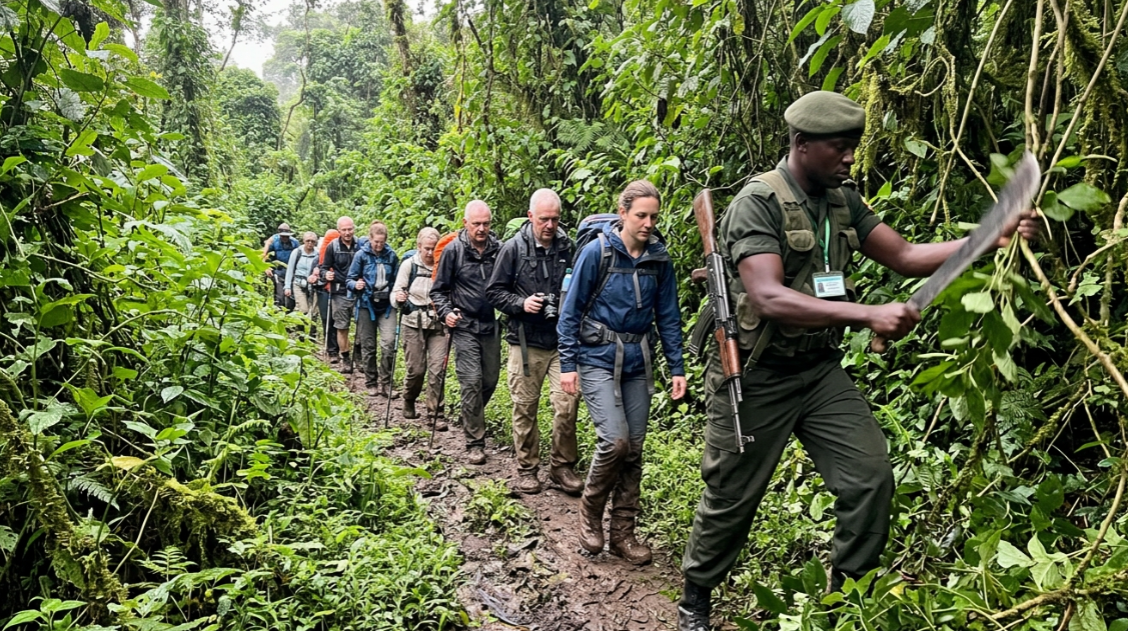
A guided hike through dense mountain forest to spend one hour with a habituated wild mountain gorilla family. This is not a zoo visit and not a game drive. You walk, sometimes for 30 minutes, sometimes for up to 8 hours, depending on where the gorillas moved overnight. The trek ends when rangers locate the family, and your group of eight gets exactly 60 minutes in their presence.
The unpredictability is part of what makes it remarkable. Practitioners on Reddit’s r/travel forum frequently note that the jungle hiking itself, macheting through vegetation and scrambling up muddy slopes, is an adventure in its own right. One photographer on the Backcountry Gallery forum described the trek through Uganda’s forest as “cool on its own,” separate from the gorilla encounter.
Learn more about how long trekking takes and what to realistically expect.
Mountain Gorilla
The mountain gorilla (Gorilla beringei beringei) is one of two subspecies of the eastern gorilla. They share approximately 98% of their DNA with humans. As of 2024, the global population has grown to roughly 1,063 individuals, up from fewer than 254 counted in 1981. They exist in the wild in only three countries: Uganda, Rwanda, and the Democratic Republic of Congo.
In 2018, the IUCN upgraded their status from Critically Endangered to Endangered. That upgrade is a rare win in wildlife conservation, and it happened in large part because of the tourism revenue from gorilla trekking permits.
Habituation
Before any gorilla family can receive visitors, it goes through a multi-year habituation process. Researchers and rangers visit the group daily, gradually getting the gorillas accustomed to human presence. This is why the sighting success rate is so extraordinarily high: habituated families are tracked every single day.
Uganda offers something unique, a four-hour “habituation experience” permit costing $1,500. This lets you accompany researchers and spend far longer with a gorilla family that’s still in the habituation process. It’s a rawer, more immersive version of the standard trek.
Costs and Where the Money Goes
Gorilla Trekking Permit
The mandatory government-issued document that grants you access. In 2026, a Uganda gorilla permit costs $800 and a Rwanda permit costs $1,500. Each covers one hour with the gorillas, park entry fees, ranger guides, and trackers. Permits are non-transferable: your name and passport number are checked at the gate.
During Uganda’s green season (April, May, and November), the permit drops to $600, though those dates cannot be rescheduled if conditions change.
Rwanda Low-Season Discount
Rwanda offers a reduced permit rate of $1,050 (instead of $1,500) for travelers who spend two or more nights visiting Rwanda’s other national parks, Akagera and Nyungwe, during the November through May period. It’s a meaningful savings, and those parks are genuinely worth visiting in their own right.
Total Trip Cost
The permit is the anchor expense, but it’s not the whole picture. Add transport to the park, accommodation, meals, tips for rangers and porters, and potentially a domestic flight. Budget travelers in Uganda should expect to spend around $1,200 to $1,500 total per person. Mid-range trips run $2,000 to $3,000. Luxury options with high-end lodges can push $4,000 to $6,000 or more.
Travelers on Reddit’s r/travel consistently point out that budget calculations often ignore the 8 to 9 hour road trip from Kampala to Bwindi, or the cost of a domestic flight to cut that drive in half. These “hidden costs” beyond the permit catch people off guard.
Hidden Costs to Budget For
|
Expense |
Typical Cost |
|---|---|
|
Porter |
$10–20 |
|
Ranger tips |
$10–20 |
|
Driver tips |
$5–15 |
|
Walking stick |
Usually free |
|
Gloves |
$5–20 |
|
Travel insurance |
Varies |
|
Domestic flight |
$250–450 |
|
Visa |
Depends on nationality |
Permit Revenue Allocation
This is where the “worth it” question shifts from personal to collective. Permit fees fund anti-poaching patrols, ranger salaries, veterinary care for injured gorillas, habitat restoration, and community development. Volcanoes National Park in Rwanda generated $11 million from gorilla permits in the first half of 2022 alone.
Under Rwandan law, 10% of all tourism revenue must go directly to communities surrounding the parks. That translates to roughly €10 million invested in schools, roads, and clean water infrastructure. The remaining funds support national conservation and park management.
Conservation ROI
Here’s the strongest case for whether gorilla trekking is worth the money: tourism permit revenue is directly responsible for the mountain gorilla population not just stabilizing but growing. From 254 individuals in 1981 to over 1,063 today, mountain gorillas are the only wild great ape population confirmed to be increasing. Every trekker’s permit is a measurable contribution to that outcome.
For a deeper look at costs, read our gorilla trekking cost breakdown.
Why Gorilla Trekking Costs So Much
Many travelers initially experience sticker shock when they see permit prices. However, the fee is intentionally high because it limits visitor numbers while generating enough revenue to protect mountain gorillas.
Permit revenue helps fund:
-
Anti-poaching patrols
-
Veterinary interventions
-
Ranger salaries
-
Forest protection
-
Scientific research
-
Community development projects
-
Visitor management
Unlike many wildlife attractions, gorilla trekking is designed around conservation first and tourism second.
Pros and Cons of Gorilla Trekking
|
Pros |
Cons |
|---|---|
|
Nearly guaranteed gorilla sightings |
Expensive permits |
|
Supports conservation directly |
Physically demanding |
|
One-of-a-kind wildlife encounter |
Strict booking rules |
|
Small group experience |
Weather can affect trekking conditions |
|
Helps local communities |
Only one hour with gorillas |
|
Excellent for wildlife photography |
Long travel time to parks |
Gorilla Trekking by the Numbers
|
Statistic |
Value |
|---|---|
|
Mountain gorillas remaining |
1,063+ |
|
Countries where they live |
3 |
|
Trekking success rate |
95–99% |
|
Visitors per gorilla family daily |
Maximum 8 |
|
Viewing time |
60 minutes |
|
Minimum age |
15 years |
|
Typical hike |
30 minutes–8 hours |
|
Permit validity |
One day |
Success Rates and What to Expect
Trekking Success Rate
The chances of actually seeing gorillas sit between 95% and 99% across both Uganda and Rwanda. Multiple operators report success rates close to 100%. This is dramatically higher than most wildlife encounters in Africa, where sightings depend on luck and migration patterns.
The near-certainty comes from the daily tracking system. Ranger teams locate each habituated family every morning before trekkers even arrive at park headquarters. In the rare event that gorillas aren’t found, Uganda offers a 75% refund on the permit.
Gorilla Family (Group)
A social unit led by a dominant silverback, typically containing 5 to 30 or more individuals including females, juveniles, and infants. On trek day, you’re assigned to a specific family at the morning briefing. Eight trekkers maximum are allowed per family per day. Rwanda’s daily limit is 112 permits total across 14 habituated families.
Silverback
The dominant adult male, aged 13 years or older, identifiable by the distinctive silver-gray saddle of hair across his back. He leads the group, determines daily movement, and makes all decisions about where the family feeds and sleeps. Encountering a silverback at close range is typically the most visceral moment of the trek.
As one Fodor’s forum contributor put it: “After you have looked into the eye of a gorilla, you won’t regret any of the money you spent.”
Why Book Multiple Treks
Experienced trekkers on travel forums often recommend doing two treks instead of one. The reasoning is practical: weather varies day to day, gorilla families behave differently, and viewing conditions change based on vegetation and terrain. One poster on Fodor’s described doing four treks, saying the primary motivation was hedging against weather or limited viewing on any single day. If budget allows, a second trek significantly increases your chances of a truly exceptional encounter.
Where to Go
Bwindi Impenetrable National Park
Uganda’s primary gorilla trekking destination, home to over 21 habituated gorilla families and approximately 459 individual gorillas. The park is divided into four trekking sectors: Buhoma, Ruhija, Rushaga, and Nkuringo. Each sector offers a different experience in terms of terrain, altitude, and gorilla family assignments.
Our detailed guide covers all Bwindi trekking sectors to help you pick the right one.
Volcanoes National Park
Rwanda’s sole gorilla trekking location, set in the Virunga mountain range. It hosts 14 habituated families and sits roughly 2 to 3 hours by road from Kigali. The infrastructure is polished, with well-maintained roads and luxury lodge options nearby. Photographers on forums note that Rwanda’s more open terrain and farmland approaches offer better lighting conditions compared to Uganda’s dense canopy.
Uganda vs. Rwanda
This comparison shapes most travelers’ decisions. Uganda offers a lower permit cost ($800 vs. $1,500), more habituated gorilla families (22+ vs. 14), and a rawer jungle experience, but the drive from Kampala to Bwindi takes 8 to 9 hours. Rwanda’s permit costs more, but Volcanoes National Park is only a short drive from the capital, and the surrounding infrastructure caters to luxury travelers.
Neither choice is wrong. Uganda gives you more gorilla access at a lower price point. Rwanda gives you convenience and a more streamlined experience. For a detailed side-by-side breakdown, read our Rwanda vs. Uganda comparison.
Best Time to Go Gorilla Trekking
Although gorilla trekking operates year-round, most visitors prefer the dry seasons because trails are easier to navigate.
|
Season |
Conditions |
Recommendation |
|---|---|---|
|
June–September |
Dry trails, peak demand |
Best overall |
|
December–February |
Dry weather |
Excellent |
|
March–May |
Rainy, muddy, fewer visitors |
Budget-friendly |
|
October–November |
Mixed weather |
Good availability |
Fitness, Rules, and Preparation
Trek Difficulty
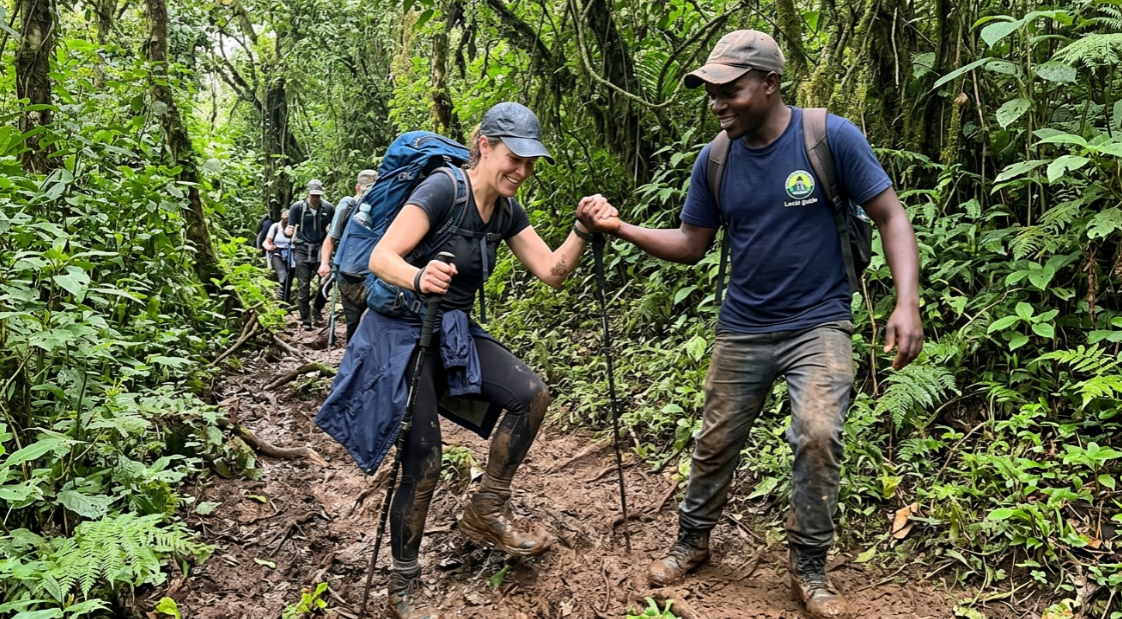
Moderate to strenuous. Altitude ranges from 1,160 to 2,607 meters in Bwindi and roughly 2,500 to 3,500 meters in Volcanoes National Park. Expect steep inclines, thick mud, dense vegetation, and the possibility of rain at any time. Biting insects are common. Some trekkers experience mild altitude effects.
That said, 98% of people successfully complete the activity. An Expert Africa reviewer described being assigned a gorilla family that had moved uphill overnight, turning what should have been a short hike into a two-hour moderately difficult climb each way. This kind of unpredictability is normal, not the exception. Check the fitness requirements before booking.
Porter
Locally hired assistants who carry your daypack and help you on steep, slippery terrain. They cost roughly $10 to $15 per day plus a tip. Hiring a porter is strongly recommended for two reasons: it makes the trek dramatically easier for you, and it directly supports livelihoods in communities surrounding the parks.
For a full list of what to bring, see our gorilla trekking packing list.
Pre-Trek Briefing
A mandatory session held at park headquarters around 7:30 AM on trek day. Rangers cover safety protocols, gorilla behavior, the 7-meter distance rule, the ban on flash photography, and what to do if a gorilla approaches you. You’ll also learn which gorilla family you’ve been assigned to and get a general sense of where they were located that morning.
7-Meter Rule
The minimum distance you must maintain from the gorillas at all times. This rule exists primarily to protect gorillas from human respiratory diseases, to which they are highly susceptible. Rangers enforce it strictly. If a gorilla moves toward you, you’re instructed to slowly back away. Read the full gorilla trekking rules and etiquette guide.
Minimum Age
15 years old. No exceptions. This rule is enforced across all three gorilla trekking countries (Uganda, Rwanda, and DRC) by mutual agreement, primarily to protect the gorillas but also because the physical demands of the trek are significant.
Permit Cancellation Policy
Gorilla permits are generally non-refundable once booked. They are date-specific and person-specific. If you fall ill, miss your flight, or have any other disruption, you’re likely out the full permit cost. Travel insurance that covers trip cancellation is not optional for a trip like this. See our gorilla trekking insurance guide for specifics on what to look for in a policy.
Photography Conditions
Conditions vary significantly by country. Rwanda’s Volcanoes National Park, with its more open terrain and farmland approaches to the forest, generally provides better natural light. Uganda’s Bwindi, with its dense triple-canopy jungle, creates ISO challenges that frustrate photographers shooting in low light. One photographer described how Uganda’s thick vegetation required pushing ISO to extremes, but noted the atmosphere of macheting through the forest produced more dramatic, documentary-style images.
For detailed camera settings and gear recommendations, check the gorilla trekking photography guide.
What Makes Gorilla Trekking Different from a Safari?
Unlike a traditional game drive where wildlife may remain hundreds of meters away, gorilla trekking places you within a few meters of a wild gorilla family under ranger supervision. Watching juveniles play, mothers care for infants, and a silverback quietly observe visitors creates a level of connection rarely experienced in wildlife tourism.
Many travelers describe the encounter as less about photography and more about witnessing behavior that feels remarkably human.
So Is Gorilla Trekking Worth It?
The numbers make the case clearly. A 95-99% success rate means you will almost certainly see gorillas. Your $800 or $1,500 permit directly funds the conservation program that pulled this species from the edge of extinction. The mountain gorilla is the only great ape whose wild population is growing, and that growth is powered by tourism revenue.
The experience itself is consistently described as transcendent. As one Expert Africa traveler wrote: “This hour felt like time stood still, pure magic.” Across years of forum discussions, travel reviews, and first-hand accounts, it is genuinely difficult to find someone who regretted going.
The cost is real. For budget travelers, a gorilla trek represents a significant portion of an entire trip’s spending. But the encounter is singular. There are roughly 1,063 mountain gorillas on earth, living in a handful of forest patches across three countries. The window to see them in the wild exists because of a carefully managed system that balances tourism access with species survival. That system depends on people deciding, year after year, that the trek is worth the price.
It is.
Ready to start planning? Explore our Uganda gorilla safari packages with permit booking, transport logistics, and accommodation options handled for you.
Gorilla Trekking Myths vs Reality
|
Myth |
Reality |
|---|---|
|
You hike all day |
Many treks last only 2–4 hours |
|
Gorilla sightings aren't guaranteed |
Success rates exceed 95% |
|
The permit only pays for tourism |
Much of it funds conservation |
|
You can get close whenever you want |
Rangers enforce a 7-meter rule |
|
Anyone can go |
Minimum age is 15 |
Frequently Asked Questions
Is gorilla trekking worth the cost compared to other African wildlife experiences?
Yes. Unlike a game drive where sightings depend on luck, gorilla trekking has a 95-99% success rate. You’re virtually guaranteed an intimate encounter with one of the world’s rarest animals. No other wildlife experience in Africa combines that level of certainty with that degree of emotional intensity.
What happens if I don’t see gorillas on my trek?
It’s extremely rare, but if trackers cannot locate a gorilla family, Uganda offers a 75% refund on your permit. Rwanda’s policy varies. Booking two treks on consecutive days is a common strategy to hedge against weather, difficult terrain, or an unusually short sighting.
Is gorilla trekking worth it if I’m not physically fit?
Most people complete the trek successfully (98% completion rate), but fitness matters. Treks can last anywhere from 30 minutes to 8 hours. Hiring a porter makes a significant difference. If you have mobility concerns, discuss them with your operator beforehand so they can assign you to a closer gorilla family.
Should I choose Uganda or Rwanda for gorilla trekking?
Uganda costs less ($800 permit vs. $1,500) and has more habituated families, but requires a long drive or domestic flight to reach the park. Rwanda offers easier access from Kigali and polished infrastructure but at a higher price. Both deliver the same core experience.
Is gorilla trekking worth it from a conservation perspective?
Absolutely. Permit revenue funded the recovery of mountain gorillas from 254 individuals in 1981 to over 1,063 today. Ten percent of Rwanda’s permit revenue goes directly to surrounding communities. Your fee pays for anti-poaching patrols, veterinary care, and habitat protection.
How far in advance should I book a gorilla trekking permit?
At least 3 to 6 months in advance, and further out for peak season (June through September, December through February). Rwanda’s daily capacity is only 112 permits, and popular dates sell out quickly. Permits are person-specific and date-specific, so early planning is essential.