

Gorilla Trekking Itineraries 2026: The Complete Glossary
TL;DR
Gorilla trekking itineraries range from 2-day standalone trips in Rwanda to 14-day multi-country circuits combining safaris and gorilla encounters. Permits cost $800 in Uganda, $1,500 in Rwanda, and $400 in the DRC (2026 prices). The country you choose, the sector you trek in, and the season you travel all fundamentally shape your itinerary’s length, cost, and structure. This glossary defines every term you’ll encounter while planning.
Quick Answer: Gorilla Trekking Itineraries Explained A gorilla trekking itinerary is a travel plan built around a fixed gorilla permit date and includes transportation, accommodation, trekking logistics, and optional wildlife experiences. Most Rwanda itineraries last 2–4 days because Volcanoes National Park is only about 2.5 hours from Kigali. Uganda itineraries usually require 3–5 days due to longer travel times to Bwindi Impenetrable National Park, although charter flights can reduce travel time. Travelers often extend gorilla trekking with chimpanzee tracking, golden monkey trekking, or a Tanzania safari.
Gorilla Trekking Itinerary Comparison
|
Feature |
Rwanda |
Uganda |
DRC |
|---|---|---|---|
|
Typical Trip Length |
2–4 Days |
3–5 Days |
3–5 Days |
|
Gorilla Permit |
$1,500 |
$800 |
$400 |
|
Drive From Airport |
2.5 Hours |
8–10 Hours (or 1-hour charter) |
Varies |
|
Gorilla Habituation |
No |
Yes |
No |
|
Best For |
Short luxury trips |
Budget & wildlife lovers |
Adventure travelers |
|
Main Park |
Volcanoes NP |
Bwindi NP |
Virunga NP |
Why a Gorilla Trekking Itinerary Glossary Exists
Most planning guides throw sample day-by-day itineraries at you. That’s useful, but only after you understand the vocabulary those itineraries are built on. What’s a “transfer day,” and why does it eat half your trip in Uganda but barely registers in Rwanda? What’s the difference between a habituation experience and a standard trek, and how does choosing one over the other reshape your entire schedule?
With roughly 1,063 mountain gorillas left in the wild, gorilla trekking involves more logistics, permits, and advance planning than a typical safari. This glossary covers the terms and concepts you’ll encounter as you evaluate operators, compare itineraries, and decide how to structure your trip. Think of it as your decoder ring for every gorilla trekking itinerary you’ll read from here on.
👉 Exploring where to go gorilla trekking across Rwanda, Uganda, and the DRC? Start with that comparison before diving into itinerary terms below.
Itinerary Structure Terms
These are the building blocks of every gorilla trekking itinerary. Understanding them helps you evaluate whether a proposed trip is realistic, rushed, or well-paced.
Gorilla Trekking Itinerary
The overall trip plan that encompasses permits, travel days, trek days, accommodations, and any extensions like safaris or beach stays. A gorilla trekking itinerary can be as short as 2 days (Rwanda, with a Kigali base) or as long as 14+ days when combined with a Tanzania safari and Zanzibar. The structure always revolves around one fixed point: the day you hold a gorilla permit.
Transfer Day
A full day dedicated to road travel between your arrival city and the gorilla park. This is the single biggest factor that separates Uganda itineraries from Rwanda itineraries. Driving from Entebbe or Kampala to Bwindi Impenetrable National Park takes 8 to 10 hours each way, meaning Uganda trips lose two full days to road transfers. Rwanda is dramatically tighter: Kigali to Volcanoes National Park is about 2.5 hours. Practitioners on Reddit’s r/FATSafari frequently highlight this contrast, with travelers noting that Rwanda’s short transfer makes it possible to fly in one afternoon, trek the next morning, and fly out that evening.
The alternative in Uganda is a charter flight from Entebbe to the Kihihi or Kisoro airstrip (roughly 1 hour), which saves a full day in each direction but adds significant cost.
Trek Day
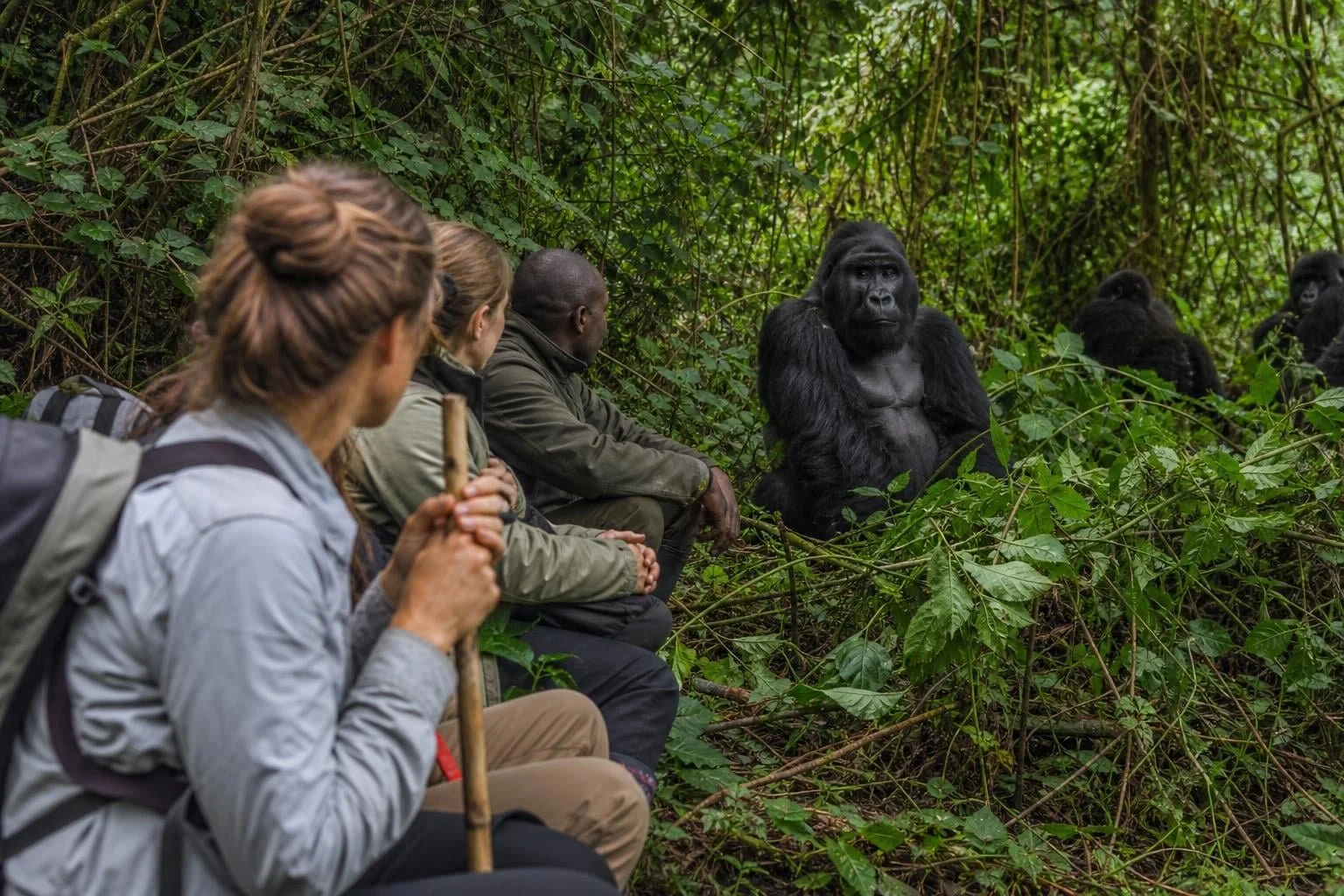
The actual gorilla trekking day. It starts with a morning briefing at park headquarters (typically 7:00 to 7:30 AM), followed by a forest hike that ranges from 30 minutes to 6+ hours depending on where the gorillas are. Once you find them, you get exactly one hour of viewing time. The total experience from briefing to return usually spans 4 to 8 hours. Most itineraries leave the afternoon of trek day free for rest.
Briefing
The mandatory orientation session at park headquarters before each trek. Rangers explain safety protocols, assign trekking groups to specific gorilla families, and review the rules (distance requirements, no flash photography, behavior if a gorilla approaches). In both Uganda and Rwanda, the briefing typically begins between 7:00 and 7:30 AM. You must arrive on time or risk losing your permit for the day. For a full breakdown of what the briefing covers, read our guide to gorilla trekking etiquette and rules.
Standalone Itinerary
A gorilla-only trip without safari or beach extensions. In Rwanda, a standalone gorilla trekking itinerary can work in as few as 2 days: arrive in Kigali in the afternoon, trek the next morning, depart that evening. In Uganda, the minimum is 3 days due to longer transfers. Most travelers find 4 to 5 days more comfortable for either country, especially when adding a golden monkey trek or a recovery day.
Extension / Add-On
Additional days tacked onto a core gorilla trek. Common add-ons include chimpanzee tracking at Kibale (Uganda) or Nyungwe (Rwanda), a golden monkey trek, a beach stay at Lake Kivu, or a full Tanzania safari. The term appears constantly in operator itineraries and directly affects total trip length and cost.
Multi-Country Itinerary
A trip crossing at least two East African countries. The most popular gorilla trekking combo is a Tanzania safari (Serengeti, Ngorongoro, Tarangire) plus a Rwanda or Uganda gorilla extension. Other common combinations pair Kenya’s Maasai Mara with Uganda gorillas, or link Rwanda and Uganda for gorilla treks in both countries. Multi-country gorilla trekking itineraries require careful visa planning, connecting flights, and permit sequencing.
Destination and Park Terms
Three countries offer mountain gorilla trekking. Each park has different logistics, costs, and itinerary implications.
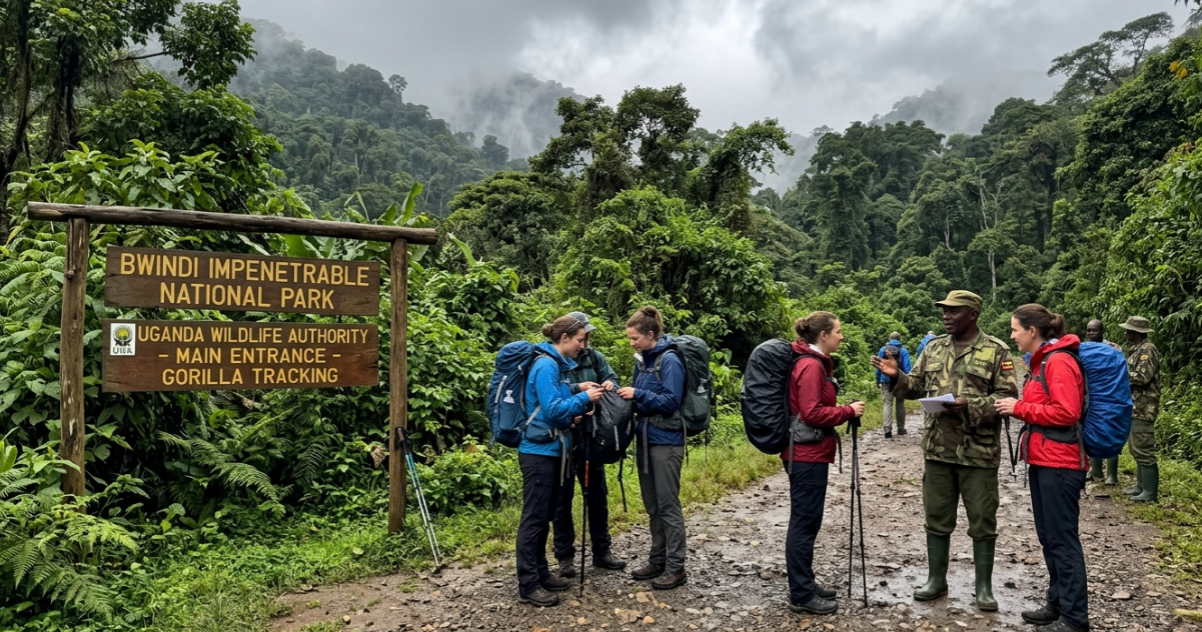
Bwindi Impenetrable National Park
Uganda’s primary gorilla trekking destination, home to roughly 459 mountain gorillas spread across four trekking sectors. Bwindi is a UNESCO World Heritage Site and holds about half the world’s mountain gorilla population. Its four sectors (detailed below) offer different experiences, difficulty levels, and lodge options, making sector choice a critical itinerary decision.
Volcanoes National Park
Rwanda’s sole gorilla trekking park, set in the Virunga Massif. It hosts 14 habituated gorilla families with a daily cap of 112 permits (8 visitors per family per day). The park’s proximity to Kigali (about 2.5 hours by road) makes it the most accessible gorilla trekking destination, which is why Rwanda works well for shorter itineraries and multi-country combos.
Mgahinga Gorilla National Park
Uganda’s smaller gorilla park, also in the Virunga Massif. Fewer habituated gorilla groups mean fewer available permits, but the park offers golden monkey treks and sits close to the Rwanda border, making it an option for cross-border gorilla trekking itineraries starting from Kigali (about 4 hours via the Cyanika border crossing).
Virunga Massif
The volcanic mountain chain spanning Rwanda, Uganda, and the Democratic Republic of Congo. Home to roughly 604 of the world’s mountain gorillas. The Virunga Massif connects Volcanoes National Park (Rwanda), Mgahinga (Uganda), and Virunga National Park (DRC) into a single ecological unit, though each country manages permits and access independently.
Bwindi Sectors: Buhoma, Rushaga, Ruhija, and Nkuringo
Bwindi is divided into four trekking sectors, and which one you’re assigned to shapes your lodging options, drive times, and trek difficulty. This is one of the most under-discussed aspects of Uganda gorilla trekking itineraries.
Buhoma (northern sector) is the most popular and widely regarded as the best for first-time trekkers. It has four habituated gorilla families and relatively moderate terrain. Lodge options are the most developed here.
Rushaga (southern sector) has the highest number of habituated gorilla families, making permit availability more flexible. Many operators and experienced trekkers prefer Rushaga for this reason. It’s also the only sector where the gorilla habituation experience is available.
Ruhija (eastern sector) sits at about 2,500 meters above sea level and is the most physically demanding sector. High altitude and rugged terrain make it the toughest option. For detail on how altitude varies by park, that’s worth reviewing before committing to a sector.
Nkuringo (also southern) offers steep terrain with rewarding views. It’s less crowded than Buhoma but requires more physical effort.
For a deeper look at how each sector affects your plans, see the full Bwindi sectors guide.
Which Country Is Best for Your Gorilla Trekking Itinerary?
Choose Rwanda if you:
-
Have limited vacation time
-
Want luxury lodges
-
Prefer short transfers
-
Are combining gorillas with Kenya or Tanzania
Choose Uganda if you:
-
Want lower permit prices
-
Plan multiple primate experiences
-
Want the habituation experience
-
Prefer longer wildlife-focused trips
Choose the DRC if you:
-
Are comfortable with adventurous travel
-
Want the lowest permit prices
-
Understand the current travel advisories
Permit and Booking Terms
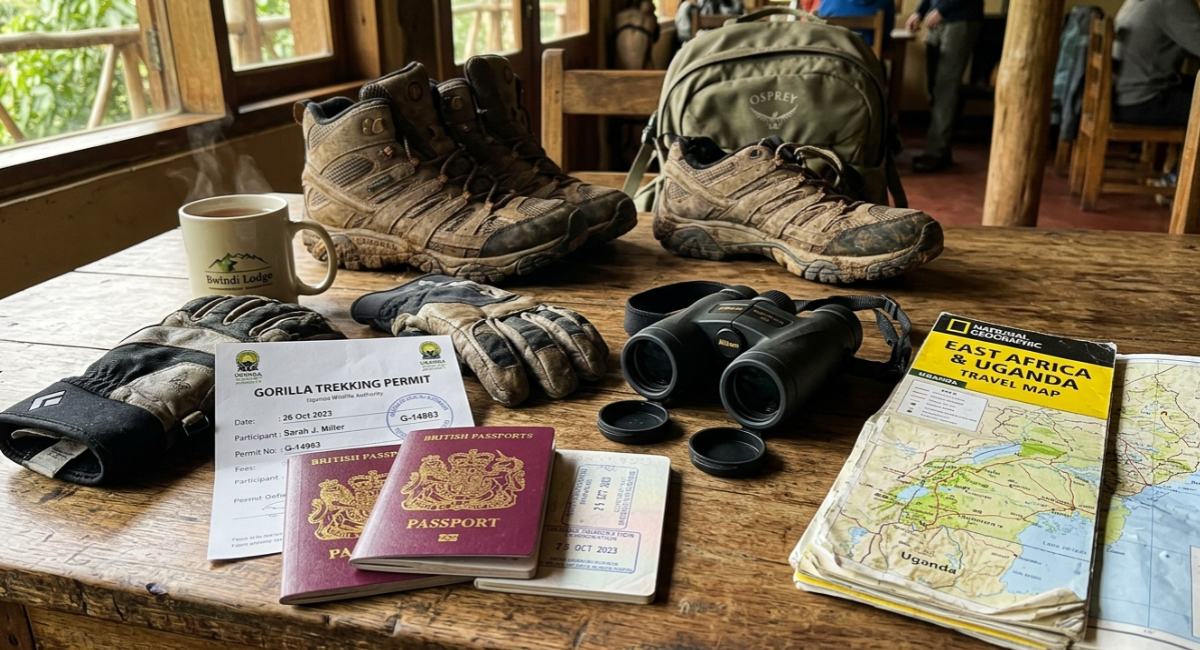
Permits are the non-negotiable centerpiece of every gorilla trekking itinerary. Get this part wrong and the rest falls apart.
Gorilla Permit
The non-transferable, non-refundable authorization required for each trekker to visit a habituated gorilla family. As of 2026, permit costs for foreign non-residents are:
-
Uganda: $800 per person
-
Rwanda: $1,500 per person
-
DRC: $400 per person
Each permit is valid for one trek on one specific date at one specific park. You cannot transfer it to another person or change the date easily. Given these stakes, many travelers work with operators who handle permit acquisition as part of the itinerary planning process, reducing the risk of scams or booking errors.
For the full breakdown of Uganda permit costs and booking rules, that guide covers current pricing, payment procedures, and cancellation policies.
Because permits are non-refundable, gorilla trekking insurance that covers trip cancellation is worth serious consideration.
Gorilla Habituation Experience
A premium, Uganda-only option that allows you to spend up to four hours with semi-habituated gorillas, four times longer than the standard one-hour trek. It costs $1,500 per person (matching Rwanda’s standard permit price) and is only available in Bwindi’s Rushaga sector. The daily limit is just 4 trekkers, split into groups of 4, compared to over 150 standard trekking permits issued daily across Bwindi.
Choosing habituation changes your itinerary structure significantly. It’s a full-day commitment, the gorillas may be deeper in the forest (longer hikes to reach them), and availability is extremely limited. Book this 6 to 12 months ahead.
Permit Availability Window
The booking timeline you should follow based on your travel season. For peak months (June through September and December through February), book at least 12 months ahead. Permits for these periods sell out furthest in advance. For shoulder and low-season months, 3 to 6 months of lead time is usually sufficient, though popular dates can still fill.
Low-Season Discount
A cost-saving opportunity that directly affects itinerary budgeting. In Uganda, gorilla permits drop to $600 during April, May, and November. Rwanda offers roughly 30% off its standard $1,500 price (bringing it to about $1,050) when you bundle your gorilla trek with two nights at accommodations in Akagera and Nyungwe national parks. The low-season discount can free up budget for extending your itinerary with additional experiences.
Logistics and Travel Terms
Getting to the gorillas involves flights, border crossings, and sometimes long drives. These terms show up in every gorilla trekking itinerary proposal.
East Africa Tourist Visa (EATV)
A $100 joint visa valid for 90 days that allows multiple entries between Uganda, Kenya, and Rwanda. For travelers building multi-country gorilla trekking itineraries across these three nations, the EATV eliminates the need for separate visa applications and saves money. One important caveat: Tanzania is not part of this visa. If your itinerary includes a Tanzania safari plus gorilla trekking in Rwanda or Uganda, you’ll need a separate Tanzania visa in addition to the EATV.
Full details on requirements and application steps are in our East Africa visa guide.
Domestic Connecting Flight
A short commercial or scheduled flight that links major airports to regional airstrips near gorilla parks. Examples include Kilimanjaro to Kigali (for Tanzania-to-Rwanda combos), Entebbe to Kihihi or Kisoro airstrip (for Bwindi access), and Nairobi to Entebbe (for Kenya-to-Uganda combos). These flights are the critical logistics link in multi-country itineraries, and their schedules often dictate which days you can trek.
Charter Flight
A small-plane option to skip long road transfers. The most common gorilla trekking charter route is Entebbe to Kihihi airstrip (about 1 hour), replacing the 8- to 10-hour drive to Bwindi. Charter flights cost more but can save an entire transfer day in each direction, effectively making a 5-day Uganda itinerary feel like what would otherwise require 7 days.
Kigali Gateway
Kigali serves as the starting hub for both Rwanda gorilla treks and many cross-border Uganda itineraries. From Kigali, Volcanoes National Park is about 2.5 hours north. For travelers heading to Uganda’s Bwindi via the Cyanika border crossing, the drive from Kigali is roughly 4 hours. This makes Kigali a practical starting point for gorilla trekking itineraries in either country, especially for travelers arriving on international flights.
Seasonal and Timing Terms
When you go affects everything from trail conditions to permit prices to which wildlife you can combine with gorillas.
Peak Season
June through September and December through February. These months bring the driest conditions and the firmest trails, making treks less muddy and generally shorter. They also bring the highest permit demand. If you want a peak-season trek, build your itinerary around a permit booked 12 months in advance.
For broader seasonal guidance across the region, the best time to visit East Africa guide covers rainfall patterns, wildlife movements, and crowd levels by month.
Green Season / Low Season
March through May and October through November. Trails are muddier, treks can take longer, and rain is more frequent. The trade-off: Uganda’s permit price drops to $600 (from $800), Rwanda offers bundled discounts, and the parks are noticeably less crowded. For budget-conscious travelers willing to embrace muddy boots, green season gorilla trekking itineraries offer real value.
Great Migration Overlap
The June through September window when Tanzania’s northern Serengeti sees the Great Wildebeest Migration’s river crossings, coinciding with the dry season for gorilla trekking. This overlap creates the ideal timing for combo itineraries that pair a Serengeti safari with a Rwanda or Uganda gorilla trek. It’s the most popular (and most expensive) multi-country itinerary window, which is why permits and lodges for this period book out fastest.
On-the-Ground Terms
These terms describe what happens during the actual trek. Understanding them ahead of time sets realistic expectations and helps you prepare.
Habituated Gorilla Family
A gorilla group that has been gradually trained over several years to tolerate the presence of human observers. Only habituated families can be visited by tourists. The habituation process typically takes 2 to 3 years of daily ranger visits before a family is opened to trekkers. Rwanda currently has 14 habituated families in Volcanoes National Park. Bwindi has over 20 across its four sectors.
Silverback
The dominant adult male gorilla who leads a family group. Identifiable by the silver-grey hair on his back (which develops around age 12), the silverback makes decisions about the family’s movement, feeding, and rest. During your trek, the silverback will likely be the most visible and closely watched gorilla. He may charge, beat his chest, or simply sit and eat. Your guides will read his behavior to keep the group safe.
Porter
A locally hired assistant who carries your daypack and provides physical support on steep sections. Hiring a porter is standard practice in both Uganda and Rwanda, and it’s one of the most important ways gorilla trekking supports local communities. Porters typically cost $15 to $20 in a direct fee, with an additional tip of $5 to $10 expected. On steep, muddy trails in Bwindi, a good porter makes the difference between an exhausting hike and a manageable one.
Tracker
A specialized park ranger who heads into the forest before dawn to locate the gorilla family. Trackers follow the gorillas’ trail from the previous day’s nesting site, radio back the family’s position, and guide the trekking group in the right direction. Their work is why some treks find gorillas in 30 minutes while others take 6 hours. The trackers’ skill directly shapes your trek day experience.
Seven-Meter Rule
The mandatory minimum distance trekkers must keep from gorillas, roughly 23 feet. Guides enforce this strictly, though gorillas don’t know the rule. If a gorilla approaches you, the standard instruction is to stay still, avoid eye contact, and let the animal move past. In practice, many trekkers report that gorillas come much closer than 7 meters on their own terms.
One-Hour Rule
The strict time limit with a gorilla family during standard trekking. Once your group reaches the gorillas and the guide starts the timer, you have exactly 60 minutes for observation and photography. This rule exists to minimize human impact on the gorillas. It applies regardless of how long it took to hike in. The only exception is the gorilla habituation experience, which allows up to four hours.
Common Itinerary Add-Ons
Most gorilla trekking itineraries include at least one extension. These are the options you’ll see most often.
Golden Monkey Trek
A lighter primate experience available in Volcanoes National Park (Rwanda) and Mgahinga Gorilla National Park (Uganda). Permits cost around $100 in Uganda. Golden monkeys are endemic to the Virunga Massif and live in bamboo forests at high altitude. The trek is shorter and less strenuous than gorilla trekking, making it a good half-day pairing on the day before or after your gorilla trek. Many travelers describe it as a highlight in its own right, not just a filler activity.
Chimpanzee Tracking
Most commonly done at Kibale National Park in Uganda (home to over 1,500 chimpanzees) or Nyungwe Forest in Rwanda. Permits run $150 to $250. Adding chimpanzee tracking to a gorilla trekking itinerary typically requires 1 to 2 extra days plus a transfer, since Kibale is a full day’s drive from Bwindi. In Rwanda, Nyungwe is about 5 hours from Volcanoes NP. The combination of gorillas and chimps gives you encounters with two of humanity’s closest living relatives in a single trip.
Lake Bunyonyi / Lake Kivu
Post-trek recovery stops commonly built into gorilla trekking itineraries. Lake Bunyonyi in Uganda sits about 1.5 hours from Bwindi and offers canoe trips, island walks, and relaxation after days of hiking. Lake Kivu in Rwanda provides beaches, boat rides, hot springs, and lakeside towns. Both work perfectly as decompression after the physical and emotional intensity of a gorilla trek.
Northern Circuit Safari
Tanzania’s classic safari loop covering Tarangire, Lake Manyara, Ngorongoro Crater, and the Serengeti. This is the most frequently combined safari extension with gorilla trekking, particularly when the Serengeti migration aligns with gorilla trekking’s dry season (June through September). A typical combo adds 5 to 7 safari days before or after the gorilla trek, with a connecting flight between Kilimanjaro (or Arusha) and Kigali.
👉 Planning a Tanzania safari itinerary to pair with gorilla trekking? That guide covers route options, park sequencing, and cost frameworks.
Sample Gorilla Trekking Itinerary Frameworks
These are structural outlines, not full day-by-day schedules. They show how the terms above fit together into real trips.
3-Day Standalone Gorilla Trek
Best for: Travelers with limited time or adding a quick gorilla extension to another trip.
-
Rwanda version: Day 1, arrive Kigali, drive to Musanze/Volcanoes NP area. Day 2, gorilla trek. Day 3, optional golden monkey trek or depart Kigali.
-
Uganda version: Day 1, arrive Entebbe, charter flight to Kihihi airstrip, transfer to lodge. Day 2, gorilla trek. Day 3, charter back to Entebbe.
Without a charter flight, Uganda requires at minimum 5 days for this same core experience due to transfer days.
5-Day Gorilla + Primate Combo
Best for: Travelers wanting multiple primate encounters.
Adds a golden monkey trek (Rwanda or Mgahinga) or chimpanzee tracking (Kibale or Nyungwe) to the core gorilla trek. Includes a transfer or travel day between primate parks. This is the sweet spot for travelers focused on gorilla trekking itineraries that go beyond a single species.
10-12 Day Gorilla + Tanzania Safari
Best for: Travelers combining East Africa’s two signature wildlife experiences.
Typically structured as 5 to 7 days on the Northern Circuit safari (Tarangire, Ngorongoro, Serengeti) followed by a connecting flight to Kigali and 3 to 4 days of gorilla trekking in Rwanda. The reverse order works too. This is the most popular multi-country itinerary framework, especially during the June to September peak when the Great Migration and dry gorilla trekking conditions overlap.
14+ Day Grand East Africa Circuit
Best for: Once-in-a-lifetime travelers covering multiple countries.
A traveler on Reddit’s r/FATSafari shared a two-week itinerary that included gorilla treks in both Rwanda and Uganda, plus a Tanzania safari. Published trip reports from travel writers like Ella McKendrick document similar routes with detailed costs. These longer gorilla trekking itineraries typically combine 3 to 4 countries, multiple primate species, and a beach or lake recovery stop. The East Africa Tourist Visa covers Uganda, Kenya, and Rwanda, but remember that Tanzania requires a separate visa.
For multi-country itinerary inspiration and route logic, see our East Africa itinerary decoder.
Which Gorilla Trekking Itinerary Is Right for You?
|
If You Want... |
Choose... |
|---|---|
|
Cheapest trip |
Uganda |
|
Luxury short break |
Rwanda |
|
Long wildlife adventure |
Uganda + Tanzania |
|
Best photography |
Uganda Habituation Experience |
|
Minimal travel time |
Rwanda |
|
Chimpanzees + Gorillas |
Uganda |
|
Safari + Gorillas |
Tanzania + Rwanda |
|
Family-friendly logistics |
Rwanda |
Practical Planning Tips
When to Book
For June through August travel, book permits 12 months ahead. For other peak months (December through February), 6 to 9 months is usually safe. Low-season months offer more flexibility, but 3 to 6 months of lead time is still wise.
Age Minimum
Trekkers must be at least 15 years old. No exceptions. This applies in Uganda, Rwanda, and the DRC. Families with younger children should plan alternative activities for non-trekking members on trek day.
Fitness Reality
Gorilla trekking is not a casual walk. Hikes can last 6+ hours through dense forest at altitudes between 2,000 and 2,500+ meters. Ruhija sector in Bwindi is the toughest, while Buhoma and Volcanoes NP tend to offer more moderate terrain. For an honest assessment, read our guide on gorilla trekking fitness requirements.
Why Operators Matter for Permits
Gorilla permits are non-refundable and non-transferable. Buying directly from a national park authority requires wire transfers and specific procedures that vary by country. Booking through an experienced operator reduces the risk of payment errors, missed deadlines, and outright scams. Reddit’s gorilla trekking communities regularly feature cautionary tales of travelers who lost money to fraudulent permit sellers.
Duma Explorer handles permit acquisition for both Uganda and Rwanda as part of their itinerary planning process, which removes that friction entirely.
Mountain Gorilla Population Context
The global mountain gorilla population has recovered from fewer than 400 individuals in the 1980s to over 1,063 today. This conservation success story is directly enabled by trekking tourism revenue, which funds anti-poaching patrols, habitat protection, and community development. The permit costs, group size limits, and time restrictions that shape every gorilla trekking itinerary exist because they work.
Gorilla Trekking by the Numbers
|
Statistic |
Value |
|---|---|
|
Mountain gorillas remaining |
1,063+ |
|
Countries offering trekking |
3 |
|
Gorilla viewing time |
1 Hour |
|
Habituation viewing |
4 Hours |
|
Minimum trekking age |
15 Years |
|
Rwanda permit |
$1,500 |
|
Uganda permit |
$800 |
|
DRC permit |
$400 |
|
Maximum visitors per gorilla family |
8 |
Common Gorilla Trekking Itinerary Mistakes to Avoid
Many first-time visitors underestimate the logistics involved in gorilla trekking. Avoid these common planning mistakes:
Booking flights before securing permits
Always obtain your gorilla permit first. Flights and accommodation should be built around the permit date.
Choosing a lodge in the wrong Bwindi sector
Each trekking permit is tied to a specific sector. Staying several hours away can create unnecessary early-morning drives.
Underestimating transfer times
Road transfers in Uganda often take 8–10 hours. Many travelers regret trying to squeeze everything into three days without charter flights.
Ignoring fitness requirements
Some gorilla families require several hours of hiking over steep terrain. Choose accommodations and sectors that match your fitness level.
Waiting too long to book
Peak-season permits regularly sell out months in advance.
Frequently Asked Questions
What is the ideal length for a gorilla trekking itinerary?
For most travelers, 3 days is the minimum for a gorilla-only trip (including travel). Four to five days is more comfortable and allows for add-ons like a golden monkey trek. If you’re combining gorillas with a Tanzania safari, plan 10 to 14 days total. Practitioners and operators consistently recommend not rushing the experience.
How far in advance should I book a gorilla trekking permit?
Book 12 months ahead for peak season (June through September, December through February). For low-season travel, 3 to 6 months usually works. Gorilla habituation permits are even more limited (only 4 per day) and should be booked as early as possible regardless of season.
Is Rwanda or Uganda better for gorilla trekking itineraries?
Rwanda is better for shorter itineraries and multi-country combos because transfers are quick (2.5 hours from Kigali). Uganda is better for budget-conscious travelers ($800 vs. $1,500 permits), those wanting the habituation experience, or travelers who want to combine gorillas with chimpanzee tracking. Our detailed Rwanda vs. Uganda comparison breaks down every factor.
Can I combine gorilla trekking with a Tanzania safari?
Yes, and it’s the most popular multi-country gorilla trekking itinerary. The standard approach is to fly between Kilimanjaro (or Arusha) and Kigali, adding 3 to 4 gorilla trekking days to a 5- to 7-day Northern Circuit safari. June through September is the optimal window because Tanzania’s migration and gorilla trekking’s dry season overlap.
What does a gorilla trekking day actually look like?
You arrive at park headquarters by 7:00 AM for a briefing, get assigned to a gorilla family, then hike into the forest with your group and guides. The hike to reach the gorillas ranges from 30 minutes to 6+ hours. Once you find them, you have exactly one hour. Total time from briefing to return is typically 4 to 8 hours.
Are gorilla permits refundable if I get sick or my flight is canceled?
No. Gorilla permits are non-refundable and non-transferable in all three countries. This is why travel insurance that covers trip cancellation or interruption is strongly recommended. Some policies specifically cover lost permit costs, which can protect up to $1,500 per person.
What is the gorilla habituation experience, and is it worth it?
The habituation experience lets you spend up to 4 hours (instead of 1 hour) with semi-habituated gorillas in Bwindi’s Rushaga sector. Only 4 people per day are allowed, making it far more exclusive than standard trekking. It costs $1,500, the same as a Rwanda standard permit. For wildlife enthusiasts and photographers, the extended time is often worth the premium.
👉 Ready to build your gorilla trekking itinerary? Duma Explorer designs custom trips across Uganda and Rwanda, handling permits, logistics, and multi-country routing. Explore options for Uganda gorilla safari trips or Rwanda gorilla trekking permits to start shaping your trip.