

Gorilla Trekking Health 2026: Vaccines, Fitness & Safety
TL;DR
Gorilla trekking health covers everything from vaccinations and malaria prevention to physical fitness, altitude risks, and strict day-of screening protocols. These rules protect both you and the roughly 1,100 remaining mountain gorillas. Failing to prepare can mean losing a non-refundable permit worth $800 to $1,500, or worse, transmitting a deadly illness to an endangered species.
Quick Answer: What Health Preparation Do You Need for Gorilla Trekking? Gorilla trekking health preparation involves four main areas: required or recommended travel vaccines, malaria and other disease prevention, enough fitness for several hours of steep and uneven hiking, and strict illness-prevention rules around gorillas. Travelers should arrange a travel-medicine consultation several weeks before departure, check country-specific entry requirements, prepare for altitude where relevant, and never trek while sick. Requirements can differ between Uganda, Rwanda, and the Democratic Republic of Congo, so verify current rules before travel.
Gorilla Trekking Health Requirements at a Glance
|
Health Factor |
What Travelers Should Know |
When to Prepare |
|---|---|---|
|
Yellow fever |
Entry requirements depend on the country and your travel itinerary; Uganda requires proof for arriving travelers, while Rwanda generally requires it when arriving from countries with yellow fever transmission risk |
Before departure |
|
Routine vaccines |
Make sure routine vaccinations such as MMR, polio, and tetanus are current |
Several weeks before travel |
|
Hepatitis A |
Recommended for travelers who are not already vaccinated |
Before departure |
|
Hepatitis B |
Recommended for many travelers depending on age and circumstances |
Start early if a multi-dose series is needed |
|
Typhoid |
Recommended for many travelers, particularly those visiting rural areas |
Before departure |
|
Rabies |
Consider based on animal exposure risk and how quickly post-exposure treatment would be available |
Discuss with a travel-medicine provider |
|
Malaria |
Prescription prevention is recommended for travelers to both Uganda and Rwanda |
Before, during, and after travel depending on medication |
|
Fitness |
Be prepared for several hours of steep, muddy and uneven hiking |
Ideally 8–12 weeks before |
|
Altitude |
Higher-elevation treks, particularly around Volcanoes National Park, can increase altitude-related concerns |
Consider acclimatization before trekking |
|
Illness |
Do not trek if you have symptoms of a contagious illness |
Monitor especially during the final days before trekking |
|
Mask and distance |
Follow current park and conservation disease-prevention rules around gorillas |
During the trek |
|
Travel insurance |
Confirm coverage for trekking, medical treatment and evacuation |
Before departure |
2026 Health Update: Check Requirements Before You Travel
Gorilla trekking health requirements are not permanently fixed. Vaccination entry rules, disease alerts, park procedures, mask policies and permit conditions can change.
For a 2026 trek, check the latest information from:
-
CDC Travelers' Health
-
WHO travel-health guidance
-
Uganda Wildlife Authority
-
Rwanda Development Board
-
The relevant gorilla park or trekking operator
For example, current CDC guidance lists malaria prevention recommendations for travelers to both Uganda and Rwanda, while yellow fever entry requirements differ between the two countries.
Use this article as a preparation guide, not as a substitute for current government or medical advice.
Gorilla Trekking Health Requirements by Country
Health preparation is broadly similar across the main gorilla trekking destinations, but entry requirements, altitude, malaria considerations and trekking conditions can differ.
|
Factor |
Uganda |
Rwanda |
Democratic Republic of Congo |
|---|---|---|---|
|
Main gorilla destination |
Bwindi Impenetrable National Park and Mgahinga Gorilla National Park |
Volcanoes National Park |
Virunga National Park |
|
Yellow fever |
Proof required for arriving travelers |
Requirements depend on origin and itinerary |
Check current entry requirements before travel |
|
Malaria prevention |
Recommended for travelers |
Recommended for travelers |
Discuss destination-specific prevention with a travel-medicine provider |
|
Altitude considerations |
Varies by sector and trail |
Important around Volcanoes National Park |
Varies by trekking area |
|
Minimum trekking age |
Generally 15 |
15 |
Check current park rules |
|
Health priority |
Fitness, malaria prevention, illness prevention |
Fitness, altitude awareness, malaria prevention and illness prevention |
Current security and health requirements require particular attention |
|
Best preparation |
Travel-medicine consultation + fitness training |
Travel-medicine consultation + acclimatization + fitness training |
Check current conditions and requirements before booking |
Always verify country-specific requirements shortly before departure because entry, health and park regulations can change.
What “Gorilla Trekking Health” Actually Means
Gorilla trekking health is not a single requirement. It is the full spectrum of physical, medical, and behavioral preparations that protect trekkers and mountain gorillas before, during, and after the encounter.
Mountain gorillas share approximately 98% of their DNA with humans. That genetic closeness makes them extraordinarily vulnerable to our diseases. A common cold that barely registers for a human could kill an entire gorilla family. The most recent census data confirmed the mountain gorilla population has exceeded 1,100 individuals for the first time in recorded history, making them the only great ape subspecies whose numbers are consistently increasing. One epidemic could undo decades of conservation work.
This is why gorilla trekking health requirements exist: they serve a dual purpose. Your preparation keeps you safe on a physically demanding trek through remote terrain. It also keeps the gorillas alive.
The financial stakes reinforce the point. Permits cost $800 in Uganda and $1,500 in Rwanda, with strict refund policies. If you show up sick on trek day, you will be turned away. Understanding every health-related term before you book is not optional.
→ See full permit pricing and booking details for both countries.
Required vs. Recommended Vaccines for Gorilla Trekking
There is an important difference between a vaccine required for border entry and a vaccine recommended for personal health. Yellow fever requirements are determined by the destination and travel itinerary, while vaccines such as hepatitis A, typhoid, and routine immunizations may be recommended based on individual circumstances and travel activities.
|
Vaccine or Prevention |
Required for Every Gorilla Trekker? |
Common Travel-Health Recommendation |
|---|---|---|
|
Yellow fever |
Not universally; depends on destination and itinerary |
Check current entry requirements |
|
Hepatitis A |
No |
Recommended for many travelers |
|
Hepatitis B |
No |
Recommended for many travelers depending on circumstances |
|
Typhoid |
No |
Recommended for many travelers |
|
Rabies |
No |
Consider based on animal exposure and access to post-exposure care |
|
MMR |
No destination-specific requirement |
International travelers should be up to date |
|
Polio |
No |
Keep routine vaccination current |
|
Tetanus-diphtheria |
No |
Keep routine vaccination current |
|
Malaria medication |
Not a vaccine |
Prescription prevention is recommended for travelers to Uganda and Rwanda |
Pre-Trip Medical Preparation
Yellow Fever Vaccine: When Is It Required?
Yellow fever requirements depend on your destination and your travel itinerary. Uganda requires proof of yellow fever vaccination for arriving travelers, while Rwanda generally requires proof when travelers are arriving from countries with yellow fever transmission risk. Requirements can also apply because of transit through certain countries.
The International Certificate of Vaccination or Prophylaxis (ICVP), commonly called the yellow card, is the document used to prove vaccination. A primary yellow fever vaccination becomes valid 10 days after administration.
Do not assume that a yellow fever certificate is automatically required for every gorilla trek. Check the current entry requirements for your destination and every country on your route before departure. CDC guidance notes that country requirements can change and that transit arrangements can affect whether proof is required.
For Uganda, Rwanda, and the Democratic Republic of Congo, verify the current requirements with the relevant government authorities and your travel-medicine provider before departure.
Hepatitis A and B Vaccines
Hepatitis A spreads through contaminated food and water, both of which are plausible risks in rural East Africa. Hepatitis B transmits through bodily fluids. Both vaccines are strongly recommended for gorilla trekkers. Hepatitis A protection requires a single dose (with a booster at 6 to 12 months for long-term immunity). Hepatitis B requires a three-dose series, which is another reason to start your medical preparation early.
Typhoid Vaccine
Typhoid fever spreads through contaminated food and water. The injectable vaccine provides protection for two years, while the oral version lasts five. For trekkers eating at lodges and camps near remote national parks, this is a sensible precaution.
Rabies Vaccine
Rabies vaccines are recommended for gorilla trekkers, children, and anyone who may have contact with wildlife or domestic animals. The pre-exposure series requires three doses over 21 to 28 days. It does not eliminate the need for post-exposure treatment after a bite, but it simplifies and shortens that treatment considerably, which matters when you are hours from the nearest hospital.
Routine Vaccinations (MMR, Polio, Tetanus-Diphtheria)
Visitors are advised to ensure they are up to date on routine vaccinations including measles, mumps, and rubella (MMR), polio, and tetanus-diphtheria. These are not exotic travel vaccines. They are the same shots you likely received as a child, but boosters may be overdue.
Malaria Prophylaxis (Chemoprophylaxis)
Chemoprophylaxis is the medical term for preventive medication taken before, during, and after exposure to a disease. For gorilla trekking, it refers specifically to antimalarial drugs.
The CDC recommends antimalarial prophylaxis for all travelers to Uganda, regardless of itinerary, trip length, or time of year. Rwanda’s Volcanoes National Park sits at elevations where malaria transmission is relatively low, but lower-altitude portions of any East Africa itinerary carry meaningful risk.
Common options include atovaquone-proguanil (Malarone), doxycycline, and mefloquine. Each has different dosing schedules, side effects, and lead times. Mefloquine requires starting two weeks before travel, while atovaquone-proguanil needs only one to two days. Your travel medicine provider can help match the right drug to your itinerary and medical history.
For a deeper breakdown of drug comparisons and risk levels by region, see our malaria prevention guide.
Travel Medicine Consultation
A travel medicine consultation is a pre-trip appointment with a doctor or clinic specializing in destination-specific health risks. This is where you get vaccinations, antimalarial prescriptions, and personalized advice for pre-existing conditions.
The timing matters. Six to eight weeks before departure allows time to start antimalarials with longer lead times, complete required blood tests (such as G6PD screening for tafenoquine), and receive multi-dose vaccines. Waiting until the last week is a common and avoidable mistake.
Acetazolamide (Diamox)
Acetazolamide is a prescription medication that helps prevent acute mountain sickness by speeding up acclimatization. It is recommended for itineraries that include gorilla trekking at higher elevations, particularly in Rwanda’s Volcanoes National Park. Note that combining acetazolamide with certain antimalarials can amplify side effects. Discuss this with your prescribing doctor, not with Google.
Do You Need a Travel-Medicine Appointment for Gorilla Trekking?
A travel-medicine appointment is strongly recommended before gorilla trekking, particularly if you are traveling to Uganda, Rwanda or the Democratic Republic of Congo for the first time.
A clinician can review your itinerary, vaccination history, malaria risk, routine medications, altitude exposure and any relevant medical conditions. They can also determine whether vaccines such as hepatitis A, hepatitis B, typhoid or rabies are appropriate for your circumstances.
Ideally, make the appointment several weeks before departure. Starting early gives you more time to complete multi-dose vaccine schedules, obtain prescriptions and resolve questions about yellow fever documentation or medical insurance.
Do not use a generic online checklist as a substitute for individualized medical advice. Vaccine and malaria recommendations can depend on your exact itinerary, health history and medications.
Physical Readiness
Moderate Fitness Level
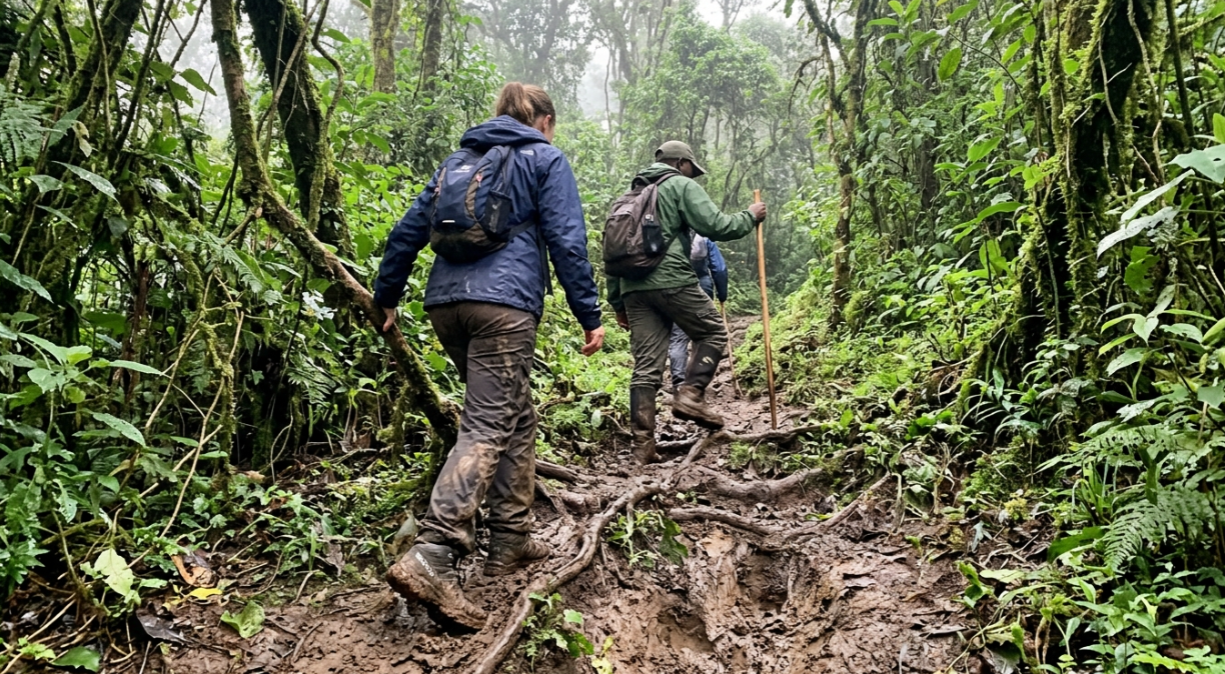
“Moderate fitness” is the minimum standard cited by park authorities and operators, but the term is vague enough to mislead people. In practice, it means you can hike four to six hours on uneven, steep terrain while carrying a daypack, maintaining enough energy to enjoy the experience rather than merely survive it.
Gorilla trekking is not a casual walk. It involves dense forest, steep slopes, mud, and elevation changes that are unpredictable on any given day. Where possible, rangers assign trekking groups to gorilla families based on visitors’ fitness levels, pairing less mobile guests with closer-ranging families. But this is a best-effort system. There are no guarantees about how far you will walk.
For a detailed look at fitness requirements and what “moderate” really means in practice, that guide breaks it down by park and sector.
Gorilla Trekking Fitness Self-Assessment
You do not need to be an elite athlete to go gorilla trekking, but you should be comfortable with sustained hiking on uneven terrain.
Before departure, ask yourself:
-
Can I walk continuously for 60–90 minutes without needing frequent breaks?
-
Can I climb several flights of stairs without becoming severely breathless?
-
Can I walk uphill for 20–30 minutes at a steady pace?
-
Can I hike for several hours while carrying a small daypack?
-
Can I maintain my balance on mud, roots, rocks and uneven ground?
-
Can I comfortably get up and down from low or awkward positions?
If several answers are no, begin conditioning before your trip and discuss any concerns with your healthcare provider. Your trek may be shorter or longer than expected, so preparation should be based on the possibility of a demanding day rather than the easiest reported trek.
Pre-Trek Training Plan
A structured 8 to 12 week fitness plan is the single best investment in your gorilla trekking health. It should include cardio training three to four times per week (hiking with a weighted pack is ideal) and strength training focused on legs and core: squats, lunges, step-ups, and planks for stability on slippery paths.
Practitioners on Reddit consistently report that the difficulty of a trek is almost entirely unpredictable. One trekker described their group finishing quickly while another group tracking the same gorilla family ended up with a seven-hour round trip because the gorillas moved uphill. You cannot plan for a short trek, so you must prepare for the worst case.
8–12 Week Gorilla Trekking Fitness Plan
|
Training Phase |
Main Goal |
Recommended Focus |
|---|---|---|
|
Weeks 1–4 |
Build endurance |
Walking, hills, stairs, cycling and basic leg/core strength |
|
Weeks 5–8 |
Increase hiking capacity |
Longer hikes, elevation gain and gradual pack-weight training |
|
Weeks 9–10 |
Simulate trekking |
Steeper trails, uneven terrain and several-hour hikes |
|
Weeks 11–12 |
Maintain fitness |
Moderate hikes, mobility work and recovery rather than exhausting workouts |
The goal is not to train for a race. It is to build enough cardiovascular endurance, leg strength, balance and hiking tolerance to handle an unpredictable day in steep, muddy forest terrain.
Trek Duration Variability
Treks can last anywhere from 30 minutes to seven or more hours. The location of the gorilla family on any given morning determines everything. Rangers track the gorillas from the previous evening’s nest site, but the animals move overnight. This unpredictability is a core gorilla trekking health consideration because you need the cardiovascular reserve, hydration strategy, and caloric intake to handle any scenario.
Understanding the Bwindi sectors and difficulty levels helps set realistic expectations about what each trail demands.
Cardiovascular Fitness
This refers to your heart and lungs’ ability to sustain prolonged physical effort. It matters more than raw strength on a gorilla trek. Steep ascents at altitude require efficient oxygen delivery to muscles. If you get winded climbing three flights of stairs, you need to start training now. Stair climbing, hill hiking, and cycling are all effective preparation.
Altitude Sickness and Gorilla Trekking
Altitude sickness can occur during higher-elevation gorilla treks, particularly around Rwanda's Volcanoes National Park and Uganda's Mgahinga Gorilla National Park. Acute mountain sickness commonly causes headache, dizziness, nausea, fatigue and reduced exercise tolerance.
The risk depends on elevation, how quickly you ascend, your individual susceptibility and whether you have had time to acclimatize. Fitness does not make someone immune to altitude illness.
If your itinerary involves spending time at higher elevation before the trek, consider building an acclimatization period into the itinerary rather than arriving immediately before the hike. Stay hydrated, avoid excessive alcohol and follow medical advice about altitude medication.
Severe symptoms such as confusion, difficulty walking, severe breathlessness or rapidly worsening symptoms require urgent medical attention. Do not attempt to simply push through serious altitude symptoms.
Altitude Acclimatization
Acclimatization is the body’s gradual adjustment to lower oxygen levels at higher elevations. For gorilla trekking, practical acclimatization means arriving at your lodge near the park a day or two early rather than flying in and trekking the next morning. Staying hydrated, avoiding alcohol, and eating light meals all support the process. If your itinerary includes Rwanda’s Volcanoes NP, a rest day at altitude before the trek is especially worthwhile.
Pre-Existing Conditions Guidance
Trekkers with pre-existing health conditions, particularly cardiovascular issues, respiratory conditions, or mobility impairments, should consult with healthcare professionals before booking. There is typically no upper age limit for gorilla trekking if you are physically capable. The minimum age requirement is 15 years across most parks.
A frank conversation with your doctor about the specific demands (altitude, duration, terrain) is more valuable than a generic “are you fit to travel?” clearance.
Gorilla Trekking Health Risks by Environment
|
Risk |
Why It Matters |
Main Prevention |
|---|---|---|
|
Steep terrain |
Can cause exhaustion, falls and muscle strain |
Cardio and leg-strength training |
|
Mud and slippery trails |
Increases fall risk |
Hiking shoes/boots with good traction and trekking poles where permitted |
|
Altitude |
Can contribute to headache, nausea and fatigue |
Gradual acclimatization and medical advice |
|
Mosquitoes |
Can transmit malaria and other infections |
Prescribed malaria prevention, repellent and protective clothing |
|
Stinging vegetation |
Can cause painful skin irritation |
Long sleeves, trousers and gloves |
|
Dehydration |
Several hours of hiking can increase fluid needs |
Carry sufficient water and hydrate regularly |
|
Respiratory illness |
Humans can transmit infections to gorillas |
Do not trek while sick; follow mask and distance rules |
|
Animal bites or scratches |
Can create rabies or other infection concerns |
Avoid touching wildlife and seek immediate medical care after exposure |
|
Remote location |
Medical assistance may be far away |
Travel insurance and evacuation coverage |
Can You Go Gorilla Trekking If You Are Sick?
You should not go gorilla trekking if you have symptoms of a potentially contagious illness. Respiratory and other infections can pose a serious disease-transmission risk to mountain gorillas, so illness exclusion is both a visitor-safety and conservation measure.
If you develop a fever, persistent cough, significant cold or flu symptoms, vomiting, diarrhea or another potentially contagious illness shortly before your trek, contact your tour operator and seek medical advice rather than trying to hide the symptoms.
Do not assume that wearing a mask makes trekking while sick acceptable. Current great-ape tourism guidance emphasizes keeping sick visitors away from habituated apes and using multiple layers of disease prevention.
The exact screening and refund or rescheduling procedure depends on the destination and operator, so confirm the current policy before your trekking date.
What Happens on Gorilla Trekking Day?
Health and safety checks generally form part of the trekking process rather than being something you handle only after entering the forest.
1. Arrival at park headquarters
You meet your guides and receive the day's briefing. Follow the current health and conservation instructions provided by park authorities.
2. Health assessment
If you are showing symptoms of illness, report them honestly before entering gorilla habitat. Sick visitors should not approach habituated gorillas.
3. Trek assignment
Your guide or ranger explains the route, group procedures and expectations for the trek.
4. Hike into the forest
Expect uneven terrain, elevation changes, mud and variable trekking times. Your physical preparation becomes important here.
5. Gorilla encounter
Maintain the required distance, use the required mask or respirator and follow your ranger's instructions. Do not touch or feed the gorillas.
6. Return from the forest
Continue normal hygiene practices and monitor your health after the trek, particularly if you develop fever or other concerning symptoms.
Day-of Health Protocols
Health Declaration Form
Before your trek begins, you will complete a written health declaration form stating that you do not have symptoms of any contagious illness. Expect questions about your recent health history, including any illnesses in the 14 days preceding your visit. This is not a formality. Rangers read these forms and make decisions based on your answers.
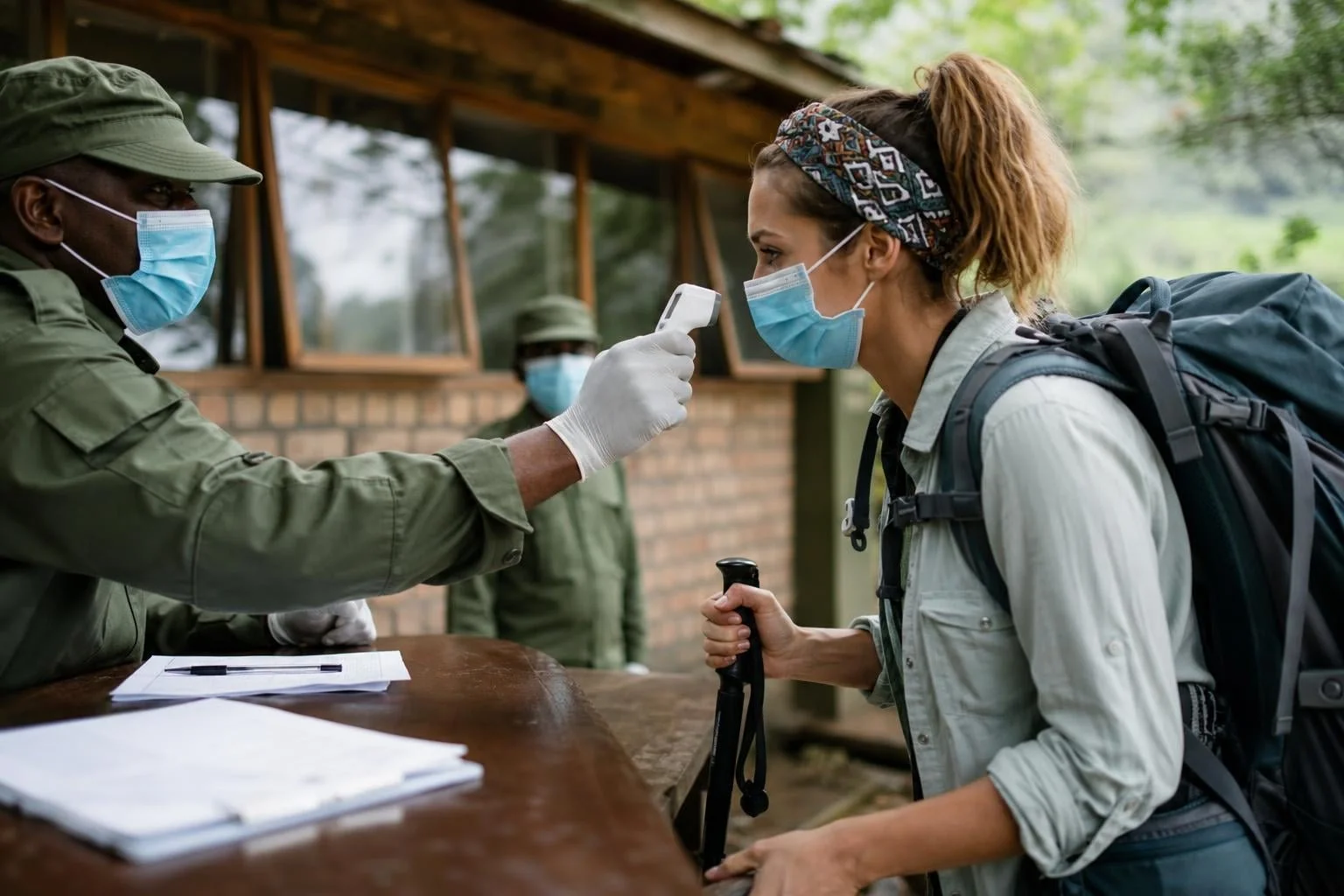
Health Screening (Temperature Check)
All visitors undergo temperature screening at park headquarters before entering gorilla territory. Anyone with a fever of 37.5°C (99.5°F) or higher will be denied entry. No exceptions, no appeals, no refunds in most cases. This single checkpoint is where inadequate health preparation turns into financial loss.
Illness Exclusion Rule
If you are sick, you must not trek. Anyone showing symptoms of a contagious illness, including fever, persistent cough, cold, flu, diarrhea, or any respiratory condition, will be denied access. Rangers and guides conduct health assessments before the trek begins, and they are trained to spot symptoms you might try to downplay.
This rule exists because of the gorillas’ extreme vulnerability. It is also the rule most directly tied to permit forfeiture risk, covered below.
Masks and Respiratory Disease Prevention
Mask requirements exist primarily to reduce the risk of transmitting human respiratory pathogens to gorillas. Mountain gorillas are highly susceptible to human respiratory infections, so mask use is part of a broader disease-prevention strategy that also includes staying away when sick, maintaining distance and following guide instructions.
Current great-ape tourism guidance recommends high-filtration respiratory protection when visitors approach habituated apes within 10 meters. Local park rules may specify the type of mask and when it must be worn, so follow the instructions provided by your ranger or tour operator on the day.
A mask does not make it safe to trek while sick. Illness exclusion remains one of the most important protections for gorillas.
Minimum Distance From Gorillas
Maintain the distance required by the park and follow your ranger's instructions at all times. A 10-meter separation is widely used as the current disease-prevention benchmark for great-ape tourism, and Rwanda's tourism guidance specifically asks visitors to maintain physical distance from gorillas.
Gorillas may occasionally approach visitors on their own. Do not reach toward them, move closer for a photograph or attempt to create space without following your guide's instructions.
On-Trail Health and Hygiene
Hand Hygiene Protocol
Before entering the forest, trekkers are encouraged to sanitize or wash their hands. Carry a small bottle of hand sanitizer and use it before and after any contact with surfaces, food, or your face. This is a basic but critical layer of disease prevention, protecting both you and the gorillas from pathogen transfer.
Zoonotic Disease / Cross-Species Transmission
A zoonotic disease is any illness that can pass between animals and humans. In the context of gorilla trekking, the concern runs in both directions. You could catch something from the forest environment, but more critically, you could give something to the gorillas. Respiratory viruses, gastrointestinal pathogens, and even skin infections can cross the species barrier thanks to that 98% genetic similarity.
This two-way risk is the foundation of every gorilla trekking health rule. The masks, the distance, the temperature checks, the illness exclusion: all of it exists because of zoonotic disease potential.
For more on behavioral expectations and trekking etiquette, that guide covers the rules in full.
Stinging Nettles
Here is a trail hazard that most gorilla trekking safety guides skip entirely. Several recent trip reports on Reddit highlight that stinging nettles line many trails in Bwindi and Volcanoes NP, causing painful welts through thin clothing. Long sleeves, gardening-style gloves, and gaiters are not fashion choices. They are health protection. The welts are not dangerous but they are intensely uncomfortable and can distract you on difficult terrain.
Porter Assistance (Physical Health Support)
Porters do far more than carry your bag. They stabilize you on slippery slopes, set foot placements in mud, and physically assist you through the steepest sections. Hiring a porter is not a luxury. It is a health and safety tool that reduces your injury risk and energy expenditure, leaving you in better condition for the actual gorilla encounter. Porters typically cost $10 to $15 and the money goes directly to local communities.
Sneezing and Coughing Protocol
If you must sneeze or cough while near the gorillas, turn away from them immediately and cover your nose and mouth. This is a strict rule, not a suggestion. Even a single uncovered sneeze at close range could transmit respiratory pathogens to a gorilla family.
Gorilla Trekking Health Packing List
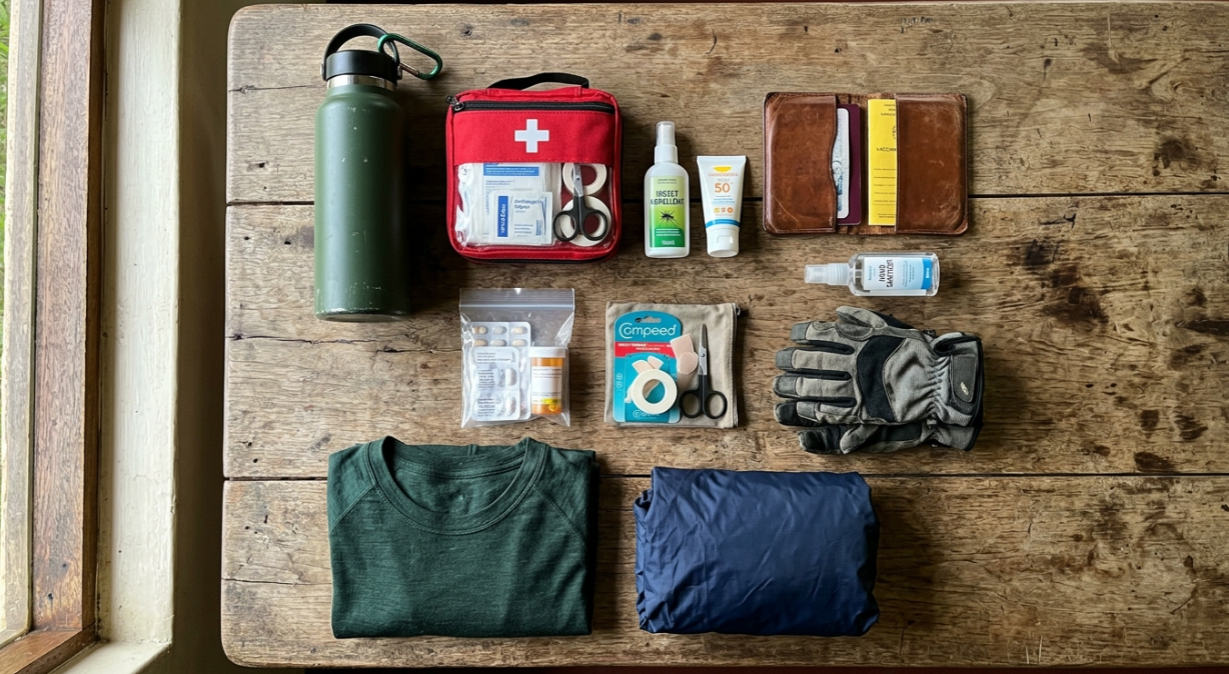
A health-focused gorilla trekking kit should be small enough to carry comfortably but comprehensive enough for a long day in remote forest terrain.
Essential health items
-
Prescription medications in their original packaging
-
Antimalarial medication if prescribed
-
Insect repellent
-
Hand sanitizer
-
Appropriate masks or respirators required by current park rules
-
Small first-aid kit
-
Blister treatment
-
Reusable water bottle
-
Electrolyte or rehydration supplies
-
Sunscreen
-
Long-sleeved clothing
-
Long trousers
-
Gloves for vegetation and stinging nettles
-
Waterproof layer
-
Personal medical documentation
-
Travel insurance and emergency contact information
Do not rely on a lodge or trekking operator to supply prescription medicines. Bring enough medication for the trip and a small additional supply in case of delays, following your healthcare provider's advice.
Post-Trek and Risk Management
Permit Forfeiture Risk
This is the financial consequence of inadequate gorilla trekking health preparation, and it is the term no other guide defines explicitly. If you are denied entry due to illness on trek day, your permit is at risk.
In Uganda, if you self-report to the warden before the trek starts, the Uganda Wildlife Authority often provides a 50% refund or a chance to reschedule for standard permits. In Rwanda, gorilla tracking permits are generally non-refundable. With Rwanda permits at $1,500 and Uganda permits at $800, the financial exposure is real.
This is the ultimate reason to take every health precaution seriously: vaccinations, fitness training, malaria prophylaxis, arriving well-rested, and not pushing through mild illness symptoms in the days before your trek.
→ Understanding permit costs and booking rules helps you weigh the financial risk properly.
Travel Insurance (Adventure Activity Coverage)
Standard travel insurance often excludes trekking, wildlife encounters, or activities above certain altitudes. For gorilla trekking, you need a policy that explicitly covers adventure activities.
Recommended minimums: emergency medical coverage of at least USD $100,000, and medical evacuation coverage of USD $250,000 to $500,000 for extraction from remote parks. Before purchasing, confirm that gorilla trekking, altitude hiking, and safari activities fall within the adventure activity clause. Many trekkers have discovered too late that their policy treated the trek as an excluded “hazardous activity.”
For a detailed breakdown, see the gorilla trekking insurance glossary.
AMREF Flying Doctors
AMREF Flying Doctors operates an emergency air evacuation service across East Africa. Their Maisha Tourist Plus plan costs $35 to $55 per person for 30 days of coverage across Tanzania, Kenya, Uganda, Rwanda, and Burundi. Given that gorilla parks are located in genuinely remote areas (hours from the nearest hospital with adequate facilities), this is inexpensive peace of mind. It supplements, rather than replaces, your primary travel insurance.
Medical Evacuation
Medical evacuation refers to emergency transport from a remote location to a facility capable of providing adequate care. In the context of gorilla trekking, the nearest quality hospitals may be in Kampala, Kigali, or Nairobi, all hours away by road. Helicopter or fixed-wing evacuation is the only realistic option for serious injuries or acute illness. This is why evacuation coverage of $250,000 or more is not excessive. A single air ambulance flight from Bwindi to Nairobi can cost $20,000 to $50,000 out of pocket.
The safari travel insurance guide explains how to evaluate evacuation policies and avoid coverage gaps.
Post-Trek Symptom Monitoring
After returning from the trek, monitor yourself for fever, diarrhea, respiratory issues, or unusual fatigue. Malaria symptoms can appear 7 to 30 days after exposure (sometimes longer with certain strains). If you develop a fever within several months of returning from East Africa, tell your doctor you were in a malaria zone. This detail can be the difference between a quick diagnosis and a dangerous delay.
Age Requirements
Most gorilla parks enforce a minimum trekker age of 15 years. There is no upper age limit, provided you are physically capable of completing the trek. Both age boundaries exist for gorilla trekking health reasons: younger children have less control over noise and movement near the gorillas, while the absence of an upper limit reflects that fitness, not age, is the true limiting factor.
Gorilla Trekking Health Preparation Timeline
|
Time Before Trek |
What to Do |
|---|---|
|
8–12 weeks |
Book a travel-medicine appointment and begin your fitness program |
|
6–8 weeks |
Review vaccinations, malaria prevention and prescription medications |
|
4 weeks |
Confirm insurance, evacuation coverage and required travel documents |
|
2 weeks |
Check that required vaccination documentation is complete and review current entry requirements |
|
1 week |
Avoid unnecessary illness exposure, finalize your health kit and reduce injury-risk training |
|
24–48 hours |
Rest, hydrate and monitor for symptoms of illness |
|
Trek day |
Report illness, follow health screening, use required protective equipment and obey ranger instructions |
|
After trekking |
Continue prescribed medications as directed and seek medical attention for concerning symptoms |
→ Ready to start planning? Explore gorilla trekking itineraries that build in proper acclimatization and health preparation time.
Frequently Asked Questions
What vaccinations are required for gorilla trekking?
Yellow fever vaccination is the only legally mandatory vaccine for entering Rwanda, Uganda, and the DRC. However, hepatitis A, hepatitis B, typhoid, rabies, MMR, polio, and tetanus-diphtheria are all strongly recommended. Start the process at least six to eight weeks before travel.
Can I go gorilla trekking if I have a cold?
No. Anyone showing symptoms of a contagious illness, including a cold, cough, fever, or diarrhea, will be denied entry at the health screening. The risk of transmitting even a mild respiratory virus to gorillas is too high. If you are feeling unwell in the days before your trek, consult a doctor immediately.
How fit do I need to be for gorilla trekking?
You need the cardiovascular endurance to hike four to six hours on steep, muddy, uneven terrain at moderate altitude. Rangers try to match less fit trekkers with closer gorilla families, but there are no guarantees. An 8 to 12 week training program focused on cardio, leg strength, and core stability is the best preparation.
Do I need malaria medication for gorilla trekking?
The CDC recommends antimalarial prophylaxis for all travelers to Uganda. Rwanda’s gorilla trekking areas at higher elevations carry lower malaria risk, but most itineraries include time at lower altitudes where transmission occurs. Common options are atovaquone-proguanil, doxycycline, and mefloquine.
What happens to my permit if I get sick on trek day?
In Uganda, self-reporting illness before the trek may result in a 50% refund or rescheduling opportunity. In Rwanda, permits are generally non-refundable. With permits costing $800 (Uganda) or $1,500 (Rwanda), comprehensive health preparation is also financial protection.
Is altitude sickness a real concern for gorilla trekking?
Yes, particularly at Rwanda’s Volcanoes National Park, where treks can reach above 3,000 meters and altitude sickness affects up to 30% of trekkers. Most Bwindi treks stay below the typical AMS threshold of 2,500 meters, but sensitive individuals can experience symptoms at lower elevations.
Why do I have to wear a mask near the gorillas?
Gorillas are highly susceptible to human respiratory diseases due to our genetic similarity. Surgical masks reduce the risk of airborne pathogen transmission during the one-hour viewing period. Both Uganda and Rwanda enforce mandatory mask-wearing without exception.
Should I hire a porter for the trek?
Strongly recommended. Porters reduce your physical load, stabilize you on difficult terrain, and lower your injury risk. At $10 to $15, this is the most cost-effective gorilla trekking health investment you can make.