

Marangu Route 2026: Huts, 5 vs 6 Days, Success Rates
Thinking about climbing Mount Kilimanjaro? You’ve probably heard of the Marangu Route. Nicknamed the “Coca Cola Route” or sometimes the “Tourist Route,” it’s the oldest and most established path to the Roof of Africa. It’s famous for one big reason: it’s the only route on Kilimanjaro where you sleep in communal mountain huts instead of tents.
While its reputation sometimes paints it as the “easy” option, that label can be misleading. The Marangu Route presents its own unique challenges, especially concerning altitude acclimatization. This guide covers everything you need to know, from the hut accommodations and day by day itinerary to the real story on its difficulty and success rate.
Marangu Route at a Glance
Feature
Details
Total Distance
72 km (45 miles) round trip
Duration
5 or 6 days (6 days strongly recommended)
Accommodation
Shared wooden A-frame huts (only route with huts)
Success Rate
50% (5-day) vs. 80%+ (6-day)
Difficulty
Moderate path; High altitude risk
Crowd Level
High
What is the Marangu Route? An Overview
The Marangu Route is a classic trail that ascends Kilimanjaro from the southeast. It's known for its relatively gentle, well maintained path and the comfort of sleeping under a roof each night. Because it can be completed in as few as five days, it's one of the shortest treks to Uhuru Peak. This is our current, most detailed Marangu guide — if you land on an older version elsewhere on the site, this is the one to trust for 2026 pricing and success rates. Not sure Marangu is your route? See our best Kilimanjaro route picks by traveler type.
However, its shorter duration is a double edged sword. The quick ascent allows less time for your body to adjust to the altitude, which contributes to a lower summit success rate compared to longer routes. Many climbers, especially first timers, underestimate the challenge of the Marangu Route precisely because of its “easier” reputation and fall victim to altitude sickness.
Another defining feature is that it’s an “in and out” trail, meaning you ascend and descend on the same path. While this makes it slightly less scenically diverse than routes that traverse the mountain, the journey still takes you through breathtaking ecological zones, from lush rainforest to an arctic summit.
Huts vs. Camping: Why Choose Marangu?
While every other route on Kilimanjaro requires sleeping in tents, Marangu offers permanent structures. Here is how they compare:
Weather Protection: Huts offer superior protection during the rainy seasons (April-May and November).
Social Vibe: Communal dining halls make it easier to meet international climbers.
Simplicity: No need to wait for porters to pitch or pack up tents each morning.
Privacy: This is the trade-off. Expect dormitory-style sleeping with 4 to 20 bunks per room.
A Closer Look at the Marangu Route Huts
The huts are what make the Marangu Route truly unique. Instead of camping, you’ll spend each night in large, A shaped wooden dormitories. There are three camps along the way: Mandara Hut, Horombo Hut, and the high camp at Kibo Hut.
Accommodation: The huts are basic, offering dormitory style sleeping quarters with bunk beds. You can expect to share a room with other climbers. Mandara and Kibo Huts each have about 60 bunks, while the larger Horombo Hut can accommodate around 120 people.
Amenities: Each hut site has a communal dining hall where your crew will serve meals. A major perk, especially at the lower camps, is the presence of basic washrooms with running water and even flush toilets, a rare luxury on Kilimanjaro. Conditions become more primitive at Kibo Hut (4,700 meters), where you’ll find pit toilets and water supplied in buckets.
What to Bring: A mattress and pillow are provided on each bunk, but you must bring your own warm, four season sleeping bag. The huts are not heated and get very cold at night, especially at Kibo.
Sleeping in a hut protects you from wind and rain, which can be a huge comfort, particularly during the wet seasons. The trade off is a lack of privacy and the potential for a noisy, crowded environment during peak season.
The Pros and Cons of Choosing the Marangu Route
Every Kilimanjaro route has its strengths and weaknesses. Here’s a balanced look at the Marangu Route.
Pros
Hut Accommodation: The number one advantage. If you dislike camping, this is your route. Sleeping in a bunk under a solid roof is warmer and often more comfortable than a tent.
Established Path: As the oldest route, the trail is well defined and the gradients are more gradual compared to other routes. There is no technical climbing or scrambling required.
Shorter Duration: It’s one of the quickest ways to the summit, making it a good option if you have limited time. Fewer days can also mean a lower overall cost.
Better Facilities: The huts offer dining halls and basic toilet facilities that are a step up from the wilderness camping experience on other trails.
Cons
Poor Acclimatization: The rapid, direct ascent profile provides very little opportunity to “climb high, sleep low,” which is crucial for acclimatization. This is the route’s biggest drawback.
Lower Success Rates: Due to the poor acclimatization, the Marangu Route has one of the lowest summit success rates, especially for the 5 day itinerary.
Less Scenic Variety: Because you use the same trail up and down, the scenery repeats itself. You miss out on dramatic features like the Barranco Wall and the Shira Plateau found on other routes.
Can Be Crowded: Its popularity means the trail and huts can be busy, particularly during peak climbing seasons. If you’re seeking solitude, this might not be the best choice.
How Difficult is the Marangu Route, Really?
Physically, the hiking trail on the Marangu Route is considered one of the least demanding on Kilimanjaro. The path is clear and the slopes are gradual without any technical sections.
However, the primary difficulty is the altitude. The short itinerary forces a rapid ascent, gaining nearly 1,000 meters in elevation on some days. This quick gain significantly increases the risk of Acute Mountain Sickness (AMS), with symptoms like headaches, nausea, and fatigue being common. Because of this acclimatization challenge, many experienced guides rate the Marangu Route as a difficult climb overall.
The summit day is also relentlessly tough. It involves a grueling ascent of nearly 1,200 meters from Kibo Hut to Uhuru Peak, followed by a massive descent of over 2,100 meters all the way back to Horombo Hut. This makes for an incredibly long and exhausting day of 12 to 16 hours on your feet.
Marangu Route Success Rate: What to Expect
The summit success rate on the Marangu Route is heavily dependent on the itinerary you choose.
5 Day Itinerary: This option has a notoriously low success rate, often estimated to be around 50% or even lower. Some sources place it as low as 30%. The lack of an acclimatization day is the primary reason so many climbers are forced to turn back.
6 Day Itinerary: By adding an extra day to acclimatize at Horombo Hut, the success rate improves dramatically, climbing to an estimated 60% to 80%. That extra day can be the difference between reaching the summit and not.
For comparison, longer routes like Lemosho or Machame (7 plus days) often have success rates exceeding 85% due to their superior acclimatization profiles; see our Kilimanjaro route comparison for details.
Success Rates: Choosing Your Success
Itinerary
Estimated Success Rate
Why?
5-Day Marangu
30% – 50%
Too fast; high risk of altitude sickness (AMS).
75% – 85%
Includes an essential acclimatization day at Horombo Hut.
8-Day Lemosho
90%+
The gold standard for slow, safe acclimatization.
Marangu Route Itinerary: 5 Days vs. 6 Days
The most important decision you’ll make when planning a Marangu Route climb is whether to take five or six days.
The 5 day itinerary is a rushed ascent with no rest days. You climb progressively higher each day, arriving at the high camp, Kibo Hut, on day three. This is extremely challenging for the body.
The 6 day itinerary is the strongly recommended option. It includes an extra day and night at Horombo Hut (3,720 meters). On this “rest day,” you’ll typically take a short acclimatization hike to a higher altitude (like Zebra Rocks) before returning to Horombo to sleep. This “climb high, sleep low” principle is critical for helping your body adapt to the thin air, significantly increasing your comfort, safety, and chance of success.
While the 6 day trip costs a bit more, it is a small price to pay for a safer and more enjoyable experience. Reputable operators like Duma Explorer prioritize safety and will always guide you toward the 6 day itinerary.
The Complete 6 Day Marangu Route Itinerary
This is the recommended path for a successful and enjoyable climb.
Day 1: Marangu Gate (1,860 m) to Mandara Hut (2,715 m)
Your adventure begins at Marangu Gate. After your guides handle the registration and permits, you’ll start your trek through a lush, magical rainforest. The 8 kilometer trail is shaded and gradual, taking about four to five hours. Keep your eyes peeled for Colobus monkeys leaping through the canopy. You’ll arrive at Mandara Hut in the afternoon, your home for the first night on the mountain.
Day 2: Mandara Hut (2,715 m) to Horombo Hut (3,720 m)
Today you leave the forest behind and enter the heath and moorland zone. The landscape opens up, revealing stunning views of Kibo’s summit cone and the jagged peaks of Mawenzi. The 12 kilometer hike takes six to eight hours. As you climb, you’ll encounter Kilimanjaro’s iconic flora, including giant groundsels and lobelias. Horombo Hut is a large, bustling camp where you’ll start to feel the effects of the altitude.
Day 3: Acclimatization at Horombo Hut (3,720 m)
This is the crucial extra day that makes the 6 day itinerary superior. After breakfast, you’ll take a half day hike up towards Mawenzi, often to Zebra Rocks (around 4,020 meters). This helps your body adjust to the altitude. You’ll return to Horombo for lunch and a relaxing afternoon, giving your body valuable time to rest and acclimatize before pushing higher.
Day 4: Horombo Hut (3,720 m) to Kibo Hut (4,700 m)
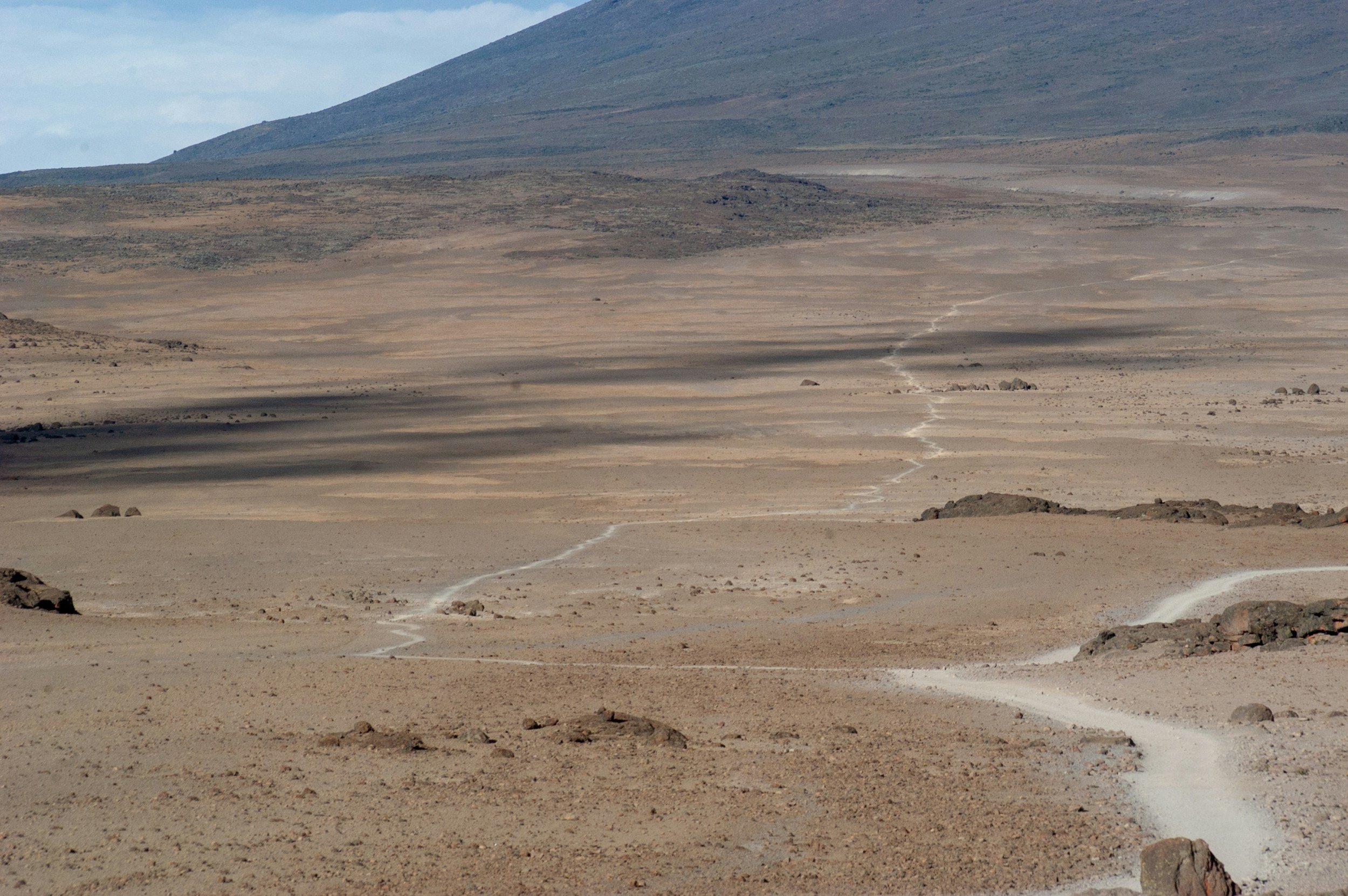
The journey to high camp takes you across the “Saddle,” a vast and starkly beautiful alpine desert that stretches between Kibo and Mawenzi. The 10 kilometer trek takes about five to seven hours. The air is very thin here, and you’ll need to move slowly (pole pole). You’ll arrive at Kibo Hut, a stone building at the base of the summit crater, in the afternoon. The plan is to eat an early dinner and get as much rest as possible before the midnight summit attempt.
Day 5: Summit Day! Kibo Hut (4,700 m) to Uhuru Peak (5,895 m) to Horombo Hut (3,720 m)
This is it. You’ll be woken around 11 PM to begin the final ascent in the cold and dark. The climb up the steep scree slope to the crater rim at Gilman’s Point (5,681 m) is the most difficult part of the entire trek. It’s a slow, grueling six to eight hour push.
You’ll aim to reach the rim just as the sun rises, rewarding you with breathtaking views. From Gilman’s Point, it’s another one to two hours of trekking around the crater rim to reach the true summit, Uhuru Peak (5,895 m). After celebrating at the Roof of Africa, you’ll begin the long descent back past Kibo Hut and all the way down to Horombo Hut for a well deserved final night on the mountain.
Day 6: Horombo Hut (3,720 m) to Marangu Gate (1,860 m)
Your final day is a long but rewarding 20 kilometer downhill trek back to Marangu Gate. You’ll retrace your steps through the moorland and rainforest, with the air getting richer and warmer with every step. At the gate, you will sign out and receive your official summit certificate. It’s a moment of pure triumph before you’re transferred back to your hotel for a hot shower and celebration.
Key Route Details and Logistics
Distance and Altitude Profile
The total round trip distance of the Marangu Route is approximately 72 kilometers (45 miles). You will ascend over 4,000 vertical meters (13,000 feet) from the gate to the summit.
Key altitude points are:
Marangu Gate: 1,860 m (6,100 ft)
Mandara Hut: 2,715 m (8,900 ft)
Horombo Hut: 3,720 m (12,200 ft)
Kibo Hut: 4,700 m (15,420 ft)
Uhuru Peak: 5,895 m (19,341 ft)
The altitude profile is a steady, direct ascent, which is what makes acclimatization so challenging.
Scenery, Crowds, and Habitat Zones
The scenery on the Marangu Route is beautiful, taking you through five distinct ecological zones: lush montane rainforest, open heath and moorland dotted with alien like plants, a high altitude alpine desert, and finally, the arctic summit zone of ice and rock.
However, since you descend the same way you came up, you won’t experience the same scenic variety as on other routes. The trail can also be one of the busiest on the mountain, especially during peak season. You should expect to share the trail and the huts with plenty of other climbers.
Planning Your Marangu Route Climb
Best Time to Climb
You can climb the Marangu Route year round, but the best times are during the two dry seasons: January to early March and June to October. These periods offer the highest chance of clear skies and dry trails. January and February are generally warmer, while June through August can be colder but very clear. The rainy seasons from late March to May and again in November should be avoided if possible.
Permits, Fees, and Overall Cost
Climbing Kilimanjaro is not cheap, and a significant portion of the cost goes toward mandatory park fees. For a 6 day Marangu Route climb, these fees alone are approximately $873 per person. This includes conservation fees, rescue fees, and the specific hut accommodation fees. If you’re curious about emergency procedures, here’s what to know about helicopter evacuation on Kilimanjaro.
The total cost for a 6 day climb with a reputable mid range operator typically falls between $2,000 and $2,600 per person. This price usually covers all park fees, guide and porter salaries, food, and hut accommodations. Be wary of operators offering prices that seem too good to be true, as it often means they are cutting corners on safety or porter welfare.
Itinerary       | Park & Hut Fees (approx.) | Total Cost (Mid-Range Operator)
5-Day Marangu   | ~$750 pp                  | $1,800 – $2,200 pp
6-Day Marangu   | ~$873 pp                  | $2,000 – $2,600 pp
Access and Transportation
The starting point is Marangu Gate, which is about a one hour drive from the town of Moshi, the main hub for Kilimanjaro climbs. Most tour packages, including those from Duma Explorer, include transportation from your hotel in Moshi or Arusha to the gate and back again after your climb.
How to Prepare for the Marangu Route
Success on Kilimanjaro requires proper preparation.
Physical Training: Focus on cardiovascular fitness and leg strength. Start a training regimen of hiking, jogging, or cycling at least three months before your trip. The best training is long hikes on hills while carrying a weighted daypack.
Mental Preparation: The climb is a significant mental challenge, especially on summit night. Be prepared to push through fatigue and discomfort. A positive attitude is your greatest asset.
Gear: You will need proper gear, including broken in waterproof hiking boots, a layered clothing system, and a warm (minus 15°C rated) sleeping bag. Your tour operator will provide a detailed packing list; for more prep tips, download our Kilimanjaro Guidebook.
Marangu-Specific Packing Essentials
Because you are staying in huts, your gear needs are slightly different:
Earplugs & Eye Mask: Essential for sleeping in communal dorms where others may snore or use headlamps.
Indoor Shoes/Crocs: You aren't allowed to wear muddy hiking boots inside the huts; comfortable slip-ons are a must for the evenings.
Power Bank: While some huts have solar lighting, charging ports are rare and often overwhelmed. Bring your own power.
4-Season Sleeping Bag: Even inside a hut, temperatures at Kibo Hut (4,700m) drop well below freezing.
Why Choose Duma Explorer for Your Marangu Route Climb?
Choosing the right operator is the most important decision you will make. A company like Duma Explorer sets the standard for safety, ethics, and a high quality experience. As a founding partner of the Kilimanjaro Porters Assistance Project (KPAP), they guarantee fair treatment and proper wages for their porters. Their highly experienced, Wilderness First Responder certified guides prioritize your safety above all else, which is why they strongly encourage the 6 day itinerary for the Marangu Route. With a focus on small groups and personalized service, they provide the support you need to maximize your chances of a safe and successful summit.
Ready to start planning your adventure? Read Duma Explorer reviews from past climbers, then explore Kilimanjaro climbs with Duma Explorer.
Frequently Asked Questions about the Marangu Route
Is the Marangu Route really the easiest?
No. While its trail is physically less strenuous, its poor acclimatization profile makes it one of the more difficult routes from an altitude perspective, leading to lower success rates.
Can I climb the Marangu Route without a guide?
No. It is mandatory to climb Kilimanjaro with a licensed guide and registered tour company. Independent climbing is not permitted.
Why is it called the “Coca Cola” route?
The nickname came about because, in the past, you could buy Coca Cola and other snacks at the huts along the trail. While less common now, the name has stuck.
What are the toilets like on the Marangu Route?
Mandara and Horombo huts have basic but functional washrooms with running water and flush toilets. At the highest camp, Kibo Hut, facilities are limited to rustic pit toilets.
Is the 6 day Marangu Route worth the extra cost?
Absolutely. The extra day for acclimatization nearly doubles your chances of reaching the summit and makes the entire experience safer and more enjoyable. It is the best investment you can make in your climb.
What kind of food can I expect on the climb?
Your cook and crew will prepare three hot meals a day. Expect hearty, high carbohydrate meals like porridge for breakfast, packed lunches on the trail, and dinners of soup, pasta, rice, stew, and vegetables. There will also be plenty of tea, coffee, and hot chocolate.
