

Lemosho Route Guide 2026: Itinerary, Cost & Success Rates
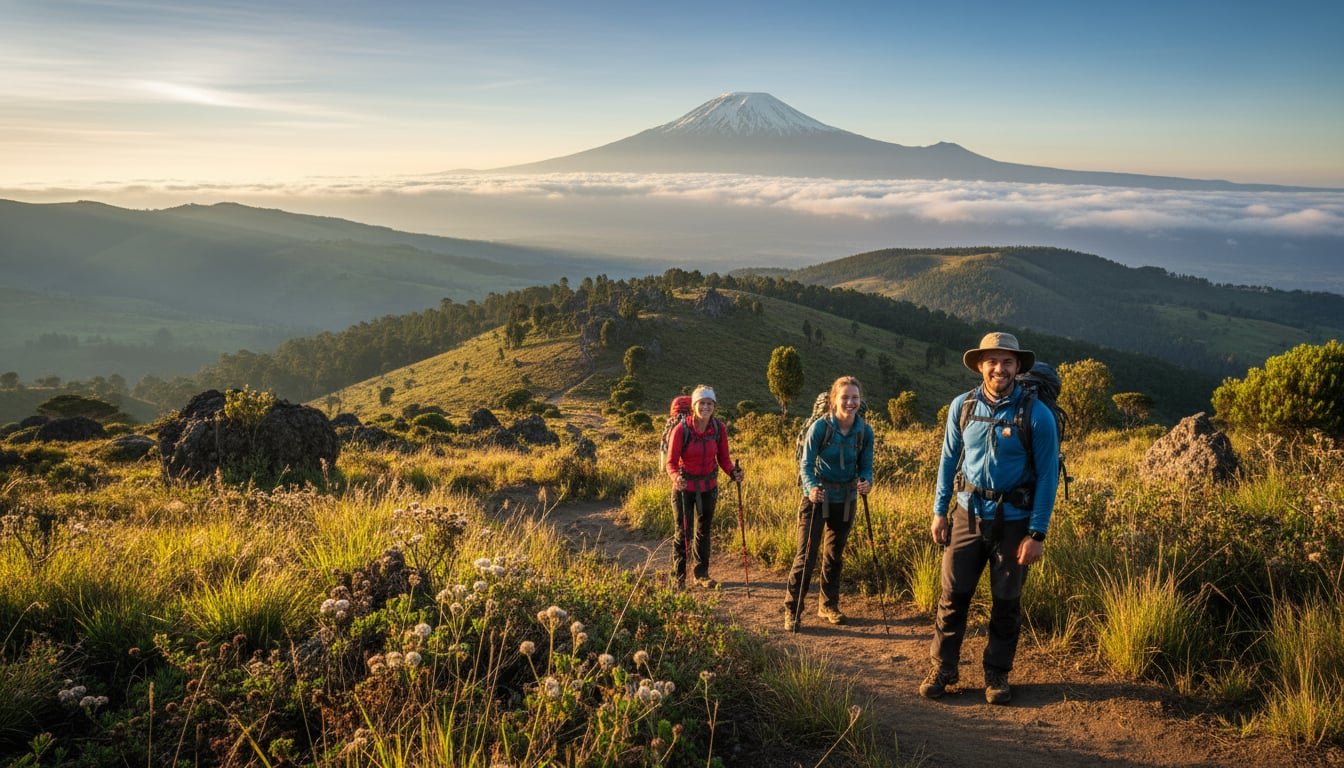
Thinking about climbing Mount Kilimanjaro? The Lemosho Route is often called the most beautiful path to the summit, and for good reason. It offers breathtaking panoramic views, a quiet start away from the crowds, and an excellent acclimatization profile that gives climbers a fantastic chance of reaching the top.
This comprehensive guide covers everything you need to know about the Lemosho Route, from the day by day itinerary and difficulty to what it costs and how it compares to other trails.
At a Glance: The Lemosho Route 2026
-
Total Distance: 70 km (42 miles)
-
Recommended Duration: 8 days (for 90%+ success rate)
-
Difficulty: Moderate to Challenging
-
Scenery: High (Traverses 5 climate zones)
-
Traffic: Low (starts remote, merges with Machame on Day 4)
-
Best For: Climbers seeking scenic beauty and the highest possible acclimatization safety.
An Overview of the Lemosho Route
The Lemosho Route is a newer trail on Kilimanjaro that begins on the remote western side of the mountain. It was designed to offer a superior experience to the older Shira route by providing a better acclimatization schedule and more spectacular scenery.
What makes it so special?
-
Incredible Scenery: You’ll trek through five distinct climate zones, starting in a lush rainforest, crossing the vast Shira Plateau (https://www.dumaexplorer.com/blog/shira-plateau-the-complete-kilimanjaro-guide), and moving through heath, alpine desert, and finally the arctic summit zone.
-
Fewer Crowds: For the first few days, the trail is wonderfully quiet, as its western starting point is far from the more crowded access gates. You’ll only merge with the busier Machame route (https://www.dumaexplorer.com/blog/kilimanjaro-machame-route) traffic around day four.
-
High Success Rates: Lemosho can be completed in 6 to 8 days. This longer duration gives your body more time to adjust to the altitude, leading to one of the highest summit success rates on the mountain, around 90% for the 8 day itinerary.
For these reasons, many expert operators, including the team at Duma Explorer, highly recommend the Lemosho Route for both first time and experienced trekkers who want the best all around Kilimanjaro experience.
The Lemosho Route Start Point
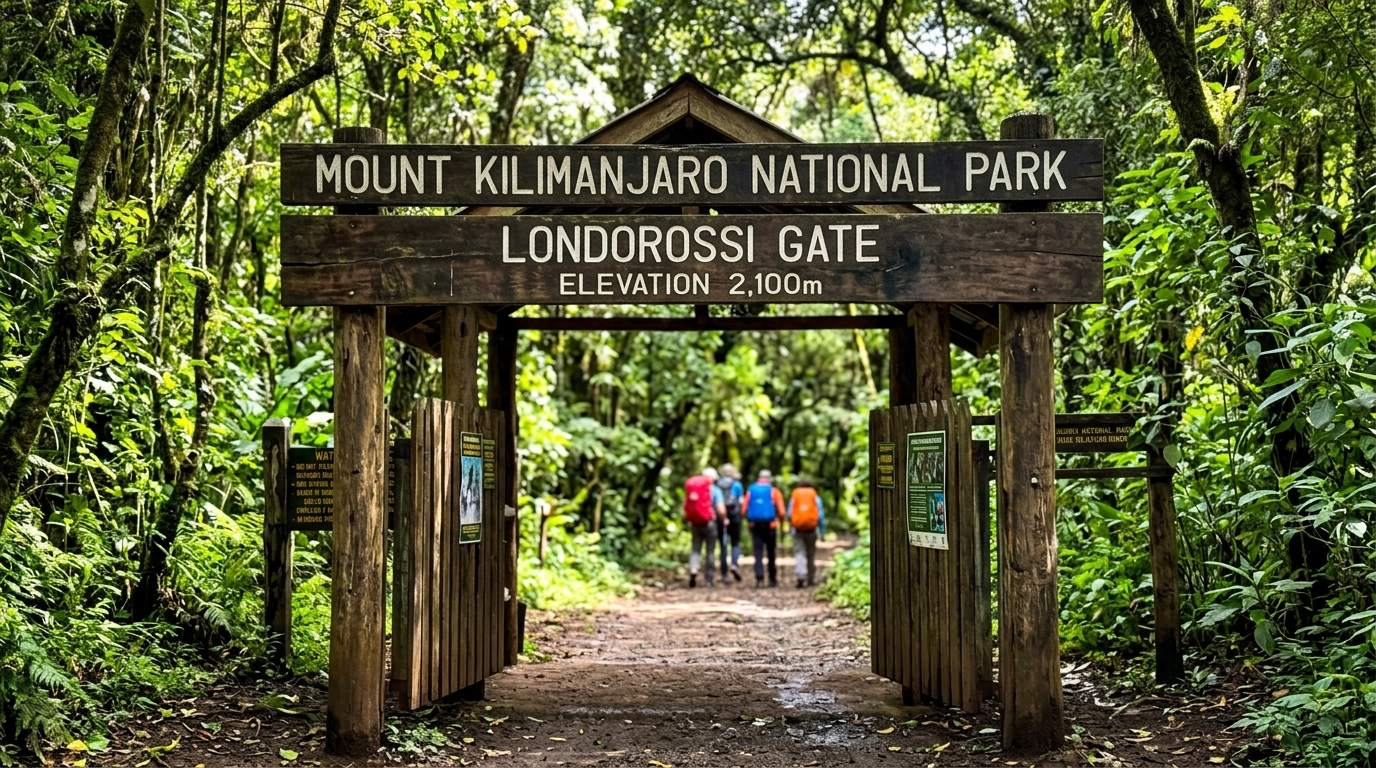
Your journey on the Lemosho Route begins at Londorossi Gate on Kilimanjaro’s western side. The gate sits at an elevation of approximately 2,100 meters (6,890 feet) inside the montane forest.
Getting here is part of the adventure. It involves a 3 to 4 hour drive from the towns of Moshi or Arusha, taking you through rural villages and coffee plantations. After registering with the park authorities, your trek officially begins. The first section of the trail is a narrow path through dense, green rainforest where you might spot black and white colobus monkeys leaping through the canopy.
By starting at a lower elevation, the Lemosho Route allows for a gentler ascent in the first couple of days, which is a key factor in its excellent safety and success record.
Lemosho Route Map and Distance
The Lemosho Route covers a total distance of approximately 70 kilometers or 42 miles from the Londorossi Gate to the Mweka Gate, where you descend. This makes it one of the longer trails on Kilimanjaro, surpassed only by the Northern Circuit.
A quick look at a Lemosho Route map shows a journey that traverses the mountain from west to south. Key landmarks you’ll pass include:
-
Londorossi Gate (Start)
-
Shira Plateau
-
Lava Tower
-
Barranco Valley
-
Barafu Camp (Summit Base Camp)
-
Uhuru Peak (The Summit)
-
Mweka Gate (Finish)
The longer distance is a huge benefit. By spreading the trek over more days, usually seven or eight, your body gets more time to adapt to the thinning air, significantly boosting your chances of a successful summit.
|
Day |
Start Point |
End Point |
Elevation Gain/Loss |
Hiking Time |
|
1 |
Londorossi Gate |
Mti Mkubwa |
+550m |
3-4 hrs |
|
2 |
Mti Mkubwa |
Shira 1 Camp |
+650m |
5-6 hrs |
|
3 |
Shira 1 Camp |
Shira 2 Camp |
+350m |
3-4 hrs |
|
4 |
Shira 2 Camp |
Barranco Camp |
+780m / -650m |
6-8 hrs |
|
5 |
Barranco Camp |
Karanga Camp |
+150m (after Wall) |
4-5 hrs |
|
6 |
Karanga Camp |
Barafu Camp |
+600m |
4-5 hrs |
|
7 |
Barafu Camp |
Uhuru Peak |
+1,230m / -2,100m |
12-15 hrs |
|
8 |
Mweka Camp |
Mweka Gate |
-1,400m |
A Detailed 8 Day Lemosho Route Itinerary
While a 7 day option exists, the 8 day itinerary for the Lemosho Route is highly recommended for its superior acclimatization. Here’s what you can expect day by day.
-
Day 1: Londorossi Gate to Mti Mkubwa (Big Tree) Camp. You’ll start your trek through the beautiful rainforest. The hike is relatively short, about 3 to 4 hours, allowing you to settle into the rhythm of the mountain.
-
Day 2: Mti Mkubwa to Shira 1 Camp. The trail leaves the forest and enters the heath and moorland zone. You’ll get your first expansive views of the Shira Plateau, an ancient collapsed volcanic crater.
-
Day 3: Shira 1 Camp to Shira 2 Camp. This is a gentler day of hiking across the plateau. It’s a crucial day for acclimatization, allowing you to explore the unique landscape dotted with giant groundsels.
-
Day 4: Shira 2 Camp to Barranco Camp via Lava Tower. A classic “climb high, sleep low” day. You’ll ascend to the impressive Lava Tower at 4,630 meters before descending into the stunning Barranco Valley to sleep at 3,976 meters. This process is vital for helping your body adapt.
-
Day 5: Barranco Camp to Karanga Camp. The day begins with the exciting challenge of the Barranco Wall. After conquering the wall, you’ll traverse a series of scenic ridges and valleys to reach Karanga Camp.
-
Day 6: Karanga Camp to Barafu Camp. A shorter hike brings you to Barafu Camp, the base camp for your summit attempt. The landscape here is rocky and alpine desert. You’ll arrive early to rest, eat, and prepare for the big night ahead.
-
Day 7: Summit Day! Barafu Camp to Uhuru Peak to Mweka Camp. Your day starts around midnight. The climb to the summit is a tough, 6 to 7 hour push in the dark, but watching the sunrise from the roof of Africa is an unforgettable reward. After celebrating at Uhuru Peak (5,895 m), you’ll descend all the way down to Mweka Camp for a well earned rest. This is a very long and demanding day.
-
Day 8: Mweka Camp to Mweka Gate. A final few hours of descent through the rainforest brings you to Mweka Gate. Here, you’ll sign out of the park and celebrate with your guides and porters before heading back to your hotel.
The Barranco Wall: A Thrilling Scramble
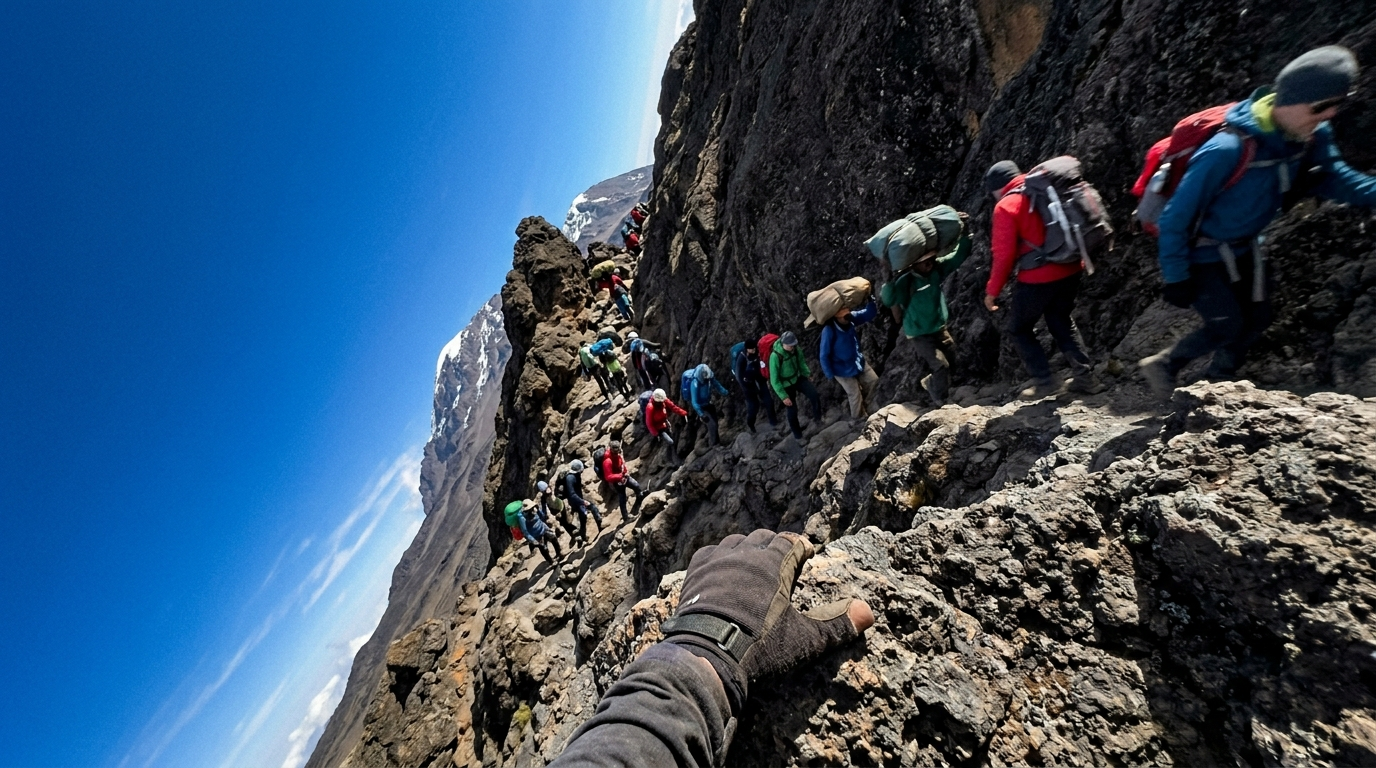
One of the most talked about features of the Lemosho Route is the Barranco Wall. This is a steep, 257 meter (843 foot) rock face you scramble up on the morning of day five.
Despite its intimidating look, it’s not a technical climb. It’s more like a fun, challenging scramble using your hands and feet. There is a clear path, and your guides will be there to assist you at every step. Many hikers find it to be one of the most exhilarating parts of the entire trek. It’s often called the “Breakfast Wall” because you tackle it right after your morning meal.
Lemosho Route Difficulty and Success Rate
The difficulty of the Lemosho Route is considered moderate to challenging. No Kilimanjaro route is easy, but Lemosho’s design makes it very achievable for anyone with good fitness and determination.
The main challenge is the altitude, not the terrain. Learn more about dealing with altitude sickness on Kilimanjaro (https://www.dumaexplorer.com/blog/dealing-with-altitude-sickness-on-mount-kilimanjaro). The trail itself is well established. The longer itinerary, however, is the route’s biggest strength. By allowing for gradual ascent and a “climb high, sleep low” profile, it gives your body the best possible chance to acclimatize.
This directly translates into an excellent summit success rate.
-
8 Day Lemosho Route: Success rates are approximately 90%.
-
7 Day Lemosho Route: Success rates are slightly lower, around 80% to 85%.
Compared to the overall Kilimanjaro average of 45% success rate for reaching the summit, Lemosho stands out as one of the most reliable paths to Uhuru Peak.
Lemosho Route: 7 Day vs 8 Day Itinerary
The main difference between a 7 day and 8 day Lemosho climb is pacing. The 8 day itinerary includes an extra day for acclimatization, usually by breaking up a longer day into two shorter ones. This gives your body a critical extra night on the mountain to adjust.
While the 7 day option is slightly cheaper and faster, the 8 day trek is almost universally recommended by high altitude experts. That extra day significantly reduces your risk of developing serious altitude sickness and increases your summit success rate from around 85% to over 90%. If your schedule and budget allow, choosing the 8 day Lemosho Route is one of the best decisions you can make to maximize your chances of a safe and enjoyable climb.
If you’re unsure which itinerary is right for you, you can speak with a Duma Explorer Kilimanjaro specialist who can provide personalized advice.
Lemosho Route vs The Northern Circuit
The Lemosho and Northern Circuit routes are often considered the two best options on Kilimanjaro. They actually share the same starting point at Londorossi Gate and follow the same path for the first couple of days.
The key difference is where they go after crossing the Shira Plateau.
-
The Lemosho Route heads south, joining the Machame route and tackling the Barranco Wall.
-
The Northern Circuit veers north, circling around the quiet, rarely seen northern slopes of the mountain.
The Northern Circuit is the longest route on Kilimanjaro (8 to 9 days) and offers the most solitude. Lemosho is slightly shorter (8 days) and offers the iconic experience of the Barranco Wall. Both have phenomenal success rates above 90%, so you can’t go wrong with either. The choice often comes down to whether you prefer more solitude (Northern Circuit) or the challenge of the Barranco Wall (Lemosho). If you’re weighing which is the best Kilimanjaro route (https://www.dumaexplorer.com/blog/best-kilimanjaro-route) for your goals, this comparison will help.
How Much Does the Lemosho Route Cost?
The cost to climb the Lemosho Route typically ranges from $2,500 to $3,500 per person. Lemosho is one of the more expensive routes because its longer duration means higher park fees and crew wages.
A large portion of the cost goes directly to Kilimanjaro National Park fees, which can be over $800 per climber for an 8 day trek. The rest covers the salaries for your guides and porters, food, equipment, and transportation.
Be cautious of budget operators offering the climb for under $2,200. Low prices can be a red flag for poor safety standards, unethical porter treatment, or low quality gear. To help you vet companies, see our guide to the best Kilimanjaro tour operators (https://www.dumaexplorer.com/blog/best-kilimanjaro-tour-operators). Investing in a reputable company is crucial for your safety and success. For transparent pricing and a breakdown of what’s included, it’s a good idea to visit Duma Explorer’s website to see their climb packages.
Lemosho Route FAQ
Q: When is the best time to climb the Lemosho Route?
A: The best times are during the two dry seasons, from June to October and from January to March. The weather is generally clear and stable, which is ideal for trekking and especially for climbing the Barranco Wall.
Q: How crowded is the Lemosho Route?
A: Lemosho is known for being very quiet for the first half of the trek. It gets busier after it merges with the Machame route around day four, but it’s still less crowded overall than routes that start on the busier southern side.
Q: Do I need special training for the Lemosho Route?
A: You don’t need any technical climbing skills, but you should have a good level of fitness. The best preparation is hiking, especially on hills, for several months before your trip. The most important thing is to be able to walk for 6 to 8 hours a day, day after day. For a deeper prep checklist and training tips, download our Kilimanjaro guidebook (https://www.dumaexplorer.com/blog/kilimanjaroguidebook).
Q: What about altitude sickness?
A: Altitude sickness is a risk on any Kilimanjaro route, but Lemosho’s excellent acclimatization schedule greatly reduces that risk. The key is to walk slowly (“pole pole”), drink plenty of water, and communicate openly with your guides if you feel any symptoms.
Q: Is the Lemosho Route safe?
A: Yes, the Lemosho Route is very safe when you climb with a reputable operator. Licensed guides are trained in high altitude medicine and carry emergency oxygen. Duma Explorer, for example, uses Wilderness First Responder certified guides and offers a 1:1 guide-to-climber ratio for small groups on summit day for maximum support. For added peace of mind, here’s what to know about helicopter evacuation on Kilimanjaro (https://www.dumaexplorer.com/blog/helicopter-evacuation-on-kilimanjaro-what-every-climber-needs-to-know).
If you have more questions about planning your climb, don’t hesitate to reach out to the experts at Duma Explorer. They have helped hundreds of climbers reach the summit and can provide all the information you need for a successful adventure. You can also read reviews from past climbers (https://www.dumaexplorer.com/blog/duma-explorer-reviews-from-past-climbers).