

Family Safari Packing List 2026: Tanzania Rules & Kids Gear
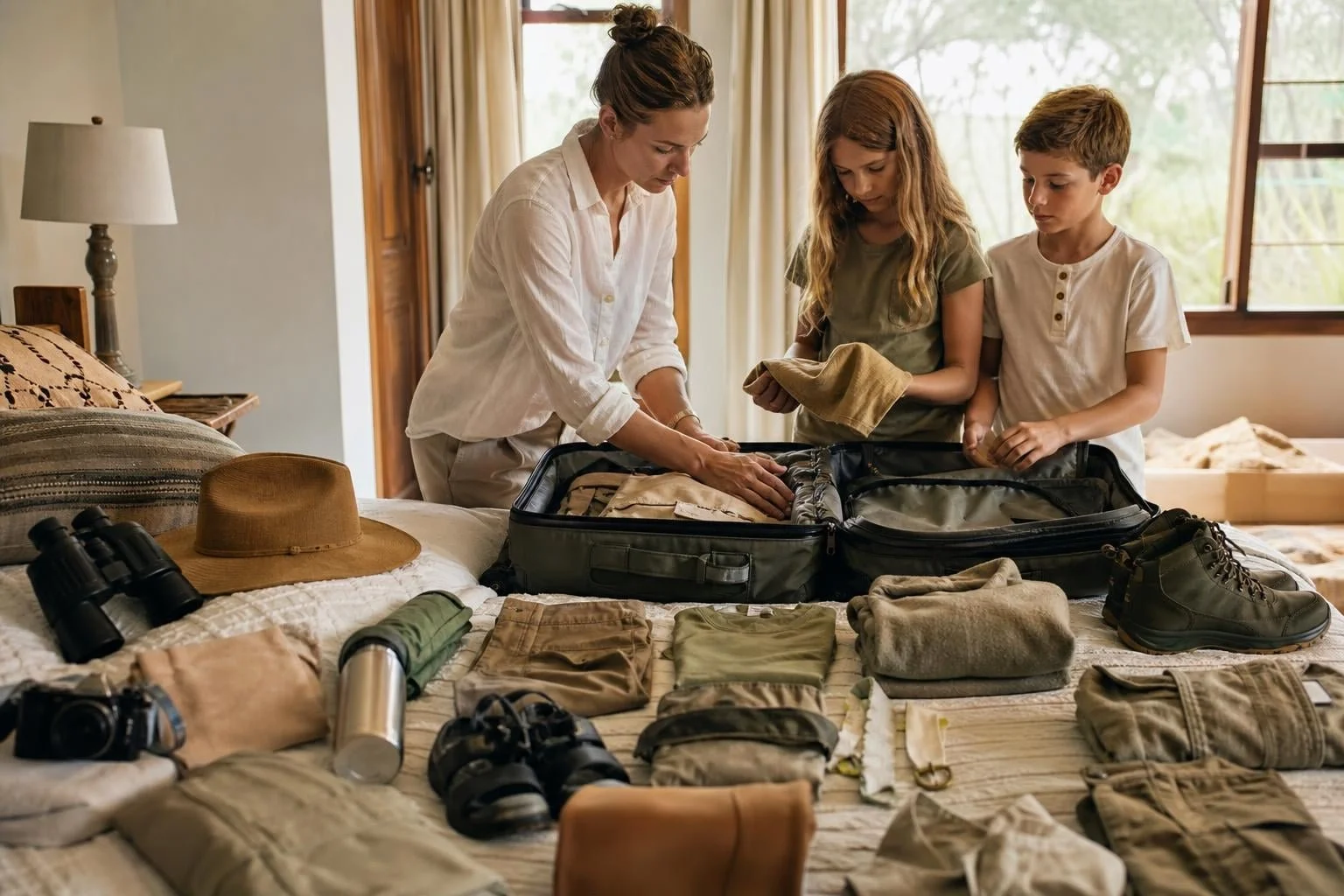
A family safari packing list for Tanzania should prioritize lightweight, quick-dry clothing, soft-sided luggage, sun and insect protection, essential medicines, and age-appropriate gear for children. The most important rule is to plan around internal-flight luggage limits, because many safari flights restrict passengers to soft-sided bags and a limited weight allowance. Packing for laundry cycles instead of the full trip length keeps the family lighter and more flexible.
A family safari packing list for Tanzania should include 3–4 days of lightweight layered clothing, a soft-sided duffel, day packs, sunscreen, insect repellent, essential medicines, binoculars, water bottles, and travel documents. Check the luggage allowance for every internal safari flight before packing, avoid camouflage clothing, and use lodge laundry to reduce the amount each family member needs to carry.
Quick takeaway: Pack for weight, weather, health, and child engagement, not for the number of days on the itinerary. For most families, the core system is soft-sided duffel + 3–4 days of quick-dry layers + sun/insect protection + medical kit + kids' activity gear + documents.
If you’re still in the early stages of planning your family trip, family safari packages covers how to structure the itinerary itself.
Family Safari Packing Checklist: What to Pack
Use this as the core family safari packing checklist before you start organizing individual bags. The exact quantity depends on the itinerary, laundry availability, season, children's ages, and the luggage allowance for each internal flight.
|
Category |
What to Pack |
Recommended Approach |
|---|---|---|
|
Luggage |
Soft-sided duffel, day pack, packing cubes |
Check each airline/operator's size and weight limits |
|
Clothing |
Quick-dry shirts, lightweight pants, convertible pants, fleece, rain shell |
Pack layers rather than bulky outfits |
|
Footwear |
Comfortable closed-toe shoes, sandals, trail shoes if needed |
Usually 1–2 pairs per person is enough |
|
Sun protection |
SPF 50+ sunscreen, hat, sunglasses |
Keep sunscreen and hats accessible during drives |
|
Insect protection |
DEET or Picaridin, long sleeves, long pants |
Follow current child-age and product instructions |
|
Health kit |
Regular medicines, thermometer, ORS, basic first aid |
Keep essential medicines in carry-on/day bags |
|
Kids' gear |
Binoculars, journal, camera, water bottle |
Give older children their own small day pack |
|
Entertainment |
Cards, small games, favorite comfort item |
Choose lightweight, screen-free options where practical |
|
Documents |
Passport, visa documentation, insurance details, vaccination records if applicable |
Keep originals and secure digital copies |
|
Zanzibar add-ons |
Swimwear, rash guards, cover-ups, water shoes, waterproof bag |
Add these only if Zanzibar is part of the itinerary |
|
Do not pack |
Camouflage clothing/accessories, unnecessary heavy items |
Check current Tanzania rules and operator restrictions before departure |
How Much Should You Pack for a Family Safari?
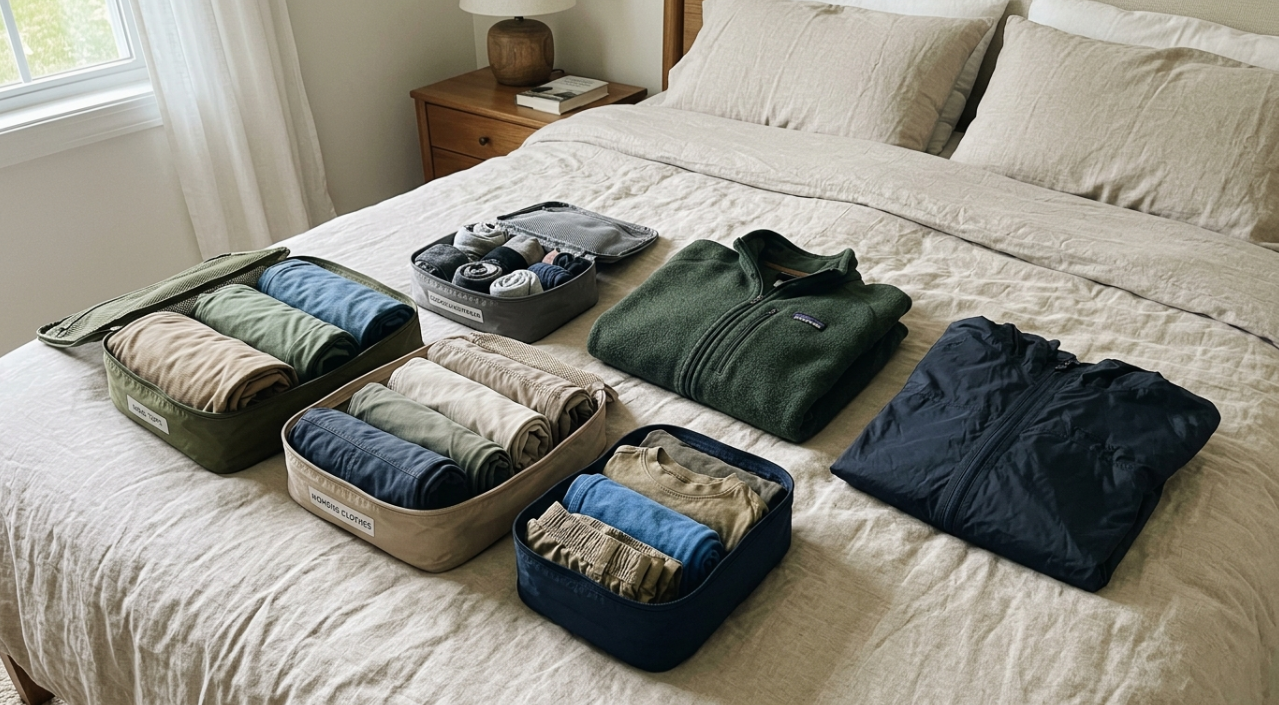
For a safari of one week or more, you usually do not need one complete outfit for every day. When laundry is available, planning around a small rotation of quick-dry clothing can reduce both luggage weight and the amount of time spent organizing clothes.
|
Item |
Per Adult |
Per Child |
Packing Tip |
|---|---|---|---|
|
Quick-dry shirts |
4–5 |
4–5 |
Choose lightweight fabrics |
|
Long-sleeve shirts |
2–3 |
2–3 |
Useful for sun and insect protection |
|
Lightweight pants |
2–3 |
2–3 |
Prioritize quick-dry fabrics |
|
Shorts |
1–2 |
1–2 |
Useful for warmer afternoons and Zanzibar |
|
Fleece/light jacket |
1 |
1 |
Especially useful for early drives and higher elevations |
|
Rain/wind shell |
1 |
1 |
Choose a lightweight packable version |
|
Underwear |
4–6 sets |
4–6 sets |
Adjust according to laundry access |
|
Socks |
4–6 pairs |
4–6 pairs |
Bring more if walking is planned |
|
Sleepwear |
1–2 sets |
1–2 sets |
Lightweight is best |
|
Swimwear |
1–2 |
1–2 |
Mainly needed if the itinerary includes Zanzibar or a lodge pool |
|
Shoes |
1–2 pairs |
1–2 pairs |
Avoid packing multiple heavy pairs |
The principle: pack for the laundry cycle, not the number of nights. Before departure, confirm the laundry policy and luggage allowance for every safari camp, lodge, and internal flight on your itinerary.
7-Day vs. 14-Day Tanzania Safari Packing
The number of safari days does not necessarily mean doubling the amount of clothing. If laundry is available, a 14-day trip can use a similar clothing rotation to a 7-day trip.
|
Item |
7-Day Safari |
14-Day Safari |
|---|---|---|
|
Quick-dry shirts |
4–5 |
5–6 |
|
Long-sleeve shirts |
2 |
2–3 |
|
Lightweight pants |
2 |
3 |
|
Shorts |
1–2 |
2 |
|
Fleece/light jacket |
1 |
1 |
|
Rain/wind shell |
1 |
1 |
|
Underwear |
5–7 sets |
6–8 sets with laundry |
|
Socks |
5–7 pairs |
6–8 pairs with laundry |
|
Main shoes |
1 pair |
1 pair |
|
Additional footwear |
1 pair if needed |
1 pair if needed |
|
Kids' activity gear |
1 compact set |
1 compact set |
|
Medical/health kit |
1 family kit |
1 family kit, with sufficient medication |
|
Laundry planning |
Optional |
Highly useful |
Before using these quantities, check your safari operator's luggage allowance and laundry policy. Internal-flight baggage limits and camp laundry arrangements can vary by itinerary.
Bags and Luggage Terms Every Family Needs to Know
Soft-Sided Duffel Bag
A soft-sided duffel is a bag with no rigid frame, hard panels, or internal structure. Dimensions typically run about 34" x 15" x 13.5". This is the only bag type accepted on Tanzania’s internal safari flights because small bush planes have narrow cargo holds with no space for rigid luggage. Hard-shell suitcases and standard wheeled bags simply won’t fit and will be refused at the airstrip.
Wheeled duffels are acceptable only if they collapse completely flat when empty. A good test: if you can fold the bag in half and sit on it, it qualifies.
Bush Plane Weight Limit (15 kg Rule)
Most internal flights between safari parks in Tanzania enforce a 15 kg (33 lb) limit per person, including hand luggage. This is checked at the airstrip, and it is strictly enforced. Practitioners on TripAdvisor forums report that overweight bags may be left behind to follow on the next flight, or may not arrive at all. For a family of four, you have a collective 60 kg to work with. That sounds manageable until you realize it includes everything: toiletries, camera gear, medications, kids’ entertainment, and clothing for potentially two weeks.
The strategy that works: weigh every bag at home before departure. Distribute heavier items (binoculars, chargers, medical kit) across family members so no single bag exceeds the limit. Children’s bags will naturally be lighter, giving you a small buffer.
For more detail on how safari vehicles and bush planes shape your logistics, that guide explains what to expect from each type of transport.
Day Pack
A small backpack (15 to 25 liters) carried during game drives. It holds sunscreen, water, snacks, binoculars, camera, a light layer, and insect repellent. Each adult needs one. Each child old enough to carry their own (roughly age five and up) should have one too. Giving kids their own day bag builds independence and lets them control access to their own essentials, which reduces the “Mom, can you get my…” cycle during drives.
One practical tip from The Safari Collection (an operator whose staff are parents themselves): make sure siblings’ day bags differ in color or design to avoid squabbles over whose is whose.
Packing Cubes
Lightweight fabric organizers that compress clothing inside a duffel. They serve two purposes on a family safari: keeping categories separated (one cube per family member, or one for tops, one for bottoms) and compressing air out of soft fabrics to save space. In a 15 kg world, packing cubes are not a luxury. They are how you fit a week’s worth of layered clothing into a collapsible bag.
Clothing Terms and Concepts
Neutral Palette and Earth Tones
Khaki, tan, olive green, sage, and brown. These colors serve multiple practical functions beyond blending with the environment. They don’t startle wildlife the way bright colors can. They don’t attract biting insects the way dark colors do. And they don’t show the fine red dust that coats everything in the Serengeti and Tarangire after a few hours on dirt roads.
A parent who traveled Kenya and Tanzania for 16 days with three kids (ages 6, 8, and 10) noted on the travel blog Travel Babbo that they “got carried away” buying all-neutral wardrobes and that most people at picnic sites were wearing regular clothes. The takeaway: you don’t need to look like a catalog model on safari. But avoiding the extremes (no bright red, no all-black, no all-white) is genuinely practical advice.
Layering System
A three-part clothing approach designed for Tanzania’s dramatic temperature swings. The Northern Circuit parks sit at varying elevations, and the difference between a 5:30 AM game drive and a midday return can be 20°C or more.
Here’s the reality, broken down by numbers:
|
Location |
Elevation |
Early Morning |
Midday |
|---|---|---|---|
|
Ngorongoro Crater Rim |
~2,300 m (7,500 ft) |
6 to 10°C (43 to 50°F) |
20 to 25°C (68 to 77°F) |
|
Serengeti Central |
~1,500 m (4,900 ft) |
15 to 18°C (59 to 64°F) |
28 to 32°C (82 to 90°F) |
|
Tarangire |
~1,100 m (3,600 ft) |
16 to 20°C (61 to 68°F) |
30°C+ (86°F+) |
Wind chill in an open-sided safari vehicle at dawn makes those Ngorongoro temperatures feel considerably colder. Kids are less tolerant of cold than adults, and a shivering six-year-old will have zero interest in looking for leopards.
The three layers:
-
Base layer: A lightweight, quick-dry long-sleeve shirt in a neutral color
-
Mid layer: A fleece or soft-shell jacket (this is the one most people underpack for kids)
-
Outer shell: A light, packable rain jacket that doubles as a windbreaker
This system lets you strip down to one layer by 10 AM without needing a full wardrobe change. Understanding when you’re visiting Tanzania affects how heavily you weight each layer.
Convertible Zip-Off Pants
Pants with zippers at the knee that convert to shorts. For kids, these are close to perfect safari clothing: one garment handles cool mornings (full length) and hot afternoons (shorts), reducing the number of items you pack. Look for quick-dry synthetic or nylon blends in neutral colors.
Quick-Dry Fabric
Synthetic materials (nylon, polyester, merino wool blends) that wick moisture and dry within hours. Cotton absorbs sweat and stays damp, which matters when you’re wearing the same shirt for a morning and afternoon drive. Quick-dry fabrics also pack lighter and take up less space in your 15 kg duffel. For kids who spill water, drop food, and sweat through active days, quick-dry is especially practical.
Closed-Toe Sandals vs. Hiking Boots
For game drives where you stay in the vehicle, comfortable closed-toe sandals (like Keens or Tevas with toe protection) work well and dry quickly. For walking safaris, crater descents, or uneven camp terrain at night, a lightweight hiking shoe or boot provides ankle support and protection from thorns. Most families don’t need heavy hiking boots unless the itinerary includes significant walking components. Pack one pair of each for adults. For kids, sturdy closed-toe sandals and a single pair of trail shoes cover everything.
Camouflage Clothing: Illegal in Tanzania
This is the single most important packing rule that families get wrong. Camouflage-pattern clothing is illegal for civilians in Tanzania. It is strictly reserved for the Tanzania People’s Defence Force, and anyone found wearing it can be fined up to $2,000 and have the clothing confiscated. The restriction covers all camouflage patterns on clothing, bags, backpacks, hats, and accessories, regardless of where they were purchased.
This matters enormously for families because kids’ camo gear is everywhere at home. Camo cargo pants, camo baseball caps from outdoor retailers, camo-print backpacks. Check every item before it goes in the bag. The same law applies in Uganda, so if your trip includes gorilla trekking, the rule follows you.
Zanzibar Dress Code
Many Tanzania family safaris include a Zanzibar beach extension. On the resort grounds and beaches, dress however you like. But in public areas (Stone Town markets, villages, mosques, restaurants outside hotels), conservative dress is legally required. Skimpy clothing outside hotels and beaches can result in fines up to $2,000. For families, this means packing light cover-ups, longer shorts or pants, and shirts that cover shoulders for any excursion into town.
This is a distinct packing consideration from the safari portion of the trip. If you’re adding Zanzibar, check the Zanzibar family travel guide for more on what to expect with kids on the island.
Sun and Insect Protection Terms
DEET (N,N-Diethyl-meta-toluamide)
The most effective and well-studied insect repellent for mosquitoes and ticks. For children, the CDC recommends concentrations of no more than 30% DEET. Children between 6 months and 12 years should use 10 to 30% concentrations. Do not use DEET on infants under two months old.
Apply to exposed skin only (not under clothing). Avoid hands and faces on small children, as they touch their mouths frequently. Budget approximately one 100 ml bottle per person per week.
Picaridin
An effective alternative to DEET that is odorless, non-greasy, and doesn’t damage synthetic fabrics or plastics (DEET can dissolve certain materials). Available in 20% concentrations, which provides equivalent protection to 20% DEET. Some parents prefer Picaridin for kids simply because it feels less chemical on the skin. Both work. Pick one and use it consistently.
Note: the CDC advises against using oil of lemon eucalyptus repellent on children under age 3.
Permethrin Treatment
Permethrin is an insecticide applied to clothing (not skin) that kills or repels mosquitoes, ticks, and tsetse flies on contact. You spray it onto evening safari clothes, socks, and shoes, let them dry for a few hours, and the treatment lasts through multiple washes. The combination of DEET or Picaridin on exposed skin plus permethrin-treated clothing dramatically reduces bite exposure. This is particularly important for children, who are often less diligent about reapplying repellent.
Treat your family’s evening wear (long pants, long-sleeve shirts, socks) before leaving home. Bring an extra bottle for mid-trip treatment if your safari exceeds ten days.
Tsetse Fly
A biting fly found in many safari areas that transmits trypanosomiasis (sleeping sickness). The practical packing consideration: tsetse flies are strongly attracted to dark colors, especially blue and black. Wearing neutral, lighter shades significantly reduces your appeal to these insects. This is one of the concrete reasons your child’s favorite navy hoodie should stay home.
Broad-Spectrum Sunscreen (SPF)
Pack SPF 50 or higher for all family members. The equatorial sun in East Africa is intense even on overcast days, and open-topped safari vehicles offer zero shade for hours. Reapply every two hours, and after sweating. For kids, mineral (zinc oxide) sunscreens are gentler and provide immediate protection without the 20-minute absorption time of chemical sunscreens.
Bed Net (LLIN: Long-Lasting Insecticidal Net)
A mosquito net treated with insecticide that hangs over the bed. The good news: virtually all safari lodges and tented camps in Tanzania provide bed nets. Many camps also provide tissues, torches, hand sanitizer, mosquito repellent, moisturizer, and bird identification books, as practitioners from Wilderness Destinations confirm. You generally do not need to bring your own net. However, if your itinerary includes budget guesthouses in transit cities (Arusha, Dar es Salaam), packing a lightweight travel net as backup is reasonable.
Health and Medical Kit Terms
Antimalarial Prophylaxis
Prescription medication taken before, during, and after travel to prevent malaria infection. For families with children, this is non-negotiable in Tanzania. Options include atovaquone-proguanil (Malarone), doxycycline (for older children), and mefloquine. Consult your pediatrician or a travel medicine clinic at least six weeks before departure. Pediatric dosing varies by weight.
The “four pillars” for malaria prevention in children are: pediatric antimalarial tablets, 20 to 30% DEET or Picaridin repellent, treated bed nets, and protective clothing from dusk to dawn. For a deeper look at malaria prevention when traveling with family, the Tanzania safari safety guide covers broader health and safety planning.
Oral Rehydration Salts (ORS)
Powder sachets mixed with clean water to replace electrolytes lost through diarrhea, vomiting, or excessive sweating. Game drives can be surprisingly dehydrating for children: hours in the sun, excitement, irregular hydration breaks. Pack flavored varieties that kids will actually drink (unflavored ORS tastes like salty water, and no child will voluntarily finish it). Bring at least four to six sachets per child.
Digital Thermometer
The single most important diagnostic tool in your family medical kit. A fever in the bush could indicate anything from dehydration to malaria onset, and knowing the exact temperature determines whether you need lodge-level care or emergency evacuation. Pack a reliable digital thermometer with fresh batteries.
Pediatric First-Aid Kit Contents
A family-specific medical kit should include:
-
Pediatric paracetamol (acetaminophen) and ibuprofen in appropriate doses
-
Oral rehydration salts (flavored)
-
Digital thermometer
-
Hydrocortisone cream for insect bites
-
Antihistamine (liquid for younger kids, tablets for older)
-
Adhesive bandages and butterfly closures
-
Antiseptic wipes
-
Blister treatment (moleskin)
-
Tweezers for splinters or thorns
-
Motion sickness medication (for bumpy roads)
-
Any prescription medications your children take regularly
Travel Insurance with Medical Evacuation
Not a suggestion. A requirement. Standard travel insurance does not always cover emergency medical evacuation from remote safari areas, which can cost $50,000 or more if a helicopter or air ambulance is needed. Verify that your policy explicitly covers evacuation from bush airstrips in Tanzania, and that it covers all family members including children. Print the policy number and emergency contact number, and keep digital copies accessible offline.
Kids’ Safari Gear Terms
This section matters more than most parents expect. The difference between a child who is captivated by safari and one who is bored by the third game drive often comes down to engagement gear.
Kid-Friendly Binoculars
Binoculars sized for small hands with 8x magnification (8x22 or 8x21 are ideal). Higher magnification causes more image shake, and children’s hands shake more than adults’. Look for rubber-coated, waterproof, lightweight models in the $15 to $25 range so you’re not anxious about drops.
One writer for Business Insider, packing for an 8-day Tanzania safari, initially considered ditching binoculars due to weight limits but removed shorts instead, and later called it the best trade she made. Binoculars “enhance the entire experience” for adults and children alike.
Safari Journal and Wildlife Checklist
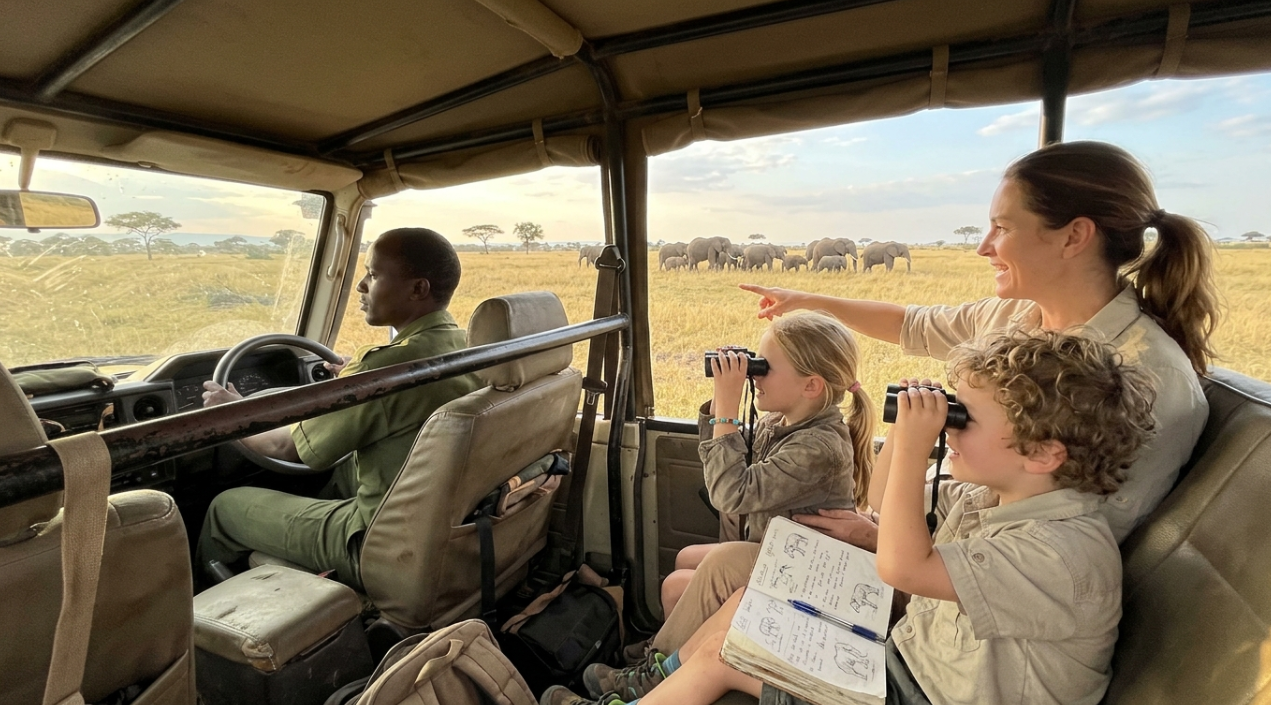
A small notebook where kids record animals spotted, with space for sketches. Many operators and lodges provide printed wildlife checklists that kids can mark off. This transforms passive watching into active observation. A child who is “looking for the next animal to check off” stays engaged far longer than one who is simply told to look out the window.
For families interested in photographing what they find, the safari photography gear guide explains camera options that work in bumpy vehicles.
Kid-Friendly Camera
An inexpensive point-and-shoot or action camera that children can operate independently. Looking through a viewfinder is a natural way to focus a child’s attention and engage their senses. The goal isn’t National Geographic shots. It’s giving the child agency in capturing their own experience. A waterproof model doubles as a Zanzibar snorkeling camera if your trip includes a beach extension.
Comfort Items
A favorite stuffed animal, a familiar snack from home, or a specific blanket. Safari lodges are wonderful, but they’re not home, and younger children (under seven, especially) may feel disoriented sleeping in a new place every two to three nights. One familiar object provides continuity. Don’t overthink this, just ask your child what they want to bring and negotiate it down to one item that fits in their day bag.
Entertainment for Downtime
A ball or frisbee takes up almost no space and transforms the hour between afternoon tea and the evening game drive. Card games like Uno, Dobble, or Top Trumps are tiny to pack and provide hours of entertainment. Avoid tablets and heavy electronics. Safari camps often have limited (or no) charging options, and screen time defeats the purpose of being in the bush.
Kids' Safari Day Pack Checklist
Children do not need to carry much. The goal is to give them a few useful items that encourage observation and independence without adding unnecessary weight.
|
Item |
Why Bring It |
|---|---|
|
Small binoculars |
Helps children actively search for wildlife |
|
Wildlife journal |
Gives them something to record or draw during drives |
|
Water bottle |
Keeps hydration within easy reach |
|
Hat |
Provides additional sun protection |
|
Sunscreen |
Useful for reapplication during long drives |
|
Light fleece or rain shell |
Handles changing temperatures |
|
Small snack |
Useful between meals or during long drives |
|
Camera |
Gives children ownership of their safari memories |
|
One small game or book |
Useful during lodge downtime |
|
Comfort item for younger children |
Helps maintain familiarity in unfamiliar surroundings |
For younger children, an adult should carry medicines, important documents, and other critical supplies rather than putting them in the child's day pack.
Documents and Admin Terms
Passport Validity
Tanzania requires passports to be valid for at least six months beyond your entry date, with at least two blank pages. Check every family member’s passport now, not three weeks before departure. Child passport renewals can take eight weeks or more during peak season.
Tanzania E-Visa
Tanzania uses an electronic visa system. Apply online before travel. Processing typically takes a few business days but can occasionally take longer. Each family member (including children) needs a separate application. The full process and current fees are covered in the Tanzania visa guide.
Yellow Fever Certificate
Required if you are arriving from or transiting through a yellow fever endemic country. If you’re flying direct from the US, UK, or Europe, you generally won’t need one for mainland Tanzania. However, Zanzibar sometimes enforces the requirement more strictly than the mainland. If your trip includes a Zanzibar extension, carry the certificate regardless. Children under one year are typically exempt from vaccination but check current WHO guidance.
Copies Strategy
Make two photocopies of every important document (passports, visas, insurance policy, vaccination certificates, flight itineraries, emergency contacts). Leave one set with a trusted person at home. Carry the second set separately from the originals. Also store digital scans in a cloud folder accessible from your phone. If a passport is lost in transit, having copies accelerates the replacement process at the nearest embassy.
What NOT to Pack on a Family Safari
|
Item |
Why to Leave It |
|---|---|
|
Camouflage anything |
Illegal in Tanzania. Fines up to $2,000. Clothes confiscated. |
|
Hard-shell suitcase |
Not accepted on bush flights. Won’t fit in vehicle cargo. |
|
Heavy jeans |
Slow to dry, absorb dust, take up excessive weight and space. |
|
Bright white clothing |
Gets filthy immediately, startles some wildlife, reflects harshly in photos. |
|
Dark blue or black clothing |
Attracts tsetse flies, absorbs heat, shows dust. |
|
Strong perfumes or fragrances |
Attract insects, especially mosquitoes. |
|
Excessive toys or electronics |
Heavy, breakable, and work against the experience. |
|
Multiple pairs of shoes |
One closed-toe sandal and one trail shoe per person is sufficient. |
Packing Differences: Safari-Only vs. Safari Plus Zanzibar
If your family trip is safari-only, the list above covers everything. But a Zanzibar extension changes the packing equation.
Additional items for Zanzibar:
-
Swimsuits and rash guards (reef protection for kids)
-
Reef-safe sunscreen
-
Lightweight cover-ups for town excursions (mandatory modesty in public areas)
-
Water shoes for coral beaches
-
A waterproof bag for boat excursions
The tricky part is weight. You’re still limited to 15 kg per person on the bush flight from safari to Zanzibar (or the flight connects through Arusha/Dar). The strategy: plan your safari wardrobe to overlap with beach basics. Quick-dry neutral shirts work at the beach. Convertible pants become shorts. Your rain shell covers a boat trip.
For families building a combined itinerary, the Tanzania safari trip itinerary and costs guide explains how routing between safari parks and Zanzibar affects timing, flights, and overall planning.
Age-Specific Packing Considerations
Toddlers (Under 4)
Toddlers need routine and comfort above all. Pack familiar sleep items, sufficient diapers and wipes (availability outside Arusha is unreliable), child-safe sunscreen, a carrier or lightweight stroller for lodge grounds, and plenty of snacks. Note: some safari camps have minimum age requirements, and a few welcome young children only if you book a private vehicle. One parent on the Fodors travel forum discovered in the fine print of their booking that “children can go on game drives at the discretion of the lodge owner.” Confirm age policies during booking, well before you start packing.
School-Age (5 to 12)
This is the sweet spot for safari. These kids are curious, observant, and old enough to sit through a three-hour game drive if properly engaged. Their packing list adds binoculars, a journal, their own camera, and their own day bag. Pack a headlamp (more fun than a flashlight for the walk from dinner to the tent), and let them pick one or two card games. Fleece layers are critical for this age group as they feel cold faster than adults.
Teenagers (13+)
Teens can carry adult-sized loads and use adult-strength insect repellent. Their packing list is essentially the adult list with one addition: a better camera, if they’re interested. Many teens become serious safari photographers when given the right tool. The real packing challenge with teenagers is convincing them that they won’t need five outfit changes per day. They won’t.
The Lodge Laundry Strategy
Here’s the fact that changes everything about family safari packing: most safari lodges and tented camps in Tanzania offer laundry service, and it’s inexpensive. Travel Babbo, who traveled Kenya and Tanzania for 16 days with three kids, reported that most lodges charged just $1 to $2 per item. Other operators note that many properties offer laundry for free.
This means a family of four does not need 14 days of clothing for a 14-day trip. Three to four days’ worth of safari clothing per person, laundered every two to three days, is sufficient. This is how you stay under the 15 kg limit without making painful trade-offs.
Plan your packing around the laundry cycle, not the trip length.
Duma Explorer designs custom family safari itineraries across Tanzania’s Northern Circuit, with lodges selected specifically for families. If you want help matching your family’s ages and interests to the right parks, camps, and routing, build your family safari with an operator who handles these details daily.
Frequently Asked Questions
How much luggage can each family member bring on a Tanzania safari?
The standard limit on internal bush flights is 15 kg (33 lbs) per person, including hand luggage. Bags must be soft-sided duffel bags with no rigid frame. For a family of four, that’s 60 kg total. Distribute weight strategically, putting heavier shared items like binoculars and medical supplies in bags that have room to spare.
Do safari lodges offer laundry service?
Yes. The vast majority of safari lodges and tented camps in Tanzania provide laundry service, typically returned the same day. Costs range from free to $1 to $2 per item. This is the key to packing light: bring three to four days of clothing and use the laundry cycle.
What colors should kids wear on safari?
Neutral earth tones: khaki, tan, olive, sage, brown. Avoid dark blue and black (they attract tsetse flies and absorb heat), bright colors (they can startle wildlife), white (shows dust immediately), and any camouflage pattern (illegal in Tanzania, with fines up to $2,000).
Is DEET safe for children?
Yes, at appropriate concentrations. The CDC recommends 10 to 30% DEET for children aged 6 months to 12 years. Do not use DEET on infants under two months. Apply to exposed skin only, avoiding hands and face on young children. Picaridin at 20% concentration is an equally effective alternative that some parents prefer.
Do I need to pack mosquito nets for a family safari?
Almost certainly not. Safari lodges and tented camps in Tanzania provide bed nets as standard. The only exception: budget transit accommodation in cities like Arusha or Dar es Salaam, where net availability can be inconsistent. A lightweight travel net as backup weighs almost nothing.
What should kids carry in their own day bag on safari?
Binoculars, a wildlife journal or checklist, their own camera, a hat, sunscreen, a water bottle, a small snack, and one layer (fleece or rain shell). Letting children manage their own essentials builds independence and keeps them engaged during game drives.
Can I bring a hard suitcase on a family safari in Tanzania?
No. Hard-shell suitcases are not accepted on bush flights and take up too much space in safari vehicle cargo areas. Pack everything in collapsible soft-sided duffel bags.
SEO Title: Family Safari Packing List: Every Term & Essential Explained
Meta Description: What to pack for a family safari in Tanzania, from luggage rules and kids’ gear to clothing terms, insect protection, and legal rules parents need to know.
Recommended URL: /blog/family-safari-packing-list-glossary