

Tanzania vs Kenya Honeymoon 2026: The Complete Guide
TL;DR
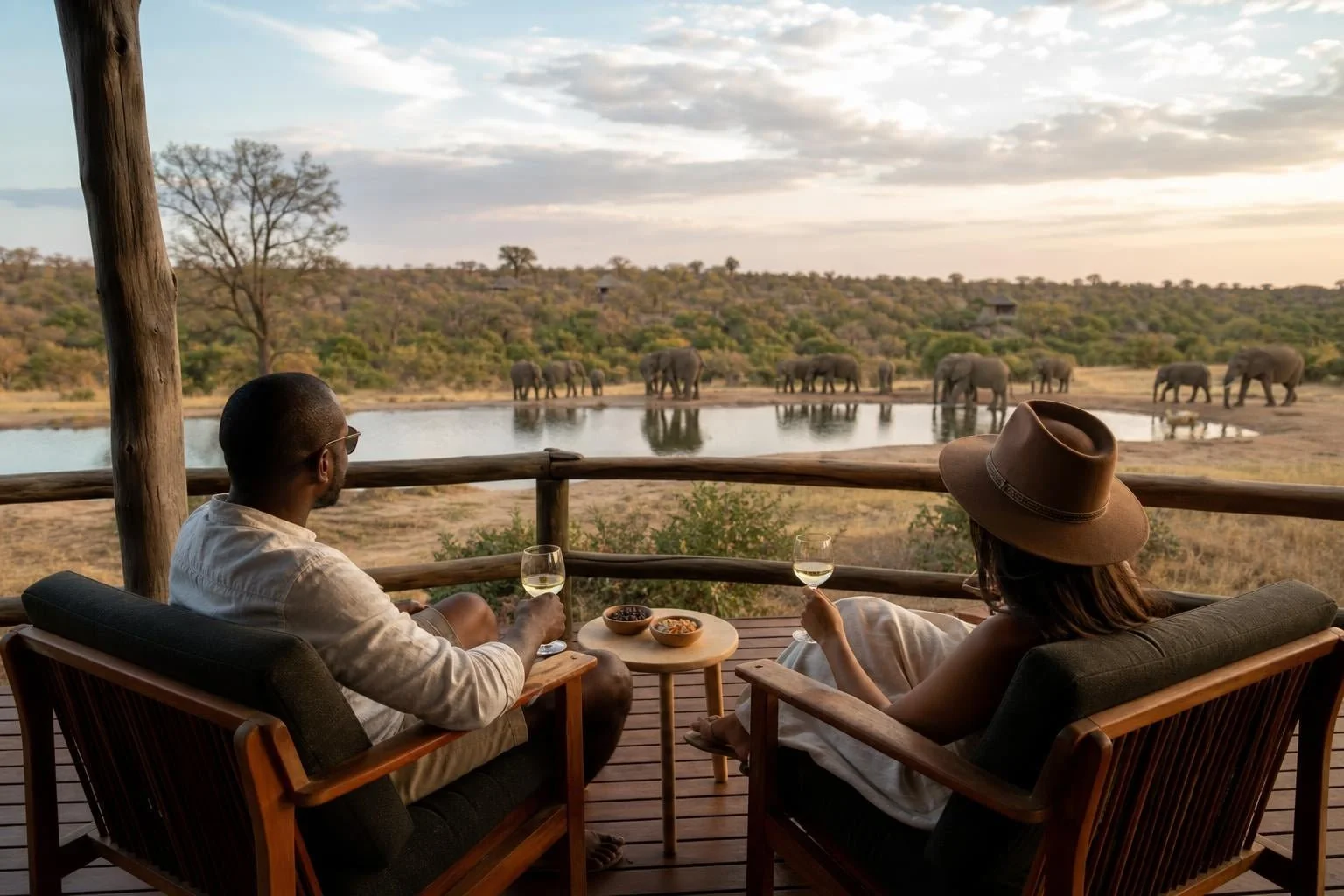
Both Tanzania and Kenya deliver outstanding safari honeymoons, but they suit different couples. Tanzania costs 10 to 25% more, offers Great Migration access for roughly 10 months of the year, and pairs seamlessly with Zanzibar for a bush-to-beach finish. Kenya is more affordable, gives couples privacy through its conservancy model (night drives, off-road tracking, walking safaris), and connects easily to Diani Beach. This glossary defines every term you’ll encounter while comparing quotes and itineraries for either country.
Quick Answer: Tanzania vs Kenya for a Honeymoon For most couples, Tanzania is the better choice if the priority is a classic safari honeymoon with the Serengeti, Ngorongoro Crater, Great Migration, and an easy safari-to-Zanzibar beach combination. Kenya is the better choice if you prioritize private conservancies, night drives, walking safaris, off-road game viewing, and a potentially lower safari budget. Choose Tanzania for scale, the Serengeti, Ngorongoro, longer Great Migration access, and Zanzibar. Choose Kenya for conservancy-based privacy, flexible game viewing, night drives, walking safaris, and Diani Beach. If you have 12 to 14 or more days and want both styles, combining Tanzania and Kenya can create a more varied honeymoon. The biggest difference is not which country has “better” wildlife. Both are exceptional. It is how you experience the safari: Tanzania emphasizes vast national-park landscapes and the Serengeti ecosystem, while Kenya's private conservancies can offer more flexible and intimate game-viewing activities.
At a Glance
|
If you want... |
Better choice |
|---|---|
|
Serengeti and Ngorongoro |
Tanzania |
|
Great Migration for the widest range of months |
Tanzania |
|
Mara River crossings |
Tanzania or Kenya |
|
Private conservancy experience |
Kenya |
|
Night drives |
Kenya |
|
Walking safari options |
Kenya |
|
Off-road wildlife viewing |
Kenya conservancies |
|
Zanzibar |
Tanzania |
|
Diani Beach |
Kenya |
|
Strong Big Five itinerary |
Both |
|
More varied safari activities |
Kenya |
|
Vast wilderness and classic safari scale |
Tanzania |
|
Simplest bush-to-beach pairing |
Tanzania |
|
Both countries in one trip |
12–14+ day honeymoon |
Bottom line: Tanzania is the stronger all-around choice for a first-time safari honeymoon centered on the Serengeti and Zanzibar. Kenya is the stronger choice for couples who value privacy, flexibility, and conservancy-based activities. The right answer ultimately depends on your travel month, budget, and preferred safari style.
Tanzania vs Kenya Honeymoon: Side-by-Side Comparison
|
Factor |
Tanzania |
Kenya |
|---|---|---|
|
Best for |
Classic safari + Zanzibar |
Conservancy safari + Diani |
|
Safari style |
Large national parks and concessions |
National reserves and private conservancies |
|
Signature destination |
Serengeti |
Masai Mara |
|
Other major highlight |
Ngorongoro Crater |
Amboseli and private conservancies |
|
Great Migration |
Longer annual window across the Serengeti |
Mara season concentrated around the mid-year period |
|
River crossings |
Mara and Grumeti areas |
Mara River |
|
Night drives |
Restricted in national parks; available in some private areas |
Widely available in conservancies |
|
Off-road driving |
Restricted in national parks; possible in some concessions/private areas |
Common in many conservancies |
|
Walking safaris |
Available in designated areas and private properties |
Widely available in conservancies |
|
Beach pairing |
Zanzibar |
Diani Beach |
|
Cultural beach experience |
Zanzibar and Stone Town |
Diani and Kenya's coast |
|
Wildlife density |
Excellent across multiple ecosystems |
Excellent, especially around the Mara |
|
Rhino-focused itinerary |
Ngorongoro and selected parks |
Strong options including Ol Pejeta and other reserves |
|
Honeymoon privacy |
Strong with private camps, concessions and private vehicles |
Particularly strong in private conservancies |
|
Typical trip style |
Safari circuit + optional Zanzibar |
Mara/conservancy + optional coast |
|
Best for first-time safari couples |
Excellent |
Excellent |
|
Best for activity variety |
Very good |
Excellent |
|
Best for wilderness scale |
Excellent |
Very good |
|
Best for bush-to-beach simplicity |
Tanzania |
Kenya |
The simplest decision: choose Tanzania if the Serengeti, Ngorongoro and Zanzibar are the experiences you picture when you imagine your honeymoon. Choose Kenya if private conservancies, night drives, walking safaris and a more flexible safari experience matter more.Safari Destinations and Structures
Which Country Is Better for Your Honeymoon?
The best destination depends less on the quality of the wildlife and more on the type of honeymoon experience you want.
Choose Tanzania If You Want...
-
The Serengeti and Ngorongoro Crater
-
A classic Northern Circuit safari
-
The widest range of Great Migration locations throughout the year
-
A strong chance to combine safari and Zanzibar
-
Large, open wilderness landscapes
-
A traditional first-time African safari experience
-
A honeymoon built around wildlife, scenery and a bush-to-beach finish
Best match: Couples who want the iconic East African safari experience and a romantic Zanzibar extension.
Choose Kenya If You Want...
-
Private conservancy stays
-
Night drives
-
Off-road game viewing where permitted
-
Walking safaris
-
Fewer vehicles around selected wildlife sightings
-
The Masai Mara
-
Amboseli and Mount Kilimanjaro views
-
A beach extension to Diani or Kenya's wider coast
Best match: Couples who want more flexibility and a greater variety of safari activities.
Choose Both If You Want...
-
The Serengeti and Masai Mara
-
Tanzania's national parks plus Kenya's conservancies
-
A more varied Great Migration experience
-
Multiple safari styles
-
At least 12 to 14 days for a comfortable itinerary
Best match: Couples with a larger budget and enough time to justify the additional flights, accommodation and border-entry requirements.
The One-Sentence Decision Tanzania is the better all-around choice for a classic safari honeymoon; Kenya is the better choice for couples who prioritize conservancy-based privacy and safari flexibility.
Northern Circuit (Tanzania)
The classic Tanzania safari route: Tarangire, Ngorongoro Crater, and the Serengeti, usually visited in that order from a base in Arusha. Nearly every Tanzania honeymoon safari follows some version of this circuit. The parks are spread across northern Tanzania, and driving distances between them range from two to six hours depending on the segment.
Why it matters for honeymoons: The Northern Circuit is the standard framework for a Tanzania honeymoon. Most operators build 7- to 14-day itineraries around these three parks, then add Zanzibar at the end. If an operator quotes you a “classic circuit” or “northern safari,” this is what they mean.
Serengeti National Park
Tanzania’s 14,750 square kilometer flagship park and the epicenter of the Great Migration. The Serengeti is roughly eight times the size of Kenya’s Masai Mara, which means more space, fewer vehicles per sighting, and a genuine feeling of wilderness. Tanzania won the World’s Leading Safari Destination 2025 at the World Travel Awards, and the Serengeti itself was named World’s Leading National Park 2025, beating South Africa’s Kruger and America’s Yellowstone.
Why it matters for honeymoons: The Serengeti’s size is both its strength and its logistical challenge. You’ll need at least three nights to explore it properly, and getting between sectors (southern plains, central Seronera, western corridor, northern Kogatende) takes time. Fly-in safaris solve this. For a deeper look at planning, see the Serengeti safari guide.
Ngorongoro Crater
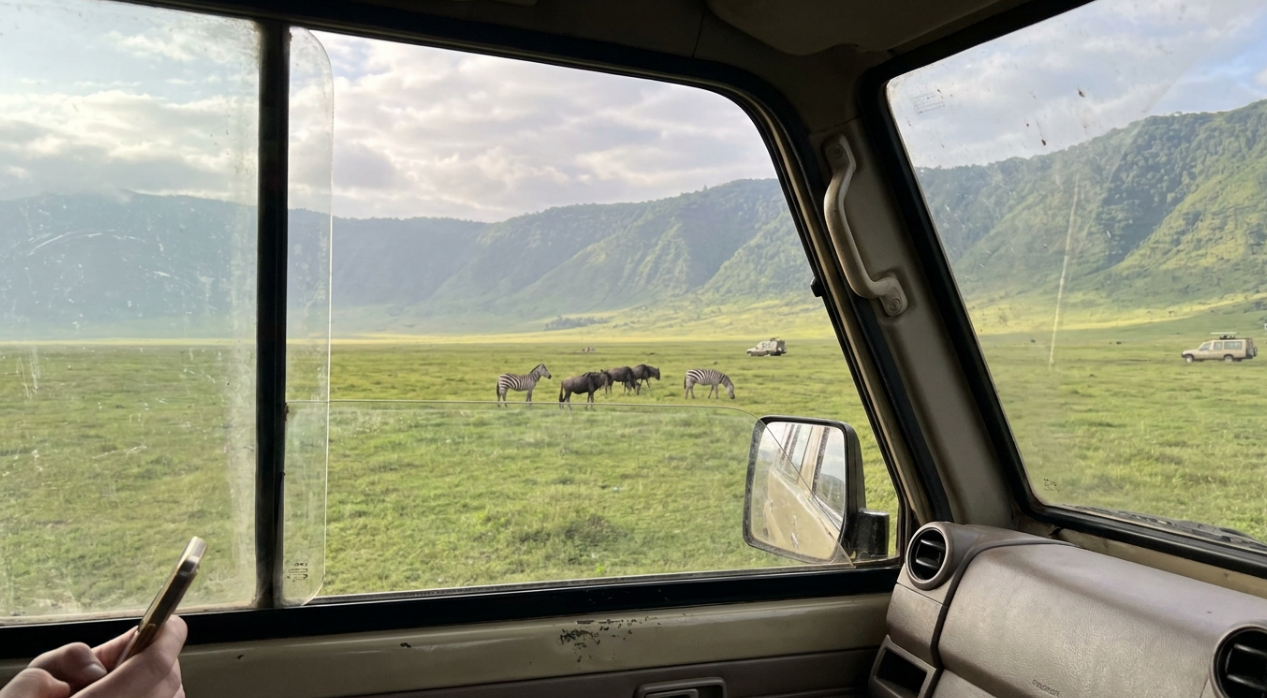
The world’s largest intact volcanic caldera, roughly 20 kilometers across and 600 meters deep. The crater floor holds a permanent population of around 25,000 large animals, including all of the Big Five. You drive down in the morning and back up by afternoon.
Why it matters for honeymoons: Ngorongoro is the one place in Tanzania where you can reasonably see all Big Five in a single game drive. That said, the crater recorded over 611,000 international visitor arrivals in 2024, so it gets crowded, especially between 10 a.m. and 2 p.m. Early-morning descents are essential. Park fees are steep: $60 per person per day plus a vehicle fee. Read the full Ngorongoro planning guide before booking.
Masai Mara National Reserve
Kenya’s premier wildlife reserve, sharing an unfenced border with the Serengeti. The Mara covers about 1,510 square kilometers, making it far smaller than its Tanzanian neighbor but with remarkably high wildlife density per square kilometer. Big cat concentrations are among the highest anywhere in Africa.
Why it matters for honeymoons: The Mara itself is a public reserve with standard national park rules. The real honeymoon value lies in the ring of private conservancies surrounding it (covered below). Practitioners on TripAdvisor forums note that inside the main reserve, you’ll share sightings with many other vehicles, while in the conservancies, “you’re on your own.” If Kenya is your pick, explore romantic destinations in Kenya for the full picture.
Amboseli National Park
A smaller Kenya park famous for two things: enormous elephant herds and clear-morning views of Mount Kilimanjaro rising behind them. Nothing in Tanzania quite replicates this photographic combination, because Kilimanjaro is best seen from the Kenyan side.
Why it matters for honeymoons: Amboseli adds a distinctive visual to a Kenya honeymoon that the Masai Mara alone can’t provide. It works well as a two-night stop before or after the Mara.
Tarangire National Park
A Tanzania park known for its ancient baobab trees and massive dry-season elephant gatherings. Park fees are lower than the Serengeti or Ngorongoro, and it’s only about two hours from Arusha, making it a natural first stop on the Northern Circuit.
Why it matters for honeymoons: Tarangire is often the least crowded park on the circuit, which makes it a good place to ease into safari rhythm as a couple. The Tarangire safari glossary covers what to expect on your first game drive there.
Tanzania vs Kenya Honeymoon by Month
Your wedding date can change which country makes more sense. The Great Migration moves continuously through the Serengeti-Mara ecosystem, while rainfall, wildlife concentration, beach conditions and seasonal pricing also change throughout the year.
|
Month |
Tanzania |
Kenya |
Better fit |
|---|---|---|---|
|
January |
Excellent for southern Serengeti and calving build-up |
Good, but Migration is generally in Tanzania |
Tanzania |
|
February |
Peak calving season in southern Serengeti |
Good wildlife, but no equivalent calving concentration |
Tanzania |
|
March |
Excellent wildlife viewing; green season begins |
Good |
Tanzania |
|
April |
Green landscapes, fewer visitors, wetter conditions |
Green season and wetter conditions |
Depends on budget |
|
May |
Green season; Migration moves toward western Serengeti |
Green season; quieter safari period |
Tanzania |
|
June |
Strong safari month; Migration moves northward |
Strong safari conditions begin |
Tanzania |
|
July |
Excellent Migration season; Mara ecosystem becomes important |
Excellent Masai Mara season |
Both |
|
August |
Excellent game viewing and potential river crossings |
Excellent Mara season and river-crossing opportunities |
Both |
|
September |
Excellent Migration and dry-season wildlife viewing |
Excellent Mara and conservancy conditions |
Both |
|
October |
Strong safari conditions; Migration begins moving south |
End of peak Mara period |
Tanzania |
|
November |
Short rains and lower-season opportunities |
Short rains and lower-season opportunities |
Depends on budget |
|
December |
Green landscapes and strong southern Serengeti build-up |
Good wildlife and festive-season demand |
Tanzania |
Best Months by Honeymoon Priority
Best for calving: February, Tanzania
Best for classic dry-season safari: June through October, both countries
Best for Mara River crossings: Typically July through October, with timing varying from year to year
Best for lower-season value: April, May and November, subject to rainfall and individual lodge conditions
Best for Zanzibar after safari: Tanzania works particularly well because the Serengeti-to-Zanzibar routing can be built directly into the itinerary.
Important: Migration timing is driven by rainfall and grass conditions rather than a fixed calendar. Treat monthly Migration patterns as planning guidelines rather than guaranteed dates.
How Safaris Work
Understanding how game viewing is structured in each country is the single biggest factor in choosing between a Tanzania vs Kenya honeymoon. The rules are different, and they shape every aspect of the experience.
National Park
A government-managed protected area with formal regulations. In Tanzania’s national parks (Serengeti, Tarangire, Lake Manyara), the rules are straightforward but strict: no off-road driving, no night drives, no walking except in designated zones, and game drives must stay on established tracks. Gates open at 6 a.m. and close at 6 p.m.
Why it matters for honeymoons: Tanzania’s national park model means structured game drives. You won’t veer off-road to follow a leopard into a thicket, and you’ll be back at camp by sunset. The tradeoff is access to enormous, wild ecosystems that feel genuinely untouched.
Private Conservancy
Community-owned or privately managed land adjacent to a national reserve, with its own rules and capped visitor numbers. Kenya’s Masai Mara is surrounded by conservancies like Mara North, Naboisho, and Ol Kinyei, where Maasai landowners and camp operators set the terms. Guides can drive off-road to follow wildlife, conduct night drives with spotlights, and lead walking safaris with armed rangers.
Why it matters for honeymoons: This is Kenya’s biggest honeymoon advantage. Guest numbers are capped, so a leopard in a tree might be shared with one other vehicle rather than fifteen. Night drives reveal nocturnal species (aardvark, bush babies, genets) that Tanzania park visitors never see. Walking safaris add an intimacy that vehicle-based drives simply can’t match. For couples who want flexibility, privacy, and exclusivity, the conservancy model is hard to beat.
Concession
Tanzania’s answer to private conservancies, though the model works differently. A concession is a designated area within or adjacent to a national park where a single lodge or camp holds exclusive operating rights. Concessions exist in several Serengeti sectors and offer more privacy than the busy central Seronera area.
Why it matters for honeymoons: Some Tanzania concessions allow limited off-road driving and walking safaris, activities normally prohibited in national parks. If privacy matters and you’re set on Tanzania, look for lodges operating in Serengeti concession areas. They cost more but deliver a more exclusive experience.
Fly-In Safari
A safari where you travel between camps or parks by small bush plane rather than by road. In Tanzania, flights connect Arusha to the Serengeti’s various airstrips (Seronera, Kogatende, Ndutu) and then onward to Zanzibar. In Kenya, flights connect Nairobi’s Wilson Airport to the Mara’s conservancy airstrips.
Why it matters for honeymoons: Fly-in safaris eliminate six-to-eight-hour road transfers and replace them with 60- to 90-minute scenic flights. For couples with limited time or low interest in long drives, flying in is worth the premium. It also enables the Serengeti-to-Zanzibar route that makes Tanzania’s bush-to-beach honeymoon so seamless.
Private Game Drive
A dedicated safari vehicle and guide for your party only. Rather than sharing a vehicle with four to six other travelers on a set schedule, you control the pace, the timing, and the stops.
Why it matters for honeymoons: A private game drive means you can linger at a sighting, take the scenic route, leave early, return late, or stop for a champagne toast without negotiating with strangers. Most premium Tanzania honeymoon safaris include private vehicles as standard. For those weighing private versus shared options, this comparison guide breaks down the cost difference.
Mobile Tented Camp
A camp that physically relocates to follow the Great Migration herds. These are not permanent structures. Tents are set up, taken down, and moved to new locations several times a year, tracking the wildebeest from the southern Serengeti plains to the northern river crossings and back.
Why it matters for honeymoons: Staying at a mobile camp puts you at the heart of the Migration without committing to one location and hoping the herds show up. It’s one of the most immersive safari experiences available, and for couples timing their honeymoon around the Migration, it’s a strong option.
Wildlife Events
Great Migration
The year-round, roughly clockwise movement of approximately 1.5 million wildebeest plus hundreds of thousands of zebras and gazelles across the Serengeti-Mara ecosystem. This is not a single event you can circle on a calendar. The animals are always moving, following rain and fresh grass.
The Migration spends about 10 months in Tanzania and roughly three to four months in Kenya’s Masai Mara (July through October). That difference matters enormously for honeymoon timing. Couples marrying in January, February, March, April, May, or June can catch the Migration in Tanzania. Couples marrying in August or September will find it in both countries, with the most dramatic crossings happening at the Kenya border area. The Great Migration guide maps the full cycle.
Calving Season
The period from roughly January through March when the wildebeest herds concentrate on the short-grass plains of the southern Serengeti and Ndutu area to give birth. An estimated 400,000 to 500,000 calves are born in a span of weeks. Predators follow: lions, cheetahs, hyenas, and wild dogs patrol the plains, creating what many safari guides consider the most dramatic wildlife viewing of the year.
Why it matters for honeymoons: February is peak calving, and it’s a superb time for a Tanzania honeymoon. Green landscapes, newborn animals, intense predator activity, and significantly fewer tourists than the July-to-October peak season. Kenya has no equivalent event at this time, because the herds are in Tanzania.
River Crossing
The marquee moment of the Migration: herds plunging into crocodile-filled rivers. There are two key crossing rivers. The Grumeti, in Tanzania’s western Serengeti, sees crossings from roughly May through June. The Mara River, which straddles the Tanzania-Kenya border, sees the most frequent and dramatic crossings from July through October.
Why it matters for honeymoons: The Mara River crossings in August and September are the iconic Migration footage you’ve seen in documentaries. They happen on both the Tanzanian and Kenyan sides of the river. The Grumeti crossings in May and June are less famous, less crowded, and exclusively Tanzanian. One Duma Explorer reviewer described their Mara River crossing experience as the “most memorable experience of my life.”
Big Five
Lion, leopard, elephant, Cape buffalo, and rhino. Both Tanzania and Kenya deliver four of these five reliably. The difference is rhino. Kenya offers more predictable rhino sightings through places like Ol Pejeta Conservancy, Lake Nakuru, or even Nairobi National Park. Tanzania’s primary rhino opportunity on the standard circuit is Ngorongoro Crater, where sightings are possible but can be distant and are not guaranteed.
Why it matters for honeymoons: If completing the Big Five checklist matters to you as a couple, Kenya has a meaningful edge on the rhino front. It’s not that Tanzania lacks rhinos entirely, but Kenya’s routing makes encounters more likely.
Beach Extensions
The phrase “bush-to-beach” describes combined safari and beach honeymoons, and it’s the dominant structure for East African honeymoon travel. Here are the key beach terms and how they compare.
Bush-to-Beach
A honeymoon itinerary that pairs a safari (the “bush”) with a beach stay. The two classic routes are Tanzania’s Serengeti to Zanzibar and Kenya’s Masai Mara to Diani Beach. In both cases, you fly rather than drive, making the transition smooth.
Zanzibar
Tanzania’s Indian Ocean archipelago, roughly 35 kilometers off the mainland coast. Zanzibar is a semi-autonomous part of Tanzania with Omani, Indian, and African cultural influences layered across centuries. Direct flights from Serengeti airstrips to Zanzibar take just two to three hours, no backtracking to Arusha required. This is the most popular honeymoon route in East Africa.
Why it matters for honeymoons: Zanzibar offers far more than a beach. Stone Town, spice tours, dhow sailing, snorkeling, and a food scene influenced by three continents make it a honeymoon destination in its own right. Multiple Duma Explorer reviewers specifically praise the Zanzibar extension as a highlight. If your idea of romance includes cultural immersion alongside turquoise water, Zanzibar wins.
Stone Town
Zanzibar’s UNESCO-listed historic quarter. Narrow alleyways, carved wooden doors, spice markets, and rooftop restaurants overlooking the harbor. The architecture reflects centuries of Omani sultanate rule, Indian merchant trade, and Swahili culture.
Why it matters for honeymoons: Stone Town adds a day or two of non-beach activity to a Zanzibar stay. Wandering the markets, sampling street food at the Forodhani Gardens night market, and visiting the old fort are distinctly different from anything you’ll experience on safari.
Diani Beach
Kenya’s 17-kilometer stretch of white sand south of Mombasa. You fly from the Mara to Ukunda Airstrip, usually via Nairobi or on seasonal direct charters. Total travel time: three to four hours.
Why it matters for honeymoons: Diani is quieter, less expensive, and has more consistent tides than many Zanzibar beaches. You get private villas, infinity pools, and direct beach access without the ultra-premium markup. If your idea of romance is intimate and secluded, Diani is the better fit. The tradeoff is that it lacks Zanzibar’s cultural depth and name recognition.
Swahili Coast
Tanzania’s mainland coastline, including the towns of Pangani and the beachfront wilderness of Saadani National Park. This is a far less known honeymoon alternative to Zanzibar.
Why it matters for honeymoons: Pangani offers empty beaches, historic ruins, and virtually no other tourists. Saadani is the only national park in East Africa where the bush meets the beach, meaning you can game drive in the morning and swim in the Indian Ocean in the afternoon. For couples who want something genuinely off the beaten path, the Pangani and Saadani guide is worth reading.
Costs and Logistics
PPPD (Per Person Per Day)
The standard unit for comparing safari quotes across operators and countries. When an operator quotes $600 PPPD, that means $600 per person per day, typically including accommodation, meals, game drives, and sometimes park fees. This is the single most important concept for comparing proposals, because operators bundle different things into their rates.
Why it matters for honeymoons: Always ask what’s included in the PPPD rate. Two quotes at $500 PPPD can represent wildly different value if one includes park fees, drinks, and laundry while the other doesn’t.
Park Fees
Entry charges paid to national park or reserve authorities, varying by park, country, and sometimes by season. This is where the Tanzania vs Kenya honeymoon cost gap starts to widen.
Tanzania’s Serengeti charges $50 to $60 per person per day. Ngorongoro adds $60 per person per day plus a vehicle fee. Over a five-day Northern Circuit safari, park fees alone can reach $300 to $400 per person.
Kenya’s Masai Mara charges $100 to $200 per person per day depending on season (peak rates apply during the Migration months). Samburu National Reserve is around $85. Private conservancies often have their own fee structures, sometimes lower than the main reserve.
For a full breakdown of how fees stack up, the Tanzania safari cost guide covers it in detail.
eVisa (Tanzania)
Tanzania’s electronic visa, required for citizens of most countries including the United States, United Kingdom, Canada, Australia, Germany, and France. Cost: $50. You’ll need a passport valid for at least six months, a blank passport page, a return ticket, and proof of accommodation. Apply through the Tanzania Immigration Services portal before departure.
eTA (Kenya)
Kenya’s electronic travel authorization, which replaced the old visa system in January 2024. Cost: approximately $30. Apply through Kenya’s eTA portal. You cannot cover both countries with a single regional visa, so couples combining Tanzania and Kenya in one trip need separate documents for each.
All-Inclusive Rate
A lodge or camp price that bundles accommodation, all meals, drinks (sometimes including alcohol), game drives, and occasionally park fees into a single nightly rate. Common at premium and luxury properties in both countries.
Why it matters for honeymoons: All-inclusive rates simplify budgeting. You pay once and stop worrying about extras. But “all-inclusive” doesn’t always mean the same thing. Some properties exclude premium spirits, spa treatments, or balloon safaris. Always request the inclusions list.
Green Season (Shoulder Season)
April through May and November. These months see lower prices, fewer crowds, and lush green scenery. Rain is possible but rarely continuous, often falling in late-afternoon showers.
Why it matters for honeymoons: Green season is a viable honeymoon window for budget-conscious couples who don’t mind occasional rain. Tanzania in November offers the short rains and the start of the Migration’s return south. Rates at premium lodges can drop 20 to 40% from peak-season pricing.
Dry Season
June through October. This is peak safari season in both countries: wildlife concentrates around water sources, vegetation thins out (making animals easier to spot), and rain is rare. Prices are highest. Availability is tightest.
Why it matters for honeymoons: If your wedding falls between June and October, you’re competing with peak-season demand. Book at least six to nine months ahead for popular lodges. For help matching your dates to the best game viewing, the seasonal timing guide is a useful reference.
Couples who are comparing quotes and finding the numbers confusing can ask Duma Explorer to break down exactly what’s included in a Tanzania or Kenya honeymoon itinerary, and where the money actually goes.
Romantic Add-Ons and Experiences
Hot Air Balloon Safari
An early-morning flight over the Serengeti or Masai Mara, launching at dawn and floating for about an hour over the plains while wildlife moves below. Expect to pay $500 to $600 per person. The flight typically ends with a champagne breakfast in the bush.
Why it matters for honeymoons: This is consistently cited as a top honeymoon moment by past travelers. Multiple Duma Explorer reviewers mention the balloon safari as a trip highlight. It’s a splurge, but for many couples, it defines the trip.
Sundowner
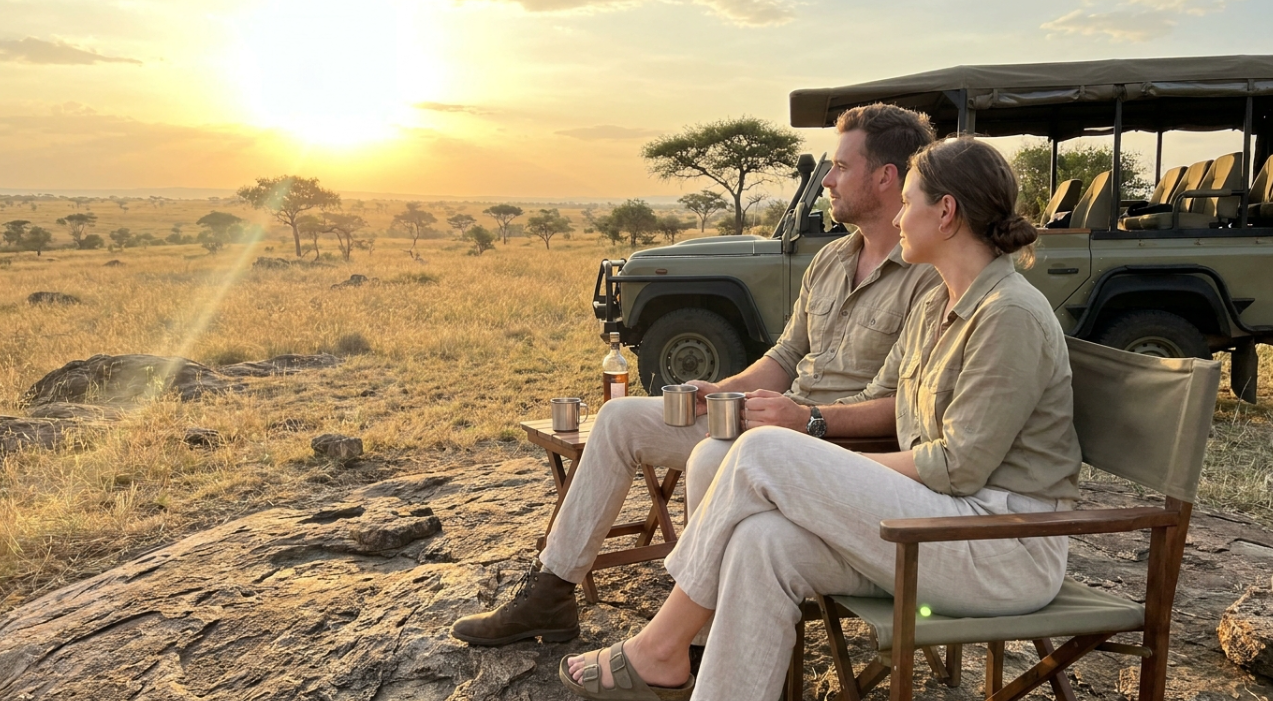
Drinks and appetizers served at a scenic bush viewpoint at sunset. Your guide drives you to a kopje, riverbank, or elevated clearing, sets up a bush bar, and you watch the sun go down with a gin and tonic in hand. Many camps include sundowners as part of the standard experience.
Why it matters for honeymoons: It’s the most naturally romantic moment on a safari day, and it costs nothing extra at most lodges.
Night Drive
An after-dark game drive using a spotlight to find nocturnal species. Available in Kenya’s conservancies and some Tanzania concessions. Reveals animals you’ll never see during daytime drives: aardvarks, bush babies, genets, civets, porcupines, and hunting leopards.
Why it matters for honeymoons: Night drives are one of the clearest differentiators between a Kenya and Tanzania honeymoon. TripAdvisor forum users put it bluntly: “In Tanzania, there is no off-road safari and no sunrise/sunset safaris. In the conservancies, there are.” If after-dark wildlife viewing excites you, Kenya’s conservancies deliver.
Walking Safari
A guided bush walk with an armed ranger, on foot rather than in a vehicle. You move slowly, learn to read tracks, identify dung, listen for bird alarm calls, and experience the bush at ground level. Available in Kenya conservancies and more restricted in Tanzania national parks (typically limited to designated walking zones and specific parks).
Why it matters for honeymoons: Walking together through the African bush with a guide is an entirely different kind of intimacy than sitting in a vehicle. It’s quieter, slower, and more connected to the environment. Couples who want this experience should factor it heavily into the Tanzania vs Kenya honeymoon decision.
Frequently Asked Questions
Is Tanzania or Kenya more expensive for a honeymoon safari?
Tanzania is generally 10 to 25% more expensive than a comparable Kenya safari. The gap comes primarily from higher park fees (Serengeti and Ngorongoro both charge $50 to $60 per person per day) and longer transfer distances between parks. A mid-range 7-day Tanzania safari runs $2,500 to $4,900 per person in 2026. The same duration in Kenya runs $2,000 to $3,500 per person.
Can you see the Great Migration from both countries?
Yes, but the timing is different. The Migration spends about 10 months in Tanzania, moving through various Serengeti sectors. It crosses into Kenya’s Masai Mara from roughly July through October. If you want the widest window of opportunity, Tanzania gives you more months to work with.
Is Zanzibar or Diani Beach better for a honeymoon?
It depends on what romance means to you. Zanzibar offers cultural richness (Stone Town, spice tours, UNESCO heritage), dramatic beach variety, and name recognition. Diani offers quieter seclusion, more consistent tides, lower prices, and no visa complications if you’re already in Kenya. First-time safari travelers on Reddit report choosing Zanzibar for the “full experience” and Diani for simplicity.
How many days do you need for a safari honeymoon in East Africa?
A minimum of 7 days for safari only, or 10 to 14 days for a bush-to-beach combination. A typical Tanzania honeymoon runs 5 days on the Northern Circuit plus 3 to 5 days in Zanzibar. A typical Kenya honeymoon runs 4 to 5 days in the Masai Mara region plus 3 to 4 days at Diani. Shorter trips are possible but feel rushed.
Do you need separate visas for Tanzania and Kenya?
Yes. There is no single visa covering both countries. Tanzania requires a $50 eVisa, and Kenya requires a ~$30 eTA. Both are applied for online before departure. If you’re combining both countries in one honeymoon, budget time and paperwork for both, and check the Tanzania visa guide for current requirements.
When is the best month for a honeymoon safari in Tanzania?
February (calving season on the southern Serengeti plains) and June through October (dry season, Migration in the western corridor and northern Serengeti) are the strongest months. February offers green landscapes, fewer tourists, and intense predator-prey drama. July through September offers classic dry-season game viewing and river crossings. November can work as a budget-friendly shoulder month.
Can you combine Tanzania and Kenya in one honeymoon trip?
Absolutely, though you’ll need at least 12 days to do it well, separate entry documents for each country, and either a cross-border road transfer or a connecting flight through Nairobi or a regional hub. A combined trip typically costs $350 to $1,000 or more per person per day. The logistics are manageable with the right operator, and the contrast between Tanzania’s vast national parks and Kenya’s intimate conservancies makes the combination genuinely rewarding.
Ready to start planning? Whether you’re choosing Tanzania, Kenya, or both, the next step is matching your wedding date, budget, and priorities to a specific route.
Plan My Safari Honeymoon