

Honeymoon Itinerary Tanzania: Planning Glossary (2026)
TL;DR
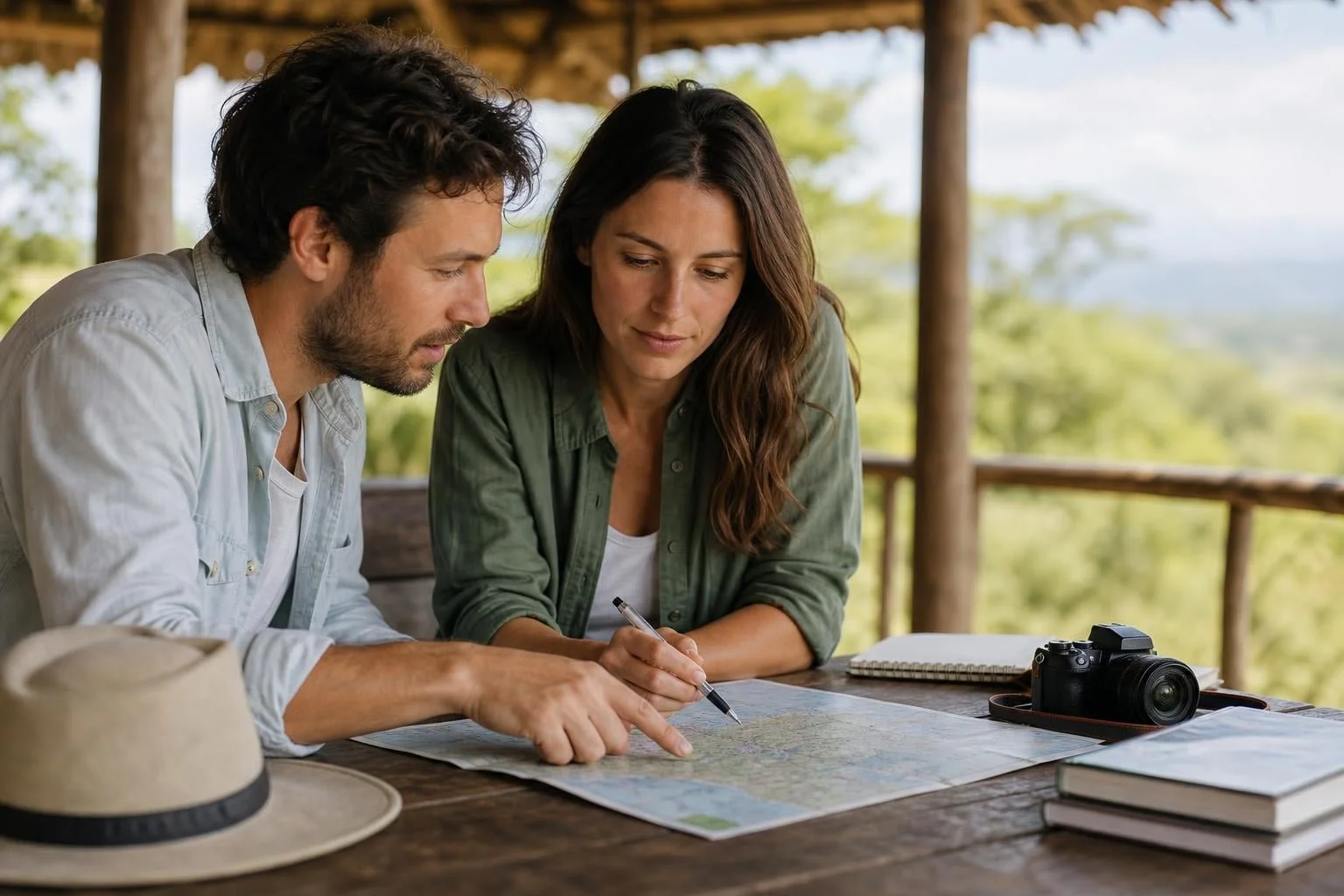
A typical honeymoon itinerary in Tanzania combines 4 to 7 nights of private safari across the Northern Circuit parks (Serengeti, Ngorongoro, Tarangire) with 3 to 6 nights on the beach, usually Zanzibar. Total trip length runs 10 to 14 days. Budget anywhere from $3,500 to $15,000+ per person depending on accommodation level, season, and fly-in logistics. This glossary defines every term you will encounter while planning.
When you start researching a honeymoon itinerary for Tanzania, the proposals and blog posts come loaded with unfamiliar vocabulary. Northern Circuit, concession fees, calving season, fly-in safari, per person sharing. These terms shape what you will experience and what you will pay, but almost nobody defines them in a honeymoon context.
This glossary exists to fix that. It covers safari destinations and routing, beach options, wildlife timing, romantic add-ons, accommodation types, cost components, and booking logistics. The goal is simple: after reading this, you should be able to pick up any operator proposal or safari and Zanzibar honeymoon guide and understand exactly what is being offered, what is missing, and whether it fits your priorities.
Quick Answer: What Does a Tanzania Honeymoon Itinerary Look Like? A typical Tanzania honeymoon itinerary lasts 10 to 14 days and combines 4 to 7 nights of private safari with 3 to 6 nights on the coast, most commonly Zanzibar. First-time couples often combine Tarangire, Ngorongoro and the Serengeti, then fly to Zanzibar for several beach days. The ideal route depends on your travel month, budget, wildlife priorities and preferred level of privacy.
Quick-Reference Table: Core Honeymoon Itinerary Terms
|
Term |
What It Is |
Why Honeymooners Care |
|---|---|---|
|
Northern Circuit |
Tarangire, Ngorongoro, Serengeti park loop |
The default safari routing for first-timers, cheaper and more accessible |
|
Southern Circuit |
Nyerere (Selous), Ruaha |
Remote, intimate, fewer tourists, higher cost |
|
Fly-in safari |
Bush plane transfers between parks |
Saves full days of driving, connects safari to Zanzibar fast |
|
Great Migration |
Year-round movement of 1.5M+ wildebeest |
Determines which part of the Serengeti to visit and when |
|
Calving season |
Jan-Feb in southern Serengeti/Ndutu |
Dramatic predator action, fewer crowds than July-Oct |
|
Park fees |
$70-$83/day per person at major parks |
Often the biggest hidden cost in budget proposals |
|
Private game drive |
Vehicle, guide, and schedule are yours alone |
The difference between a honeymoon and a group tour |
|
Per person sharing (pps) |
Price assumes two people sharing a room |
Standard pricing format; solo travelers pay a supplement |
|
Concession fee |
Nightly fee for staying inside a park |
$71/night/person in the Serengeti (2026) |
|
Tented camp |
Permanent or semi-permanent luxury tents |
The signature Tanzania honeymoon accommodation |
Tanzania Honeymoon Itinerary at a Glance
The easiest way to plan a Tanzania honeymoon is to divide the trip into two parts: safari first, followed by several days on the coast. Safari provides the wildlife and adventure; Zanzibar, Pemba or the mainland coast provides the slower pace that makes the second half of the honeymoon feel like a true break.
10-Day Tanzania Honeymoon Itinerary
|
Day |
Location |
Typical Experience |
|---|---|---|
|
1 |
Arusha |
Arrival, rest and honeymoon welcome |
|
2 |
Tarangire |
Game drive and elephant viewing |
|
3 |
Ngorongoro |
Transfer and crater-area stay |
|
4 |
Ngorongoro |
Crater game drive |
|
5 |
Serengeti |
Transfer and afternoon game drive |
|
6 |
Serengeti |
Full-day private game drive |
|
7 |
Serengeti |
Morning game drive and fly to Zanzibar |
|
8 |
Zanzibar |
Beach and relaxation |
|
9 |
Zanzibar |
Private excursion, snorkeling or dhow cruise |
|
10 |
Zanzibar |
Final beach day and departure |
14-Day Tanzania Honeymoon Itinerary
|
Days |
Location |
Typical Stay |
|---|---|---|
|
1 |
Arusha |
1 night |
|
2–3 |
Tarangire / Ngorongoro |
2 nights |
|
4–7 |
Serengeti |
4 nights |
|
8–12 |
Zanzibar |
5 nights |
|
13 |
Stone Town or Zanzibar |
1 night |
|
14 |
Departure |
Travel home |
For couples who have more time, the extra days are usually better spent adding depth rather than adding destinations. Four nights in the Serengeti and five nights in Zanzibar will generally feel less rushed than trying to add several additional hotels or islands.
Best Structure by Trip Length
|
Trip Length |
Recommended Structure |
Best For |
|---|---|---|
|
7 days |
3–4 nights safari + 2–3 nights beach |
Short honeymoon |
|
10 days |
4–5 nights safari + 4–5 nights Zanzibar |
First-time couples |
|
12 days |
5–6 nights safari + 5–6 nights beach |
More relaxed honeymoon |
|
14 days |
6–7 nights safari + 6–7 nights beach |
Full Tanzania honeymoon |
|
16+ days |
Safari + Zanzibar + optional extension |
Couples adding gorillas, Kilimanjaro or another destination |
Best Tanzania Honeymoon Itinerary by Month
Your travel month should influence where you spend your safari nights. Tanzania's wildlife moves seasonally, while Zanzibar remains a strong beach option for much of the year.
|
Travel Period |
Safari Focus |
Beach Focus |
Why Couples Choose It |
|---|---|---|---|
|
January–February |
Southern Serengeti / Ndutu |
Zanzibar |
Calving season and warm beach weather |
|
March |
Southern Serengeti |
Zanzibar |
Calving can continue with fewer peak-season crowds |
|
April–May |
Flexible / selected parks |
Zanzibar |
Lowest-season pricing, but heavier rains can affect logistics |
|
June |
Central/Western Serengeti |
Zanzibar |
Dry-season safari begins and crowds are often lower than later summer |
|
July–September |
Northern Serengeti |
Zanzibar |
Strong period for migration activity and dry conditions |
|
October |
Northern/Central Serengeti |
Zanzibar |
Wildlife viewing with the possibility of fewer crowds later in the month |
|
November–December |
Central/Southern Serengeti |
Zanzibar |
Green landscapes, seasonal movement and potentially lower rates |
Which Safari Area Should You Choose?
If seeing the Great Migration is the priority, choose your Serengeti region based on the month rather than simply booking a camp because it is called “Serengeti.”
If privacy is the priority, consider the Southern Circuit or a private concession.
If this is your first Tanzania safari, the Northern Circuit is usually the simplest way to combine Tarangire, Ngorongoro and Serengeti in one trip.
Always confirm current wildlife movements and road or weather conditions with your safari operator before finalizing the route.
What Should You Prioritize on a Tanzania Honeymoon?
A honeymoon itinerary should not try to maximize the number of destinations. Prioritize experiences that justify the travel time between them.
Prioritize
-
A private safari vehicle and guide
-
At least two nights in the Serengeti
-
A well-positioned Serengeti camp based on your travel month
-
A relaxed Zanzibar stay after safari
-
One or two special experiences such as a balloon flight, private bush dinner or dhow cruise
-
Direct or efficient domestic flights when they save substantial driving time
-
Accommodation that makes the honeymoon feel special, rather than simply choosing the highest room category
Consider Skipping
-
Three or four different hotels during a short Zanzibar stay
-
Spending a full day driving when a practical bush flight is available
-
Adding every famous park to a 7- or 8-day trip
-
Choosing a Serengeti camp without checking its location for your travel month
-
Paying for luxury upgrades that you will barely use because you are spending most of the day on safari
The best honeymoon itinerary is usually not the one with the most stops. It is the one that gives you enough time to enjoy each place without constantly packing and transferring.
How Many Nights Should You Spend on Safari vs. Zanzibar?
There is no single perfect split, but a useful starting point is to give safari and beach time roughly equal importance on a 10- to 14-day honeymoon.
|
Honeymoon Style |
Safari |
Beach |
Best For |
|---|---|---|---|
|
Wildlife-first |
6–7 nights |
3–4 nights |
Couples who want maximum safari time |
|
Balanced |
5–6 nights |
5–6 nights |
Most first-time honeymooners |
|
Beach-first |
3–4 nights |
6–7 nights |
Couples prioritizing relaxation |
|
Luxury slow travel |
6–7 nights |
6–7 nights |
Couples with 13–14+ days |
For most couples, adding another safari park is less valuable than adding an extra night in the Serengeti or Zanzibar. Longer stays reduce packing, transfers and check-in time while giving you more flexibility for game drives and beach days.
Safari Destinations and Routing
Northern Circuit
The Northern Circuit is the most straightforward choice for a first Tanzania honeymoon because it combines several of the country's best-known safari destinations in one route: Tarangire, Ngorongoro and Serengeti. It offers strong wildlife viewing, a wide choice of camps and lodges, and multiple options for continuing by air to Zanzibar.
The main advantage for honeymooners is variety without requiring a complicated itinerary. Couples can experience elephants and baobabs in Tarangire, the wildlife-rich Ngorongoro Crater and the open plains of the Serengeti without changing regions of the country.
The Northern Circuit is not automatically the cheapest option. Your total cost depends more heavily on accommodation, season, private vehicle arrangements, park fees, flights and the number of safari nights.
Northern vs. Southern Circuit for a Honeymoon
|
Factor |
Northern Circuit |
Southern Circuit |
|---|---|---|
|
Main parks |
Tarangire, Ngorongoro, Serengeti |
Nyerere, Ruaha |
|
Best known for |
Classic Tanzania safari |
Remote wilderness |
|
Wildlife |
Excellent |
Excellent, with a different mix and setting |
|
Crowds |
Generally higher in popular areas |
Generally lower |
|
Activities |
Game drives, selected walking experiences, ballooning |
Game drives, walking and boat activities in suitable areas |
|
Logistics |
Easier for first-time visitors |
More dependent on domestic flights |
|
Honeymoon appeal |
Iconic safari + more accommodation choices |
Privacy and a more remote atmosphere |
|
Best for |
First-time Tanzania couples |
Repeat visitors or couples prioritizing seclusion |
Choose the Northern Circuit if iconic destinations and easier routing matter most. Choose the Southern Circuit if remoteness and a quieter safari atmosphere are more important than ticking off Tanzania's most famous parks.
Southern Circuit
The Southern Circuit centers on Nyerere National Park (formerly Selous Game Reserve) and Ruaha National Park. These parks offer something the north cannot: genuine remoteness, boat safaris, walking safaris, and very few other vehicles.
Honeymooners drawn to privacy over famous landmarks will find the southern parks more romantic. Intimate bush camps and remote settings create an atmosphere that the busier northern parks struggle to match. The trade-off is cost. Since the Southern Circuit is so remote, it requires fly-in safaris, which pushes prices significantly higher. For a deeper look at how the two circuits compare, see this guide to Tanzania’s safari circuits.
Serengeti National Park
The Serengeti is Tanzania’s most famous park and the anchor of nearly every honeymoon safari itinerary. It is renowned for the Great Migration, where millions of wildebeest, zebras, and gazelles traverse the plains in search of fresh grazing. The park is enormous, so where you stay within it matters as much as whether you visit. Different regions (Central Seronera, Western Corridor, Northern Serengeti, Southern Serengeti/Ndutu) offer different wildlife depending on the month.
Most honeymoon itineraries include two to three nights here. Read the full Serengeti safari planning guide for regional breakdowns.
Ngorongoro Crater
The Ngorongoro Crater is a collapsed volcanic caldera and UNESCO World Heritage Site. It holds an extraordinarily high density of wildlife in a relatively small area, including the endangered black rhino. A single day on the crater floor can deliver all of the Big Five.
Couples should know about the crater service fee: roughly $295 to $300 per vehicle, per descent. This is charged on top of standard park entry fees and is sometimes buried in proposal fine print. See the Ngorongoro Crater safari planning guide for details on timing and logistics.
Tarangire National Park
Tarangire is famous for massive elephant herds congregating near the Tarangire River, set against a landscape of ancient baobab trees. It is typically the first or last park on a Northern Circuit honeymoon, and one night is standard.
Tarangire often gets treated as a warm-up park, but it delivers some of the best elephant encounters in Africa. During the dry season (June through October), hundreds of elephants gather along the river in concentrations you simply will not see in the Serengeti.
Lake Manyara National Park
A smaller park sometimes included as a half-day stop between Arusha and Ngorongoro. Known for tree-climbing lions, flamingos along the alkaline lake, and a compact but diverse ecosystem. Some honeymoon itineraries skip it to spend more time in the Serengeti. Others use it as a gentle introduction on the first afternoon.
Arusha (Gateway City)
Arusha is where your Tanzania honeymoon begins. It is the staging city for Northern Circuit safaris, with an international airport (Kilimanjaro International, JRO) about 45 minutes east. Most couples spend one night here before departing on safari, and sometimes one night on return before flying to Zanzibar.
Ndutu
Ndutu is a region on the southern edge of the Serengeti, within the Ngorongoro Conservation Area. It is the epicenter of the calving season from January through March. Couples visiting in this window will find enormous herds of wildebeest giving birth, with predators (lions, cheetahs, hyenas) hunting actively. February in Ndutu is arguably the best time in Africa to see cheetahs.
Which Zanzibar Coast Is Best for a Honeymoon?
Zanzibar is not a single beach experience. The best area depends on whether you care most about swimming, privacy, nightlife, water sports, diving or minimizing tidal disruption.
|
Area |
Best For |
Tides |
Atmosphere |
|---|---|---|---|
|
Kendwa |
Swimming and sunsets |
Lower impact |
Lively but romantic |
|
Nungwi |
Beach activities and restaurants |
Lower impact |
Busier |
|
Matemwe |
Privacy and boutique stays |
Noticeable |
Quiet |
|
Paje |
Kitesurfing and younger energy |
Strong |
Social |
|
Jambiani |
Quiet beach stays and local atmosphere |
Strong |
Relaxed |
|
Michamvi |
Seclusion and boutique resorts |
Noticeable |
Romantic and quiet |
|
Stone Town |
Culture and history |
Not primarily a beach stay |
Cultural |
|
Pemba Island |
Diving and remoteness |
Varies |
Very secluded |
|
Mafia Island |
Marine experiences and fewer visitors |
Varies |
Remote |
If swimming directly from the beach throughout the day is important, prioritize the north coast. If privacy and a quieter boutique atmosphere matter more, look at Matemwe, Michamvi or the southeast coast. If you want culture rather than a conventional beach resort, add Stone Town.
Beach and Coastal Destinations
Zanzibar (Unguja)
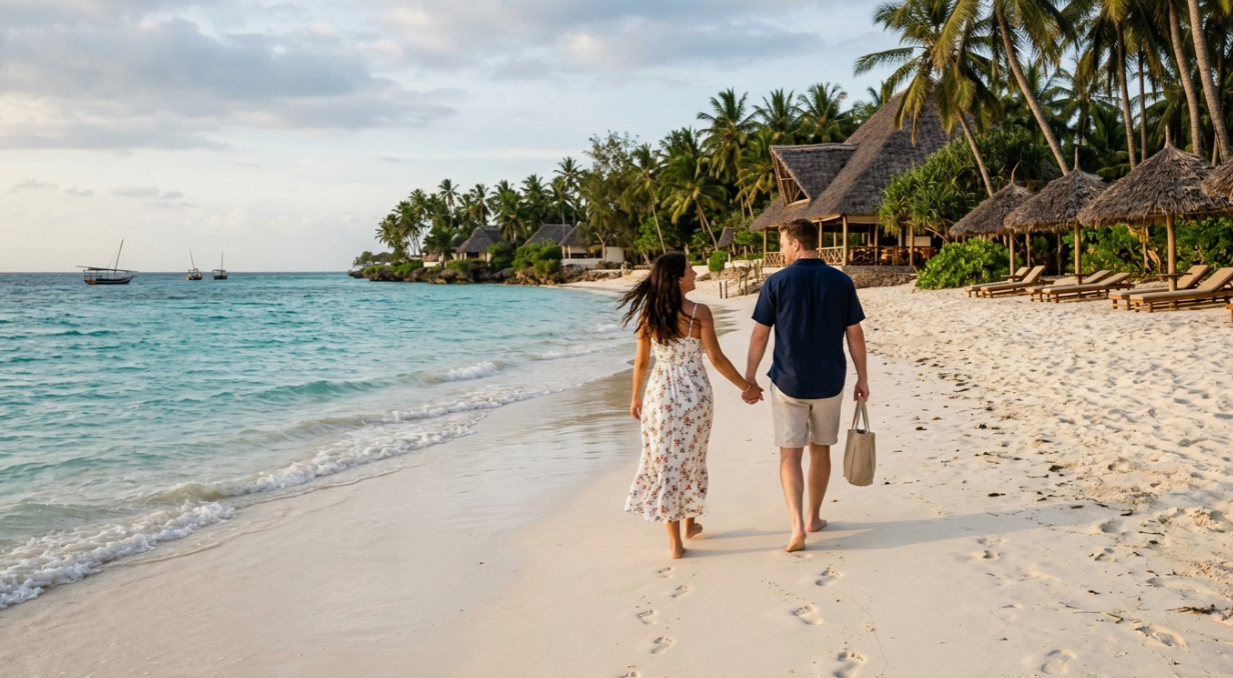
Zanzibar is the default beach component of every Tanzania honeymoon itinerary, and for good reason. It features clear turquoise water, shallow sandbars, white sand beaches, excellent diving and snorkeling, and the historic UNESCO World Heritage Site of Stone Town.
An important point that most guides skip: Zanzibar is not one beach experience. The north coast, east coast, and southeast coast each offer different conditions, vibes, and tide patterns. Choosing the wrong coast for your priorities can mean spending half your beach days watching the ocean recede a kilometer from shore.
North Coast (Kendwa, Nungwi)
The north coast has the least tidal variation, meaning swimmable beaches all day. Kendwa and Nungwi are livelier, with beach bars, sunset cocktails, and a social atmosphere. Good for couples who want some energy mixed with their relaxation. For more on Zanzibar’s best beaches, including tide considerations, that guide covers each coast in detail.
East and Southeast Coast (Paje, Jambiani, Matemwe, Michamvi)
The east coast is quieter, more boutique, and has dramatic tides. Low tide exposes vast sandflats where locals harvest seaweed, which is beautiful but means the water can be far from your beach chair for several hours. Paje is the kitesurfing capital. Matemwe and Michamvi offer more seclusion.
Stone Town
A UNESCO World Heritage Site and the cultural hub of Zanzibar. Stone Town’s labyrinth of narrow streets, carved wooden doors, and rooftop restaurants makes it worth at least one night or a full day, ideally at the start of your beach stay. A growing number of intimate boutique hotels are establishing Stone Town as a romantic honeymoon destination in its own right.
For excursion planning during your Zanzibar days, see this guide to Zanzibar day trips and excursions.
Pemba Island
Zanzibar’s quieter northern sister island. Pemba has better diving (especially at the Pemba Channel), far fewer visitors, and a genuine feeling of remoteness. If sharing a beach with other tourists sounds unappealing, Pemba is worth the extra domestic flight. It adds cost and a travel day, but the privacy is real.
Mafia Island
South of Zanzibar, Mafia Island pairs well with a Southern Circuit safari (Nyerere + Mafia is a natural combination). Think Robinson Crusoe-style beaches, whale shark snorkeling from October to March, and almost no other tourists. It is the most remote mainstream beach option in Tanzania.
Swahili Coast: Pangani and Saadani
This is the alternative almost nobody mentions. For couples who want a quiet mainland beach without island logistics, Tanzania’s Swahili Coast offers a genuinely different post-safari ending. Saadani National Park sits between Pangani and Bagamoyo, directly opposite Zanzibar, and it is the only place in Tanzania where you can game drive in the morning and swim in the Indian Ocean before lunch.
Practitioners on travel forums often overlook this option entirely because Zanzibar dominates the conversation. But for couples short on time or wanting to avoid an extra flight, the Swahili Coast is practical and romantic. Read the Pangani and Saadani beach guide for a full breakdown.
Mnemba Island
A private island off Zanzibar’s northeast coast, usually booked as a single-property experience. Mnemba is the ultra-premium beach option: one lodge, a handful of rooms, excellent snorkeling. It carries an ultra-premium price tag to match.
Wildlife and Seasonal Terms
Timing a Tanzania honeymoon around wildlife events requires understanding a few key concepts. For a month-by-month breakdown, the best time for a Tanzania safari guide covers this in more depth.
Great Migration
The Great Migration is the year-round movement of over 1.5 million wildebeest and hundreds of thousands of zebras and antelope through the Serengeti ecosystem. These animals cover roughly 1,200 miles following the rains and fresh grasses. The migration is not a single event but a continuous cycle, meaning the “best” location within the Serengeti shifts month by month.
For honeymoon itinerary planning in Tanzania, this matters because it determines which camps and regions to book, and those decisions need to be made months in advance.
Calving Season
January through March in the southern Serengeti and Ndutu region. Wildebeest gather in enormous numbers to give birth, and the presence of newborns attracts predators in unusual concentrations. It is an excellent, slightly less crowded alternative to the famous July-October migration window.
River Crossing
From July through September, vast herds of wildebeest cross the Mara River in the northern Serengeti. These crossings are chaotic, dramatic, and unpredictable. One reviewer described a Mara River crossing as the “most memorable experience of my life.” The crossings cannot be scheduled or guaranteed; they require patience, a good guide, and flexible days in the northern Serengeti.
Big Five
Lion, leopard, elephant, rhino, and Cape buffalo. A Tanzania honeymoon safari covering the Serengeti and Ngorongoro Crater gives you a realistic chance of seeing all five, with the crater being particularly reliable for rhino sightings.
Dry Season / Peak Season (June through October)
The best general wildlife viewing conditions. Animals concentrate around water sources, vegetation is thinner (making animals easier to spot), and park roads are in good condition. This is also the busiest and most expensive period. Peak-season camps in the Serengeti can fill up a year in advance.
Green Season / Low Season
April and May are the heavy rain months. Many park roads become muddy and difficult to drive. Some lodges close entirely. Prices drop significantly, but the trade-off is real. Most experienced planners advise against scheduling a Tanzania honeymoon in April or May.
The shoulder months (November, early December, March) offer a middle ground: lower prices, fewer crowds, and generally manageable conditions.
Shoulder Season
The transition months between peak and low seasons. November and March often deliver good wildlife viewing at lower cost. Rains are possible but typically come in short afternoon bursts rather than all-day downpours.
Timing a honeymoon around the Migration or calving season takes precise routing. Duma Explorer designs private honeymoon itineraries around your travel dates and wildlife priorities.
Romantic Experience and Activity Terms
Hot-Air Balloon Safari
If there is one splurge worth building into a honeymoon, this is it. A sunrise balloon flight over the Serengeti costs approximately $599 per person and includes a champagne breakfast after landing. The flight lasts about an hour and covers the open plains at low altitude. It is genuinely unforgettable.
Sundowner
An evening ritual where your guide finds a secluded spot, sets up a table with drinks and snacks, and leaves you alone with the sunset. The African sunset happens every day, but a private sundowner setup turns it into one of the most intimate moments of a honeymoon safari.
Bush Dinner / Private Bush Dining
A private dinner set up in the bush, lanterns lit, table arranged under the stars, the sounds of the African night surrounding you. Many premium camps offer this as a complimentary honeymoon touch, though some charge extra. It is worth confirming the details when you book.
Private Game Drive
Unlike group safaris where you share every game drive with strangers, a private game drive means the vehicle, the guide, and the schedule are entirely yours. Morning coffee becomes an intimate ritual. Sundowners happen where you choose. The pace is yours to set. For honeymoons, this is not a luxury add-on but a fundamental part of the experience. Understanding the differences between private and group safaris helps clarify why this matters.
Walking Safari
A guided walk through the bush on foot, available in certain parks and conservancies. Walking safaris offer a completely different sensory experience from a vehicle-based drive. They are typically short (two to three hours), conducted in the early morning, and led by armed rangers. Not available in the Ngorongoro Crater or most parts of the Serengeti, but common in Tarangire and the Southern Circuit parks.
Night Game Drive
Game drives conducted after dark using spotlights, available in certain conservancies and parks. Night drives reveal a different cast of animals (bush babies, aardvarks, leopards hunting) and are a memorable addition to a honeymoon safari. Not permitted inside the Serengeti or Ngorongoro, but available at some private concessions bordering those parks.
Dhow Cruise
A traditional wooden sailing vessel (dhow) used for sunset cruises along the Zanzibar coast. A private dhow cruise with champagne and snacks is one of the most popular romantic activities in Zanzibar.
Spice Tour
A guided walk through Zanzibar’s spice plantations, tasting and smelling cloves, vanilla, cinnamon, and more. It is an excellent half-day activity, especially if you are staying near Stone Town. The Zanzibar spice tour glossary covers what to expect and what it costs.
Star Bed / Fly Camping
Some camps offer the option of sleeping on an elevated platform under the open sky, or in a simple fly camp set up away from the main lodge. Both are memorable honeymoon experiences, though they require some tolerance for being genuinely in the wild at night.
Accommodation Terms
Tented Camp (Permanent / Semi-Permanent)
Up
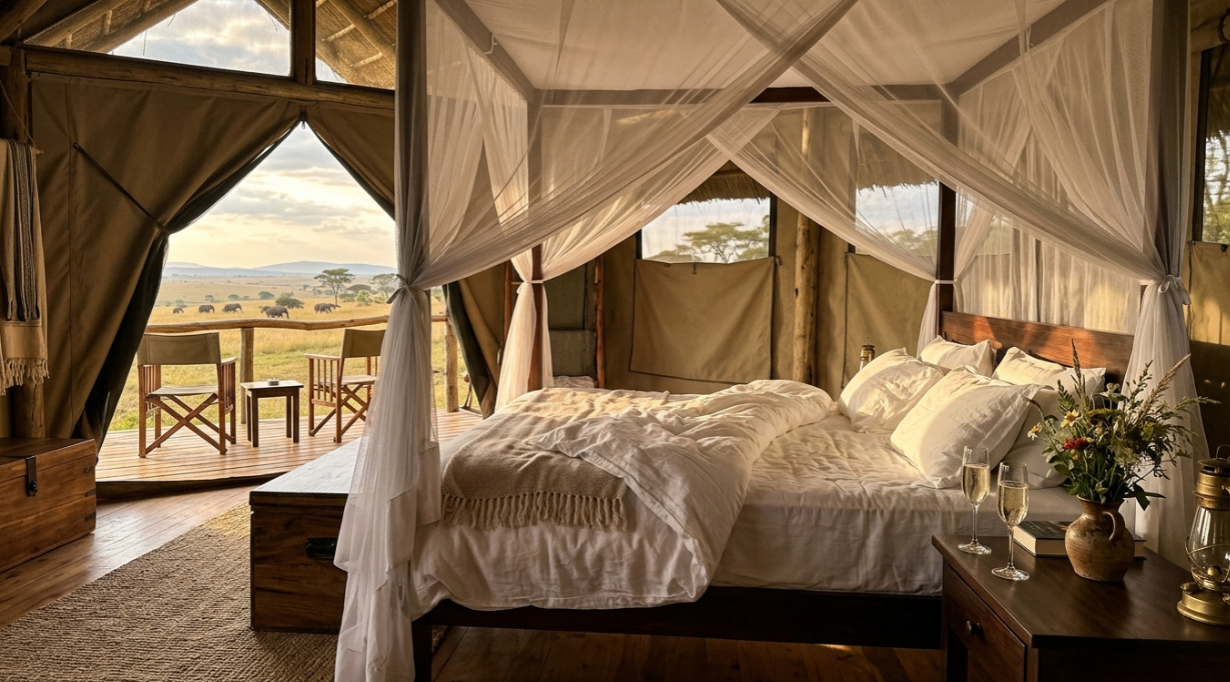
he signature accommodation type for a Tanzania honeymoon safari. These are not what most people picture when they hear “tent.” Tanzania’s finest tented camps offer freestanding canvas structures with private verandas, outdoor showers, plunge pools, king-size beds, and full en-suite bathrooms. The canvas walls mean you hear the bush at night, which is the entire point.
Mobile Camp
A camp that relocates seasonally to follow the Great Migration. Serengeti Under Canvas, for example, moves between different Serengeti regions throughout the year. Mobile camps offer excellent wildlife access because they are positioned where the animals actually are, not where permanent infrastructure was built decades ago.
Safari Lodge
A permanent, built structure, often with stone or timber construction. Lodges range from simple to ultra-luxurious. Crater-rim lodges overlooking the Ngorongoro Crater are a classic honeymoon choice, offering views that tented camps in the crater floor cannot provide (because camping in the crater is not permitted).
Boutique Beach Hotel
The accommodation style for the Zanzibar portion of a honeymoon itinerary. Tanzania’s coast has everything from barefoot-chic beach bungalows to full-service luxury resorts. The choice depends on your preference for privacy vs. amenities vs. social atmosphere.
All-Inclusive
A pricing structure where meals, drinks, and often activities are included in the nightly rate. Common at beach resorts in Zanzibar but less standard on safari, where most camps operate on a full-board (meals included, drinks extra) or fully inclusive basis.
Honeymoon Suite / Honeymoon Package
Many camps and lodges offer honeymoon-specific touches: room upgrades, complimentary champagne, private dinners, late checkout, or spa credits. Always mention that you are celebrating a honeymoon when booking, as these extras are often complimentary but not automatically applied.
Logistics and Cost Terms
Understanding cost terminology is critical for comparing proposals. Two itineraries that look similar can differ by thousands of dollars based on what is and is not included. For a full cost breakdown, see the Tanzania safari cost per person guide.
Park Fees / Conservation Fees
Daily entry fees charged per person at each national park. Major parks like the Serengeti and Ngorongoro charge $70 to $83 per adult per day for non-residents. These fees add up quickly: a five-day safari across two parks can generate $350 to $400 per person in park fees alone. Always check whether quoted itinerary prices include park fees or list them separately.
Concession Fee
A nightly fee charged per person for staying inside a national park. In the Serengeti, the concession fee is $71 per adult per night (2026). This is separate from the daily park entry fee. If your proposal says “park fees included” but does not mention concession fees, ask.
Crater Service Fee
A specific vehicle fee of approximately $295 to $300 charged per descent into the Ngorongoro Crater floor. This is per vehicle, not per person, and is in addition to regular park entry fees. It is a significant line item that some proposals bury or omit.
Fly-In Safari vs. Road Safari
A fly-in safari uses small bush planes (typically 12 to 14 seats) to transfer between parks and from safari to the coast. A road safari uses 4x4 vehicles for all transfers. Flying saves enormous amounts of time, particularly between the Serengeti and Zanzibar. One operator noted that you can be on safari in the Serengeti in the morning and on a tropical beach that same afternoon if you fly, instead of spending an entire day on the road to Arusha.
Scheduled flights on small safari planes cost around $350 per person each way. The convenience for honeymooners is usually worth it.
Domestic Flight (Bush Flight)
Small aircraft operated by companies like Coastal Aviation or Auric Air, connecting airstrips across Tanzania. Bush flights land on dirt or grass strips, sometimes with wildlife visible from the runway. They are safe, well-regulated, and an experience in themselves.
Private Vehicle / Private Guide
Having your own dedicated 4x4 safari vehicle and guide for the duration of your trip. Vehicle and guide costs run approximately $350 to $450 per day. For two people, the per-person cost drops to roughly $175 to $225 each. On a honeymoon, a private vehicle is standard for any operator catering to couples, not an optional upgrade.
Full-Board / Half-Board
Full-board means breakfast, lunch, and dinner are included. Half-board typically covers breakfast and dinner. Most safari camps are full-board, as there are no restaurants to visit in the middle of the Serengeti. Some high-end camps are “fully inclusive,” meaning all drinks (including alcohol) are also covered.
Per Person Sharing (pps)
The standard pricing format in East African travel. It means the quoted price per person assumes two people sharing a room or tent. Solo travelers should look for the “single supplement” line, which can add 30% to 50% to the per-person cost.
Single Supplement
The extra charge a solo traveler pays to occupy a room alone. On a honeymoon this is irrelevant (you are sharing), but it matters if you are comparing proposals: some operators quote per-person-sharing prices that look low, then add supplements for anything non-standard.
Tipping (Safari Guides, Camp Staff)
Tipping is customary on Tanzanian safaris and not included in quoted prices. Standard ranges vary by role (guide, driver, camp staff, porters). The total can add $200 to $500+ to a couple’s trip cost depending on length and number of camps. The Tanzania safari tipping guide covers amounts by role.
If operator proposals feel hard to compare, Duma Explorer provides transparent, all-in pricing that includes park fees, transfers, and accommodations so couples can evaluate the real cost. Explore detailed Tanzania safari pricing for a clearer picture.
Planning and Booking Terms
Custom / Bespoke Itinerary
An itinerary designed specifically for you, as opposed to a fixed group departure with set dates and routing. For a honeymoon, custom is the standard approach. Your operator should build the itinerary around your dates, budget, interests, and any special requests.
Ground Operator / Local Operator
The company that actually runs your trip on the ground in Tanzania: providing vehicles, guides, making camp reservations, handling logistics. Some international travel agents sell Tanzania trips but subcontract the actual operation to a local company. Knowing who your ground operator is matters, because they determine the quality of your daily experience.
Lead Time
How far in advance you need to book. For peak season (July through October), experienced operators recommend booking 6 to 12 months ahead. The best camps fill quickly, and booking nearly a year in advance is not unusual for this period. For shoulder season travel, three to six months is generally sufficient.
Deposit and Cancellation Terms
Most operators require a 25% to 30% deposit at booking, with the balance due 60 to 90 days before travel. Cancellation policies become progressively stricter as the travel date approaches, since camps and flights often have non-refundable components. Read the terms carefully before committing.
Travel Insurance / Medical Evacuation
Non-negotiable for a Tanzania trip. Standard travel insurance covers trip cancellation and delays. Medical evacuation insurance covers emergency air transport from remote safari locations to a hospital, a scenario that is rare but potentially very expensive without coverage. The safari travel insurance guide explains what to look for in a policy.
Tanzania Visa
Visa requirements depend on your nationality and travel circumstances, so honeymooners should check the current Tanzania Immigration requirements before booking or traveling.
For travelers who require an ordinary tourist visa, Tanzania Immigration currently lists the fee at US$50, while the multiple-entry visa is listed at US$100. U.S. passport holders traveling for tourism are subject to the multiple-entry visa requirement.
Apply through the official Tanzania Immigration e-Visa system and verify the requirements for your passport before departure.
Common Honeymoon Itinerary Structures
These are reference frameworks, not full itineraries. They show how different trip lengths are typically structured.
7-Day Safari Only
Four to five days on the Northern Circuit (Tarangire, Ngorongoro, Serengeti) plus transit days. This works for couples adding beach time in a different country or who have already visited Zanzibar. It is tight but viable.
10-Day Safari and Beach (Most Common)
The standard honeymoon itinerary structure for Tanzania. Four to five nights of safari followed by four to five nights in Zanzibar. This is the format that appears in nearly every operator proposal and ranking blog post for good reason: it balances wildlife and relaxation without feeling rushed. A 14-day Tanzania itinerary stretches both portions for couples with more time.
The most common planning mistake, according to practitioners on TripAdvisor forums, is trying to split a short stay across three or more areas. One traveler proposed three hotel moves in eight nights, and replies overwhelmingly suggested simplifying. If you have fewer than six beach nights, pick one base.
14-Day Safari, Beach, and Extension
Two weeks allows for a more relaxed safari pace, a longer beach stay, or the addition of a major extension: gorilla trekking in Uganda or Rwanda, a Kilimanjaro day hike, or a second country entirely. This is the format for couples treating the honeymoon as the trip of a lifetime.
Tanzania Honeymoon Cost: What Does the Budget Include?
Tanzania honeymoon prices vary widely because safari and beach packages can combine accommodation, private vehicles, guides, park fees, domestic flights and activities in different ways. Before comparing two proposals, check whether both use the same inclusions.
The budget ranges below are planning estimates rather than fixed prices. Unless an operator states otherwise, treat international flights as separate and confirm whether park fees, domestic flights, transfers, drinks and special honeymoon experiences are included.
|
Budget Level |
Approximate Trip Budget Per Person* |
Typical Experience |
|---|---|---|
|
Mid-range |
$3,500–$6,000 |
Comfortable safari camps/lodges and a quality Zanzibar hotel |
|
Luxury |
$6,000–$10,000 |
Premium camps, private safari logistics and upscale beach accommodation |
|
Ultra-luxury |
$10,000–$15,000+ |
Exclusive camps, premium island stays and multiple private experiences |
*Planning ranges only. Actual pricing varies by season, accommodation, routing, length of stay, flights and inclusions.
When comparing proposals, ask for the total price and a line-by-line list of what is included rather than comparing the headline per-person figure alone.
Frequently Asked Questions
How many days do you need for a Tanzania honeymoon?
Most couples spend 10 to 14 days. Plan four to five days for safari and five to seven days on the beach. This gives enough time to see wildlife across multiple parks and genuinely unwind in Zanzibar without feeling rushed. Going shorter than 10 days means cutting something meaningful.
Is it better to do safari first or beach first?
Safari first is the near-universal recommendation, and operators design itineraries this way for practical reasons. Early morning game drives require 5:00 a.m. starts. Better to do those when you are excited and energized at the beginning of the trip, then decompress on the beach afterward. Flying from the Serengeti to Zanzibar is also a cleaner logistics sequence than the reverse.
What is the difference between a fly-in safari and a road safari?
A road safari uses 4x4 vehicles for all transfers between parks. A fly-in safari uses small bush planes. Flying saves significant time (the drive from the Serengeti to Arusha alone takes eight to ten hours) but costs more, roughly $350 per person per flight. For honeymoons of 10 days or fewer, flying at least one leg, typically Serengeti to Zanzibar, is worth the cost to avoid losing an entire day to driving.
When should you book a Tanzania honeymoon?
For peak season travel (July through October), book six to twelve months in advance. The best camps fill very quickly during this window. For shoulder season (November, January through March), three to six months is usually sufficient. The earlier you book, the better your camp selection.
Do you need a visa for Tanzania?
Yes. Most nationalities can apply for an e-Visa online before departure. The fee is $50 and processing takes a few business days. Apply at least two weeks before travel.
Can you combine a Tanzania honeymoon with gorilla trekking?
Yes, and it is one of the most popular extensions. Uganda and Rwanda border Tanzania, and gorilla trekking adds two to three days to a honeymoon itinerary. Permits must be booked well in advance (especially for Rwanda). The combination of safari, beach, and gorilla trekking makes for an extraordinary 14 to 16 day trip.
What is the best month for a Tanzania honeymoon?
June through October delivers dry safari conditions, the Great Migration in the northern Serengeti, and excellent Zanzibar weather. January through February combines the calving season in the southern Serengeti with warm beach days and generally fewer crowds than peak season. Avoid April and May due to heavy rains.
How much should you budget for a Tanzania honeymoon?
Expect $3,500 to $15,000+ per person for a 10 to 13 night trip, depending on accommodation level, fly-in logistics, and season. A luxury honeymoon with premium camps and fly-in transfers typically runs $6,000 to $13,000 per person. Always confirm whether quoted prices include park fees, concession fees, and domestic flights.
Ready to turn this vocabulary into an actual trip?
Duma Explorer designs private honeymoon safaris across Tanzania’s Northern and Southern Circuits, paired with Zanzibar, Pemba, or the Swahili Coast. Every itinerary is custom-built around your dates, wildlife priorities, and budget.