

Tanzania Honeymoon Packages: Terms, Costs & Guide (2026)
TLDR
Tanzania honeymoon packages typically combine a private safari in destinations such as the Serengeti, Ngorongoro and Tarangire with several nights on Zanzibar. In 2026, a realistic luxury honeymoon can range from roughly $5,800 to $20,000+ per couple depending on trip length, accommodation, season, flights, park fees and how private the itinerary is.
The biggest price differences are not always obvious from an itinerary headline. A quote that looks cheaper may exclude park fees, domestic flights, transfers, drinks, activities or taxes. Understanding terms such as full-board, all-inclusive, concession fee, fly-in safari and private safari makes it much easier to compare packages on an apples-to-apples basis.
This guide explains what Tanzania honeymoon packages cost, what they normally include, how to build a safari-and-Zanzibar itinerary, when to go, which upgrades are worth paying for, and the key safari terms you need to understand before booking.
If you already know what these terms mean and want to see how a safari and Zanzibar honeymoon actually fits together, start there. Otherwise, read on.
Quick Answer: How Much Does a Tanzania Honeymoon Package Cost? A Tanzania honeymoon package typically costs about $5,800 to $20,000+ per couple for 10 to 13 days, with luxury safari-and-Zanzibar trips often falling around $8,000 to $15,000+ depending on the lodge tier and season. Packages commonly include accommodation, meals, a private safari vehicle and driver-guide, park fees, domestic flights or transfers, and airport transfers. International flights, visas, insurance, premium drinks and optional experiences are often extra. The most important comparison is not the headline price. Check whether every quote includes park fees, taxes, internal flights, transfers, meals, drinks, activities and private vehicle costs before deciding which Tanzania honeymoon package is actually cheaper.
Tanzania Honeymoon Packages at a Glance
|
Package style |
Typical length |
Best for |
Approx. couple budget |
|---|---|---|---|
|
Safari only |
5–7 nights |
Couples focused on wildlife |
$9,000–$12,000 |
|
Safari + short Zanzibar stay |
7–9 nights |
First-time safari honeymooners |
$13,000–$18,000 |
|
Full safari + Zanzibar honeymoon |
9–12 nights |
Couples wanting adventure + beach |
$16,000–$26,000 |
|
Ultra-luxury private honeymoon |
10–14 nights |
Maximum privacy and premium camps |
$24,000–$30,000+ |
These are planning ranges rather than fixed prices. The final cost depends heavily on travel season, accommodation category, number of safari nights, internal flights, park and conservation fees, private vehicle arrangements, Zanzibar hotel category and optional experiences.
Which package is right for you?
-
Choose safari-only if wildlife is the main reason for visiting Tanzania.
-
Choose safari + Zanzibar if you want a classic adventure-and-beach honeymoon.
-
Choose a longer bush-and-beach itinerary if you want time to slow down after the safari.
-
Choose ultra-luxury/private everything if privacy, exclusive camps, private transfers and special experiences matter more than minimizing cost.
Tanzania Honeymoon Package Cost Tiers at a Glance
Before the glossary, here is a quick reference for what Tanzania honeymoon packages actually cost in 2026/2027, broken into the four most common formats:
|
Package Type |
Typical Length |
Per Person Cost (USD) |
Per Couple Cost (USD) |
|---|---|---|---|
|
Safari only |
5–7 nights |
$4,500–$6,000 |
$9,000–$12,000 |
|
Safari + short beach |
7–9 nights |
$6,500–$9,000 |
$13,000–$18,000 |
|
Full bush-and-beach |
9–12 nights |
$8,000–$13,000 |
$16,000–$26,000 |
|
Ultra-luxury, private everything |
10–14 nights |
$12,000–$15,000+ |
$24,000–$30,000+ |
These ranges assume luxury-tier accommodation. Mid-range packages with comfortable but simpler lodges can start closer to $3,500 per person for 10 nights. For a detailed cost breakdown, see the Tanzania safari cost guide.
What Is Included in a Tanzania Honeymoon Package?
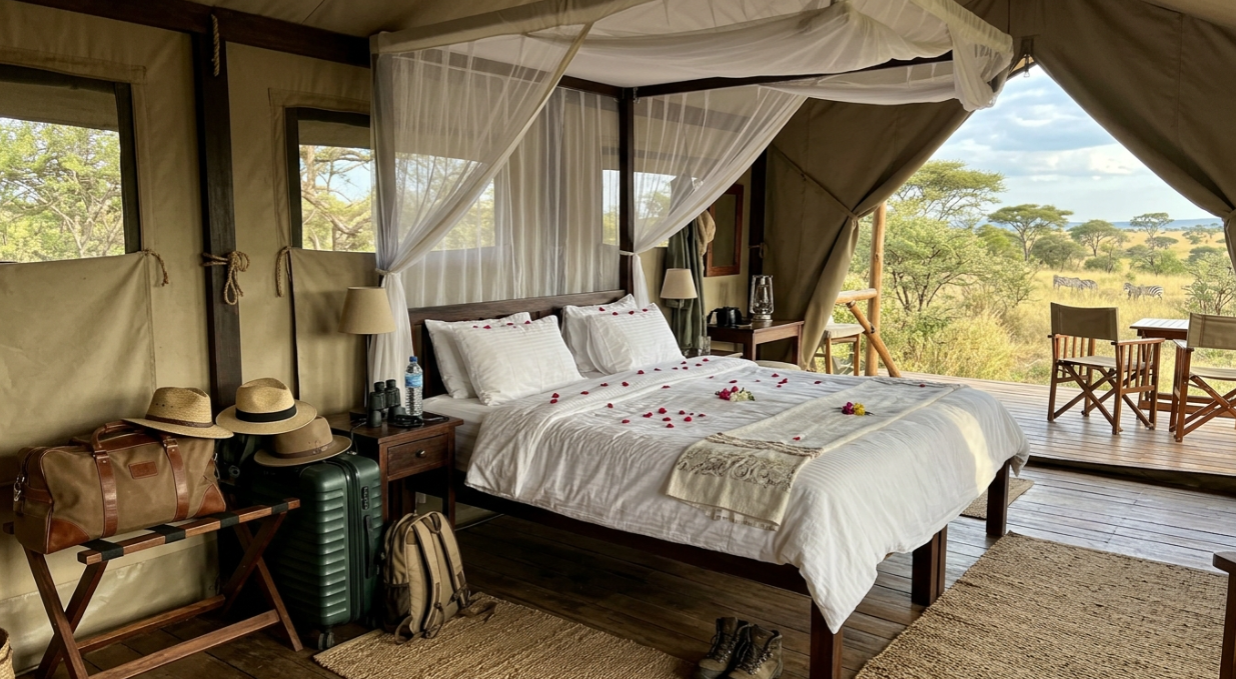
A Tanzania honeymoon package usually bundles several travel components into one itinerary, but the exact inclusions vary by operator and accommodation level. Never assume that a package labeled "all-inclusive" covers every expense.
Commonly included
-
Safari accommodation
-
Zanzibar accommodation when a beach extension is included
-
Breakfast, lunch and dinner, depending on the meal plan
-
Private safari vehicle and driver-guide
-
Park or conservation fees
-
Airport transfers
-
Domestic flights or bush flights when listed in the itinerary
-
Game drives
-
Selected lodge or camp activities
-
Drinking water during safari, depending on the operator
-
Some honeymoon amenities or special arrangements
Commonly excluded
-
International flights
-
Tanzania visa fees
-
Travel insurance
-
Premium alcoholic drinks
-
Spa treatments
-
Hot-air balloon safaris
-
Private charter flights
-
Some Zanzibar excursions
-
Personal purchases
-
Tips
-
Laundry, depending on the property
-
Additional transfers not specified in the itinerary
The most important question to ask
Before comparing two Tanzania honeymoon packages, ask the operator:
"Is this price fully inclusive of accommodation, meals, park fees, taxes, internal flights, transfers, private vehicle costs and all scheduled activities?"
Getting a written list of inclusions is one of the easiest ways to prevent a low headline price from becoming an expensive final bill.
Tanzania Honeymoon Itineraries: 7, 10 and 14 Days
There is no single best Tanzania honeymoon itinerary. The right combination depends on whether you want to maximize wildlife viewing, spend more time on Zanzibar, or prioritize private camps and slower travel.
|
Itinerary |
Suggested route |
Best for |
|---|---|---|
|
7 days |
Arusha → Tarangire → Ngorongoro → Serengeti |
Couples with limited time |
|
10 days |
Arusha → Tarangire → Ngorongoro → Serengeti → Zanzibar |
Classic first Tanzania honeymoon |
|
12 days |
Arusha → Tarangire → Ngorongoro → Serengeti → Zanzibar |
More relaxed safari + beach trip |
|
14 days |
Arusha → Tarangire → Ngorongoro → Serengeti → Zanzibar + excursions |
Couples wanting a slower luxury honeymoon |
Example 10-day Tanzania honeymoon
Days 1–2: Tarangire
Start with wildlife viewing and a more relaxed introduction to safari life.
Day 3: Ngorongoro
Travel toward the Ngorongoro Conservation Area and include a crater experience where appropriate.
Days 4–6: Serengeti
Spend several nights in the Serengeti so you have more time for game drives rather than changing camps every day.
Day 7: Serengeti to Zanzibar
Take a domestic or bush flight toward Zanzibar and transition from safari to beach.
Days 8–10: Zanzibar
Relax at a beach resort and add experiences such as snorkeling, a dhow cruise, a spice tour or a private sandbank excursion.
For most couples, three nights in Zanzibar is a useful minimum if the goal is genuine downtime rather than simply checking the island off the itinerary.
Best Time for a Tanzania Honeymoon
The best time depends on whether you prioritize dry weather, the Great Migration, lower prices or a combination of safari and Zanzibar beach conditions.
|
Travel period |
Safari conditions |
Zanzibar |
Price level |
Best for |
|---|---|---|---|---|
|
January–March |
Excellent southern Serengeti wildlife and calving |
Hot and generally beach-friendly |
High |
Calving season |
|
April–May |
Wetter and greener |
Long-rain considerations |
Lower |
Couples prioritizing value |
|
June |
Strong safari conditions |
Generally favorable |
Medium-high |
Shoulder season |
|
July–October |
Excellent wildlife viewing |
Generally favorable |
High |
Peak safari season |
|
November |
Green landscapes and changing migration patterns |
Rain possible |
Medium |
Value + wildlife |
|
December |
Good wildlife opportunities |
Festive/high-demand period |
High |
Holiday honeymoons |
If the Great Migration is your priority, choose the month based on the wildlife event you want to see rather than assuming there is one "migration season." The herds move throughout the Serengeti ecosystem, so the best location changes during the year.
For couples who want to balance safari conditions with price, shoulder periods can offer a useful compromise, but exact lodge availability and seasonal pricing should be checked for your travel dates.
Group 1: Trip Structure Terms
Bush-and-Beach Honeymoon
The dominant format for Tanzania honeymoon packages. You spend the first portion of the trip on a private safari through the northern parks (typically Serengeti, Ngorongoro Crater, and sometimes Tarangire), then fly to Zanzibar for three to five nights on the beach. The most popular version runs about 10 days total.
Why it matters: This structure lets you front-load the adventure and close with relaxation. Practitioners on Reddit report that safari honeymoons work best when the active portion comes first. “Do the adventure while the excitement is high; do the beach when your body finally realizes the wedding is over” is the consensus among experienced planners.
Northern Circuit
The classic Tanzania safari route connecting Tarangire National Park, the Ngorongoro Crater, and the Serengeti. Most Tanzania honeymoon packages follow this circuit because it offers the highest wildlife density and the widest range of luxury lodges.
Why it matters: When an operator describes a “Northern Circuit honeymoon safari,” this is what they mean. It is also the most expensive circuit due to high park fees and demand for limited luxury camps. For a full breakdown of how these parks and circuits connect, see the destination guide.
Southern Circuit
An alternative route through Nyerere National Park (formerly Selous) and Ruaha National Park. Far fewer tourists, more remote camps, and a genuine feeling of isolation.
Why it matters: Couples who want privacy over spectacle should know this option exists. The Southern Circuit pairs well with a Zanzibar extension and costs less than the Northern Circuit, though flight logistics are slightly more complex.
Fly-in Safari
A safari where you travel between parks by light aircraft instead of driving. In the Northern Circuit, this typically means flying from Arusha to the Serengeti (skipping the long drive through Ngorongoro) and between other parks.
Why it matters: Fly-in safaris save significant travel time. A drive from Arusha to Central Serengeti takes 8 to 10 hours. A flight takes about 90 minutes. For honeymooners with limited days, flying between parks can add a full extra day of game viewing.
Bush Flight
Specifically, the light-aircraft transfer from the Serengeti to Zanzibar. This is the flight that connects the two halves of a bush-and-beach honeymoon. From Central Serengeti (Seronera airstrip), the total flight time to Zanzibar is roughly 2 hours 15 minutes to 2 hours 45 minutes, usually with one refueling stop in Arusha. Departures typically leave between 10:45 AM and 1:00 PM, with arrival in Zanzibar by mid-afternoon.
Why it matters: Unlike Southern African honeymoons that require repositioning flights of three to five hours, the Serengeti-to-Zanzibar bush flight is short and direct. It is one of the reasons the Tanzania bush-and-beach format works so well. However, bush flights impose strict luggage limits (see “soft duffel bag” below).
Coordinating the Serengeti-to-Zanzibar transition, including bush flights, lodge handoffs, and luggage limits, is where having one operator handle both halves of the trip eliminates headaches. Duma Explorer builds combined safari and Zanzibar honeymoons as a single coordinated itinerary.
Private Safari
A safari where you have your own dedicated vehicle, driver-guide, and customized itinerary. You do not share your game drive vehicle with strangers. This is the standard format for Tanzania honeymoon packages at the luxury level.
Why it matters: Privacy is the whole point of a honeymoon safari. A private setup means you control your wake-up time, how long you spend watching a leopard, and when you head back to camp. For couples weighing the tradeoffs, the private vs. group safari comparison covers costs and logistics in detail.
Self-Drive Safari
Renting a 4x4 and driving yourself through the parks without a professional guide.
Why it matters: This is not a honeymoon format in Tanzania. The roads in the Serengeti and Ngorongoro require serious off-road experience, there are no road signs in most parks, and you will miss 80% of the wildlife without a trained spotter. Some couples consider self-drive to save money. For a honeymoon, skip it.
Group 2: Accommodation Terms
Tented Camp
A semi-permanent or permanent structure with canvas walls, a real bed (often king-sized), en-suite bathroom with running water, and usually a private veranda overlooking the bush. This is not “camping.” High-end tented camps include heated showers, flush toilets, and sometimes plunge pools.
Why it matters: Tented camps are the signature Tanzania honeymoon accommodation. The canvas walls mean you hear the bush at night: hyenas calling, lions in the distance, insects buzzing. That sensory connection is what separates a tented camp from a hotel room.
Lodge
A permanent-structure building, typically made of stone, wood, or concrete. Lodges tend to be larger than tented camps, with more rooms, central dining areas, swimming pools, and sometimes spas.
Why it matters: Lodges offer more conventional hotel comforts. The tradeoff is that they are often larger (30+ rooms) and feel less intimate than a 10-tent camp. For honeymooners, smaller is usually better.
Mobile Camp
A tented camp that physically relocates to follow the Great Migration herds through the Serengeti. The camp is packed up, moved, and reassembled in a new location several times per year.
Why it matters: Mobile camps put you directly in the path of the migration without the crowds of permanent lodges. They tend to be smaller (6 to 10 tents) and more exclusive. They are also harder to book, so planning early is important.
Private Concession / Conservancy
Land that borders a national park but is managed privately, either by a single lodge operator or a conservancy trust. In Tanzania, these are often called “Wildlife Management Areas” or simply “concessions.”
Why it matters: This is arguably the most important term for honeymooners. Inside national parks, vehicles must stay on designated roads, night drives are prohibited, walking safaris are restricted, and off-road driving is not allowed. On a private concession, all of those rules relax. You can drive off-road to follow a cheetah hunt, take a walking safari with an armed ranger, do night drives to find nocturnal predators, and share the area with only a handful of other guests. The romantic potential lies in selecting lodges located in these exclusive areas. Expect to pay a premium, but for honeymoon intimacy, concessions are worth it.
Full-Board
All meals (breakfast, lunch, dinner) are included in the nightly rate. Drinks are usually not included, or limited to water, tea, and coffee.
Why it matters: Full-board is the standard inclusion level for mid-range and many luxury Tanzania camps. It does not mean “everything is free.” Premium wines, imported spirits, and activities like balloon safaris will cost extra. Check what is excluded before you assume the quoted price covers everything.
All-Inclusive
Meals, house wines, local spirits, soft drinks, and often laundry are included. Some all-inclusive camps also include certain activities (walking safaris, guided nature walks) in the rate.
Why it matters: The difference between full-board and all-inclusive can be $100 to $200 per person per night. For a honeymoon, all-inclusive reduces the mental load of tracking bar tabs. But “all-inclusive” at a safari camp still does not include balloon safaris, spa treatments, or premium champagne. Read the fine print.
Per Person Per Night (pppn)
The standard pricing unit for safari accommodation in Africa. A lodge quoted at “$800 pppn” costs $1,600 per night for a couple.
Why it matters: This pricing convention confuses first-time safari planners. When you see a Tanzania honeymoon package quoted at “$6,000 per person,” that is for one person. Your total as a couple is $12,000. Always confirm whether a quoted price is per person or per couple.
Honeymoon Turndown
Special romantic touches arranged by the lodge for honeymoon couples. This can include rose petals on the bed, a bottle of sparkling wine, candles in the bathroom, a private bush dinner setup, or a hand-written welcome note. Most luxury lodges offer this complimentary when they know you are on honeymoon.
Why it matters: Tell your operator it is your honeymoon. Many camps will upgrade you to a better tent or add extras at no charge. As one couple shared in their review: “Thank you to Stacey and Isack for making our honeymoon so special. It exceeded our expectations in every way.”
Group 3: Cost and Fee Terms
Park Fees / Conservation Fees
Mandatory daily charges set by TANAPA (Tanzania National Parks Authority) for every visitor entering a national park. As of 2026, Serengeti entry is $60 per person per day, Tarangire is $53 per day, and Ngorongoro is $60 per person plus separate vehicle and crater fees.
Why it matters: Park fees typically account for about 30% of a mid-range safari’s total cost. An additional 18% VAT applies to all park fees in Tanzania. When comparing Tanzania honeymoon packages, always ask whether the quoted price includes park fees and VAT, or whether these are added later.
Concession Fee
A separate nightly fee charged for staying inside a national park rather than outside its boundaries. This applies to lodges and camps located within the park gates.
Why it matters: Staying inside the Serengeti means you can start your morning game drive at dawn without waiting at a park gate. But the concession fee (which varies by camp and park) adds to your nightly rate. Budget operators sometimes quote lower prices by placing you in lodges outside the park, adding a 45-minute drive each morning.
Vehicle Entry Fee
A separate daily charge for bringing a safari vehicle into the park. This is charged on top of per-person park entry fees.
Why it matters: On a private safari, you bear the full vehicle fee as a couple rather than splitting it among six people. This is one reason private safaris cost more per person. For a deeper look at how these fees stack, the safari cost and fee breakdown covers it line by line.
Crater Service Fee
A specific additional charge applied only for descending into the Ngorongoro Crater. This is separate from the general Ngorongoro Conservation Area entry fee and is managed by the NCAA (Ngorongoro Conservation Area Authority).
Why it matters: Ngorongoro has the most complex fee structure of any site in Tanzania. You pay a conservation area entry fee, a crater descent fee, and a vehicle fee, all for a single half-day game drive. It is worth every shilling for the wildlife density, but the fees can surprise couples who did not expect them.
Green Season / Value Season
The period when rainfall is most likely (roughly April to May and parts of November). Lodges reduce rates, sometimes by 30% to 50% from peak-season pricing, to attract visitors during wetter months.
Why it matters: Green season is not necessarily bad. The Serengeti is lush, baby animals are everywhere, and the crowds vanish. But some Zanzibar properties close in April and May (notably Mnemba Island and Chumbe Island), and beach swimming is less reliable during the long rains. For more on when to time your safari, see the seasonality guide.
High Season / Peak Season
The premium-pricing periods: June through October (dry season) and December through February (calving season). Expect to pay 20% to 30% more for the same lodge compared to shoulder months.
Why it matters: Peak season delivers the best wildlife viewing conditions. If your honeymoon falls in July or August, book camps 9 to 12 months in advance. The most sought-after properties sell out entirely.
Shoulder Season
The transitional months between peak and value seasons, roughly late May, early June, November, and early December. Conditions are often near-peak, crowds are thinner, and rates sit between high and green season levels.
Why it matters: Shoulder months are the sweet spot for couples who want strong game viewing without paying top dollar. November in the Serengeti can be excellent, with the migration herds moving south and rain refreshing the plains.
Group 4: Wildlife and Experience Terms
Great Migration
The continuous, circular movement of roughly two million wildebeest, zebras, and gazelles through the Serengeti-Mara ecosystem. There is no start or end point. The herds follow the rains and fresh grass in a roughly clockwise pattern throughout the year.
Why it matters: The Great Migration is the single biggest draw for Tanzania honeymoon safaris. Different months offer different spectacles: calving in the south (January to March), river crossings in the north (July to October), and long columns moving through the western corridor (May to June). Read the Great Migration guide for month-by-month positioning.
Calving Season
The period from roughly January through early March when hundreds of thousands of wildebeest give birth on the short-grass plains around Ndutu, in the southern Serengeti. Predators concentrate in the area, making for intense wildlife viewing.
Why it matters: Many experienced safari-goers consider calving season the best time of year for a Serengeti safari. It also coincides with Zanzibar’s hot, festive period (January to March), making it a natural pairing for bush-and-beach honeymooners.
Mara River Crossing
The dramatic event (typically July through October) when migration herds attempt to cross the crocodile-filled Mara River in the northern Serengeti. Crossings are unpredictable and can happen multiple times in a single day, or not at all for a week.
Why it matters: Multiple honeymoon reviewers highlight the Mara River area as a trip highlight. One couple described a hot air balloon safari over the Mara River as the defining moment of their honeymoon. But timing a crossing requires flexibility and a guide who understands herd behavior.
Big Five
Lion, leopard, elephant, Cape buffalo, and rhinoceros. The term originated from colonial hunting but is now used to describe the five most sought-after animals for wildlife viewing.
Why it matters: Tanzania’s Northern Circuit is one of the few places where you can realistically see all five on a single trip. Ngorongoro Crater is particularly reliable for rhino sightings, which are rare elsewhere.
Game Drive
A vehicle-based wildlife viewing excursion, usually lasting 3 to 4 hours in the morning (starting at dawn) or afternoon (returning at sunset). On a private safari, your guide tailors the drive to your interests.
Why it matters: Game drives are the core activity of any safari honeymoon. Most packages include two drives per day: an early morning drive and a late afternoon drive, with midday rest at camp.
Walking Safari
A guided walk through the bush on foot, accompanied by an armed ranger. Walking safaris focus on smaller details (tracks, insects, plants, birdsong) rather than big-game sightings from a vehicle.
Why it matters: Walking safaris are only permitted in certain areas, mainly private concessions and a few designated zones within parks. They add a completely different dimension to the safari experience and are particularly romantic for couples.
Night Drive
An after-dark game drive using a spotlight to find nocturnal animals: aardvarks, bush babies, genets, honey badgers, and hunting predators.
Why it matters: Night drives are prohibited inside Tanzania’s national parks. They are only available on private concessions. This is another reason concession-based lodges are valuable for honeymooners who want experiences beyond the standard game drive.
Hot Air Balloon Safari
A sunrise flight over the Serengeti in a hot air balloon, followed by a champagne bush breakfast. Flights last about one hour and cost between $550 and $650 per person depending on season and operator. Private charter flights are available in the Grumeti Reserve for couples wanting exclusivity.
Why it matters: This is the most commonly mentioned honeymoon highlight in traveler reviews. Several couples have described it as the single best experience of their trip. Book it in advance, as flights are limited to a handful of balloons per morning.
Bush Dinner
A private, candlelit dinner set up in the bush, away from the main camp. The table is often arranged under a tree or overlooking a river, with lanterns and a dedicated server.
Why it matters: Most luxury camps will arrange a bush dinner for honeymooning couples at no additional charge (or a small setup fee). Ask your operator to request this when booking.
Sundowner
Sunset drinks served at a scenic viewpoint, typically on a kopje (rocky outcrop) or riverbank, with a small spread of snacks. Your guide drives you to the spot, sets up camp chairs, and pours drinks as the sun goes down.
Why it matters: A sundowner is one of the simplest but most memorable parts of a safari honeymoon. One traveler specifically mentioned bush lunch and sundowner snacks arranged by their guide as a standout memory.
Group 5: Zanzibar and Beach Terms
Zanzibar
An archipelago in the Indian Ocean, about 15 miles off the coast of mainland Tanzania. The main island, Unguja, is where nearly all Zanzibar honeymoon resorts are located. Nicknamed the “Spice Islands,” Zanzibar has been a global source of cloves, nutmeg, cinnamon, and black pepper for centuries.
Why it matters: Zanzibar is the beach half of Tanzania honeymoon packages. The island offers some of the quietest, most private beach hotels in the Indian Ocean, but choosing the right coast matters enormously (see “East Coast Tides” below). For a full look at Zanzibar excursions and day trips, see the activity guide.
Stone Town
The historic heart of Zanzibar City and a UNESCO World Heritage Site. A maze of narrow alleys, carved wooden doors, spice markets, rooftop restaurants, and centuries-old architecture reflecting Arab, Persian, Indian, and European influences.
Why it matters: Most couples spend one night in Stone Town at the start or end of their beach stay. It is a sharp cultural contrast to the beach resort portion and worth at least a half-day walking tour.
Spice Tour
A guided visit to a Zanzibar spice plantation where you see, smell, and taste cloves, vanilla, cinnamon, cardamom, turmeric, and other spices growing in their natural form. Tours last about 2 to 3 hours and cost $20 to $40 per person. For a full breakdown, see the Zanzibar spice tour glossary.
Why it matters: A spice tour is the most popular cultural excursion on Zanzibar and a good half-day activity when you want a break from the beach.
Dhow Cruise
An excursion on a traditional wooden sailing vessel (dhow). Sunset dhow cruises are particularly popular for honeymooners, often including snacks, drinks, and sometimes a seafood dinner served on a sandbank.
Why it matters: A sunset dhow cruise is one of the most romantic add-ons available on Zanzibar. Most resorts can arrange one with a day’s notice.
Mnemba Island / Mnemba Atoll
Mnemba Island is a tiny, private island northeast of Zanzibar with a single exclusive lodge. The surrounding Mnemba Atoll is a marine conservation area with some of the best snorkeling in East Africa. You do not need to stay on the island to snorkel the atoll.
Why it matters: One reviewer highlighted snorkeling with dolphins and eating lobster on a sandbank near Mnemba as a standout Zanzibar honeymoon experience. Note that Mnemba Island closes for maintenance in April and May.
East Coast Tides
Zanzibar’s east coast experiences dramatic tidal swings. At low tide, the ocean can recede hundreds of meters, exposing seaweed-covered mudflats instead of the turquoise water you see in photos.
Why it matters: This is the single most important piece of Zanzibar information that most honeymoon pages leave out. If your resort is on the east coast (Paje, Jambiani, Bwejuu), you will have limited swimming at low tide. The water literally disappears. It is still beautiful, but it is not what most couples expect from a beach honeymoon. For reliable all-day swimming, choose the north coast (Nungwi, Kendwa).
Where Should You Stay in Zanzibar on a Honeymoon?
Zanzibar is not one uniform beach destination. The coast you choose changes the swimming conditions, atmosphere and type of honeymoon experience.
|
Area |
Best for |
Main consideration |
|---|---|---|
|
Nungwi |
Swimming, resorts and convenience |
Generally busier |
|
Kendwa |
Beaches and swimming |
More developed |
|
Paje |
Kiteboarding and relaxed beach atmosphere |
Strong tidal variation |
|
Jambiani |
Quieter, local atmosphere |
Strong tidal variation |
|
Bwejuu |
Seclusion and boutique stays |
Strong tidal variation |
|
Stone Town |
Culture and history |
Not a traditional beach stay |
East coast vs. north coast
The east coast is visually spectacular but has pronounced tidal changes. At low tide, the shoreline can look dramatically different from the turquoise-water images used in resort marketing.
The north coast is generally easier for couples who want convenient swimming throughout more of the day.
If swimming is a major honeymoon priority, check the tidal pattern for your exact resort and travel dates before booking. If privacy, scenery and a slower atmosphere matter more, an east-coast property may still be the better choice.
Zanzibar's tourism authority describes the destination as a combination of beaches, warm waters, coral reefs, snorkeling, diving and cultural experiences, so the island can serve as more than just the final "beach stop" on a safari itinerary.
North Coast
The northern tip of Zanzibar (Nungwi and Kendwa beaches) where tidal shifts are minimal. The water stays swimmable throughout the day.
Why it matters: For honeymooners who want to swim whenever they feel like it, the north coast is the safer choice. The tradeoff is that these beaches tend to be slightly busier than the east coast.
Sandbank Excursion
A boat trip to a small, exposed sandbar in the ocean where a private picnic, snorkeling gear, and sometimes a grilled seafood lunch are set up just for you. You are literally on a tiny strip of sand surrounded by open water.
Why it matters: A private sandbank excursion is one of the most photogenic and romantic Zanzibar experiences. Some operators arrange these as surprise honeymoon add-ons.
Group 6: Logistics and Booking Terms
Tanzania e-Visa
An electronic visa obtained online before travel through the Tanzania Immigration portal. Processing takes 3 to 10 business days.
Why it matters: You cannot enter Tanzania without a visa. Apply at least two weeks before departure. The Tanzania visa guide covers fees, requirements, and common mistakes.
Yellow Fever Certificate
Proof of yellow fever vaccination, required if you are arriving from or transiting through a country where yellow fever is endemic (most of sub-Saharan Africa, parts of South America). If you fly directly from the US, UK, or Europe, you typically do not need one.
Why it matters: If your honeymoon includes a stop in Kenya, Ethiopia, or Rwanda before Tanzania, you will need the certificate. Some airlines check before boarding.
Soft Duffel Bag
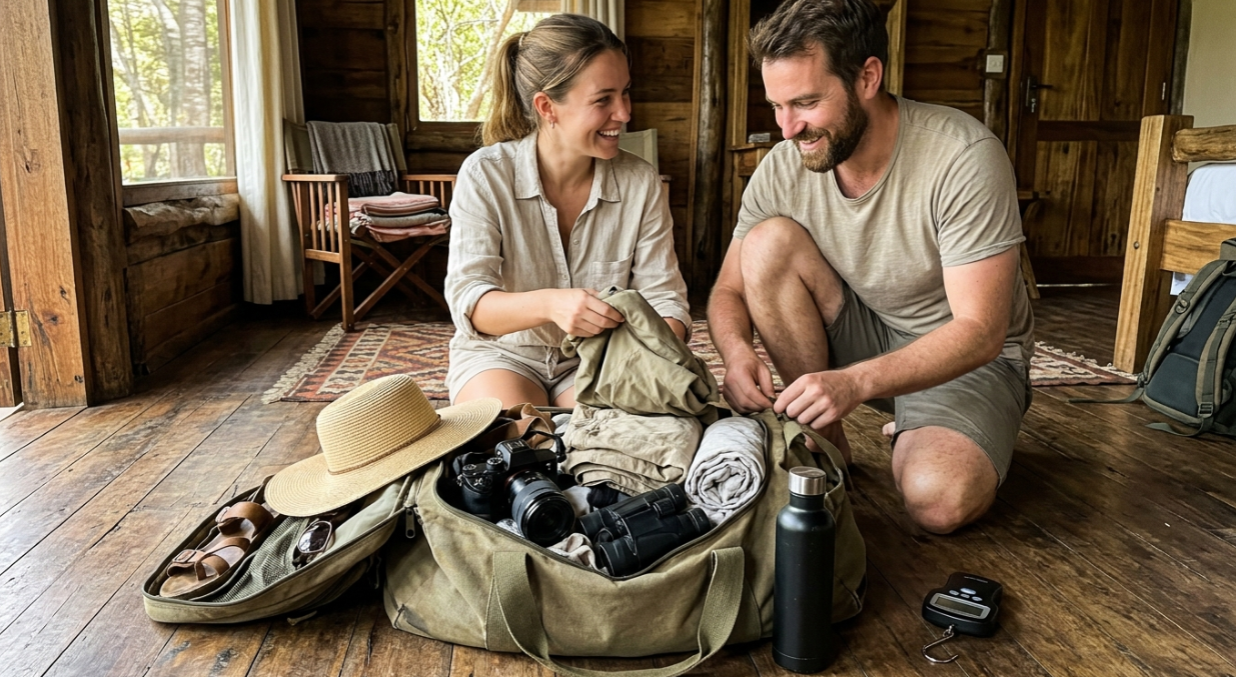
A collapsible, soft-sided bag required for all bush flights in Tanzania. Hard-shell suitcases are not permitted on light aircraft because they cannot be compressed to fit in the small cargo holds. The typical weight limit is 15 kg (33 lbs) per person, including carry-on.
Why it matters: This catches honeymooners off guard more than almost any other logistics detail. You cannot bring a rolling suitcase on a bush flight. Buy or borrow a duffel before you travel. The packing list guide covers exactly what to bring within the weight limit.
Flying Doctors Membership
A membership with the Flying Doctors’ Society of Africa (AMREF) that covers emergency air evacuation from remote safari areas to Nairobi’s hospitals. Costs roughly $25 per couple.
Why it matters: If you have a medical emergency in the Serengeti, the nearest hospital is hours away by road. Flying Doctors membership gets you airlifted to proper medical facilities. It is inexpensive insurance for peace of mind. For broader coverage options, see the safari travel insurance guide.
Driver-Guide
In Tanzania, the person driving your safari vehicle is also your wildlife guide. This is a combined role, unlike in some Southern African countries where the driver and guide are separate people.
Why it matters: Your driver-guide is the single most important person on your safari honeymoon. Their knowledge of animal behavior, park geography, and timing determines the quality of your wildlife encounters. A great guide makes the trip. A mediocre one wastes your money.
USD Cash Requirements
Tanzania operates largely on US dollars for tourism services. However, bills must be from 2009 or later. Older US dollar bills are widely refused by banks, lodges, and exchange bureaus.
Why it matters: Bring newer US bills. Carry small denominations ($1, $5, $10, $20) for tips and markets. ATMs exist in Stone Town but are unreliable elsewhere.
What Makes Tanzania Honeymoon Packages More Expensive?
The largest differences between Tanzania honeymoon packages usually come from six factors: accommodation, season, safari privacy, internal flights, location and optional experiences.
|
Cost factor |
Lower-cost choice |
Higher-cost choice |
|---|---|---|
|
Accommodation |
Comfortable lodge or camp |
Luxury or ultra-luxury private camp |
|
Safari vehicle |
Shared vehicle |
Private vehicle |
|
Location |
Outside major park areas |
Prime wildlife location |
|
Flights |
More driving |
Fly-in safari and bush flights |
|
Season |
Green or shoulder season |
Peak migration periods |
|
Experiences |
Standard game drives |
Balloon, private dinners, walking safaris and other premium activities |
Why two "luxury" packages can have very different prices
A luxury Tanzania honeymoon package is not a standardized product. One itinerary may use larger lodges outside the park and involve long road transfers. Another may use small camps in prime wildlife areas, private vehicles, multiple bush flights and additional experiences.
The accommodation price alone therefore does not tell you whether a package represents good value. Compare the complete itinerary and every included cost.
Terms That Directly Affect Your Honeymoon Budget
Seven terms from this glossary have the biggest impact on what you actually pay. If you only absorb a few definitions, make it these:
-
Per person per night (pppn): Doubles the number you see in a quote. A $900 pppn lodge costs $1,800 per night for two.
-
Park fees: Stack up fast. A 7-day Northern Circuit safari for two generates $700 to $900+ in fees alone before VAT.
-
High season vs. shoulder season: Traveling in November instead of July can save 20% to 30% on lodge rates for nearly identical wildlife viewing.
-
Full-board vs. all-inclusive: The gap between these two inclusion levels can add $150 to $400 per night to your total.
-
Private concession: Costs more per night but unlocks walking safaris, night drives, off-road driving, and dramatically fewer vehicles, all of which elevate a honeymoon.
-
Bush flight: The Serengeti-to-Zanzibar transfer adds $300 to $500 per person but saves an entire day of travel compared to driving back to Arusha and flying commercially.
-
Concession fee + crater service fee: Hidden layers in many quotes. Ask whether they are included or itemized separately.
Frequently Asked Questions
What is typically included in a Tanzania honeymoon package?
A standard package covers accommodation, all meals (full-board or all-inclusive), a private safari vehicle and driver-guide, park fees, domestic transfers or bush flights between destinations, and airport transfers. It usually does not include international flights, travel insurance, visa fees, premium drinks (at full-board properties), balloon safaris, or personal expenses like spa treatments and tips.
How far in advance should you book a Tanzania honeymoon?
For peak season (July to October and December to February), book 9 to 12 months ahead. The best tented camps in the Serengeti have only 6 to 12 tents, and they fill completely during migration season. Shoulder-season trips (November, May, early June) can sometimes be arranged 4 to 6 months out, but earlier is always better for securing first-choice lodges.
Is a Zanzibar beach extension worth adding?
Yes, for most couples. The bush-and-beach format exists because it works. A safari is physically and mentally stimulating, with early mornings, bumpy roads, and adrenaline-filled game drives. Three to five nights on Zanzibar provides genuine recovery time. The transfer is also remarkably simple: a single bush flight from the Serengeti, arriving in Zanzibar by mid-afternoon.
How much should you budget for add-ons like balloon safaris?
A hot air balloon safari costs $550 to $650 per person. A private sandbank excursion on Zanzibar runs $80 to $150 per person. Spice tours cost $20 to $40 per person. Sunset dhow cruises range from $30 to $80. Budget an extra $1,200 to $1,500 per couple for add-ons if you want the full experience.
What is the difference between a tented camp and a lodge?
A tented camp uses canvas-walled structures with real beds, en-suite bathrooms, and often private verandas. A lodge is a permanent building, more like a hotel. Tented camps tend to be smaller (8 to 15 tents), more intimate, and more connected to the bush. Lodges tend to be larger (20 to 60+ rooms), with more conventional amenities like pools and restaurants. For honeymoons, most couples prefer the intimacy of a tented camp.
Do you need travel insurance for a Tanzania honeymoon?
Absolutely. A comprehensive travel insurance policy should cover trip cancellation, medical evacuation, emergency medical treatment, and baggage loss. Safari-specific considerations include evacuation from remote areas (which can cost $10,000+ without coverage) and the fact that the nearest hospital may be a multi-hour flight away. Flying Doctors membership ($25 per couple) covers air evacuation specifically, but it is not a substitute for full travel insurance.
Can you combine a honeymoon safari with other East Africa experiences?
Yes. Some couples add romantic destinations in Kenya (like the Maasai Mara) before their Tanzania safari, or include gorilla trekking in Uganda or Rwanda. Multi-country combinations add complexity and cost but create a once-in-a-lifetime itinerary. A good operator will sequence the logistics so you are not spending half your honeymoon in transit.
If you are comparing Tanzania honeymoon packages and want a custom quote that breaks down every line item (park fees, flights, lodge costs, and add-ons), Duma Explorer designs private honeymoon safaris with full cost transparency. Share your travel dates, trip length, accommodation preferences, and whether you want safari-only or bush-and-beach, and the team will build an itinerary around your honeymoon.