

Bird Watching Tanzania: 2026 Guide to Best Parks & Seasons
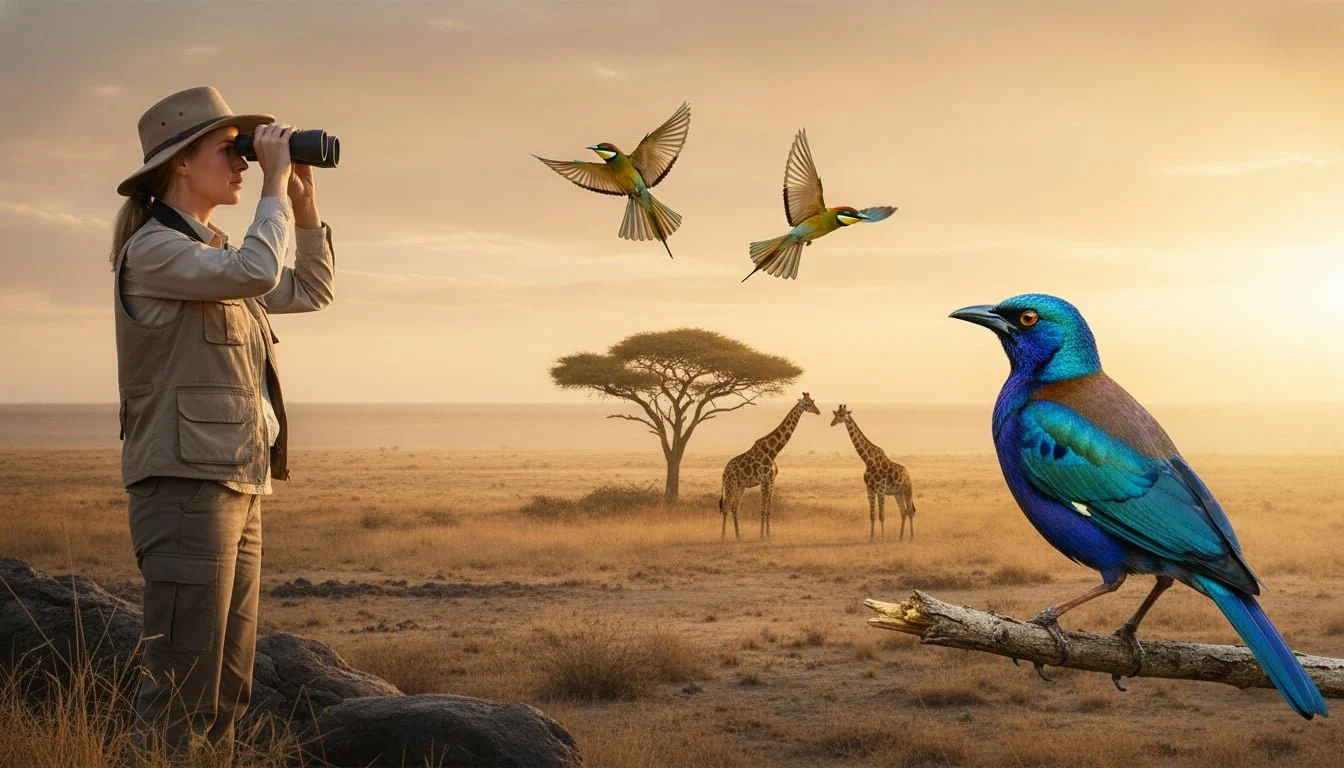
Tanzania might be famous for the Great Migration and the Big Five, but for those who look up, a completely different world awaits. With an astonishing list of over 1,100 bird species, Tanzania is a global hotspot for bird watching Tanzania. This represents roughly 10 percent of the entire world’s bird population, all found within one incredible country. The secret to this diversity lies in its mosaic of habitats, from misty mountain forests and vast savannas to flamingo filled alkaline lakes and coastal mangrove swamps.
Whether you’re a seasoned birder with a long life list or a safari enthusiast who wants to identify the colorful birds around your lodge, this guide is for you. A journey focused on bird watching Tanzania reveals a side of the wilderness many visitors miss, full of vibrant plumage, unique calls, and fascinating behaviors.
What Exactly is a Bird Watching Tanzania Safari?
A bird watching Tanzania safari is a wildlife tour that prioritizes spotting and identifying the country’s incredible avian life. Instead of rushing from one lion sighting to the next, the pace is slower and more deliberate. The focus shifts from the Big Five to the small, winged wonders flitting through the acacia trees or the majestic raptors soaring high above.
These trips are typically led by specialist guides with a deep knowledge of bird calls, nesting sites, and seasonal movements. They can identify a tiny warbler by its song or spot a well camouflaged owl from a distance. An expert guide might point out a flock of Fischer’s lovebirds, a species largely found only in Tanzania, or a rare Shoebill stork stalking its prey in a remote swamp. It’s an immersive experience that opens your eyes to the sheer diversity of the ecosystem.
- Avian Diversity: Tanzania is home to 1,160 bird species. This includes more than 800 resident species and nearly 200 regular migrants that visit from Europe and Asia.
- Specialized Guides: A successful trip often depends on your guide. Companies like Duma Explorer invest in advanced field training, equipping their guides to find everything from camouflaged nightjars to distant eagles.
- Habitat Variety: A good itinerary covers multiple habitats. You could spend a morning scanning alkaline lakes for flamingos, a midday in a forest looking for turacos, and an evening searching for owls on the savanna.
The Best Time for Bird Watching Tanzania
While birding in Tanzania is a fantastic year-round activity, the absolute best time for bird watching Tanzania is during the wet season, from November to April. For broader trip planning, see our guide to the best time to visit Tanzania. During these months, the resident bird populations are joined by hundreds of thousands of migratory shorebirds from northern Europe to escape the northern winter.
The rains also trigger a boom in insect life, providing abundant food. This is the main breeding season for many local birds, meaning you’ll see them in their brightest, most stunning breeding plumage and witness fascinating courtship displays. Weavers build their intricate nests, and widowbirds perform their dramatic bouncing dances.
That said, the dry season (June to October) has its perks. The vegetation is thinner and wildlife (including birds) concentrates around remaining water sources, making spotting easier. It’s a great time for observing raptors in clear skies and large flocks of waterbirds in shrinking wetlands.
Northern Circuit Hotspots for Bird Watching Tanzania
Tanzania’s famous Northern Circuit is not just for big game, it’s a premier destination for bird enthusiasts.
Arusha National Park
Often called a “birder’s paradise in miniature”, Arusha National Park packs incredible diversity into a small area. With over 450 species recorded, its varied habitats include montane rainforests, alkaline lakes, and open grasslands, making it an ideal location for bird watching Tanzania.
- Momella Lakes: These shallow alkaline lakes attract thousands of Lesser Flamingos, painting the shoreline pink. They are also a magnet for pelicans, grebes, and a host of migratory waders.
- Montane Forests: The slopes of Mount Meru are home to spectacular forest birds like the Hartlaub’s Turaco, Bar tailed Trogon, and the Silvery cheeked Hornbill.
Tarangire National Park
With a bird list exceeding 500 species, Tarangire is a true birding haven. Its landscape of baobab trees, acacia woodlands, and seasonal swamps provides a rich environment for a huge variety of birds, and it’s a key destination for any bird watching Tanzania tour.
- Tanzanian Endemics: Tarangire is one of the best places to see species endemic to northern Tanzania, including the Ashy Starling, Rufous tailed Weaver, and the delightful Yellow collared Lovebird.
- Birds of Prey: The park is fantastic for raptors. Bateleur eagles are a common sight, and you can also find Martial Eagles, Brown Snake Eagles, and even Verreaux’s Eagle Owls.
- Wetland Birds: The Silale Swamp becomes a birding hotspot in the wet season, teeming with storks, herons, egrets, and pelicans.
Lake Manyara National Park
Famous for its tree climbing lions, Lake Manyara is equally spectacular for its birdlife. This compact park has recorded over 400 bird species, and it’s possible to see over 100 in a single day. The park’s main feature is the shallow alkaline lake that gives it its name.
The number one spectacle is the vast flock of Lesser Flamingos that can turn the lake’s edge into a sea of pink. Beyond the flamingos, the park’s groundwater forests, acacia woodlands, and lakeshore are home to pelicans, storks, hornbills, and a number of northern Tanzania’s endemic species like the Rufous tailed weaver and Ashy starling.
Ngorongoro Conservation Area
The Ngorongoro Conservation Area offers a unique birding experience across its highlands and the famous Crater floor. The area boasts a list of 500 species of birds.
- The Crater Floor: Here you can find massive Ostriches, the world’s heaviest flying bird the Kori Bustard, and elegant Grey Crowned Cranes. The central Lake Magadi is often home to thousands of flamingos and other waterbirds.
- Highland Forests: The forests on the crater rim are home to highland specialists like the Eastern Double collared Sunbird and the Tacazze Sunbird.
- Endemics and Specials: The Ngorongoro highlands are one of the few places to witness the breeding display of the Jackson’s Widowbird. The Grey breasted Spurfowl, a near endemic, is also found here.
Serengeti National Park
The legendary plains of the Serengeti are not just for the Great Migration. This vast ecosystem supports over 500 bird species, offering some of the most scenic bird watching Tanzania. If you’re planning time here, explore our Serengeti safari tours for route ideas and timing.
- Savanna Giants: The open plains are perfect for spotting large ground birds like the Ostrich, Kori Bustard, and the fascinating Secretarybird, which hunts snakes on foot.
- Serengeti Specials: The park is the best place to find species largely confined to this ecosystem, including the Fischer’s Lovebird, Grey crested Helmetshrike, and the Rufous tailed Weaver.
- Raptor Heaven: With over 50 species of birds of prey, the Serengeti is a raptor enthusiast’s dream. Six species of vultures play a critical role in the ecosystem, and eagles like the Martial and Bateleur are common.
Birding in Tanzania’s Great Rift Valley Lakes
The Great Rift Valley created a series of dramatic lakes, many of which are crucial habitats for birds.
Lake Natron: The Flamingo Nursery
While many lakes have flamingos, Lake Natron is special. This hyper saline lake is the only regular breeding ground for East Africa’s 2.5 million Lesser Flamingos. Over 75% of the world’s population of this species is hatched here, making it a globally Important Bird Area of critical significance. The caustic environment protects their nests from predators. A visit here offers a stark, beautiful landscape and one of the most important avian spectacles on the planet.
Lake Victoria and Rubondo Island National Park
Birding on Rubondo Island offers a completely different experience. This forested island in Lake Victoria, Africa’s largest lake, is a sanctuary for both aquatic and forest birds. With over 300 species recorded, it’s a tranquil and unique destination.
The island boasts one of the highest densities of African Fish Eagles, and their calls provide a constant soundtrack to your visit. The forests are home to African Grey Parrots and spectacular species like the Piping Hornbill and Ross’s Turaco. Exploring by boat allows for quiet approaches to waterbird colonies and papyrus swamps where you might spot the rare Papyrus Gonolek.
Exploring Tanzania’s Unique Habitats
Beyond the classic safari circuits lie specialized ecosystems that are a must visit for serious birders.
Mount Kilimanjaro: Birding on Africa’s Rooftop
Climbing Africa’s highest peak offers more than just a trekking challenge; it’s a journey through distinct ecological zones, each with its own birdlife. If you’re considering a trek, review our overview of Mount Kilimanjaro climbing routes to choose an approach that pairs well with birding. The richest diversity is found in the montane forests on the lower slopes (1,800 to 3,000 meters). Here you can find the beautiful Hartlaub’s Turaco, the rare Abbott’s Starling, and numerous colorful sunbirds. As you ascend, the species change. Look for the Scarlet tufted Malachite Sunbird in the heathlands and even the mighty Lammergeier (Bearded Vulture) soaring near the highest camps.
The Usambara Mountains: A Realm of Endemics
The Usambara Mountains are part of the ancient Eastern Arc range, a place often called the “Galápagos of Africa” for its incredible number of endemic species. For birders, this is a treasure chest. The mountains are home to strictly endemic bird species, including the Usambara Eagle Owl, Usambara Weaver, and Usambara Akalat. Birding here involves walking through misty, primordial cloud forests, listening for unique calls in the dense foliage.
Ruaha National Park: Where East Meets South
As Tanzania’s largest national park, Ruaha is a wild and remote destination with a staggering bird list of over 570 species. Its location at the crossroads of eastern and southern African ecosystems results in an unparalleled mix of birds. Ruaha is the only place on earth to find the Ruaha Red billed Hornbill, a recently recognized endemic species. The park is also a stronghold for raptors and is known for its miombo woodland specialists.
The Rufiji Delta: Coastal and Wetland Wonders
The Rufiji Delta is the largest mangrove estuary in East Africa, a sprawling network of channels, mudflats, and mangrove forests on the Indian Ocean coast. This rich wetland is a haven for waterbirds and an essential stopover for migratory shorebirds arriving from Eurasia. Exploring by boat, you can find flocks of herons, egrets, storks, kingfishers, and perhaps even the rare Mangrove Kingfisher or Crab Plover.
Understanding Tanzania’s Avian Treasures
For those who want to dive deeper, understanding the lists and designations behind the birds can enhance the experience of bird watching Tanzania.
Tanzania’s Bird Checklist
Tanzania’s official bird checklist contains 1,148 known species. This dynamic list is the foundational tool for any birder in the country. It documents every species ever recorded, noting their status as residents, migrants, or rare vagrants. The checklist includes around 200 regular migratory species and highlights those of conservation concern.
Tanzania’s Endemic Bird Species
Tanzania is home to 33 endemic bird species, birds found here and nowhere else on Earth. These are the crown jewels for many visiting birders. They range from the recently discovered Udzungwa Forest Partridge in the southern mountains to the Pemba Green Pigeon on Pemba Island and the Yellow collared Lovebird of the northern savannas. Seeing one of these unique species is a special part of any Tanzania birding trip.
What is an Important Bird Area (IBA) in Tanzania?
An Important Bird Area, or IBA, is a site recognized as being globally significant for bird conservation. Tanzania has 80 Important Bird & Biodiversity Areas (IBAs), covering more than 168,000 square kilometers. These include famous national parks like the Serengeti, critical breeding sites like Lake Natron, and the endemic rich Eastern Arc Mountains. Visiting an IBA means you are in one of the most vital places for birds in the country.
Connecting with the Birding Community
The hub for birding and conservation in the country is Nature Tanzania, the official partner of BirdLife International. They are involved in critical conservation work, monitoring IBAs, and coordinating citizen science projects like the Tanzania Bird Atlas and the annual African Waterfowl Census. For visiting birders, connecting with local guides and lodges that support these efforts is a great way to contribute to the conservation of Tanzania’s magnificent birdlife. Learn how we support initiatives like Friends of Serengeti.
Planning Your Ultimate Birding Safari
A little extra planning can turn a good birding trip into an unforgettable one.
- Pick the Right Season: For the highest species count, travel between November and April to catch the migratory birds and breeding season.
- Diversify Your Itinerary: Don’t stay in one place. A well-designed trip should include different habitats like savannas, forests, and wetlands to maximize your sightings. For inspiration, see our 7 to 10 day Tanzania safari itineraries.
- Hire an Expert Guide: This is the most important tip. A specialist bird guide knows the calls, the habitats, and the secret spots. Their expertise will exponentially increase the number of birds you see and appreciate.
- Pack the Right Gear: Good binoculars (8x42 or 10x42 are popular choices) are essential. A field guide to East African birds and a camera with a good zoom lens will also enhance your trip.
- Be Prepared for Early Mornings: Birds are most active at dawn. A typical birding day starts before sunrise. Be ready for early wake up calls followed by a rest during the midday quiet period.
- Dress Appropriately: Wear neutral colored clothing (greens, browns, khaki) to blend in. Dress in layers, as mornings can be cool and afternoons warm.
A safari focused on bird watching Tanzania is a journey of discovery. It’s about the thrill of the chase, the reward of patience, and the simple joy of watching a Lilac breasted Roller flash its rainbow colors against a blue sky. Ready to find your wings? Let Duma Explorer help you plan a birding adventure tailored to your wish list. Start with our complete safari planning guide.
Frequently Asked Questions About Bird Watching Tanzania
How many bird species are in Tanzania?
Tanzania has one of Africa’s most impressive bird lists, with 1,148 known species recorded within its borders. This incredible diversity is due to its wide range of habitats.
What is the best month for bird watching in Tanzania?
The period from November to April is generally considered the best time. This is when resident birds are in their breeding plumage and are joined by a huge number of migratory species from the northern hemisphere, maximizing species diversity.
Can I see endemic birds on a standard safari?
Yes, absolutely. The popular Northern Circuit parks like Tarangire, Lake Manyara, and the Serengeti are home to several Tanzanian endemics and near endemics, including the Yellow collared Lovebird, Ashy Starling, and Rufous tailed Weaver, which are often easily seen.
Do I need a special guide for bird watching Tanzania?
While any good safari guide will know the common birds, a dedicated bird watching Tanzania trip is vastly improved by a specialist bird guide. Their expert knowledge of calls, behaviors, and specific locations for rare species can transform your experience. Operators like Duma Explorer can provide guides with this specialized training.
What equipment should I bring for birding in Tanzania?
The most essential items are a good pair of binoculars and a field guide for East African birds. A camera with a telephoto lens is great for photography, and a small notebook is useful for keeping a list of your sightings.
Is Tanzania good for beginner bird watchers?
Tanzania is a fantastic destination for birders of all levels. Beginners will be amazed by the abundance and visibility of large, colorful birds like hornbills, rollers, and cranes. The sheer number of species and the availability of expert guides make it a great place to learn and quickly expand your life list.