

Umbwe Route 2026: Kilimanjaro’s Steepest 6–7 Day Guide
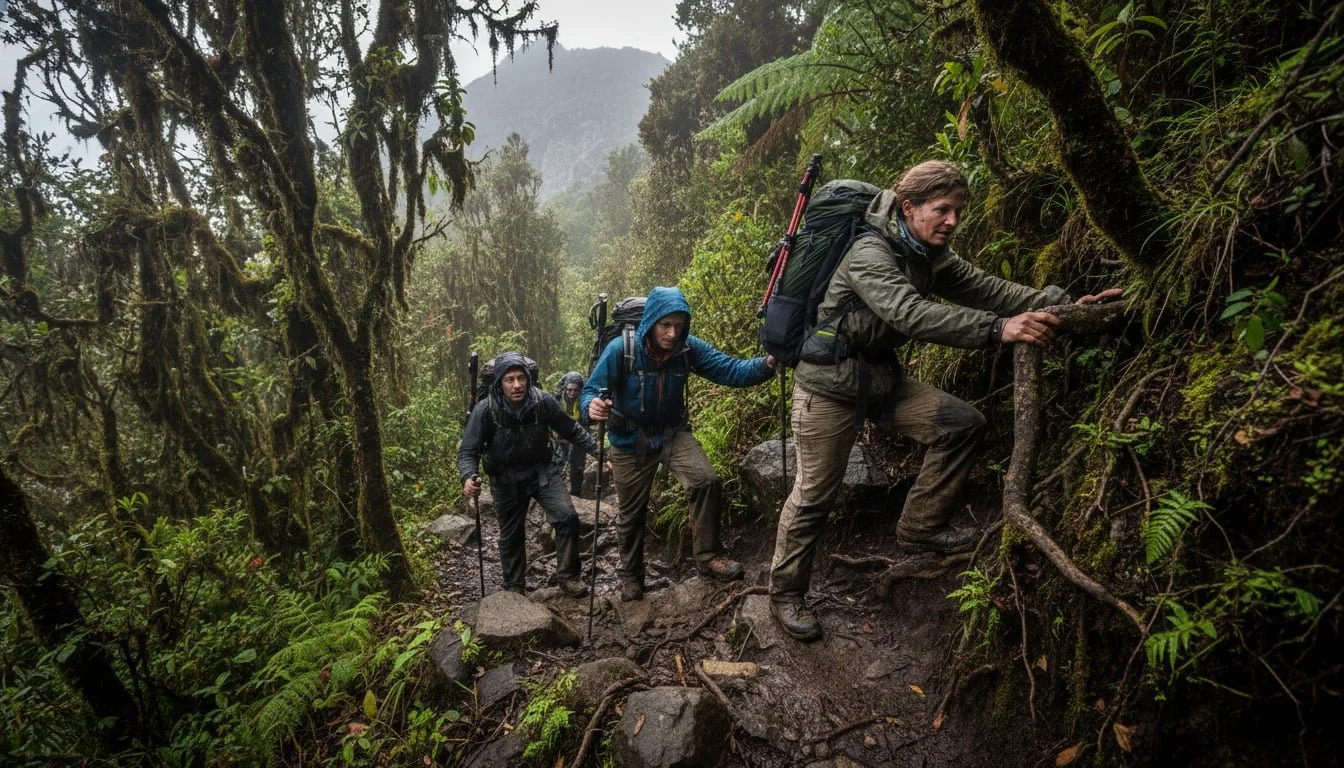
So, you’re thinking about climbing Mount Kilimanjaro and you’ve heard whispers of the Umbwe Route. Let’s talk about it. Known as the steepest, shortest, and most direct path to the roof of Africa, this trail is not for the faint of heart. It’s a serious challenge that rewards experienced trekkers with breathtaking scenery and a quiet, almost solitary, start to their adventure.
At a Glance: Climbing Kilimanjaro via Umbwe
Is the Umbwe Route the hardest? Yes, it is widely considered the most difficult and steepest path on Kilimanjaro due to its rapid ascent profile.
-
Total Distance: 53 km (32 miles)
-
Average Success Rate: 60%–70% (7 days is recommended)
-
Difficulty Level: Very High (Experienced trekkers only)
-
Best For: Those seeking solitude and a physical "true" climb.
-
Key Highlight: The quietest rainforest approach and the Barranco Wall scramble.
Unlike the more popular trails, the Umbwe Route is a path less traveled. In a recent year, only about 1% of the 47,000 people who climbed Kilimanjaro chose this route. If you’re looking for a tough, rewarding climb away from the crowds, the Umbwe Route might be your perfect match.
The Umbwe Route by the Numbers: Distance, Duration, and Profile
The Umbwe Route is a compact and intense journey. It covers a total distance of about 53 kilometers (32 miles) from start to finish. Because of its direct nature, the climb is typically completed in six or seven days. While a five day trek is technically possible, it is strongly discouraged by reputable operators due to the dangerously rapid ascent and extremely low summit success rates. Most itineraries will travel for 6 or 7 days, which builds in a critical acclimatization day to boost safety and success.
What truly defines the Umbwe Route is its elevation profile. The trail starts at Umbwe Gate (around 1,600 meters) and makes a relentlessly steep climb. By the end of day two, hikers are already at Barranco Camp, standing at an impressive 3,900 meters. This rapid gain of over 2,300 meters in just 48 hours is what makes the Umbwe Route so demanding and why proper acclimatization is non negotiable. After this initial intense push, the route joins the Southern Circuit, which offers a more gradual approach to the base camp before the final summit push.
The Journey Begins: Your Path on the Umbwe Route
Understanding the flow of the trek helps paint a clearer picture of what to expect. The journey can be broken down into three main phases: the initial ascent, the traverse, and the descent.
Starting Point: Umbwe Gate
Your adventure begins at Umbwe Gate, located on the southern side of Kilimanjaro at an elevation of about 1,600 meters. It’s a more remote and less developed entrance compared to others. Often, climbers will first register at the busier Machame Gate before a short drive over to Umbwe Gate to begin hiking. The trail immediately enters a lush, humid rainforest, quickly narrowing from a forestry track into a steep, root covered footpath that signals the challenge ahead.
The Ascent: To Barranco Camp and the Southern Circuit
The first two days are a steep climb through rainforest and then into the moorland zone. The quiet trail eventually merges with the much busier Machame Route, Lemosho, and Shira trails at the scenic Barranco Camp (3,900 meters). This is a pivotal point in the trek.
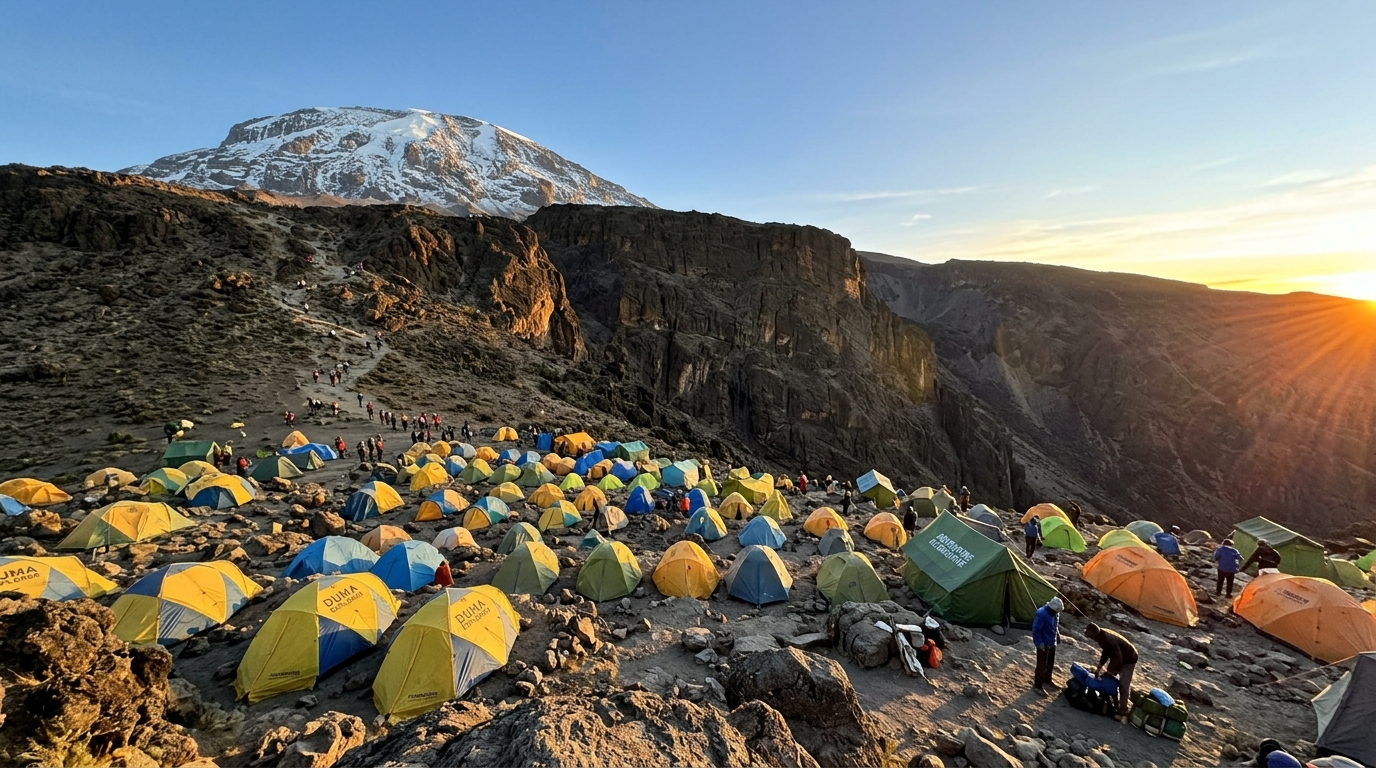
From Barranco, you’ll follow the Southern Circuit path eastward. This section is famous for its incredible views of Kibo’s southern glaciers. The trail takes you up the famous Barranco Wall, across the Karanga Valley, and finally to Barafu Camp (4,670 meters), the base camp for your summit attempt. Barafu, meaning “ice” in Swahili, is a stark, rocky, and windswept camp that serves as the launching point for the final push to Uhuru Peak.
The Descent: Down the Mweka Route
After reaching the summit, you won’t return the way you came. Instead, you’ll descend using the Mweka Route, a trail designated for descent only. This path offers a faster and safer way down the mountain, leading you from the arctic conditions of the summit back through the moorland and rainforest to Mweka Gate (1,640 meters). The rapid loss of altitude on this well trodden path helps your body recover, though it can be tough on the knees.
Is the Umbwe Route Right for You? Difficulty and Success
Before committing to this trail, it’s essential to understand the challenges involved. The Umbwe Route is considered the most difficult of Kilimanjaro’s standard trekking routes.
The Steepest Challenge: Difficulty and Terrain
The primary difficulty of the Umbwe Route is its unrelenting steepness. The first two days are a continuous, aggressive ascent with very little flat ground. You’ll find yourself using tree roots and rocks as natural staircases, requiring good leg strength and endurance. While it’s a non technical trek (no ropes or climbing gear needed), the sharp gradients and occasional exposed ridges make it a physically demanding endeavor. It’s best suited for hikers who are confident in their ability to handle long, steep climbs.
The Acclimatization Hurdle
The single greatest challenge on the Umbwe Route is acclimatization. The body needs time to adjust to lower oxygen levels, and this trail provides very little. Ascending to 3,900 meters in just two days significantly increases the risk of Acute Mountain Sickness (AMS). In fact, many climbers begin to feel the effects of altitude on the third day, which is why a seven day itinerary with an extra rest day at Barranco Camp is so important for success. This extra day can make a huge difference in how your body copes with the altitude.
How to Beat the Umbwe Ascent Profile
Because you reach 3,900 meters within 48 hours, your strategy must be proactive:
-
Pre-Acclimatize: If possible, hike a smaller peak like Mount Meru immediately before starting Umbwe.
-
Hydration: Drink 4 liters of water daily to help blood oxygenation.
-
The "Pole Pole" Rule: Even though the trail is steep, maintain a slow, rhythmic pace to keep your heart rate in a sustainable zone.
Summit Success Rate: What Are the Odds?
Due to the acclimatization challenges, the Umbwe Route generally has a lower summit success rate than other, longer routes.
-
6 Day Itinerary: Operators estimate a success rate of around 60% to 70%.
-
7 Day Itinerary: Adding an acclimatization day dramatically improves the odds, pushing success rates up to about 70%.
Umbwe Route vs. Popular Kilimanjaro Routes
|
Route |
Difficulty |
Traffic |
Success Rate (Avg) |
Recommended Days |
|
Umbwe |
Expert |
Very Low |
60-70% |
7 Days |
|
Machame |
High |
High |
85% |
7 Days |
|
Lemosho |
Moderate |
Medium |
90%+ |
8 Days |
|
Marangu |
Moderate |
High |
50% |
These statistics highlight why rushing is not a good idea. Choosing a longer itinerary and a reputable operator like Duma Explorer, who prioritizes safety and acclimatization, will give you the best possible chance of standing on Uhuru Peak. If you’re still deciding between routes, see our complete overview of Kilimanjaro climbing routes.
Umbwe Route 2026: What’s New?
Planning for a 2026 trek requires attention to updated park regulations and booking trends:
-
Permit Requirements: Kilimanjaro National Park (KINAPA) requires all trekkers to be accompanied by a licensed guide. Permits for the Umbwe Route remain less competitive than Machame, but 2026 bookings are trending 6–8 months in advance for dry season slots.
-
Sustainability Fees: Ensure your 2026 quote includes the latest conservation and camping fees, as these are subject to annual adjustments by the Tanzanian government.
-
Safety Protocols: Updated 2026 safety standards recommend that all Umbwe climbers undergo a pulse oximetry check twice daily due to the steep ascent profile.
The Experience: Scenery, Crowds, and When to Go
While difficult, the Umbwe Route offers a unique and rewarding experience for those who are prepared.
Scenery: Is the View Worth the Climb?
Absolutely. The scenery on the Umbwe Route is nothing short of spectacular. You’ll start in a dense, primeval rainforest, ascend a narrow ridge with stunning vistas on either side, and emerge into a surreal moorland dotted with giant Senecio plants. The views from Barranco Camp, with the Great Barranco Wall on one side and Kibo’s glaciers on the other, are often cited as a highlight. The Southern Circuit offers constant, dramatic panoramas of the Southern Ice Fields before you reach the stark, beautiful alpine desert of Barafu Camp.
Popularity and Trail Traffic
The Umbwe Route is one of Kilimanjaro’s best kept secrets, at least for the first two days. It sees very few climbers, offering a truly quiet and wild experience. You may not see another group until you reach Barranco Camp. At that point, the route merges with the main artery of the Machame and Lemosho trails, and the traffic increases significantly. So, you get the best of both worlds: initial solitude followed by the shared energy of fellow climbers on the final push.
Best Season and Weather for the Climb
The best times to climb Kilimanjaro on any route, including the Umbwe Route, are during the two dry seasons.
-
July through September: This is the primary dry season and offers the clearest skies and most stable weather.
-
January through early March: This is the shorter dry season, which is also a great time to climb, though there can be more clouds.
You should try to avoid the rainy seasons of April, May, and November, as the steep Umbwe trail can become extremely muddy and slippery. No matter when you go, be prepared for a wide range of temperatures. It can be warm and humid in the rainforest, cool in the moorland, and well below freezing at the summit, where temperatures can drop to as low as −20°C at night, especially with wind chill.
A 7 Day Umbwe Route Itinerary: Day by Day
Here’s a look at what you can expect on a recommended seven day Umbwe Route climb. This itinerary includes the all important acclimatization day.
Day 1: Umbwe Gate to Umbwe Cave Camp
The first day is a tough, 1,250 meter ascent through dense rainforest. The trail is steep and can be slippery, with tree roots forming natural steps. You’ll arrive at Umbwe Cave Camp, a small, secluded campsite in the forest, feeling tired but accomplished.
Day 2: Umbwe Cave Camp to Barranco Camp
You’ll continue the steep ascent along a ridge, leaving the forest behind and entering the heath and moorland zone. The landscape opens up with incredible views of Kibo peak ahead. The day ends at the stunning Barranco Camp, located in a valley beneath the imposing Barranco Wall.
Day 3: Barranco Camp Acclimatization
-
Elevation: Staying at 3,900m
This is your crucial acclimatization day. You will spend a second night at Barranco Camp to let your body adjust to the altitude. To aid the process, your guides will likely lead a short “climb high, sleep low” hike partway up the Barranco Wall or toward the Karanga Valley before you return to camp to rest.
Day 4: Barranco Camp to Karanga Camp
The day begins with the exciting scramble up the Barranco Wall. This 257 meter rock face looks intimidating but is a fun, non technical climb that requires using your hands and feet. After conquering the wall, the trail crosses several ridges and valleys before arriving at Karanga Camp, which offers fantastic views of Kibo.
Day 5: Karanga Camp to Barafu Camp
-
Distance: Approximately 3.5 kilometers
-
Elevation: 3,960m to 4,670m
This is a short but steep day, taking you into the high alpine desert. The trail is a steady uphill walk over rocky terrain to Barafu Camp, a cold and windy camp perched on a narrow ridge. You’ll arrive early to eat and rest as much as possible before the midnight summit attempt.
Day 6: Summit Day (Barafu Camp to Uhuru Peak to Mweka Camp)
-
[* Trekking Time: 10-13 hours total
-
Distance: 16.36km total
-
Elevation: 4,662m up to 5,895m, then down to 3,106m](https://suricatasafaris.com/wp-content/uploads/2025/03/6-Days-Kilimanjaro-Trekking-Umbwe-Route.pdf)
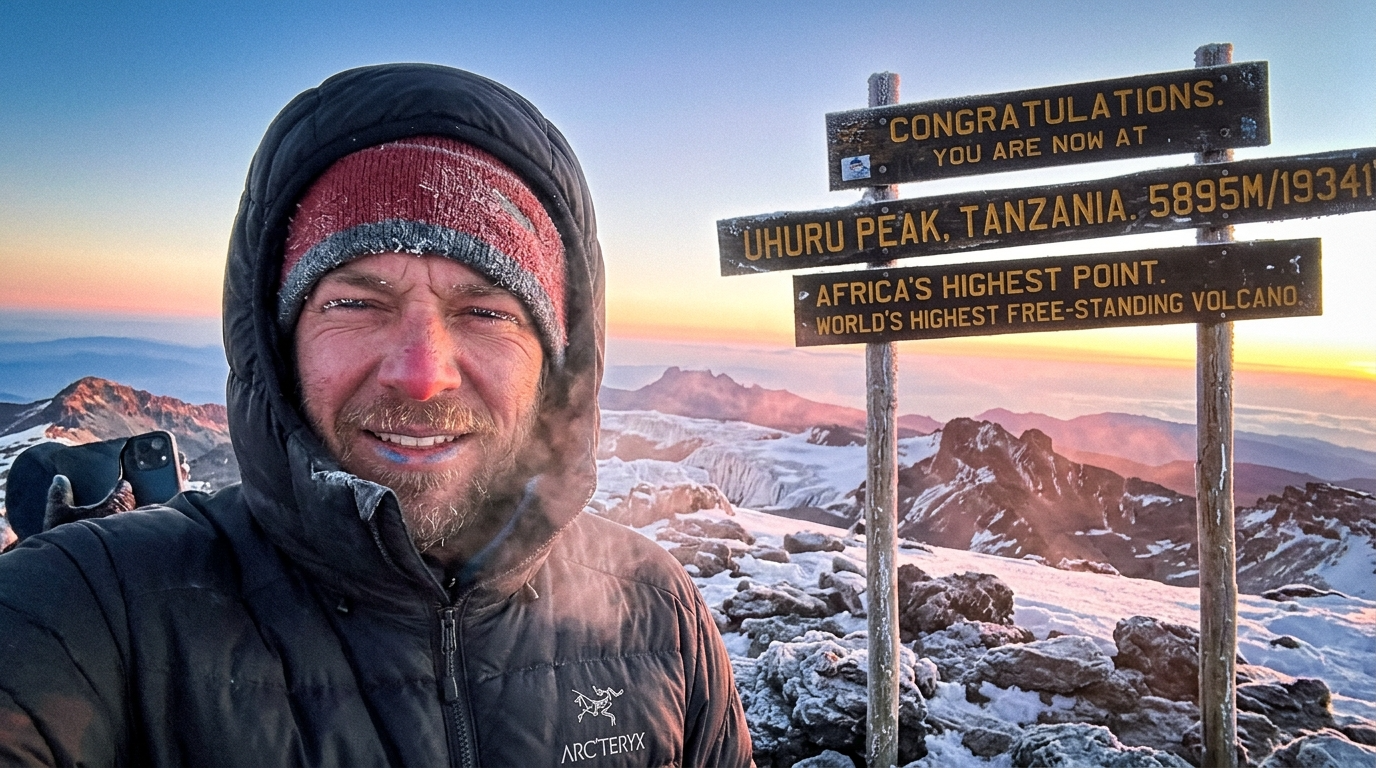
The longest and most challenging day of the trek. You’ll start around midnight, hiking up steep scree slopes in the dark for 6 to 8 hours to reach Uhuru Peak (5,895 meters) around sunrise. After celebrating at the summit, you’ll begin the long descent back to Barafu for a short rest, and then continue down to Mweka Camp (3,100 meters) for the night.
Day 7: Mweka Camp to Mweka Gate
-
Distance: Approximately 9 kilometers
-
Elevation: 3,100m down to 1,640m
The final day is a pleasant, easy downhill walk through the lush rainforest to Mweka Gate. At the gate, you will sign out of the park, receive your official summit certificate, and celebrate with your incredible crew before heading back to your hotel for a well deserved shower and rest. Many climbers reward themselves with a few days on Zanzibar. A good place to start is with Zanzibar’s best beaches.
Key Features and Preparations for the Umbwe Route
Success on the Umbwe Route depends on good preparation. Here are a few key things to know.
Conquering the Barranco Wall
The Barranco Wall is a famous landmark on the mountain. This 257 meter (843 foot) ridge requires a bit of scrambling, using your hands for balance and to pull yourself up over rocks. It’s often described as looking more intimidating than it actually is and becomes a fun highlight for most climbers. No technical skills are needed, and your guides will be there to show you the way.
Your Essential Equipment and Gear Checklist
Packing properly is critical for a safe and comfortable climb. You will need to be prepared for everything from tropical heat to arctic cold.
-
Layered Clothing: Bring moisture wicking base layers, insulating mid layers (like fleece), and a waterproof and windproof outer shell.
-
Footwear: Broken in, waterproof hiking boots are a must.
-
Cold Weather Gear: For the summit, you’ll need an insulated down jacket, warm gloves or mittens, a thermal hat, and a balaclava.
-
Sleeping Gear: A sleeping bag rated to at least negative 10°C (14°F) is recommended.
-
Packs: A daypack (25 to 35 liters) for your daily essentials and a larger duffel bag for porters to carry.
-
Essentials: A headlamp with extra batteries, sunglasses, high SPF sunscreen, and trekking poles are non negotiable.
Many essential items can be rented in Tanzania if you don’t own them. Companies like Duma Explorer provide a detailed packing list and can help arrange high quality gear rentals.
Training and Fitness Preparation
You don’t need to be a professional athlete, but you do need to be in good physical shape for the Umbwe Route. Start training at least 2 to 4 months before your trip. Your training should focus on:
-
Cardiovascular Fitness: Hiking, jogging, cycling, and stair climbing are all excellent ways to build aerobic endurance.
-
Strength Training: Focus on strengthening your legs (squats, lunges) and core to handle the steep terrain.
-
Endurance: Go for long hikes (4 to 6 hours) on weekends to simulate the long days on the mountain. Practice carrying a daypack with some weight in it.
The better your physical condition, the more you will be able to enjoy the climb rather than just endure it.
The Final Verdict: Who Should Attempt the Umbwe Route?
The Umbwe Route is best suited for seasoned trekkers who are in excellent physical condition and have previous high altitude hiking experience. It is not recommended for beginners or anyone who is unsure about their fitness level. This is a route for those who are specifically looking for a tough physical and mental challenge and who value solitude over comfort.
If this sounds like you, the Umbwe Route can be an incredibly rewarding journey. Conquering Kilimanjaro’s most demanding trail offers an unparalleled sense of accomplishment. If you are ready to take on this challenge, it’s vital to go with an experienced and safety conscious team. A private climb with one of the best Kilimanjaro tour operators ensures you have the expert guidance and support needed for success.
Ready to plan your ultimate Kilimanjaro adventure? Contact Duma Explorer to start designing your private Umbwe Route expedition.
Frequently Asked Questions About the Umbwe Route
What is the success rate of the Umbwe Route?
The success rate varies greatly with the itinerary length. A 6 day Umbwe climb has an estimated success rate of about 50%, and a 7 day Umbwe climb about 70%.
Is the Umbwe Route dangerous?
The main danger is the increased risk of severe altitude sickness due to the rapid ascent. The terrain itself is not technically dangerous, but it is steep and demanding. Choosing a seven day itinerary and a reputable operator with experienced, medically trained guides mitigates these risks (see our guide to choosing the best Kilimanjaro climb operator in Moshi).
How many days are best for the Umbwe Route?
A seven day itinerary is strongly recommended. The extra day for acclimatization at Barranco Camp is crucial for increasing your safety and your chance of reaching the summit.
Can a beginner climb the Umbwe Route?
No, the Umbwe Route is not recommended for beginners. Its steepness and poor acclimatization profile make it suitable only for experienced hikers who are physically fit and have previous high altitude trekking experience.
What makes the Umbwe Route different from Machame?
The Umbwe Route is much steeper and more direct in its first two days. It is also far less crowded. After two days, it joins the Machame Route at Barranco Camp., and from that point on, the two routes follow the same path to the summit and down the Mweka descent. If you prefer gentler gradients and hut accommodations, consider the Marangu Route.
How cold does it get on the Umbwe Route?
Temperatures can range from over 20°C (68°F) in the rainforest to well below freezing on the summit. At Barafu Camp and on the way to Uhuru Peak, temperatures can drop to At Barafu Camp (4,670 m), nighttime temperatures are typically −10°C to −5°C (14–23°F), and during summit night in the summit zone they range from −20°C to −10°C (−4–14°F)., with wind chill making it feel even colder.