

Wildebeest Migration 2026: When & Where to See It Best
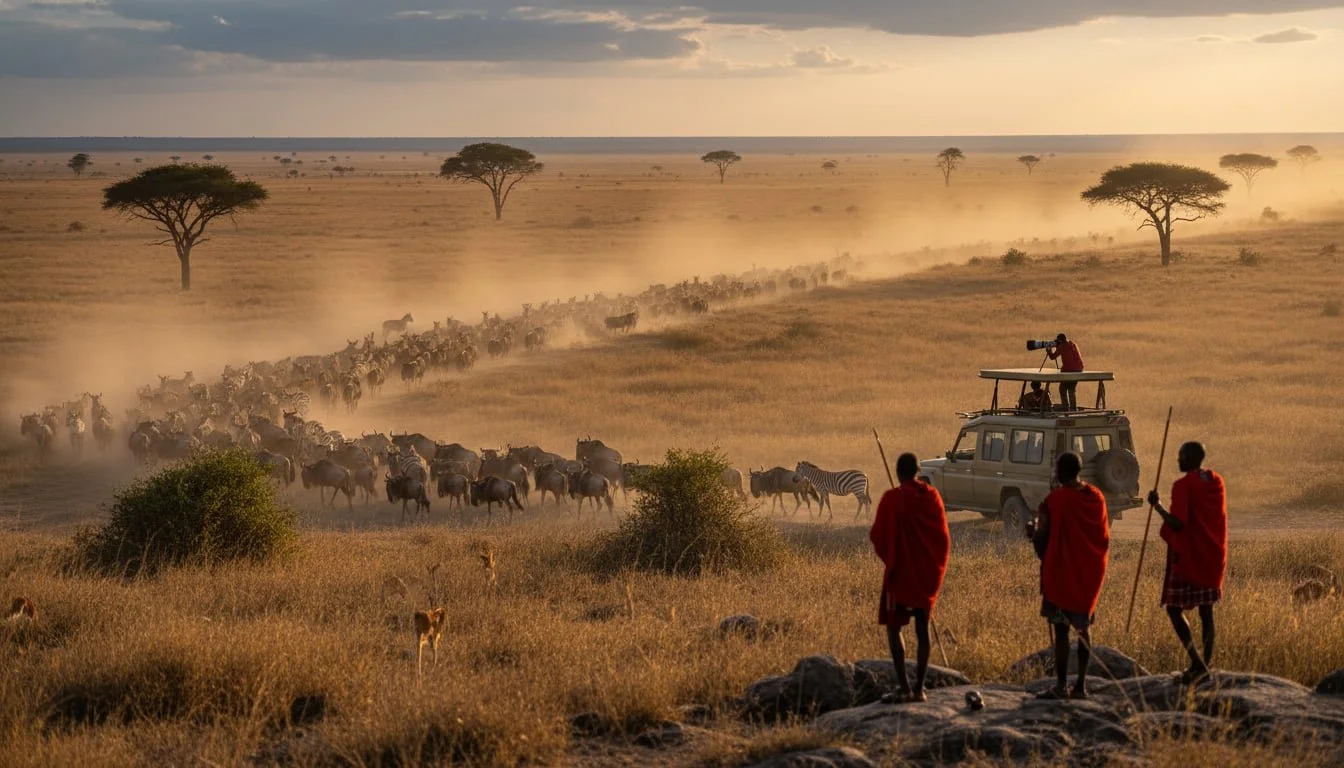
Picture this: over a million wildebeest, hundreds of thousands of zebras, and countless gazelles thundering across the vast plains of East Africa. This isn’t just a journey; it’s the Great Wildebeest Migration, a relentless, circular trek for survival that’s often called the greatest show on Earth. It is the largest overland mammal migration in the world, a raw, dramatic spectacle that unfolds year round across Tanzania and Kenya.
Following the rhythm of the rains, these massive herds travel roughly 800 kilometers in a clockwise loop through the Serengeti and Maasai Mara ecosystem. They are in constant search of fresh grass and water, facing challenges at every turn, from opportunistic predators to treacherous, crocodile infested rivers. It’s a true circle of life, where around 500,000 calves are born each year, yet on average, about 6,250 wildebeest drown each year during the Mara River crossings.
For anyone planning a safari, understanding the timing and movement of this incredible event is key. Let’s dive into the month by month flow of the wildebeest migration.
The Great Migration Route: A Month by Month Guide
While the wildebeest migration follows a predictable annual cycle, its exact timing is famously unpredictable. The entire event is driven by rainfall, so the herds’ movements can shift by weeks or even months depending on when and where the rains fall. Nature doesn’t run on a strict schedule. This guide provides a general timeline, but always remember that the animals are in charge.
January to March: Calving Season in the Southern Serengeti
The year begins with the herds concentrated on the nutrient rich, short grass plains of the Southern Serengeti and the Ndutu area of the Ngorongoro Conservation Area. This is the calving season, a time of incredible renewal. From late January through March, a massive baby boom occurs, with as many as 8,000 wildebeest calves born every single day at its peak.
The open plains provide a perfect nursery, offering rich grazing for mothers and making it easier to spot approaching danger. Of course, this explosion of new life attracts predators in huge numbers. Lions, cheetahs, hyenas, and jackals flock to the area, creating a theater of dramatic predator prey interactions. For safari goers, it’s a phenomenal time to witness both the tender moments of new life and the raw reality of the food chain (including on a guided “walking safari in Ndutu” for an entirely different perspective).
April to June: The Northward Journey Begins
As the long rains arrive around April and May, the southern plains have been grazed down. This is the signal for the great herds to begin their epic trek northward. The single mega herd splinters into smaller groups, fanning out across the Serengeti. Some columns head directly north through the central Seronera region, while a massive contingent veers northwest into the Serengeti’s Western Corridor. If you’re planning to base in these areas, our “Serengeti safari tours guide” compares regions and camps to help you decide.
By May, you can witness incredible scenes of wildebeest marching in columns that can stretch for an astonishing 40 kilometers. This period is also the wildebeest rutting season. As the herds move, thousands of bulls engage in noisy, energetic clashes for mating rights. The air fills with grunting and the sight of sparring males, ensuring the next generation will be conceived on the move. By June, a large part of the herd congregates in the Western Corridor, preparing for its first major obstacle: the Grumeti River.
July to October: Dramatic River Crossings and Grazing in the North
This is the most famous phase of the wildebeest migration, defined by perilous river crossings.
-
The Grumeti River Crossing (June and July): Located in the Western Corridor, the Grumeti River is the first major hurdle. Its channels are home to some of the largest Nile crocodiles in Africa. While perhaps less chaotic than the Mara crossings to come, witnessing the herds plunge through these waters is a heart pounding experience, often with fewer crowds.
-
The Mara River Crossing (July to September): The ultimate spectacle. The Mara River, which forms the border between the Serengeti in Tanzania and the Maasai Mara in Kenya, is the final and most dramatic barrier. Thousands of animals build up on the banks before taking a leap of faith into the churning, crocodile filled water. Crossings are explosive, chaotic, and happen repeatedly over several weeks, not as a single event. For a quick overview of where and when to position yourself, see our “Great Migration in East Africa guide.”
Once across, the herds spread out to graze on the lush pastures of Kenya’s Maasai Mara National Reserve and Tanzania’s Northern Serengeti (in areas like Kogatende and the Lamai Wedge). They spend September and October recovering their strength, fattening up on the green grasses. Predator action remains high, as the resident lion prides of the Mara take full advantage of the bounty.
November to December: The Return South During the Green Season
The arrival of the short rains in Tanzania around November signals that it is time to head home. The scent of fresh grass sprouting on the southern plains pulls the wildebeest back. The herds begin their southward journey, often moving through the Lobo Valley and the Loliondo Game Controlled Area on the eastern side of the Serengeti.
This “Green Season” is a beautiful time for a safari. The landscapes are vibrant and green, the dust has settled, and the air is clear. You can see long, snaking lines of wildebeest returning to their birthing grounds. By the end of December, the herds are typically arriving back in the Southern Serengeti and Ndutu area, completing the great circle and positioning themselves to give birth once again.
Understanding the Key Events of the Wildebeest Migration
While the month by month guide gives you the big picture, certain events define the experience.
The Calving Season: A Predator’s Paradise
The synchronized birth of half a million calves in just a few weeks is an evolutionary masterstroke. By overwhelming the landscape with newborns, the wildebeest ensure that predators simply can’t eat them all, guaranteeing a high survival rate for the species. For cheetahs and lions, however, this is a time of feasting. The abundance of vulnerable prey makes for incredible and frequent hunting action, often in broad daylight, making it one of the best times to see the wildebeest migration.
The River Crossings: Nature’s Ultimate Drama
The river crossings, especially at the Mara River, are the nail biting climax of the journey. The combination of steep banks, powerful currents, and enormous, waiting crocodiles creates a life or death struggle. It’s a powerful and emotional spectacle that showcases the sheer determination of these animals. Planning a trip around this event requires patience, as herds can wait by the river for days before one brave individual triggers a stampede.
Central Serengeti’s Role: The Great Crossroads
The Seronera area in the Central Serengeti acts like a major intersection for the wildebeest migration. Herds pass through here on their way north (around April and May) and again on their way south (around November and December). Because Seronera has reliable water sources, it also supports a huge resident wildlife population. This means that even if the main migration has passed, you are virtually guaranteed fantastic game viewing, especially for big cats.
How to Plan and Time Your Great Migration Safari
Chasing a moving target across two countries can feel overwhelming, but a few key tips can help you be in the right place at the right time. For a step-by-step checklist, see our “complete safari planning guide.”
-
Pick Your Priority: Decide what you want to see most. Is it the adorable newborns and predator drama of the calving season (January to March)? Or the high stakes action of the river crossings (July to September)? Your answer will determine the best time for you to travel; our month-by-month overview of the “best time for a Tanzania safari” makes it easy to choose.
-
Allow Enough Time: Don’t rush it. To maximize your chances of seeing a river crossing, plan to spend at least three or four nights in the Northern Serengeti or Maasai Mara. These “sample 7-10 day Tanzania safari itineraries” show how to build in enough time.
-
Stay Flexible: The best safari itineraries are flexible. Working with an operator who has guides on the ground provides a huge advantage. Experienced teams, like ours at Duma Explorer, use real time reports from guides and pilots to track the herds’ movements and adjust your route for the best possible experience.
-
Book Well in Advance: The Great Wildebeest Migration is one of the world’s most sought after wildlife experiences. Lodges and mobile camps in prime locations, especially for the river crossing season, can be fully booked more than a year in advance. To set expectations and budgets early, review our “Tanzania safari cost guide.”
Ultimately, there is no single “best” time to witness this natural wonder. Every phase offers its own unique magic. Whether you are watching a wobbly calf take its first steps or holding your breath as a herd plunges into the Mara River, you are witnessing one of the last great movements of wildlife on our planet.
Ready to see the magic for yourself? A well planned safari can place you at the heart of the action. Let the experts help you navigate the complexities of the wildebeest migration. You can explore custom safari options on the Duma Explorer website to start planning your adventure.
Frequently Asked Questions About the Wildebeest Migration
What is the best month to see the wildebeest migration?
This depends on what you want to see! For baby animals and intense predator hunts, January and February are fantastic. For the famous and dramatic river crossings, July and August are peak months. There is something spectacular to witness in every season.
Is the wildebeest migration always in the same place?
No, the herds are constantly moving. Their location is dictated by local rainfall and the availability of fresh grass. While they follow a general annual pattern, their exact location can vary significantly from year to year, making local guide knowledge essential.
How many animals are in the Great Migration?
The migration involves approximately 1.4 million wildebeest, 200,000 zebra and 300,000 Thomson’s and Grant’s gazelle. This includes approximately 1.5 million blue wildebeest, joined by about 200,000 to 300,000 zebras and hundreds of thousands of Thomson’s and Grant’s gazelles.
Is it better to see the migration in Kenya or Tanzania?
Both countries offer incredible viewing. Tanzania hosts the migration for about nine months of the year, including the entire calving season and the Grumeti River crossings. Kenya’s Maasai Mara hosts the herds for typically four months, from July to October, offering incredible density and the most famous Mara River crossing moments. Many travelers opt to visit both to get the full experience. Here’s how to “fit multiple experiences into one East Africa trip.”
What is the most dangerous part of the migration?
The river crossings are arguably the most perilous stage. The combination of drowning in strong currents, being crushed in stampedes, and predation by massive Nile crocodiles results in thousands of deaths each year. The calving season is also incredibly dangerous for newborns, who are easy targets for predators.